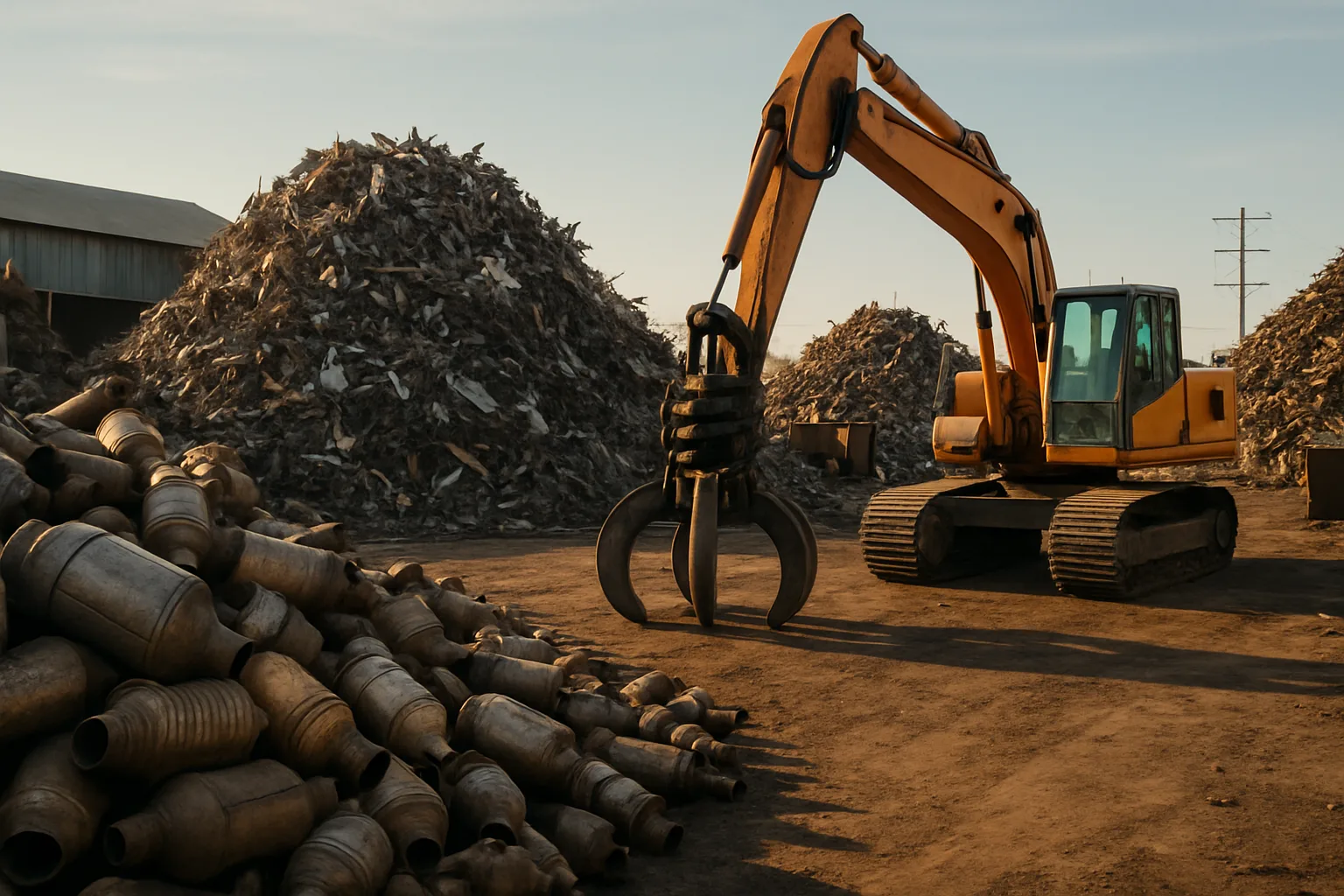
Most Denver yards will quote you a flat rate on your catalytic converter. That flat rate rarely reflects what your converter is actually worth. The difference between a low-ball quote and a fair one comes down to one thing: grading. If you don't understand how converters get graded, you're leaving money on the table every single time.
This isn't complicated once you know the system. Converters aren't all the same. A domestic cat off a Ford F-150 grades completely differently than a foreign cat pulled from a Toyota Prius. The precious metal content — platinum, palladium, and rhodium — varies wildly by vehicle, engine type, and manufacturer. Buyers who know this price accordingly. Sellers who don't know this get generic quotes.
If you're in Denver or anywhere in Colorado looking to find the best scrap converter prices today, understanding grading tiers is the first step to getting paid what your converter is actually worth.
What Catalytic Converter Grading Actually Means
Grading is how buyers categorize converters based on their precious metal content. Every catalytic converter contains a ceramic or metallic substrate coated with platinum group metals (PGMs) — platinum, palladium, and rhodium. The quantity of each PGM inside determines the converter's real market value. Grading is the shorthand system buyers use to price that value quickly.
There's no single universal grading standard across the industry. Different buyers use different tier names. But the underlying logic is consistent: higher PGM content equals a higher-grade designation equals a higher payout. Most buyers break converters into three to five tiers, often labeled low, mid, high, and premium — or numbered grades like Grade 1 through Grade 5.
Here's what typically separates the tiers:
- Low-grade converters: Older vehicles, high-mileage units, or certain domestic applications with lower PGM loadings. These still have value but yield less on assay.
- Mid-grade converters: Common domestic and import applications with average PGM content. This is the bulk of most yards' inventory.
- High-grade converters: Late-model imports, luxury vehicles, and certain trucks. Higher rhodium and palladium concentrations push the value up significantly.
- Premium / exotic converters: Diesel particulate filters, large diesel cats, certain Toyota and Honda applications. These command top dollar when rhodium prices are elevated.
- Foreign small / large: Many buyers separate import converters by physical size as a proxy for substrate volume, which correlates with PGM loading.
The grading tier your converter lands in has a direct dollar impact. A mid-grade converter might pay $80–$150. A premium foreign cat from the right vehicle can push $400–$600 or more, depending on where rhodium price today is trading. That spread is real, and it's why getting an accurate grade matters.
How Rhodium Price Today Drives Your Converter's Value
Of the three PGMs found in catalytic converters, rhodium gets the least attention from casual sellers — and that's a mistake. Rhodium is the most volatile and often the most valuable of the three. When rhodium spikes, premium converter grades move significantly. When it pulls back, low-grade converters feel it hardest because they rely more on palladium and platinum to carry their value.
In 2026, PGM markets have continued to show volatility driven by EV adoption timelines, South African mining output, and industrial demand shifts. Scrap metal prices today — including PGMs — move daily. A converter you quoted two weeks ago may have a different payout today, in either direction.
This is why static price lists from buyers are almost always stale. A reputable buyer updates pricing in line with the spot market. If your buyer is quoting you the same price every week regardless of what platinum and rhodium are doing, that's a red flag. You're absorbing all the market downside and they're pocketing the upside.
Platforms like smashscrap.com — the SMASH scrap metal auction platform — put competitive pressure on buyers to price against current market data, not against what they think you'll accept. When multiple vetted buyers bid on your inventory, pricing reflects reality instead of convenience.
The Denver Converter Market: What Local Sellers Should Know
Denver's scrap market is active. Colorado's mix of pickup trucks, older domestic vehicles, and a growing population of late-model imports gives local yards a wide range of converter types moving through their doors daily. That variety is good for sellers — if they know how to position what they have.
The challenge in the Denver market, like most mid-size U.S. cities, is that a handful of established buyers control most of the volume. When one buyer dominates, price discovery suffers. You get a quote, you don't have a reference point, and you take it or leave it. Most sellers take it.
That dynamic is changing. Denver sellers who use Denver scrap metal services connected to auction-based platforms are seeing more competitive outcomes because their inventory goes in front of multiple buyers simultaneously. Competition does what competition does — it pushes prices toward actual market value.
A few practical notes for Colorado sellers:
- Document your converters with photos and serial numbers before you bring them anywhere. This makes grading faster and reduces disputes.
- Separate your foreign and domestic cats before getting a quote. Mixing them together often results in your foreign cats being priced as domestics.
- Know your vehicle makes. A Prius cat, a Lexus cat, and a Subaru cat all grade differently. Being able to identify your stock is worth real money.
- Avoid buyers who won't tell you how they're grading. Transparency on grading method is a baseline expectation, not a favor.
Serial Numbers, VINs, and Why Documentation Raises Your Payout
Here's something most sellers don't realize: documented inventory consistently gets better offers than undocumented inventory. Why? Because buyers pricing undocumented lots are managing uncertainty. They don't know exactly what grade each unit is, so they price conservatively to protect their margin. When you give them verified data — serial numbers, VIN lookups, photos — you're removing their uncertainty, and they price accordingly.
SMASH builds this into the platform by design. The inventory tool lets you log converters with serial tracking and photo documentation before they ever go to auction. Buyers see what they're bidding on. When buyers have confidence in the inventory, bidding is stronger. That's not a theory — it's basic buyer psychology applied to scrap.
Serial number tracking also matters for regulatory reasons. Catalytic converter theft remains a serious issue across the U.S., and Colorado has tightened documentation requirements for converter transactions in recent years. Keeping clean records protects you legally and builds credibility with buyers who run tight compliance operations.
To check current scrap converter prices and understand how documentation affects what you'll get paid, start with a platform that values transparency over convenience.
How SMASH Changes the Pricing Equation for Converter Sellers
The traditional way to sell converters: call one buyer, get one price, decide yes or no. That model benefits the buyer every time. They have market data. You have a phone call.
SMASH flips that. The SMASH scrap metal auction format puts your inventory in front of vetted buyers who compete against each other. More buyers bidding means better price discovery. It doesn't guarantee a higher number — no platform can promise that — but competition can help reveal the market in a way a single phone call never will.
For converter sellers specifically, the platform's features matter:
- VIN lookup: Helps buyers identify and grade converters accurately, which supports stronger bids on premium units.
- Serial tracking: Keeps your inventory documented and compliant.
- Photo documentation: Gives remote buyers enough confidence to bid competitively without seeing the physical unit.
- Auto-invoicing: Cleans up the back end so you're not chasing paperwork after the sale.
- No subscription fees: SMASH only wins when the seller wins.
For Denver sellers managing regular converter volume, these aren't nice-to-have features. They're the difference between running a tight operation and leaving margin on the table every week.
Reading the Market This Week: What Converter Sellers Should Watch
As of the week of June 21, 2026, PGM markets continue to be driven by a few key factors worth watching:
- Rhodium supply constraints: South African production disruptions have historically been the biggest swing factor in rhodium pricing. Any supply-side news out of mining operations moves the market fast.
- Palladium demand signals: While EV adoption is accelerating globally, internal combustion engine production remains substantial. Palladium demand from automotive manufacturing directly supports converter scrap values.
- USD strength: PGMs are priced in USD globally. A stronger dollar can compress spot prices even when physical demand is steady. Denver sellers are exposed to this like everyone else.
- Seasonal volume: Late spring and early summer typically see increased converter volumes hitting yards as vehicle turnover picks up. More supply can soften short-term bids if buyer competition doesn't keep pace.
For up-to-date reads on scrap metal prices today, read scrap converter pricing guides that track market movements in real time rather than relying on static buyer price sheets.
Understanding grading tiers, staying current on PGM spot prices, documenting your inventory, and putting your converters in front of competitive buyers — that's the full picture. If you're in Denver or anywhere in Colorado and you're not doing all four, you're not getting the best catalytic converter price available to you. That's not pessimism. It's just how the market works.
Start with what you have, document it properly, and let competition do the work. Get a free quote at best-scrap-converter-prices.com and find out what your converters are actually worth in today's market.
Disclaimer: Catalytic converter scrap prices fluctuate daily based on PGM spot markets. All price references in this article are general and illustrative. Always check current rates before making selling decisions.
Frequently Asked Questions
Q: How do I find the best catalytic converter price in Denver?
The best way to find a strong converter price in Denver is to get multiple quotes from vetted buyers rather than relying on a single yard. Auction-based platforms like SMASH put your inventory in front of competing buyers simultaneously, which helps reveal actual market pricing instead of a single buyer's preferred margin. Document your converters with photos and serial numbers before quoting — it consistently supports stronger offers.
Q: What is the difference between domestic and foreign catalytic converters for scrap value?
Foreign catalytic converters — from Japanese and European manufacturers — typically contain higher concentrations of platinum, palladium, and rhodium than their domestic counterparts. This generally places them in higher grading tiers and results in better payouts. Mixing foreign and domestic cats without separating them before getting a quote often results in your foreign units being undervalued.
Q: How does rhodium price affect what I get paid for my scrap converter?
Rhodium is one of three precious metals inside every catalytic converter, and it's often the most valuable on a per-gram basis. When rhodium prices are elevated, premium and high-grade converters see the biggest payout increases. Because rhodium trades daily on global markets, your converter's value can shift week to week — which is why checking current rates before selling matters.
Q: Do I need to provide serial numbers when selling catalytic converters in Colorado?
Colorado has strengthened documentation requirements for catalytic converter transactions in response to ongoing theft issues. Many legitimate buyers require serial numbers and proof of ownership or source before completing a transaction. Beyond legal compliance, providing serial numbers and photos helps buyers grade your inventory more accurately, which typically results in stronger bids.
Q: What is the fastest way to get a quote on scrap converters near me in Denver?
The fastest quote isn't always the best one. A quick single-buyer quote gives you a number with no reference point. For sellers in Denver managing converter volume, submitting inventory through a platform like SMASH generates competitive bids from multiple vetted buyers, giving you actual market data rather than one buyer's opening offer. Visit best-scrap-converter-prices.com for current pricing guidance and to start the process.
Follow SMASH on LinkedIn for weekly scrap metal market insights, PGM price updates, and industry news relevant to converter sellers across North America.
```