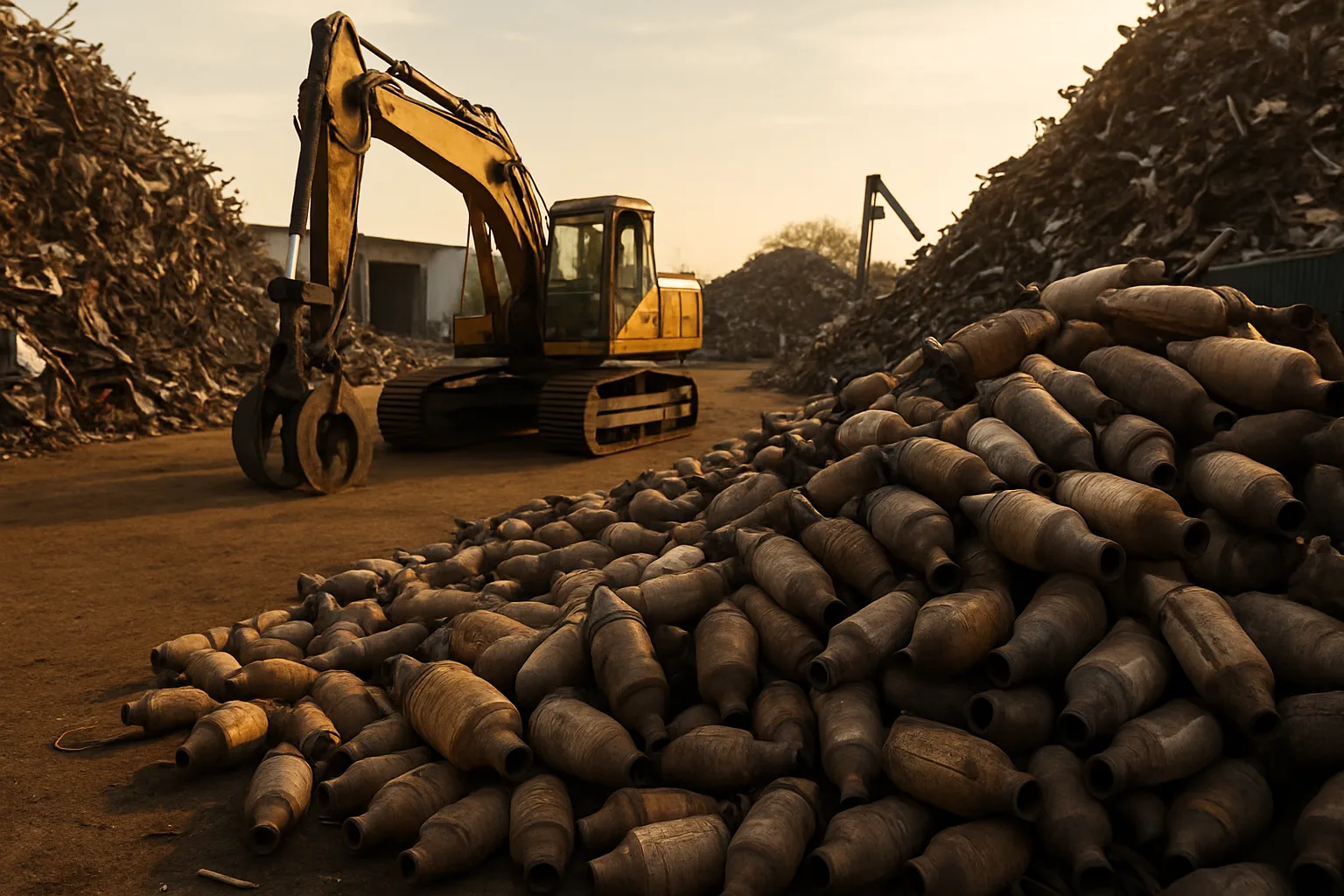
Before You Pull That Converter: What El Paso Sellers Need to Know First
A catalytic converter sitting on a shelf is worth nothing. A catalytic converter removed correctly and sold to the right catalytic converter buyer El Paso shops trust? That's real money — sometimes hundreds of dollars for a single unit, depending on the precious metal content inside. But the gap between those two outcomes comes down to one thing: how you handle the removal process.
Get it wrong and you risk personal injury, a damaged unit, or a buyer who discounts your price because of how the converter looks. Get it right and you walk in with a clean, documented part that commands full scrap converter value. This guide covers exactly how to do that — safely, efficiently, and in a way that holds up when it's time to sell.
Why Safe Removal Directly Affects Your Catalytic Converter Price
Most sellers focus entirely on the metal markets — platinum, palladium, rhodium — when thinking about what their converter is worth. Those markets matter, and we'll get to them. But physical condition at the time of sale matters just as much. Buyers assess your unit the moment you hand it over.
A converter that's been cut too close to the body, cracked during removal, or had its substrate crushed is worth less. Sometimes significantly less. The precious metals are locked inside the ceramic honeycomb substrate, and any damage to that core gives buyers a reason to lower their offer. When you're asking how much is my catalytic converter worth scrap, the honest answer is: it depends on the metals inside and the condition you deliver it in.
- Intact substrate: Full value — buyers can assay the material accurately
- Cracked or partially crushed core: Reduced offer — material loss is assumed
- Cut too short on the pipe ends: Some buyers pass entirely or require significant discount
- Burned out or rattling internally: Lower precious metal content — disclose it upfront
The point isn't to scare you. It's to make clear that how you remove the unit is part of how you sell catalytic converter price — it's not separate from it. Treat the removal like the first step in the sale, not an afterthought.
Tools You Actually Need (and Safety Steps That Aren't Optional)
Removing a catalytic converter without the right setup is how people get hurt. These units run at extreme heat during operation — up to 1,400°F under load. Even after the engine has been off for hours, the exhaust system can retain heat. Start there: always let the vehicle cool completely before you touch anything. Minimum four hours after last operation. Overnight is better.
Here's the basic tool list for a clean removal:
- Floor jack and jack stands rated for your vehicle's weight (never work under a vehicle on a jack alone)
- Penetrating oil (PB Blaster or equivalent) — apply to all fasteners 30–60 minutes before you start cutting
- Angle grinder with a cutoff wheel, or a reciprocating saw with a metal blade
- Pipe wrench and breaker bar for flanged connections
- Safety glasses, gloves, and ear protection
- A drop cloth or cardboard — the substrate material is fine particulate and you don't want it in your lungs or eyes
Work in a well-ventilated space. Exhaust systems carry residual carbon deposits and the substrate dust from a disturbed converter is not something you want to breathe. If you're working indoors in El Paso's summer heat, make sure airflow is moving. Open every door and use a fan if you have one.
Once the vehicle is safely raised and supported on stands — never on a slope, never on soft ground — locate the converter in the exhaust run. On most vehicles it sits close to the engine, before the muffler. Some larger trucks and SUVs common in Texas have multiple converters. Know what you have before you start cutting.
How to Make the Cut Without Killing the Value
This is where most first-timers leave money on the table. The goal is to remove the converter with enough pipe on each end to make it easy to handle and verify — without over-cutting and damaging adjacent exhaust components you may need later.
Standard practice: leave two to four inches of pipe on each end of the converter body. This gives buyers a clean unit to examine, confirms the welds and mounting points are intact, and avoids any contact with the internal substrate during cutting. Do not cut directly at the converter body itself.
- Spray penetrating oil on flanged bolts and clamps — let it soak
- If bolts are seized, use the angle grinder to cut through the bolts rather than forcing them (damaged threads aren't your problem after removal)
- For welded connections, mark your cut lines clearly with chalk or a marker before starting
- Cut straight and steady — a jagged cut doesn't affect value much, but a rushed cut that contacts the body can
- Once the unit is free, handle it carefully — don't drop it or shake it hard
- Place it substrate-side up in a container or bag to avoid dust exposure
If the converter rattles when you move it, that's a sign the substrate has already broken down internally. It doesn't mean the unit is worthless — some precious metal recovery is still possible — but disclose this to your buyer. Hiding it doesn't help you; buyers will hear it themselves and discount without explaining why.
Scrap Metal Prices Today: What Drives Your Converter Scrap Value in 2026
Here's the reality of scrap metal prices today as of June 2026: platinum, palladium, and rhodium markets continue to fluctuate based on automotive industry demand, mining output from South Africa, and industrial use patterns. Rhodium in particular has seen dramatic swings over the past few years, and palladium demand has shifted as automakers adjust their hybrid and EV powertrain mixes.
What this means for your converter scrap value: the number changes. Sometimes week to week. The converter you pulled today may not carry the same offer it would have two weeks ago — or it may be worth more. This is why getting a current quote from a transparent buyer matters more than relying on a number you heard from someone else.
For context on how values are generally structured:
- High-grade domestic converters (late-model American trucks and SUVs): typically among the higher-value units
- Foreign/import converters (Toyota, Honda, BMW): often contain higher palladium and rhodium concentrations
- Small foreign or economy converters: lower precious metal content, lower returns
- Pre-cats and secondary converters: usually lower value than primary units
- Diesel oxidation catalysts (DOCs): different metal profile — platinum-heavy
Disclaimer: Converter prices fluctuate daily based on precious metal markets. Always check current scrap converter prices before making a sale decision.
If you're in El Paso and wondering where the local market sits, the best move is to get quoted through a platform that pulls from live market data rather than a static price sheet. That's where tools like SMASH come in — sell your scrap metal on the SMASH marketplace and let buyer competition reveal what your load is actually worth right now, not what it was worth last month.
Finding a Catalytic Converter Buyer in El Paso Who Pays Fairly
El Paso has an active recycling and scrap market. The city sits on a major trade corridor, and there's no shortage of buyers looking for converter material. The problem isn't finding a buyer — it's knowing whether the offer you're getting is fair relative to actual metal markets.
Single-buyer transactions are the old way. One phone call, one number, take it or leave it. You have no idea if that number is based on today's platinum spot price or on whatever margin that buyer is trying to protect. The El Paso scrap metal services landscape has evolved, and sellers who use competitive platforms consistently get better price discovery than those who don't.
SMASH brings vetted buyers into competition for your material. Instead of one offer, you get multiple bids. The market sets the price, not one buyer's margin. For sellers moving regular volume — a shop pulling converters from fleet vehicles, a salvage yard processing Texas trucks — this difference adds up fast. Find the best scrap converter prices today by letting competition do the work instead of guessing.
When you're evaluating any local buyer, ask these questions directly:
- Is your quote based on today's spot price for platinum, palladium, and rhodium?
- Do you assay on-site or send to a third-party lab?
- What percentage return do you pay against assay results?
- How do you handle documentation and BOLs for multi-unit loads?
A buyer who can't answer those questions clearly isn't giving you a market-based price. You deserve better than that. Read scrap converter pricing guides to understand what fair pricing actually looks like before you walk into any transaction.
Frequently Asked Questions
Q: How do I find a reliable catalytic converter buyer in El Paso?
Look for buyers who quote based on live precious metal spot prices, not fixed internal price sheets. Ask directly how their pricing is calculated. Platforms like SMASH use competitive bidding from vetted buyers, which removes the guesswork and gives you real market transparency — especially useful if you're selling multiple units or want to compare offers without making multiple phone calls.
Q: How much is my catalytic converter worth for scrap in 2026?
Converter scrap value depends on the make, model, year of the vehicle, and the current spot prices for platinum, palladium, and rhodium. High-grade domestic converters from large trucks and SUVs — common across Texas — tend to carry higher values than small foreign economy units. Always get a current quote rather than relying on old numbers, because precious metal markets shift frequently.
Q: Is catalytic converter recycling legal in El Paso?
Yes — recycling a converter you legally own is entirely legal in Texas. State and federal regulations require that sellers document proof of ownership, especially as anti-theft legislation has tightened in recent years. Keep your title, bill of sale, or other documentation ready. Reputable buyers will ask for it, and you should expect that as standard practice.
Q: Does the condition of the converter affect the scrap price I get?
Absolutely. A converter with an intact, undamaged substrate commands full market value. A cracked or crushed core gives buyers reason to reduce their offer because precious metal recovery is assumed to be lower. Removing the converter carefully — following the steps in this guide — protects both your safety and your selling price.
Q: What types of converters are worth the most at scrap?
Generally speaking, large domestic converters from full-size trucks, SUVs, and performance vehicles tend to carry higher precious metal loads. Import converters from brands like Toyota, Honda, and BMW are often palladium and rhodium-heavy, which can push values up depending on current market prices. Diesel DOCs carry a different profile — platinum-dominant. The only way to know exactly what you have is to get it quoted by a buyer using current assay data.
Ready to stop guessing what your converters are worth? Find the best scrap converter prices today — get a free quote at best-scrap-converter-prices.com and see what real market competition does for your bottom line.
Follow SMASH on LinkedIn for scrap metal market updates, pricing insights, and industry news delivered straight to your feed.