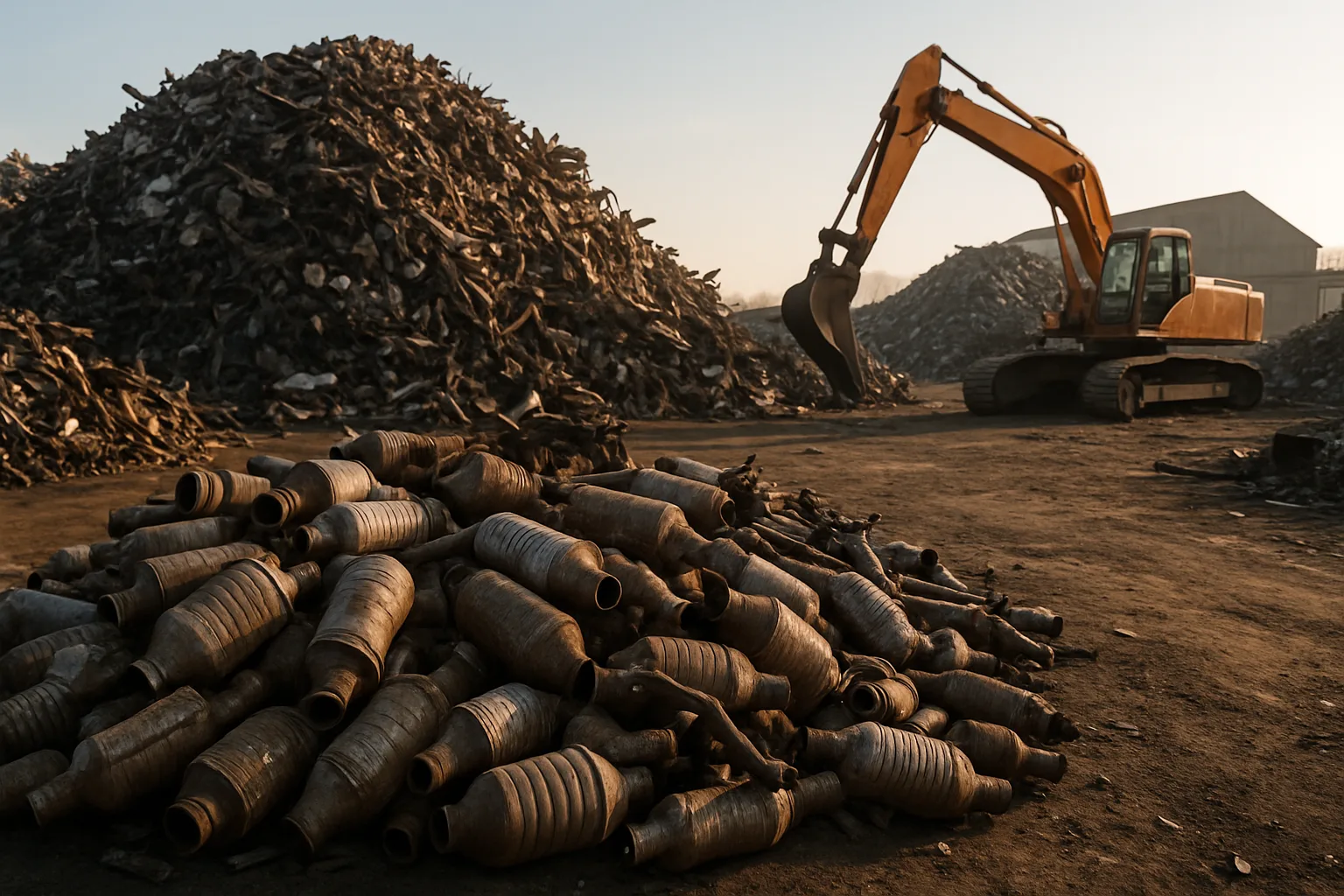
Most people pulling a catalytic converter off a junked vehicle in Philadelphia have no idea what they're actually holding. Some converters are worth $30. Others are worth $800 or more — same size, different vehicle, completely different metals inside. The difference comes down to one thing: catalytic converter scrap value is driven by the precious metals packed into the substrate, and those metals vary wildly by vehicle make and model.
If you're scrapping converters without knowing which ones command top dollar, you're leaving money on the table. This guide breaks down the most valuable catalytic converters by vehicle, explains what drives the price, and shows you how to stop guessing and start selling smarter.
What Actually Determines Catalytic Converter Scrap Value
A catalytic converter's scrap value isn't about its size or weight. It's about what's loaded into the ceramic or metallic honeycomb substrate inside — specifically three platinum group metals (PGMs): platinum, palladium, and rhodium. These are among the rarest and most expensive metals on earth. Their concentration inside each converter determines its market value.
Palladium price today sits among the most volatile of the three, having seen significant swings over recent years. Rhodium, while less well-known, can spike to extraordinary levels when demand from automotive manufacturers tightens supply. Platinum has historically been the anchor of converter value, though the market dynamics shift constantly.
- Platinum: Used heavily in diesel converters
- Palladium: Dominant in gasoline-engine converters
- Rhodium: Present in smaller amounts but extremely high value per gram
Beyond metal content, assay data, serial numbers, and documented condition all affect what a buyer will actually pay. A converter pulled clean with photos and verified vehicle info gets better price discovery than a mystery unit in a bin. Platforms like the SMASH scrap metal auction marketplace are built around that principle — documented inventory attracts more serious buyers and better offers.
The Most Valuable Catalytic Converters by Vehicle Make and Model
Not all vehicles are created equal when it comes to converter value. Here's a breakdown of the makes and models that consistently produce high-value units — the ones worth knowing before you price a load.
Luxury and Performance Vehicles
High-end vehicles run hotter, require more precise emissions control, and use higher PGM loadings as a result. Ferrari, Lamborghini, and BMW M-series converters regularly top converter price lists for exactly this reason. A single converter off a late-model Ferrari can carry a scrap value that dwarfs an entire set from a compact sedan.
Porsche and Mercedes-Benz converters — especially from V8 and V12 models — also fall into the premium tier. Multiple converter units per vehicle amplify the value further. If you're processing vehicles in the Philadelphia area and a luxury model comes through your yard, those converters deserve individual attention, not a bin toss.
SUVs and Trucks with High PGM Loadings
Large-displacement SUVs and trucks consistently produce high-value converters. Ford F-250 and F-350 with diesel engines carry significant platinum content. GMC Sierra and Chevy Silverado HD converters are common and consistently valuable — volume vehicles that show up regularly in Pennsylvania salvage yards.
Toyota Land Cruiser and Lexus LX converters are among the most sought-after in the industry. Toyota's emission systems are known for heavy PGM loadings, and the Land Cruiser's converter has earned a reputation as one of the most valuable units you can pull off a domestic-market vehicle. Thieves know this, which is why it's been a persistent theft target nationwide.
Toyota, Honda, and Japanese Domestic Market Vehicles
Toyota and Honda dominate the high-value converter conversation for everyday vehicles. The Toyota Prius has two converters — the standard unit and a secondary "pre-cat" — and both carry strong PGM content. The Prius pre-cat is one of the most stolen and most discussed converters in scrap circles for a reason.
- Toyota Prius (pre-cat and main cat): Consistently high-value
- Toyota Tacoma and Tundra: Strong palladium content
- Honda Accord V6: Above-average converter value
- Honda CR-V (older models): Recognized by buyers for consistent returns
- Acura MDX/RDX: Premium Honda-family emissions hardware
If you're selling catalytic converters in Pennsylvania, these Japanese-brand units move quickly through the secondary market because buyers have strong assay data and reliable pricing history on them.
Domestic Vehicles Worth Knowing
American-made vehicles produce a wide range, but several models stand out. The Ford Mustang (V8 models) and Dodge Ram 1500 with the HEMI engine both carry converters that price above average. Jeep Grand Cherokee with the 5.7L HEMI is another consistent performer — common in Philadelphia-area salvage, easy to identify, and well-documented in buyer databases.
GM's Cadillac Escalade and similar large V8 platform vehicles are worth pulling carefully. Multiple converters per vehicle and solid PGM content make them worth the extra documentation effort. Don't lump them into a mixed load when they can command individual pricing.
How to Sell Catalytic Converters Online and Get a Real Market Price
The old way of selling converters is dead simple — and that's the problem. One phone call, one offer, no competition. You take it or leave it, and you rarely know if you left money behind. That approach might work for a single unit, but it's not a pricing strategy.
To actually sell catalytic converters online at market value, you need documentation, identification, and buyers who are competing for your material. That means:
- Identify the unit. Use VIN lookup or serial number identification to confirm the vehicle and converter type. Don't guess. Buyers pay more for confirmed units.
- Photograph everything. Both ends of the converter, the body, any visible markings. Photos reduce buyer skepticism and support better offers.
- Know your PGM content estimate. Reference a current converter price list or assay database before accepting any offer.
- Get competitive bids. One buyer isn't a market. Multiple buyers competing for your load is how price discovery actually works.
SMASH is built specifically for this. Sellers list documented converter loads, vetted buyers compete, and the process creates real price transparency — not a take-it-or-leave-it offer from whoever answered the phone first. You can find the best scrap converter prices today without cold-calling your way through a list of buyers who already know more than you do.
If you're based in Philadelphia and want local context on how these platforms operate for Pennsylvania-based sellers, check out Philadelphia scrap metal services for region-specific information.
Why Palladium Price Today Matters More Than You Think
Scrap converter pricing doesn't exist in a vacuum. Every offer you receive is calculated against live PGM spot prices, and palladium is often the dominant variable — especially for gasoline-engine converters, which are the most common units moving through yards in Philadelphia and across Pennsylvania.
When palladium prices move, converter values move. A load that was worth a certain figure last Tuesday may be priced differently today. This is not a reason to panic — it's a reason to stop treating converter pricing like a fixed number and start treating it like commodity trading. The buyers you're selling to are watching PGM markets in real time. You should be too.
To read scrap converter pricing guides that explain PGM market dynamics in plain language, the blog at best-scrap-converter-prices.com covers this regularly. Understanding why prices change puts you in a stronger position when you're negotiating — or listing on a competitive auction platform.
Selling Catalytic Converters in Pennsylvania: What You Need to Know in 2026
Pennsylvania has specific documentation requirements for catalytic converter sales, and those requirements have tightened in recent years as theft rates drove legislative responses across the country. If you're operating a recycling yard or selling converters as an individual in Philadelphia, staying current on state-level rules protects your business.
In general, Pennsylvania requires sellers to provide proof of ownership or vehicle documentation, and buyers are required to maintain transaction records. This is not unique to Pennsylvania — most states have enacted similar frameworks. But the practical impact for sellers is clear: documentation isn't just good practice for price discovery, it's legally required in many cases.
The good news is that proper documentation — the same photos, serial numbers, and vehicle info that help you get a better price — also satisfies most compliance requirements. The discipline of documenting inventory well serves both purposes. Platforms like SMASH treat serial tracking and photo documentation as baseline features, not optional extras, because that's the standard serious buyers expect.
If you're ready to check current scrap converter prices against a vetted buyer network, the market is more accessible than it used to be — but only if you come prepared.
Frequently Asked Questions
Q: Which catalytic converter has the highest scrap value?
Luxury and performance vehicles — particularly Ferrari, Lamborghini, and Toyota Land Cruiser — consistently produce the highest-value converters due to heavy PGM loadings. The Toyota Prius pre-cat is one of the most well-known high-value units in the everyday vehicle segment. Value ultimately depends on confirmed metal content, not just vehicle brand.
Q: How do I find out the catalytic converter scrap value for a specific vehicle?
Use the vehicle's VIN or the converter's serial number to identify the exact unit, then cross-reference against a current converter price list or assay database. Prices fluctuate with live PGM spot markets, so always check current rates before accepting an offer. A competitive auction platform gives you multiple data points instead of one buyer's quote.
Q: Can I sell catalytic converters online if I'm based in Philadelphia?
Yes. Online auction platforms and scrap metal marketplaces are accessible to sellers across Pennsylvania, including Philadelphia. The key is proper documentation — photos, vehicle info, serial numbers — which allows vetted buyers anywhere in North America to evaluate and bid on your load. More buyers means better price discovery than a single local offer.
Q: How does palladium price today affect what I get for a catalytic converter?
Most gasoline-engine converters carry significant palladium content, so palladium's spot price is a direct driver of converter value. Buyers calculate their offers using live PGM markets, which means the same converter can yield different prices on different days. Checking current PGM spot prices before you sell helps you understand whether market timing is in your favor.
Q: What documentation do I need to sell catalytic converters in Pennsylvania?
Pennsylvania requires proof of ownership or vehicle documentation for catalytic converter sales. Buyers are required to maintain transaction records. Beyond compliance, solid documentation — photos, serial numbers, VIN — also helps you get stronger offers because buyers have more confidence in what they're bidding on. When in doubt, document everything.
If you're sitting on converters from a Toyota Prius, a Cadillac Escalade, or anything in the high-value tier above, the worst move is taking the first offer you're handed. Price discovery only works when buyers compete. Whether you're operating a yard in Philadelphia or processing vehicles across Pennsylvania, the infrastructure to sell smarter already exists — you just have to use it. Find the best scrap converter prices — get a free quote at best-scrap-converter-prices.com.
Disclaimer: Catalytic converter prices fluctuate based on live precious metal spot markets. Always check current rates before selling. No specific prices in this article should be treated as current offers.
Follow SMASH on LinkedIn for ongoing scrap metal market insights, PGM price updates, and industry news that helps you sell smarter.