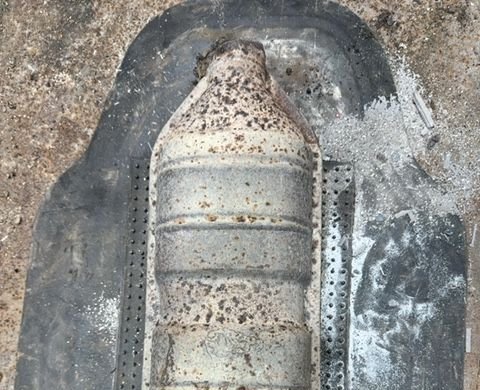
Rhodium Quietly Runs the Catalytic Converter Market — Here's Why
Most scrap sellers fixate on platinum and palladium when they think about OEM catalytic converter value. That's understandable — both metals get plenty of attention. But rhodium is the one that actually moves the needle. It's rarer, harder to replace, and when the market spikes, it spikes hard. Understanding why rhodium commands such a premium helps you stop guessing what your cats are worth — and start demanding prices that reflect reality.
If you're sitting on a pile of OEM converters in New York and wondering why quotes vary so wildly from one buyer to the next, rhodium is a big part of that answer. Let's break it down.
What Makes Rhodium Different From Platinum and Palladium
Platinum, palladium, and rhodium are the three platinum group metals (PGMs) that make catalytic converters work. Each one does a specific job inside the ceramic or metallic substrate. Platinum handles diesel oxidation. Palladium manages gasoline combustion emissions. Rhodium is the one responsible for reducing nitrogen oxide — the nastiest emission compound in the bunch.
Here's the problem for automakers: there's almost nothing that replaces rhodium for that specific chemical reaction. You can't just swap in more palladium to do the same job. That chemical specificity, combined with an extremely limited global supply, is what drives rhodium prices to levels that regularly dwarf both of its counterparts. Global rhodium production is overwhelmingly concentrated in South Africa — which means any supply disruption hits the market fast and hard.
- Platinum: Oxidation catalyst, common in diesel converters, more widely available
- Palladium: Reduction and oxidation catalyst, dominant in gasoline converters, high demand
- Rhodium: NOx reduction specialist, no viable substitute, extremely scarce supply
That last bullet is the one that matters most when you're pricing a load of cats. If rhodium is high, OEM converters — especially from newer, emissions-compliant vehicles — are worth significantly more at the recycling window.
How Rhodium Content Affects OEM Catalytic Converter Value by Vehicle Type
Not all converters carry equal amounts of rhodium. The ratio of PGMs in a substrate depends on the manufacturer's engineering specs, the vehicle's emissions standards, and the engine type. This is exactly why two converters that look identical on the outside can have completely different scrap values.
OEM converters — original equipment manufacturer units that came installed directly from the factory — tend to have higher and more consistent PGM loadings than aftermarket replacements. That's why OEM catalytic converter value is a distinct category in the recycling market. A factory-installed converter from a late-model domestic truck or a European luxury sedan will typically carry more rhodium per unit than a cheap replacement unit bolted on two years later.
Here's a general breakdown of rhodium presence by vehicle category:
- Late-model domestic trucks and SUVs — Higher engine displacement often means more substrate material and more PGM loading overall, including rhodium.
- European luxury and performance vehicles — Stricter Euro emissions standards have historically required higher rhodium concentrations. These are premium cats.
- Japanese and Korean passenger vehicles — Solid rhodium content, particularly in models meeting Tier 3 or California Air Resources Board standards.
- Older gasoline vehicles (pre-2000) — Lower rhodium content. Emissions standards were less stringent, so PGM loadings were lighter.
- Diesel vehicles — Lower rhodium presence; diesel converters prioritize platinum for oxidation over rhodium for NOx reduction (though diesel particulate filters add their own value).
The takeaway: if you're pulling converters in New York from newer gas-powered vehicles — especially trucks, SUVs, or imports — there's a real chance those units carry meaningful rhodium. Don't let anyone price them like they don't.
Why Catalytic Converter Prices Today Swing So Hard — And What Rhodium Has to Do With It
If you've watched catalytic converter prices today bounce around over the past few years, rhodium is often the reason. The metal has historically traded at multiples of gold. Supply is thin, demand from automakers is non-negotiable (they have to meet emissions regs), and the recycling stream can't move fast enough to stabilize the market when industrial buyers start competing for refined rhodium.
When rhodium moves up sharply, the entire OEM converter market moves with it. A load that was worth a certain number on Monday might price out differently by Thursday — not because your cats changed, but because the underlying metal market shifted. This is exactly why locking in a price from a single buyer — without any competitive pressure — is a losing strategy.
The old way of selling: one phone call, one quote, take it or leave it. That buyer knows the rhodium market. You might not. That information gap costs yards real money on every transaction.
Price volatility isn't something to fear if you have the right setup. It's actually an argument for getting multiple bids on every load. When prices are moving up, you want every interested buyer competing — not just the one who called you first. You can check current scrap converter prices to establish a baseline before you ever pick up the phone.
The Case for a B2B Scrap Metal Marketplace When Rhodium Is in the Price
Rhodium-loaded OEM converters are exactly the kind of material where buyer competition matters most. The spread between a low-ball offer and a fair market offer can be substantial when PGM content is high. Single-buyer transactions eliminate that spread before you even realize it exists.
This is where a B2B scrap metal marketplace like SMASH changes the math. Instead of calling your one regular buyer and hoping they're being straight with you, SMASH puts your load in front of vetted buyers who actually compete for it. The auction format means price discovery happens in real time — not in a buyer's back office where you have no visibility.
SMASH also brings documentation into the process. Photo uploads, serial tracking, VIN lookup, detailed inventory listings — these aren't just administrative tasks. They're the difference between a buyer saying "I'll give you a flat rate per unit" and a buyer paying a premium because they know exactly what's in the load. Documented rhodium-bearing OEM cats attract serious bids. Mystery boxes attract lowball offers.
For yards handling New York scrap metal services, that documentation layer is especially important. New York has some of the most active scrap buyer networks in the country — and some of the most aggressive pricing competition. You want buyers seeing clean, detailed listings, not vague descriptions that give them an excuse to hedge their offer.
If you're ready to stop leaving money on the table, get competitive bids for your scrap metal and see what a real auction does for your per-unit returns.
5 Reasons Rhodium-Bearing Converters Deserve More Attention From Scrap Yards
Here's the direct comparison most yards never sit down to think through. If you're processing converters in New York or anywhere in New York state, these five points should be on your radar every time a load comes in.
- Rhodium has the highest value-per-gram of all three PGMs — even when it's present in smaller quantities, it dominates the financial contribution of a substrate. A converter with 1 gram of rhodium can be worth more than one with 3 grams of palladium depending on market conditions.
- OEM converters hold more consistent PGM ratios — meaning they're easier to price accurately with assay data. Aftermarket units are harder to benchmark. That consistency is an advantage when you're negotiating.
- Tighter emissions standards keep rhodium demand structural — automakers aren't going to stop needing it anytime soon. As long as internal combustion engines are running on the road, rhodium demand remains.
- Misidentified converters lose you money immediately — a high-rhodium unit misread as a standard palladium cat will be priced wrong from the start. Proper serial tracking and reference data protect you.
- Competitive buyer markets reward documentation — buyers on platforms like SMASH bid more aggressively when they can verify what they're getting. Vague listings get hedged; documented loads get competed over.
For first-time sellers or yards that don't specialize in cats, this list is a starting point. For experienced operators, it's a checklist worth revisiting every quarter when market conditions shift.
How to Position Your OEM Converter Loads for the Best Converter Price
Knowing that rhodium is valuable doesn't automatically put more money in your pocket. You need a process that captures that value consistently. That starts before the load ever goes to a buyer.
First, separate your OEM units from aftermarket replacements. Don't mix them into the same lot. Buyers price to the lowest common denominator in a mixed load — and your premium OEM cats end up subsidizing your cheapest aftermarket units. Keep them distinct and get them priced accordingly.
Second, document everything. Photograph both ends of the converter, capture the serial or part number, and use reference tools to identify the unit before you price it. The more a buyer knows, the less room they have to hedge. This is exactly the kind of workflow SMASH is built to support — inventory tools, photo documentation, and serial tracking are native to the platform, not afterthoughts.
Third, get multiple bids. Don't accept the first offer. Rhodium market prices are publicly tracked, and serious buyers know them. The only way to confirm you're getting a fair share of that value is to put the load in front of more than one buyer. To find the best scrap converter prices today, competition isn't optional — it's the mechanism.
When you're ready to take that step, you can also read scrap converter pricing guides to sharpen your baseline before your next negotiation.
The scrap converter market rewards the sellers who show up prepared. Understanding that rhodium is the primary driver of OEM converter value — and building your sales process around that fact — is how yards in New York and across North America stop leaving money in the buyer's pocket.
Disclaimer: Precious metal prices fluctuate daily based on global market conditions. All price references in this article are general in nature. Always verify current rhodium, platinum, and palladium spot prices before finalizing any transaction.
Frequently Asked Questions
Q: Why is rhodium worth more than platinum or palladium in catalytic converters?
Rhodium is the only PGM that effectively reduces nitrogen oxide emissions, and there's no practical substitute for it in that role. Combined with extremely limited global supply — most of it comes from South Africa — demand from automakers keeps rhodium prices structurally elevated compared to other precious metals.
Q: How does rhodium content affect OEM catalytic converter value?
OEM converters from newer, emissions-compliant vehicles tend to carry more rhodium per unit than older or aftermarket alternatives. Because rhodium often trades at a significant premium to other PGMs, even a small difference in rhodium loading can have a meaningful impact on your converter's scrap value. Getting accurate identification — via serial number or assay — is the only reliable way to capture that value.
Q: Where can I find the best scrap converter prices in New York?
Start by documenting your load carefully — photos, serial numbers, and unit counts. Then use a platform that puts your converters in front of multiple vetted buyers rather than relying on a single quote. For yards in New York, finding the best scrap converter prices means creating real buyer competition, not just accepting the first number you hear.
Q: Does catalytic converter recycling near me pay differently based on rhodium content?
Yes — or it should. Any serious buyer is pricing against live PGM spot prices, and rhodium is a major component of that calculation for OEM units. If a local buyer gives you a flat per-unit price without referencing the converter's identity or current market conditions, that's a sign they're pricing to protect their margin, not to reflect the actual metal inside.
Q: How does a B2B scrap metal marketplace like SMASH help me get better converter prices?
SMASH puts your documented converter inventory in front of multiple vetted buyers who compete in an auction format. That competition is what drives price discovery — instead of accepting a single buyer's number, you see what the market actually pays. For rhodium-bearing OEM converters, that difference can be significant on a per-load basis.
If you're handling OEM converters and want to know what they're actually worth, stop relying on one buyer's word for it. Build your process around documentation, market data, and real competition — and let the numbers speak. Head over to best-scrap-converter-prices.com to get a free quote and see what your load is worth today.
Follow SMASH on LinkedIn for ongoing scrap metal market insights, PGM price updates, and industry news that actually matters to your yard.