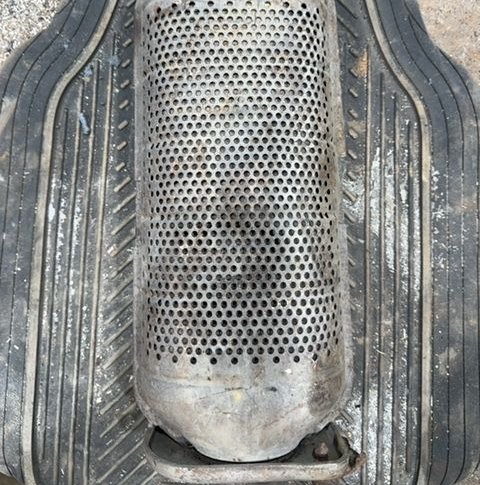
What's Actually Inside a Catalytic Converter — And Why It's Worth Real Money
Most people know catalytic converters are valuable. Fewer know why. The short answer: platinum, palladium, and rhodium — three of the rarest and most expensive metals on the planet are packed into that ceramic honeycomb inside your converter. If you're sitting on a pile of spent cats in Aurora, Illinois, understanding what's inside them is the first step to getting paid what they're actually worth.
This isn't a chemistry lesson. It's a practical breakdown of what drives catalytic converter price, why converter scrap value swings so hard, and how to position yourself to get the best converter price when you're ready to sell. Whether you're a yard operator, a parts puller, or a first-time seller trying to figure out the market — this one's for you.
The Three Precious Metals That Drive Catalytic Converter Scrap Value
Every catalytic converter contains a ceramic or metallic substrate coated with a washcoat. That washcoat holds the precious metals — specifically platinum (Pt), palladium (Pd), and rhodium (Rh). These metals act as catalysts, triggering chemical reactions that convert toxic exhaust gases into less harmful emissions. When the converter reaches end of life, those metals don't disappear. They're recoverable. That's what makes the scrap converter market tick.
Here's a quick breakdown of each metal and what it does:
- Platinum (Pt): Historically the dominant catalyst metal, especially in diesel converters. Platinum handles oxidation reactions and is found in higher concentrations in European-style diesel cats. It's rare, but palladium has displaced it in many gasoline applications over the past two decades.
- Palladium (Pd): Now the workhorse of modern gasoline catalytic converters. Palladium is more effective at lower temperatures, which makes it ideal for cold-start emission control. It's also historically the most volatile of the three metals in terms of price swings.
- Rhodium (Rh): The rarest of the three and the most valuable per troy ounce. Rhodium handles NOx reduction — converting nitrogen oxides into harmless nitrogen and oxygen. Even small concentrations of rhodium in a converter can dramatically affect its scrap value. When rhodium prices spike, converter values follow.
The exact loading — how much of each metal is in a given converter — varies by manufacturer, vehicle model, engine size, and emissions standard the converter was designed to meet. A large truck cat from a heavy-duty diesel will have a very different precious metal profile than a compact car cat. That variation is exactly why a legitimate catalytic converter buyer in Aurora won't give you a flat rate on every unit. The good ones price by the piece, based on assay data and market rates.
Why Scrap Metal Prices Today Directly Affect What You Get Paid
Your converter's scrap value isn't fixed. It moves with the spot prices of platinum, palladium, and rhodium on global commodity markets. Those prices are quoted in troy ounces and tracked on exchanges like the London Platinum and Palladium Market (LPPM). Buyers who are paying you fair market value for your converters are working backward from those live spot prices, factoring in processing and refining costs, then calculating what percentage of recovery they can reasonably offer.
When you check scrap metal prices today, you're really checking the upstream inputs that determine what your cats are worth downstream. A surge in palladium — driven by supply constraints from mining regions or a spike in EV-hybrid vehicle production that still uses combustion-assist systems — pushes converter values up. A rhodium price correction can drop values fast. This is why timing matters and why getting a quote based on current market data beats relying on yesterday's number.
One more thing worth knowing: the secondary market for platinum group metals (PGMs) is genuinely global. Refiners in North America, Europe, and Asia are all competing to process recovered PGMs. That competition is what makes converter recycling a real market — not a take-it-or-leave-it transaction. Sellers in Aurora, Illinois, have access to that same global pricing through the right channels.
How Buyers Actually Calculate Catalytic Converter Price
A reputable catalytic converter buyer doesn't pull numbers out of the air. The pricing process generally follows these steps:
- Identification: The converter is identified by its serial number, OEM part number, or physical characteristics. Platforms with VIN lookup and serial tracking make this step faster and more accurate.
- Grade and assay data: Based on identification, the buyer references historical assay data for that converter type — average PGM content by weight for that unit. Some buyers rely on published price lists; serious buyers use proprietary databases built from actual smelter returns.
- Spot price calculation: The PGM content estimates are multiplied by current spot prices for Pt, Pd, and Rh.
- Deductions applied: Processing, shipping, and refining costs are deducted. What's left is the offer to the seller. Transparent buyers show you this math. Opaque buyers don't — and that gap is often where sellers leave money on the table.
This is also why you'll sometimes hear references to price lists from other markets. A catalytic converter price list from the UK or Australia reflects local market conditions — different vehicle fleets, different buyer ecosystems, different currency considerations. Those lists aren't directly applicable to what you'll be offered by a catalytic converter buyer in Aurora, but they do reflect the same underlying PGM spot prices that drive the North American market. The fundamentals are global even if the local transaction isn't.
If you want to understand how pricing works across different types of units, read scrap converter pricing guides that break down categories like foil cats, diesel cats, and aftermarket units — each with a distinct value profile.
Catalytic Converter Recycling in Aurora: What Local Sellers Need to Know
Aurora, Illinois, sits in the greater Chicago metro area — one of the largest scrap metal markets in the Midwest. That's an advantage for sellers. There's genuine buyer competition in this region, which creates real price discovery when you engage multiple buyers rather than defaulting to one phone call and one offer.
The challenge is that not every buyer operating near Aurora is offering transparent, market-linked pricing. Some buyers pay flat rates that don't reflect actual PGM content. Some work off outdated price lists. And some simply bank on sellers not knowing the difference between a low-grade aftermarket cat and a high-value OEM unit from a late-model truck.
Catalytic converter recycling in Aurora works best when sellers come in with documentation — photos, serial numbers, vehicle source data where available. A buyer who can verify what they're looking at is a buyer who can price with confidence. That confidence typically translates into a better offer. Documented inventory gives buyers more confidence, and more confidence means less discount baked into the offer to account for uncertainty.
Platforms like SMASH are built around exactly that principle. When you get competitive bids for your scrap metal, you're not guessing what your cats are worth. You're putting documented inventory in front of vetted buyers who are actively competing for the load. That's a different market dynamic than the single-call approach most sellers default to.
How to Get the Best Converter Price in 2026
The converter market in 2026 is more competitive than it was five years ago — more buyers, more data, more tools available to sellers who want to use them. That's good news. But it also means the gap between what uninformed sellers get and what informed sellers get has widened. Here's how to close that gap:
- Document everything. Photos, serial numbers, and unit counts before you sell. Buyers who can see what they're buying price more aggressively.
- Check current PGM spot prices. You don't need to be a commodities trader. Just know where Pd and Rh are trading before you take a call from a buyer. It's context.
- Don't sell on the first offer. More buyers means better price discovery. One offer is a guess. Three offers is a market.
- Know your unit types. OEM cats from domestic trucks, foil cats from imports, and aftermarket replacements all have different values. Don't let mixed loads get averaged down unfairly.
- Use platforms built for this. SMASH's auction format and inventory tools exist specifically to remove the information asymmetry that costs sellers money.
To find the best scrap converter prices today, you need current market data and real buyer competition — not a flat-rate price list from a buyer who's padding their margin on your lack of information.
If you're in Aurora or anywhere in Illinois, the infrastructure is there. The buyers are active. The only variable is whether you're approaching the market with the tools to get what your converters are actually worth. You can check current scrap converter prices before you sell — that single step changes the negotiation.
When you're ready to move inventory, start at best-scrap-converter-prices.com for a free quote and let the market tell you what your cats are worth — not a single buyer with one number and no competition.
Frequently Asked Questions
Q: What precious metals are inside a catalytic converter?
Catalytic converters contain platinum (Pt), palladium (Pd), and rhodium (Rh) — three platinum group metals (PGMs) embedded in the converter's substrate. The exact quantity and mix depends on the vehicle make, model, engine type, and the emissions standards the converter was built to meet. These metals are what give spent converters their scrap value.
Q: How much is a catalytic converter worth in scrap?
Scrap value varies significantly depending on the converter type, the precious metal content, and current PGM spot prices. A small aftermarket cat might be worth very little. A large OEM cat from a late-model domestic truck can be worth several hundred dollars. The only way to know your converter's actual value is to have it identified and quoted against current market prices — not guessed from a generic list.
Q: Where can I find a reputable catalytic converter buyer in Aurora, Illinois?
Aurora, Illinois, has access to active scrap buyers throughout the greater Chicago metro area. For the best results, use a platform that puts your inventory in front of multiple vetted buyers rather than settling for one local offer. Competition between buyers is what creates fair market pricing — a single call to a single buyer rarely reflects what the market will actually pay.
Q: Why do catalytic converter prices change so frequently?
Converter prices move because they're tied directly to global spot prices for platinum, palladium, and rhodium. Those commodity prices respond to mining output, industrial demand, automotive production trends, and macroeconomic conditions. A shift in any of those factors can move converter values up or down in a matter of days. Always get a quote based on today's market, not last week's.
Q: Is catalytic converter recycling in Aurora legal and straightforward?
Yes. Selling spent catalytic converters to licensed buyers is legal. Illinois, like most U.S. states, has regulations around the documentation of converter sales — particularly for bulk sellers — to combat theft-driven supply. Using a platform with proper documentation tools, photo capture, and serial tracking protects you as a seller and satisfies buyer and regulatory requirements simultaneously.
Follow SMASH on LinkedIn for ongoing scrap metal market updates, PGM price insights, and practical guides for yards and sellers across North America.
Price disclaimer: Catalytic converter prices fluctuate based on live PGM spot markets. All values referenced in this article are illustrative. Always check current rates before selling.
```