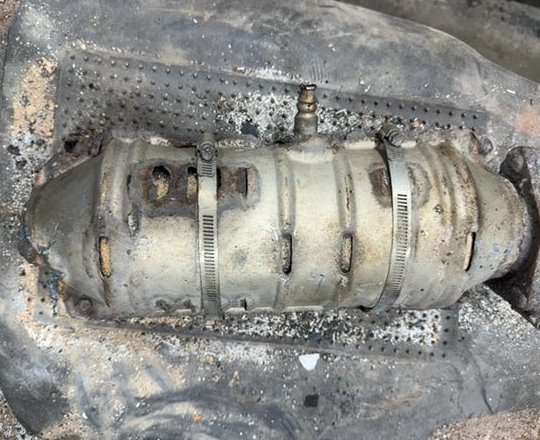
Most people don't realize a catalytic converter sitting in their driveway could be worth serious money — but only if it's removed correctly and sold through the right channel. Mess up the removal, and you risk damaging the substrate inside. Sell to the wrong buyer, and you leave real money on the table. If you're dealing with a scrap vehicle or a worn-out converter in Baltimore or anywhere across Maryland, this guide walks you through the safe removal process and shows you how to get the best converter price for what you've got.
This week's market recap digs into what's driving converter scrap value right now, what the removal process actually looks like, and why catalytic converter recycling Baltimore sellers are increasingly turning to platforms like SMASH to get competitive, transparent pricing.
Why Catalytic Converter Scrap Value Fluctuates Week to Week
Converter scrap value isn't fixed. It moves with the precious metals market — specifically platinum, palladium, and rhodium. These three metals sit inside the ceramic substrate of virtually every catalytic converter, and their spot prices shift daily based on global supply, industrial demand, and macroeconomic conditions. In October 2026, palladium has continued to see pressure from the broader shift toward battery-electric platforms, while rhodium remains volatile.
What this means for sellers: the week you choose to sell matters. Holding a converter for a better market window can pay off — but only if you know what the market is actually doing. Most single-buyer relationships don't give you that visibility. You get one number, take it or leave it. That's the problem platforms like the SMASH scrap metal auction marketplace are built to solve — competitive bids, real-time pricing context, and buyers who are actually competing for your load.
- Platinum: Used heavily in diesel converters. Watch diesel vehicle scrap trends.
- Palladium: Dominant in gasoline converters. EV adoption pressure continues in 2026.
- Rhodium: Highest value per ounce. Small amounts, huge impact on converter price.
Before you pull a converter off a vehicle, it helps to understand what's inside it and why condition matters to the buyer calculating your scrap converter prices.
What You Need Before You Start: Tools and Safety Basics
Removing a catalytic converter safely isn't complicated, but it requires the right setup. Rushing this step damages the unit — and a cracked or rattling substrate loses value fast. Buyers assessing converter scrap value will dock you for damaged goods.
Here's what you need before you touch anything:
- Floor jack and jack stands rated for the vehicle weight (never work under a car on a floor jack alone)
- Angle grinder or reciprocating saw with a metal-cutting blade
- Penetrating oil (PB Blaster or equivalent) — exhaust bolts rust solid, especially in Maryland winters
- Safety glasses, gloves, and a dust mask — ceramic substrate dust is a respiratory hazard
- Breaker bar and wrench set (metric and standard)
- Wire brush for clearing corrosion around flanges
One more thing: confirm legal ownership of the vehicle before removal. Baltimore and Maryland law enforcement actively investigate converter theft. Every legitimate recycler and every serious buyer will ask for documentation. Have your title, bill of sale, or registration ready. No paperwork, no sale — and that's how it should be.
Step-by-Step: How to Remove a Catalytic Converter Without Damaging It
Take your time here. A damaged converter isn't just harder to sell — it tells every buyer that the substrate may be cracked, which directly reduces the precious metal yield they can recover. That hits your final number.
- Let the vehicle cool completely. Exhaust components retain heat for hours. Working on a hot converter means burns and warped components.
- Lift and secure the vehicle. Use jack stands on solid frame points. Never trust a jack alone. Work on a flat, stable surface.
- Spray penetrating oil on all exhaust bolts and clamps. Let it soak for 15–20 minutes minimum. In older Maryland vehicles with rust exposure, you may need to soak overnight.
- Photograph the converter in place. Front, back, and the serial or part number stamped on the unit. This documentation helps when you check current scrap converter prices and submit for quotes — buyers want to verify what they're bidding on.
- Loosen the upstream and downstream bolts or clamps. Work slowly. Snapped bolts mean cutting, which adds time and can damage surrounding pipe sections you might want to keep.
- Cut if necessary. If bolts are seized solid, cut the pipe cleanly a few inches from the converter flanges. Keep cuts straight. Ragged cuts waste pipe material buyers might price separately.
- Lower the converter carefully. Don't drop it. The ceramic substrate inside fractures on impact. A rattling converter is a red flag to any experienced scrap converter buyer.
- Mark and store it properly. Keep it dry. Store it off concrete if possible — moisture accelerates substrate degradation in cracked units.
That's it. The process itself isn't technical — the discipline is in slowing down and protecting the unit. For sellers in Baltimore doing multiple vehicles from a fleet or estate sale, this process scales. Document everything with photos, and you'll move through the quoting process much faster when you find the best scrap converter prices today.
How to Sell Catalytic Converters Online and Get Real Market Value
Once the converter is out and documented, the next decision is where to sell it. This is where most sellers lose money. Calling a single local yard, taking whatever number they quote, and hauling the converter over — that's the old way. It's fast and convenient, but you have no idea if that number reflects actual market value.
When you sell catalytic converters online, you introduce competition. Multiple buyers see the same unit. They bid based on current precious metal spot prices and their own processing margins. That competition is what produces real price discovery — not a number pulled from a relationship where the buyer holds all the cards.
SMASH operates exactly this way. Sellers submit documented inventory — photos, part numbers, vehicle details — and vetted buyers across North America compete for the load. There's no subscription fee. SMASH only wins when the seller wins. For Baltimore and Maryland sellers moving regular volume, that model adds up.
A few things that help you get a stronger offer when you sell scrap metal online:
- Clear photos of the converter (both ends, serial number visible)
- Make, model, year, and engine size of the donor vehicle
- Confirmation that the substrate is intact (no rattling)
- Proof of ownership documentation
- Quantity — if you have multiple units, group them in the same submission
Better documentation equals more buyer confidence. More buyer confidence equals stronger bids. That's the direct line between paperwork and price. You can read scrap converter pricing guides to understand what buyers are actually looking for before you submit.
What Baltimore Sellers Should Know About Local Recycling Regulations in 2026
Converter theft remains a serious enforcement focus in Maryland. Baltimore area recyclers operate under strict documentation requirements — and they've tightened further in 2026 as state regulators increased compliance pressure on secondary metal dealers. If you're a private seller or small yard, know what's required before you show up with a load.
Maryland law requires recyclers accepting catalytic converters to collect:
- Government-issued photo ID of the seller
- Vehicle title, registration, or bill of sale proving ownership
- Vehicle identification information (VIN on many transactions)
- Transaction records held on file for state audit
Legitimate buyers — including those on platforms like SMASH — require this documentation as part of the submission process. It protects you as a seller and it protects the buyer. If a buyer offers to skip documentation for a faster transaction, walk away. That's not a deal, that's a liability.
For Baltimore scrap metal services, working through a documented, auditable process isn't just good practice — it's how you protect yourself from being connected to stolen material you had no knowledge of.
Market Recap: What's Moving Converter Prices This Week
As of late October 2026, here's the broad picture for North American converter markets:
Palladium has remained under moderate pressure through Q3 and into Q4 2026. Increased EV production has softened long-term demand forecasts, but gasoline vehicles still dominate the active fleet — which means palladium-heavy converters from model years 2010–2022 are still moving well at recyclers.
Rhodium continues to trade at elevated levels relative to its historical average, though it remains volatile. A single large-vehicle converter — think trucks, SUVs, and certain luxury sedans — can carry meaningful rhodium content that significantly impacts the final catalytic converter price.
Platinum has seen modest support from industrial demand outside of auto, which helps floor values on diesel-sourced converters. If you're pulling converters from older European diesel vehicles, those units have a different precious metal profile than domestic gasoline converters.
Prices fluctuate daily. Always check current rates before selling. Use the data as context, not as a fixed expectation.
Disclaimer: Converter prices change based on precious metal spot prices and market conditions. Always verify current pricing before completing any transaction.
Whether you're a Baltimore yard, a private seller with one converter, or an operator moving regular loads across Maryland, the process is the same: document what you have, remove it carefully, and put it in front of multiple buyers. If you're ready to move a load, the SMASH scrap metal auction marketplace connects you with vetted buyers competing for exactly what you have. No guessing. No single-buyer phone tag.
Start with solid documentation, take your time on the removal, and let competition do the work. When you're ready to see what your converters are actually worth, find the best scrap converter prices today — get a free quote at best-scrap-converter-prices.com.
Frequently Asked Questions
Q: Is it legal to remove and sell a catalytic converter in Baltimore?
Yes — if you own the vehicle. Maryland law requires proof of ownership when selling catalytic converters to any licensed recycler or metal dealer. Bring your title, registration, or bill of sale. Buyers are required by law to document the transaction.
Q: How do I know if my catalytic converter substrate is damaged?
Shake the converter gently after removal. A rattling sound means the ceramic substrate is cracked or broken internally. Damaged substrates reduce precious metal yield, which lowers the offer you'll receive. Handle converters carefully during and after removal to preserve value.
Q: What information do I need to sell catalytic converters online?
At minimum: photos of both ends of the converter, the serial or part number stamped on the unit, and the make, model, year, and engine size of the vehicle it came from. Ownership documentation is required for any legitimate transaction. Better documentation consistently produces stronger offers from buyers.
Q: How long does it take to remove a catalytic converter from a standard vehicle?
On a newer vehicle with accessible hardware and no rust, experienced hands can do it in 30–45 minutes. On older vehicles common in Maryland with corroded exhaust hardware, budget 1–2 hours once penetrating oil has soaked. Rushing costs you — a damaged converter is worth less.
Q: Why does the catalytic converter price vary so much between buyers?
Buyers use different assay data, processing margins, and precious metal spot price references. One buyer quoting on Tuesday may use different data than another quoting on Thursday — and markets move daily. That's why competitive platforms exist: multiple buyers bidding on the same unit reveal the real market, not just one buyer's preferred margin.
Follow SMASH on LinkedIn for weekly scrap metal market updates and industry insights: linkedin.com/company/scrap-metal-auction-sales-hub.