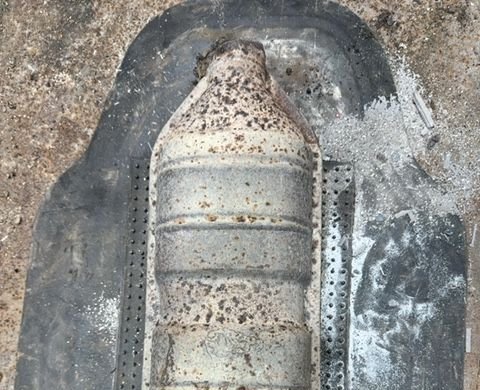
Most converter sellers focus on the obvious stuff — the big, heavy units off trucks and SUVs. But foil and bead style catalytic converters sit in a pile getting ignored, and that's a mistake that costs yards real money. If you're trying to get the best catalytic converter price Buffalo has to offer, you need to know exactly what you're holding before you sell it.
This isn't theory. It's a breakdown of two converter types that confuse sellers constantly, what's actually inside them, and how to stop leaving money on the table when you pull them from your inventory.
What Are Foil Style Catalytic Converters?
Foil converters use a metallic substrate — thin corrugated metal foil, usually a nickel or iron alloy — wound into a honeycomb-like structure inside the converter shell. That substrate gets coated with a wash that contains platinum, palladium, and rhodium, just like ceramic converters. The difference is in the base material and how the precious metals sit on it.
You'll find foil-style units most often on European vehicles — BMWs, Mercedes, Audis, and some Volkswagens from the 2000s through the mid-2010s. Diesel aftertreatment systems also use metallic substrates in some configurations. Visually, they're often lighter than ceramic units and can feel hollow when you shake them. The metallic core doesn't rattle or crack the way ceramic does.
Because the substrate is metallic, the smelting process to recover precious metals is different from ceramic processing. Not every processor handles them the same way. That matters when you're trying to find a scrap catalytic converter price list that actually reflects what these units are worth — because generic price lists often lump foil converters into broad categories that don't capture their real PGM content.
What Are Bead Style Catalytic Converters?
Bead-style converters use small ceramic or alumina beads as the substrate, rather than a honeycomb block. The precious metal washcoat is applied to the surface of these beads, which are packed loosely inside the converter canister. Shake one and you'll hear it — a distinct rattling sound, like marbles shifting inside a tin.
These units were common in American vehicles from the late 1970s through the 1980s and into the early 1990s. Think older GM, Ford, and Chrysler platforms. They're less common today, but plenty of them still show up in salvage yards, estate cleanouts, and classic car restoration shops across New York.
Bead converters tend to have lower PGM loadings than modern ceramic honeycomb units, but don't write them off. Depending on the original application and the age of the vehicle, some bead-style units carry meaningful platinum content. The problem is that without proper assay data, sellers often guess wrong — either overvaluing them or, more commonly, underselling them to a buyer who knows exactly what they've got.
What Drives Converter Scrap Value — Foil and Bead Included
Every catalytic converter's scrap value comes back to three precious metals: platinum (Pt), palladium (Pd), and rhodium (Rh). The concentration of each — measured in troy ounces per unit — multiplied by the current spot price gives you the theoretical gross value. Refiners then apply a recovery rate and their processing margin, and what's left is your return.
For foil and bead styles, the key variables are:
- PGM loading: How much platinum, palladium, and rhodium was originally applied during manufacturing. This varies by vehicle make, model, year, and emissions standard.
- Condition: Contaminated, burned, or water-damaged cores recover fewer PGMs. A clean foil substrate with intact washcoat is worth more than a corroded one.
- Current metal prices: The rhodium price today swings dramatically — it's historically one of the most volatile precious metals. When rhodium is high, even modest loadings matter. When it's depressed, the math changes fast.
- Processor capability: Not all buyers can handle metallic substrate converters efficiently. If your buyer isn't set up for foil processing, they may discount your units more than necessary.
This is exactly where platforms like North America's B2B scrap metal auction platform change the equation. Instead of one buyer giving you their number on foil and bead units, you get competitive bids from vetted buyers who actually process these converter types. Competition reveals the real market. One buyer's lowball is another buyer's opportunity.
The Buffalo Angle — Why Location Affects Your Converter Price
Buffalo sits at the edge of major Rust Belt salvage territory. New York runs one of the larger scrap metal recycling ecosystems in the country, and yards in the Buffalo area see a wide mix of vehicles — older domestic iron from the 1980s and 90s (hello, bead converters), plus European imports and fleet vehicles (foil substrate territory).
That mix is actually an asset, if you know how to work it. Buffalo scrap metal services that understand the specific units coming out of Western New York salvage pools can price more accurately than a generic national buyer who's never seen your inventory.
The catch is that local buyers who know your market may still give you a single price — their price. That price may be fair, or it may not be. You have no reference point unless you're running competitive bids. Yards in Buffalo that find the best scrap converter prices today aren't doing it by calling one guy. They're doing it by creating actual competition for their loads.
SMASH was built for exactly this situation. List your foil units, your bead converters, your full loads — vetted buyers bid, you see the numbers, you decide. No guessing, no "trust me" pricing.
How to Identify and Sort Foil vs. Bead Converters Before You Sell
Sorting before you sell matters. Lumping foil, bead, and ceramic units into one bin gives your buyer a reason to average-down your entire load. Separate them, document them, and you give buyers the confidence to bid higher on the units that justify it.
Here's a quick field guide:
- Shake the unit. A rattling, loose sound = likely bead style. No rattle, solid feel = ceramic honeycomb or foil.
- Check the weight. Foil substrates are lighter than ceramic for the same size shell. If something feels unusually light for its size, it may be a foil unit.
- Look at the vehicle source. European makes from the 2000s-2010s lean foil. American domestic vehicles from the 1980s and early 1990s lean bead.
- Use a VIN lookup or serial number where possible. SMASH's inventory tools include VIN lookup and serial tracking, which helps match units to known assay data — a major advantage when pricing foil and bead converters that don't appear on standard price sheets.
- Photo document every unit. Shell condition, end caps, visible substrate — photos increase buyer confidence and reduce pricing disputes after the fact.
If you're regularly pulling converters in the Buffalo area, building a documented inventory isn't optional. It's what separates sellers who get market price from sellers who get whatever the buyer feels like paying that day.
Getting the Best Catalytic Converter Price — Foil, Bead, and Everything Else
The old way: pull a converter, call your one buyer, accept their price, move on. That model works fine when metals are calm and you're not sitting on a mixed load of specialty substrate units. It breaks down fast when rhodium is moving, when you've got bead converters a standard buyer won't touch, or when the buyer who picks up your load also sets the price.
The SMASH way: list your inventory with documentation, let vetted buyers compete, get real market bids. For foil and bead units specifically, this matters more than it does for standard ceramic honeycomb converters — because the pricing variation between buyers on specialty substrates is wider. A buyer who doesn't process metallic substrates will discount heavily. A buyer who does will pay for what's actually there.
If you want to check current scrap converter prices and understand what your specific units might be worth before you list them, that's where you start. And if you want to go deeper on how converter pricing works across different types and markets, read scrap converter pricing guides built for sellers who want to actually understand the market — not just accept someone else's number.
No subscription fees. No lock-in. SMASH only wins when you do. If you're pulling foil and bead converters in Buffalo and you're not running competitive bids, you're leaving real money in someone else's pocket.
Ready to stop guessing? Find the best scrap converter prices — get a free quote at best-scrap-converter-prices.com.
Disclaimer: Catalytic converter prices fluctuate with platinum, palladium, and rhodium spot markets. Always verify current rates before finalizing any sale. The figures and ranges referenced in this article reflect general market conditions as of October 2026 and may change without notice.
Frequently Asked Questions
Q: Are foil style catalytic converters worth more than ceramic honeycomb converters?
Not necessarily — it depends on the specific PGM loading, the vehicle application, and current metal prices. Foil converters from high-end European vehicles can carry strong platinum and palladium content, but generic foil units off economy cars may return less than a standard ceramic honeycomb from a mid-size truck. Always identify the unit before assuming value.
Q: How do I find the best catalytic converter price in Buffalo?
The most reliable method is creating competition among buyers rather than accepting a single quote. Platforms like SMASH connect sellers with vetted buyers who bid competitively on documented converter loads. Buffalo yards that run their loads through an auction format consistently get better price discovery than those working with a single buyer relationship.
Q: Why does the rhodium price today affect my bead converter value so much?
Rhodium is one of the three key precious metals recovered from catalytic converters, and it's historically one of the most price-volatile. Even small concentrations of rhodium in a bead-style converter can significantly change your return when rhodium is trading at elevated levels. When rhodium drops, the math shifts — which is why checking current metal prices before you sell is non-negotiable.
Q: Can I find a scrap catalytic converter price list that covers foil and bead styles?
Standard price lists often don't break out foil and bead converters accurately because fewer units exist and buyer capability varies more. Your best reference point is real bids from processors who actually handle these substrate types. SMASH's platform and best-scrap-converter-prices.com both help you move beyond generic list prices to what buyers are actually willing to pay.
Q: Is it worth sorting my converters before selling them in New York?
Absolutely. Sorted, documented loads — foil, bead, and ceramic separated, with photos and VIN or serial data where available — give buyers the confidence to bid more aggressively. Mixed, undocumented loads invite conservative bids because buyers are pricing in uncertainty. Sorting takes time, but it pays for itself on every competitive load.
Follow SMASH on LinkedIn for scrap metal market updates, converter pricing insights, and industry news across North America.