OEM vs. Aftermarket Catalytic Converters: Why the Scrap Value Gap Is Bigger Than You Think
Most converter sellers assume a catalytic converter is a catalytic converter. Pull it off, sell it, done. But if you've ever gotten two wildly different quotes on two converters from the same vehicle make, you already know that's not how it works. The difference between an OEM unit and an aftermarket replacement can mean hundreds of dollars — sometimes more — and that gap comes down to one thing: precious metal content.
With the platinum price today remaining a key driver of converter scrap value, understanding what's actually inside your converter before you sell is no longer optional. It's the difference between leaving money on the table and getting paid what the market actually supports.
What Makes OEM Converters More Valuable to Scrap Buyers
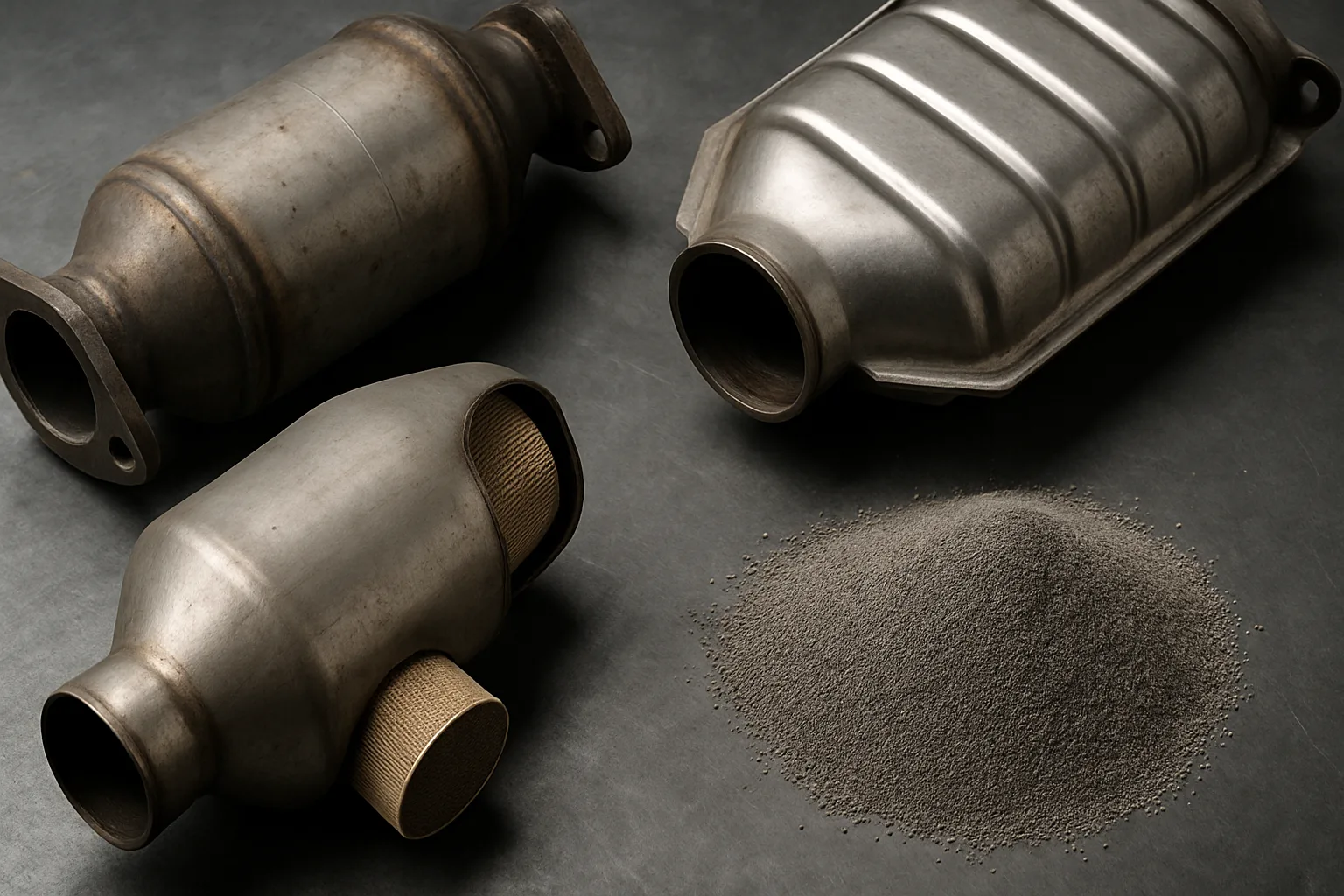
OEM (original equipment manufacturer) catalytic converters are built to meet strict emissions standards set by the EPA and CARB. To hit those targets, automakers load the ceramic substrate — the honeycomb core inside the converter — with a precise blend of platinum group metals (PGMs): platinum, palladium, and rhodium. These are the metals that drive scrap value. More PGMs means more money.
Aftermarket converters play a different game. They're designed to pass an emissions test at the lowest possible manufacturing cost. That means lower PGM loadings — sometimes dramatically lower. A legitimate OEM unit from a late-model V8 truck might carry two to three grams of combined PGMs. A cheap aftermarket replacement on the same vehicle might carry a fraction of that. When you're looking at palladium prices and rhodium prices running at historically significant levels, that loading difference translates directly into a gap in what a catalytic converter buyer will actually pay.
- OEM converters — higher PGM loading, substrate matched to the engine, typically larger and heavier ceramic core
- Direct-fit aftermarket converters (major brands, CARB-compliant) — moderate PGM loading, closer to OEM but still generally lower value
- Universal/cheap aftermarket converters — minimal PGM loading, often thin substrate, low scrap value regardless of vehicle type
If you're in Bakersfield selling a stack of cores, mixing OEM and aftermarket units without sorting them is one of the fastest ways to get an averaged-down quote that undervalues your best pieces.
How the Platinum Price Today Affects Your Converter's Actual Worth
Converter scrap value isn't a static number — it moves with the precious metals market every single day. Platinum, palladium, and rhodium are exchange-traded commodities, and their spot prices shift based on mining output, automotive production trends, industrial demand, and macroeconomic pressures. When you hear someone say "converter prices are up" or "buyers are slow right now," they're usually reacting to PGM market movements.
Here's why this matters for OEM vs. aftermarket: because OEM converters carry significantly more PGMs per unit, they amplify market movements in both directions. When the platinum price today spikes, the delta between a high-load OEM unit and a low-load aftermarket piece gets wider. When markets soften, OEM units still hold more residual value because there's more metal to recover. Aftermarket units, with their thin substrate loadings, have less cushion. Their scrap value can drop close to the value of the steel shell itself in a weak market.
This is exactly why serious catalytic converter buyers in California — from Los Angeles to Fresno to Bakersfield — are asking more questions about converter origin before making offers. Buyers who are connected to real assay data know the difference. You should too before you call anyone.
Disclaimer: Precious metal prices fluctuate daily. Always check current scrap converter prices before selling to ensure you're working with up-to-date market data.
How to Identify OEM vs. Aftermarket Before You Sell
You don't need to cut open every unit to know what you're dealing with. There are practical ways to sort your inventory before you approach any buyer.
Visual and physical indicators:
- Weight — OEM converters are generally heavier. A light converter on a truck platform is a red flag that you're looking at a cheap replacement unit.
- Markings — OEM units typically carry manufacturer codes, VIN-linked part numbers, or recognizable OEM supplier stamps (e.g., Tenneco, Faurecia, Eberspächer). Aftermarket units often have generic part numbers or store-brand labeling.
- Shell construction — OEM units tend to have more robust welds, thicker steel housings, and a more finished appearance. Budget aftermarket units often look stamped and thin.
- Size relative to vehicle — If a converter looks undersized for the engine displacement it came off, it's almost certainly aftermarket.
Platforms like SMASH use serial tracking and photo documentation tools that let sellers capture this information upfront — before a buyer even makes an offer. That documentation changes the conversation. Instead of a buyer guessing low to protect their margin, they're bidding on what's actually in front of them. If you want to find the best scrap converter prices today, accurate identification is step one.
Why a Catalytic Converter Auction Closes the OEM Premium Gap
Here's the problem with calling one local buyer and taking their offer: they have no incentive to tell you your OEM units are worth significantly more than your aftermarket pieces. A single buyer, working a phone call, will average your load or just quote you the weaker units to protect their margin. That's not a conspiracy — it's just how single-buyer markets work.
A catalytic converter auction changes the dynamic entirely. When multiple vetted buyers compete for the same inventory, the pricing pressure moves in the seller's direction. A buyer who specializes in high-load OEM cores from domestic trucks will outbid a general buyer on those units because they know exactly what they can recover from the substrate. That specialization — multiplied across a competitive bidding pool — is where OEM value actually gets recognized.
SMASH is built around this model. The platform connects sellers with vetted buyers who are actively competing for inventory. No subscription fees. No guessing. Competition helps reveal the actual market. If you're sitting on a mixed load in Bakersfield and you've been taking single-call quotes, you're almost certainly leaving money behind on your OEM pieces. Sell your scrap metal on the SMASH marketplace and let buyers compete for what your inventory is actually worth.
More buyers means better price discovery — especially when the spread between OEM and aftermarket value is as wide as it is in today's PGM market.
What Bakersfield and California Sellers Need to Know Right Now
California has some of the strictest emissions regulations in the country. That means a higher concentration of CARB-compliant OEM converters on vehicles that go through regular smog checks — and it means more replacement converters in the scrap stream as vehicles age out. For yards and individual sellers in Bakersfield and across California, that creates a mixed inventory reality: you're likely handling both high-value OEM cores and lower-value aftermarket replacements in the same loads.
Sorting matters here more than almost anywhere. California's active vehicle market — particularly the heavy pickup truck and commercial fleet segment around Bakersfield — means you've got access to some of the highest-value OEM converter types in North America. Late-model domestic trucks, California-spec SUVs, and diesel emissions control units can all carry significant PGM content. Treating them the same as a cheap aftermarket replacement is a straight-up loss.
The sell catalytic converter price you walk away with depends on how well you understand what you're selling before you sell it. California sellers who take the time to identify, document, and present their inventory through a competitive channel consistently see better outcomes than those who batch everything and take a single call. For practical guidance on this, read scrap converter pricing guides that break down value by type and market condition.
Selling Smart: Steps to Get the Best Price on OEM Converters
Whether you're a Bakersfield yard operator moving volume or an individual seller with a handful of cores, the process is the same. Better information before the sale equals better outcomes at the sale.
- Sort your inventory. Separate confirmed OEM units from suspected aftermarket replacements. Don't let buyers average them together.
- Document what you have. Photos, part numbers, vehicle origin, weight — anything that helps a buyer understand the substrate quality without guessing.
- Check current PGM prices. The platinum price today, combined with palladium and rhodium, tells you whether you're selling in a strong or weak market. Timing matters.
- Use a competitive channel. A platform like SMASH puts your documented inventory in front of multiple vetted buyers simultaneously. That competition surfaces real market value — especially on high-load OEM units.
- Don't batch if you don't have to. High-value OEM pieces sold as part of a low-value mixed load will get priced toward the average. Know when to separate.
The old way — one call, one number, take it or leave it — was never designed to surface the premium that quality OEM converters actually carry. The SMASH model is built for exactly this kind of inventory, where the spread between best and worst units is real and significant.
Frequently Asked Questions
Q: Why does the platinum price today affect what I get paid for my catalytic converter?
Catalytic converters contain platinum, palladium, and rhodium — precious metals recovered through smelting after the converter is scrapped. Buyers price converters based on the estimated PGM content of the substrate, so when the platinum price today moves up or down, scrap converter values move with it. OEM units, which carry more PGMs, amplify these market swings more than low-load aftermarket units.
Q: How do I find a reliable catalytic converter buyer in Bakersfield?
Start by looking for buyers who are transparent about how they price — buyers connected to real assay data and current PGM spot prices, not just flat-rate charts. Platforms like SMASH give Bakersfield sellers access to vetted buyers who compete for inventory, which means you're not relying on a single offer from a single yard. Always document your converters with photos and part numbers before approaching any buyer.
Q: Are aftermarket catalytic converters worth scrapping?
Yes, but their value is typically lower than OEM units — sometimes significantly lower. Cheap universal aftermarket converters may have minimal PGM content, meaning most of the scrap value comes from the steel shell rather than the substrate. High-quality direct-fit aftermarket converters from recognized brands carry more value, but still generally trail OEM units from the same vehicle platform.
Q: What is a catalytic converter auction and how does it work for sellers?
A catalytic converter auction puts your documented inventory in front of multiple vetted buyers who submit competing bids. Instead of accepting the first offer from one local buyer, you let the market determine value. SMASH runs this model — sellers list their converters with photos and details, buyers compete, and the seller chooses the best offer. No subscription fees; SMASH only wins when the seller wins.
Q: How can I tell if my catalytic converter is OEM or aftermarket before I sell it?
Check the weight (OEM units are typically heavier), look for manufacturer stamps or VIN-linked part numbers on the shell, and compare the unit's size to what's expected for the engine it came off. Generic part numbers, thin steel housings, and undersized cores are all indicators of aftermarket replacement units. When in doubt, photograph the converter and consult a buyer or pricing platform before accepting any offer.
If you're holding OEM converters and you've been getting averaged-down quotes, it's worth taking a closer look at how you're selling — not just what you're selling. The market for high-quality OEM cores is real, and competitive pricing channels exist to surface it. Find the best scrap converter prices today and get a free quote at best-scrap-converter-prices.com.
Stay current on PGM markets and scrap converter pricing by following SMASH on LinkedIn — practical industry updates, no filler.