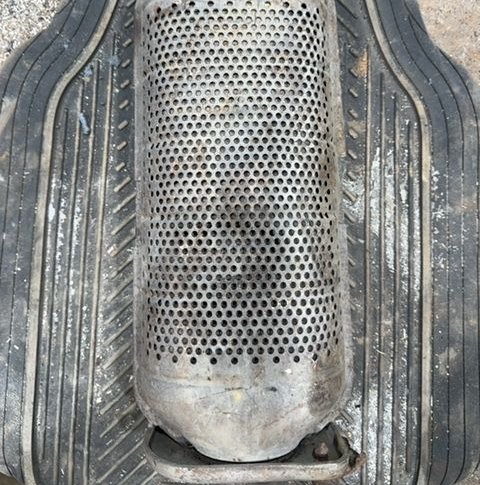
Most converter sellers in Miami have no idea why two converters that look identical can pay out completely differently. The answer isn't random — it comes down to assaying and smelting, the two processes that reveal exactly what's inside your cats and set the final payout number. Understanding how this pipeline works gives you real leverage when you're trying to lock down the best catalytic converter price Miami has to offer.
This isn't theoretical. If you're sitting on a load of cats, cores, or whole units and you're still relying on a single buyer's verbal quote, you're leaving money on the table. The assay and smelt process is where converter scrap value gets defined — and it's where transparency either exists or gets buried.
---What Assaying Actually Is — And Why It Matters for Your Converter Price
Assaying is the process of measuring the exact concentration of precious metals locked inside a catalytic converter's ceramic or metallic substrate. The three metals that drive all the value are platinum (Pt), palladium (Pd), and rhodium (Rh). The rhodium price today in particular can swing dramatically — rhodium has historically been the most volatile of the three, and small shifts in its market value translate directly into meaningful changes in what your converters are worth.
Here's how the assay process works in practice:
- De-canning: The outer steel shell gets cut away to expose the substrate — the honeycomb-structured ceramic or metallic core where the precious metals actually live.
- Crushing and milling: The substrate is ground into a fine, uniform powder. Homogeneity matters here. Inconsistent particle size means inconsistent sampling, which means your assay results won't accurately reflect the full load.
- Sampling: A statistically representative portion of the milled powder is pulled for analysis. This is where sampling methodology separates reputable processors from sloppy ones — a bad sample means a bad price, regardless of what your load actually contains.
- Acid digestion: The sample is dissolved in a strong acid solution (typically aqua regia — a mix of nitric and hydrochloric acid) that brings the platinum group metals into solution.
- Spectrometric analysis: The dissolved solution runs through ICP-OES (inductively coupled plasma optical emission spectrometry) or similar instruments that measure the exact concentrations of Pt, Pd, and Rh down to parts per million.
Those ppm numbers, multiplied against the total weight of your lot and cross-referenced against live precious metal spot prices, produce your recoverable value. That's your converter scrap value — not a guess, not a gut feeling, a calculated number.
The takeaway for sellers: assay methodology matters as much as metal content. You want transparency into sampling size, methodology, and who conducted the analysis. Platforms like compare scrap metal bids from verified buyers — SMASH connects sellers with vetted buyers who work from documented inventory and real assay data, not ballpark estimates.
---The Smelting Stage — Turning Powder Into Tradeable Metal
Once assaying confirms what's in the load, smelting is the step that physically recovers the platinum group metals from the substrate material. This is where the chemistry gets intense and where processing costs enter the picture — costs that directly affect your net payout.
Most large-scale converter processors use one of two primary smelting routes:
- Pyrometallurgical smelting: The crushed substrate is combined with a collector metal (often iron or copper) and melted at extreme temperatures — we're talking above 1,400°C. The platinum group metals, being dense and chemically compatible with the collector, migrate into the molten metal phase while the ceramic slag floats to the top and gets poured off. The resulting metal alloy then goes through refining to separate and purify the individual metals.
- Hydrometallurgical refining: Instead of heat, this route uses chemical leaching and solvent extraction to selectively pull Pt, Pd, and Rh out of solution. It's often more precise for certain substrate types but requires more steps and chemical management.
Most major North American processors use a combination — pyro to bulk-recover the metals, then hydro refining to clean and separate them to London Bullion Market Association (LBMA) or equivalent standards. The refined metals then get sold into commodity markets where the rhodium price today, along with platinum and palladium spot prices, determines their dollar value.
Processing fees, refining charges, sampling costs, and payable percentages all get deducted before you see a number. This is why knowing the full fee structure matters just as much as knowing what your cats assay at. A high gross assay value with opaque deductions can pay out worse than a moderate assay with a transparent, seller-friendly fee structure.
---How Assay Results Translate Into a Real Converter Scrap Value Quote
Here's where a lot of sellers get confused — and sometimes get burned. The assay result gives you a gross metal value. What you actually get paid depends on the payable percentage your buyer offers, the refining and processing fees they charge, and how quickly the settlement happens relative to the metal prices on the day of assay versus the day your load was priced.
A simplified example of the math flow:
- Your lot assays at a certain number of troy ounces of combined Pt/Pd/Rh across the full weight
- Those ounces get multiplied by current spot prices for each metal
- The buyer's payable percentage (often somewhere in the 70–90% range depending on terms and volume) is applied
- Processing, smelting, and refining fees are deducted
- The remainder is your settlement check
For sellers in Miami and across Florida, the market for catalytic converters is active and competitive — but only if you're putting your load in front of multiple buyers. One phone call to one local buyer gives you one number. That's not price discovery, that's luck.
This is exactly the problem SMASH was built to solve. Instead of one buyer setting the price in private, SMASH runs competitive auctions where vetted buyers compete for your load. More competition reveals the real market. You can find the best scrap converter prices today when buyers are competing rather than guessing low unopposed.
---What Converter Sellers in Miami Should Know About Lot Documentation
Whether you're running Miami scrap metal services at a mid-size yard or selling a one-time load of cores, documentation directly impacts your assay outcome and your negotiating position. Buyers who see well-documented inventory — VINs, serial numbers, photos, converter grades — price it more aggressively. Undocumented mixed loads invite conservative lowball offers.
Here's what strong converter lot documentation looks like:
- Photo documentation of each unit or batch, showing visible markings and physical condition
- VIN lookups or serial tracking where applicable — certain OEM converters carry known assay profiles
- Packing lists with unit counts, approximate weights, and grade breakdowns
- Separation of substrate types — ceramic honeycomb, metallic substrate, and foil-type units process differently and often carry different values
When you're selling in a market like Miami, where catalytic converter buyers near me within 5 mi is a real search people make every day, the difference between a documented load and a mystery bag is often the difference between a fair market price and whatever a buyer decides to offer in the moment.
SMASH's inventory tool handles this documentation work in a structured format that buyers can actually use to price competitively. You build the record once, and it follows the lot through the auction. That's how you get buyers competing on real data instead of guessing around it.
Want to dig deeper into how pricing and documentation intersect? Read scrap converter pricing guides that break down what documentation choices actually do to your bottom line.
---Why the Weekly Market and Spot Prices Always Come Back to Precious Metals
This week, as of November 1, 2026, precious metal markets continue to drive every converter quote you receive. Rhodium remains the most price-sensitive of the three platinum group metals — small movements in rhodium per troy ounce create outsized swings in converter values compared to platinum or palladium shifts of the same magnitude. This is because rhodium concentrations, while lower by weight in most converters, carry a multiplier effect when rhodium spot is elevated.
The practical implication: the best time to sell isn't necessarily when you have the most cats. It's when the precious metal market aligns with your readiness and your documentation is solid. Chasing a single buyer during a market peak still gets you one price. Running a competitive process through an auction platform means the market — not a single buyer's margin requirements — sets your number.
For sellers across Florida, including active yards in Miami, this weekly rhythm of spot price movement is the reality of the business. Check current scrap converter prices regularly and match your selling decisions to both your inventory readiness and the precious metal environment.
The old model — one buyer, one call, one offer — was never really price discovery. It was price acceptance. SMASH changes that dynamic by bringing multiple vetted buyers into a competitive format where your documented load gets seen, evaluated, and bid on by buyers who actually want to win the work.
---Frequently Asked Questions
Q: How long does the assay and settlement process take for a catalytic converter load?
Timelines vary by processor, but most full assay and settlement cycles run between 5 and 20 business days after the processor receives your material. Some buyers offer advance payments against estimated assay values while the full process completes. Always clarify the settlement timeline and terms before you ship your load.
Q: Does the rhodium price today directly affect what I get paid for my converters?
Yes — directly and immediately. Rhodium is one of the three platinum group metals (alongside platinum and palladium) that determines converter scrap value. When rhodium spot prices rise, the value of converters with higher rhodium content rises proportionally. Most processors price your lot against the spot prices on or near your settlement date, so market timing matters.
Q: What's the best catalytic converter price I can realistically expect in Miami?
There's no single universal answer — converter values vary by make, model, substrate type, and current precious metal spot prices. The best approach is to document your load properly, know what types of converters you're selling, and put that load in front of multiple buyers who compete for it. Competitive bidding through platforms like SMASH gives you real market discovery rather than a single buyer's estimate.
Q: How do I find catalytic converter buyers near me in Miami?
Local buyers exist across Miami and throughout Florida, but proximity alone shouldn't drive your decision. A buyer five miles away offering a single non-competitive quote can easily pay less than a vetted remote buyer competing in an auction format. Use platforms like SMASH to access verified buyers across North America while still being able to choose who you work with.
Q: Does proper documentation actually change what I get paid for my converter load?
It can — significantly. Buyers price undocumented or poorly described loads conservatively because they're managing unknown risk. When you provide photos, serial numbers, VIN data, and accurate grade breakdowns, buyers can price more aggressively because they know what they're bidding on. Better documentation typically means more confident, competitive bids.
---If you're selling converters in Miami or anywhere across Florida and you're still working off one buyer's quote, you don't have a price — you have a starting point. Get your load documented, understand what your cats actually contain, and put them in front of buyers who have to compete for the business. That's how you find the real market. Start by visiting best-scrap-converter-prices.com to get a free quote and see what competitive pricing actually looks like for your load.
Disclaimer: Catalytic converter and precious metal prices fluctuate daily based on commodity markets. All pricing information should be verified against current spot rates at the time of sale. Nothing in this article constitutes a guaranteed price or offer.
Follow SMASH on LinkedIn for weekly market updates, precious metal price movements, and practical insights for converter sellers and scrap metal professionals across North America.