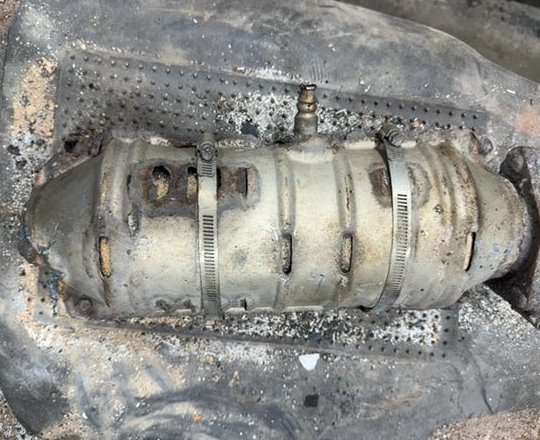
Catalytic Converter Theft Is Costing Legitimate Recyclers — Here's the Real Impact
Catalytic converter theft doesn't just hurt car owners. It's quietly strangling the legitimate recycling market — driving up scrutiny, killing buyer trust, and making it harder for honest yards to get fair catalytic converter scrap value for converters they've sourced legally. If you're in the business of recycling converters the right way, this is your problem too.
Las Vegas has seen its share of converter theft headlines. Nevada, like most Sun Belt states, logs consistent theft activity year-round — partly because of climate (vehicles sit outside), partly because of vehicle mix (trucks and SUVs with high-value cats are everywhere). But the ripple effect on legitimate recyclers is a story that rarely gets told.
This piece breaks it down: how theft distorts the market, what it costs compliant sellers, and how platforms built around transparency are starting to push back.
How Catalytic Converter Theft Distorts Scrap Converter Prices
When stolen converters flood the market, they don't disappear — they move through secondary channels and eventually get processed somewhere. That creates a pricing problem for everyone operating legitimately. Buyers tighten up. Documentation requirements increase. Some buyers stop accepting converters altogether without ironclad provenance records.
That means even if your yard is running a clean operation — proper BOLs, documented sourcing, photo records on every unit — you're still negotiating against market skepticism caused by theft activity you had nothing to do with. It's a tax on compliance. Honest sellers absorb the cost while the bad actors move on.
The precious metals inside converters — platinum, palladium, rhodium — are priced globally. Palladium price today fluctuates with broader market forces: automotive demand, mining output, geopolitical supply pressure. Theft doesn't change those fundamentals. But it changes how buyers behave at the local level, and that friction has a real dollar cost when you're trying to sell a load competitively.
The Documentation Problem: Why Stolen Units Undermine Converter Scrap Value for Everyone
Here's the mechanics of the problem. Legitimate recyclers build value through documentation. A converter with a VIN link, a clear acquisition record, and serial tracking is worth more to a serious buyer than an undocumented unit — because it's defensible. It won't create legal exposure. It's clean.
Stolen converters almost never have that paper trail. They enter the market as anonymous units, which means buyers dealing in that space price everything at a discount to offset unknown risk. When that discount mentality bleeds into the broader market, it hits legitimate sellers too. Buyers get cautious. Offers come in lower. The spread between what you should get and what you're actually offered widens.
The right response isn't to accept that discount — it's to document aggressively and find buyers who reward it. That's where tools like VIN lookup, serial tracking, and photo documentation at the unit level start earning their keep. A well-documented load tells a different story to a vetted buyer than a mystery pile of anonymous cats. If you want to find the best scrap converter prices today, documentation is your first competitive advantage.
What This Looks Like on the Ground in Las Vegas
Las Vegas is a real-world example of what happens when theft activity meets a legitimate recycling market that's trying to operate professionally. Nevada has implemented dealer record-keeping requirements — sellers must provide identification, and transactions need to be logged. Those rules exist for a reason. But they also create friction for compliant yards when buyers lump everyone together out of caution.
Local recyclers in the Las Vegas area who've invested in proper intake processes — photos on every unit, documented sources, clean chain of custody — find themselves competing on price against operations that don't carry that overhead. It's a real competitive disadvantage in the short run, even though it's the right long-term play.
The solution isn't to cut corners to match those operations. It's to find buyers who can actually distinguish between the two — and pay accordingly. Las Vegas scrap metal services have evolved to meet this demand, connecting documented sellers with buyers who value compliance over convenience. If you're a compliant recycler in Nevada, the market you want to reach is the one that values what you've built.
How Transparency Platforms Are Changing the Game for Legitimate Sellers
The traditional model for selling converters — one call, one buyer, one offer, take it or leave it — was already broken before theft became a major market distortion. Add in the increased scrutiny that theft drives, and that model becomes actively harmful to compliant sellers. You're accepting a single number from a buyer who may or may not be discounting you for risk that has nothing to do with your operation.
Competitive auction platforms are changing that dynamic. When you sell catalytic converters online through a vetted marketplace, your documented load reaches multiple buyers simultaneously. Competition between buyers does the pricing work that a single cold call never could. More eyes on your load means better price discovery — especially when your documentation is solid and buyers can see it.
SMASH is built exactly for this. The platform connects sellers with vetted buyers, runs competitive auctions on documented loads, and handles auto-invoicing — no guessing, no single-buyer leverage. If you want to find the best price for your scrap on SMASH, the process is built around transparency from intake to close. That's the environment where properly documented converter inventory gets priced correctly.
And because SMASH only wins when the seller wins — no subscription fees, commission-based model — there's no incentive to pad timelines or obscure pricing. That alignment matters when you're trying to move loads efficiently in a market that's already complicated by theft-driven skepticism.
What Compliant Recyclers Should Do Right Now
If you're sourcing and selling converters legitimately, the theft problem is real but manageable. Here's what actually moves the needle:
- Document everything at intake. Photos of the unit, serial numbers where visible, VIN links where applicable. Build the paper trail that proves your load's legitimacy before a buyer ever asks.
- Track by serial number, not just by lot. Unit-level tracking creates granular defensibility. If a question comes up on any individual converter, you have an answer.
- Work with buyers who are vetted. Not every buyer in the market is equipped to value compliant inventory properly. Find the ones who are — they'll pay for documentation because it protects them too.
- Use competitive auctions, not single-buyer quotes. The single-call model gives all the pricing leverage to one party. Competition changes that math entirely.
- Stay current on precious metal markets. Palladium price today, platinum and rhodium movements — these drive converter scrap value. Know what your load is worth before you negotiate.
- Know Nevada's dealer regulations and stay ahead of them. Requirements will tighten as theft enforcement evolves. Compliance now is protection later.
Yards that do this work will be positioned to capture the price premium that documentation supports — especially as the market continues to distinguish between compliant and non-compliant inventory. To check current scrap converter prices and understand what your documented load could realistically bring, start with current precious metal benchmarks and work from there.
The Long View: Theft Enforcement and Market Stabilization
Enforcement has been accelerating. Federal pressure on secondary metal dealers, state-level transaction reporting requirements, and industry-driven certification programs have all stepped up in 2026. The direction of travel is clear — the market is moving toward accountability, and operations built on documentation will be better positioned as that happens.
That's not wishful thinking. It's structural. When compliance becomes the baseline, the discount that non-compliant inventory currently undercuts disappears. The legitimate market gets its margin back. Buyers who've been discounting everything out of caution start pricing the difference between a clean, documented load and an anonymous pile of units.
For recyclers in Las Vegas and across Nevada, this is a medium-term opportunity. The infrastructure — inventory tools, VIN lookup, photo documentation, competitive auction access — exists now. The yards that build these systems into their operations today aren't just managing theft-related risk. They're building a competitive advantage that compounds as enforcement tightens.
If you want to understand where the market is heading and how to position your operation, read scrap converter pricing guides that track precious metal markets and buyer behavior in real time. Information is leverage. Use it.
The bottom line: catalytic converter theft is a problem you didn't create and can't solve alone. But you can make sure your operation isn't collateral damage. Document your inventory, use competitive platforms, and work with buyers who know the difference. If you're ready to get accurate pricing on a documented load, best-scrap-converter-prices.com is where compliant sellers start — free quote, no obligation, no guesswork.
Frequently Asked Questions
Q: How does catalytic converter theft affect the scrap value I get for my legitimate inventory?
Theft drives buyer caution across the board, which can compress offers even for well-documented loads. Buyers who can't quickly verify provenance often discount preemptively to offset risk. The counter is strong documentation — photo records, serial tracking, and VIN links — which gives vetted buyers the confidence to price your load at or near full market value.
Q: What drives catalytic converter scrap value in 2026?
The three precious metals inside converters — platinum, palladium, and rhodium — are priced on global commodity markets and fluctuate daily. Vehicle make, model, and engine type also matter significantly, since converter size and metal loading vary widely. A high-value truck cat can be worth multiples of a standard economy car unit.
Q: Is it legal to sell catalytic converters in Las Vegas, Nevada?
Yes, selling scrap catalytic converters is legal in Nevada, but dealers are required to maintain transaction records and verify seller identification. Regulations have tightened in recent years in response to theft activity. Working with compliant platforms and keeping thorough intake documentation keeps you on the right side of current rules.
Q: How do I sell catalytic converters online and get a fair price?
The key is reaching multiple vetted buyers simultaneously rather than taking the first single-buyer offer. Platforms like SMASH run competitive auctions on documented converter inventory, which drives better price discovery. Clean documentation — photos, serial numbers, sourcing records — makes your load more attractive to serious buyers and supports stronger offers.
Q: Does palladium price today directly affect what I get for my scrap converters?
Yes, directly. Palladium is one of the primary metals recovered from catalytic converters, and its spot price is a key input in what processors and buyers are willing to pay for your load. Monitoring palladium, platinum, and rhodium markets gives you a benchmark before you enter any pricing conversation — and makes it much harder for a buyer to lowball you.
Follow SMASH on LinkedIn for industry updates, precious metal market insights, and scrap recycling news across North America.
```