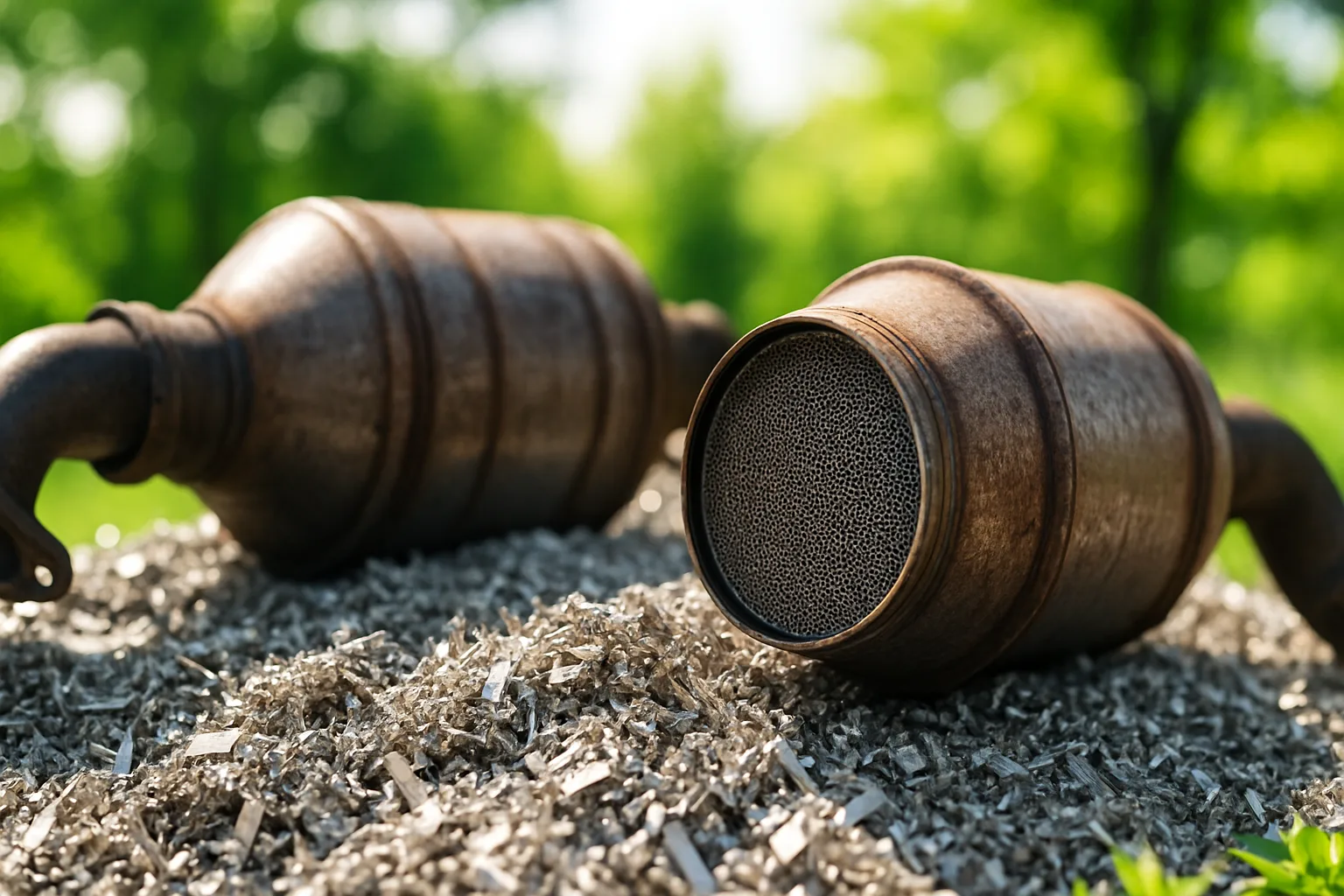
Most converter sellers leave money on the table — not because they have bad inventory, but because they can't read what's stamped on it. That serial number on the shell of your catalytic converter isn't random. It's a map to your money. Learn to read it, and you'll find the best scrap converter prices today instead of guessing at them.
If you're in Syracuse, New York and pulling converters off vehicles — whether from a salvage yard, a fleet, or shop trade-ins — this guide is for you. Understanding serial numbers is the first step to selling smarter. And in 2026, with precious metal markets moving fast, smart is the only way to play it.
Why the Serial Number Is the Most Important Thing on a Converter
Buyers don't price converters by weight alone. They price them by what's inside — specifically, how much platinum, palladium, and rhodium is packed into the ceramic substrate. That data is tied directly to the serial number stamped or etched onto the converter's body or end pipe.
Every manufacturer uses a different coding system. A Ford converter has a different serial format than a Toyota or a BMW. But they all serve the same purpose: they tell a trained buyer exactly which vehicle that unit came from, which generation of emissions hardware it contains, and roughly what the precious metal loading looks like. Without that number, buyers are guessing. When buyers guess, they guess low.
This is why experienced yards and platforms that sell catalytic converters online always document the serial before anything else. It's the foundation of accurate pricing — not an afterthought.
Where to Find the Serial Number and What It Looks Like
Serial numbers aren't always easy to find, especially on older or corroded units. Here's where to look depending on the converter type:
- OEM converters: Usually stamped directly on the outer shell or heat shield. Look for a raised or recessed alphanumeric string — often 5 to 12 characters long.
- Aftermarket converters: Often printed on a sticker or laser-etched near the inlet pipe. These typically have lower precious metal content and command lower scrap converter prices.
- End-pipe serials: Some manufacturers stamp the number on the flanged end of the pipe rather than the body. Check both ends before assuming there's no number.
- Foil or plate serials: Certain GM and Ford units have a small metal plate riveted to the shell. This plate holds the serial and can sometimes be separated from the unit — keep them together.
If the number is corroded or worn, don't give up. A wire brush and decent lighting can reveal a lot. Some yards in the New York region use UV light to read partially obscured serials on older units. It sounds like overkill until you realize it can mean the difference between a $40 and a $400 quote on a single cat.
How to Decode a Catalytic Converter Serial Number
There's no single universal decoding system. But there are patterns. Once you understand the logic, reading serials becomes faster and more intuitive.
Here's how most OEM serial structures break down:
- Manufacturer prefix: The first 1-3 characters often identify the OEM or the Tier 1 supplier (e.g., Delphi, Tenneco, Faurecia). This tells you who built the unit, not just who it was installed in.
- Application code: The middle section ties the unit to a specific vehicle platform — engine size, model year range, and emissions standard. This is where most of the pricing data lives.
- Substrate identifier: Some serials include a character or suffix that indicates substrate type (ceramic vs. metallic foil) and cell density. Higher cell density generally means higher platinum group metal (PGM) loading.
- Position code: Many vehicles have two or more converters — a front (close-coupled) unit and a rear (underfloor) unit. The serial often includes a designator for this. Front converters typically carry more PGM content and fetch a higher catalytic converter price.
Aftermarket units are trickier. Brands like Magnaflow, Walker, and Eastern use their own part numbering systems, and those numbers cross-reference to their own databases — not OEM specs. If you're trying to sell catalytic converters online, aftermarket units should always be disclosed as such. Misrepresenting an aftermarket as OEM will get you flagged fast in any reputable B2B scrap metal marketplace.
Serial Numbers, Precious Metal Markets, and Why the platinum price today Matters
Here's where it gets real. The converter scrap value tied to a specific serial isn't fixed. It moves with the market. The platinum price today, palladium spot, and rhodium levels all affect what a buyer will pay — even for the same serial number on the same day versus a week later.
This is why blanket price lists (including those circulating internationally — think catalytic converter price list formats from overseas markets) are dangerous to rely on. They're snapshots. They go stale fast. A price published Monday may be meaningfully different by Friday if PGM markets shift.
What you want is a pricing mechanism that responds to live market data, not a static sheet. That's exactly what platforms like the SMASH scrap metal auction marketplace are built around. When vetted buyers compete on real inventory with documented serials, the price discovery reflects actual market conditions — not someone's best guess from last week.
For yards in Syracuse and across New York, that dynamic pricing access matters. You're not operating in isolation. Your converters compete against inventory from across North America. Knowing your serials — and presenting them clearly — is what gets you competitive bids instead of lowball offers.
Documenting Serials the Right Way Before You Sell Catalytic Converters Online
Good documentation isn't just about accuracy. It's about speed and trust. Buyers move faster on inventory that's properly presented. Here's the workflow that separates organized sellers from the ones who constantly chase their own quotes:
- Photograph the serial clearly: Natural light, close-up, in focus. If the unit has multiple stamps, photograph all of them. Blurry photos waste everyone's time.
- Record the VIN where possible: If you know the source vehicle, log the VIN alongside the converter serial. VIN data confirms application and adds credibility to your listing. Platforms like SMASH support VIN lookup for exactly this reason.
- Note the position: Front or rear? Bank 1 or Bank 2? This detail directly affects converter scrap value.
- Flag damaged or de-canned units separately: A converter that's been crushed, cut open, or had its substrate removed needs to be listed differently. Misrepresenting condition is the fastest way to lose buyer trust.
- Group by serial type when possible: Organizing your inventory by serial family before listing helps buyers assess volume and respond faster. It also makes your listings look professional.
Once your documentation is solid, you're ready to check current scrap converter prices and put your inventory in front of buyers who can actually compete for it. That's where the real difference shows up in your settlement.
What Buyers Actually Do With Your Serial Number
When a buyer receives your serial, they run it through a reference database — either proprietary or industry-standard — that maps that serial to a specific substrate spec. From there, they apply current PGM spot prices and their processing margin to generate a bid.
The better your documentation, the less uncertainty they're pricing into their offer. Uncertainty always costs the seller. A buyer who can't confirm a serial number will either pass or bid defensively. A buyer who has a clear photo, a confirmed application, and a documented condition grade can bid aggressively because they know what they're buying.
This is why the best converter price almost always goes to the best-documented load — not necessarily the largest load. You can read scrap converter pricing guides and learn strategies, but at the end of the day, your documentation is your negotiating leverage.
For sellers in the Syracuse area and across New York, the takeaway is straightforward: treat your serial documentation like a legal document. It's the basis of every price you'll receive.
Frequently Asked Questions
Q: Can I sell catalytic converters online without knowing the serial number?
You can, but you'll likely get a lower offer. Without a confirmed serial, buyers can't accurately price the PGM content and will bid conservatively to offset their risk. Taking the time to document serials properly almost always results in stronger quotes.
Q: Are serial numbers the same as OBD codes or part numbers?
No. OBD codes relate to emissions diagnostics, not the physical converter unit. Part numbers and serial numbers can overlap on some OEM units, but they serve different functions. The serial stamped on the converter body is what scrap buyers use for pricing — not the diagnostic code from a scan tool.
Q: Where can I find a reliable catalytic converter price list to compare offers?
Static price lists (including international formats) are useful for rough reference only — they go stale quickly as PGM markets move. For real-time pricing, platforms like SMASH use competitive auctions with vetted buyers to reflect actual market conditions. That's a more reliable benchmark than any published list.
Q: I'm in Syracuse — are there local regulations around selling used catalytic converters?
New York State has specific secondary metal dealer regulations that apply to converter sales, including record-keeping requirements and restrictions on anonymous cash transactions. Always verify current compliance requirements with your local authority or legal counsel before selling. Reputable online platforms that facilitate B2B transactions typically require seller verification as part of their onboarding process.
Q: Does the platinum price today actually affect what I get paid for a single converter?
Yes — directly. Converter scrap value is calculated based on the estimated PGM content in that specific serial and the current spot prices for platinum, palladium, and rhodium. When the platinum price today is up, high-platinum units are worth more. When rhodium spikes, certain European-spec converters become significantly more valuable. Market timing matters.
Disclaimer: Catalytic converter prices fluctuate daily based on precious metal spot markets and buyer demand. All pricing information in this article is general in nature. Always check current rates before making selling decisions.
If you've been pulling converters without documenting serials, now's the time to change that habit. The difference between a rushed listing and a properly documented one can be significant — and in this market, that gap adds up fast. Whether you're running a yard in Syracuse, managing a fleet operation across New York, or liquidating a one-time haul, the process is the same: document the serial, confirm the condition, and put it in front of competitive buyers. Find the best scrap converter prices — get a free quote at best-scrap-converter-prices.com.
Follow SMASH on LinkedIn for industry updates, PGM market insights, and scrap metal pricing trends delivered straight to your feed.