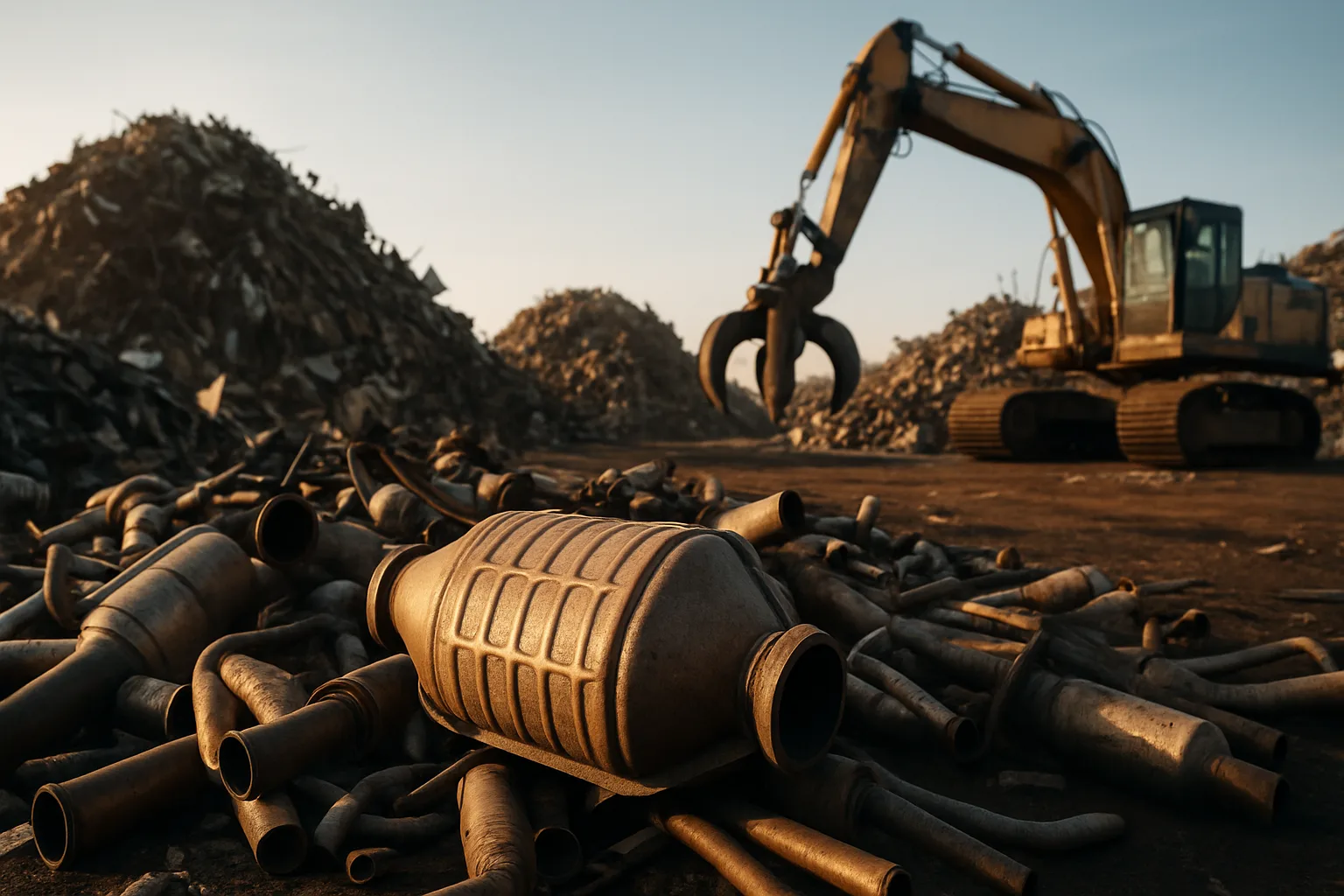
Catalytic Converter Theft Is Costing Legitimate Recyclers Real Money
Catalytic converter theft in the U.S. surged dramatically in the early 2020s — and while enforcement has tightened since, the ripple effects on the legitimate recycling market are still being felt in 2026. If you're trying to get the best catalytic converter price Denver has to offer, you're operating in a market shaped — and distorted — by theft. Understanding how that distortion works helps you protect your margins and make smarter decisions about where and how you sell.
This isn't a crime story. It's a market story. And if you're a recycler, a yard operator, or a private seller with a stack of converters sitting in your shop, the distinction matters.
How Theft Contaminates the Scrap Converter Market
When stolen converters flood local markets, they don't disappear cleanly. They enter the supply chain — sometimes through unsuspecting buyers, sometimes not. Either way, they drag the entire market down with them. Buyers tighten up. Compliance costs rise. Yards start requiring more documentation on every unit just to protect themselves legally.
That paperwork burden falls hardest on legitimate sellers. You show up with a clean load, proper bills of lading, and documented serial numbers — and you still get treated like a suspect because the buyer down the street got burned last month by a stolen lot. The scrap converter prices you're quoted reflect that risk premium, whether you earned it or not.
Here's what the theft cycle actually does to the recycling market:
- Depresses offered prices — buyers hedge against legal exposure by lowballing everyone
- Narrows the buyer pool — some buyers exit the market entirely to avoid compliance risk
- Inflates documentation requirements — more forms, more delays, more friction per transaction
- Creates price opacity — when the market is murky, it's harder to know if you're getting a fair catalytic converter price
- Erodes trust — even long-term seller-buyer relationships get strained when theft is widespread
The result: legitimate recyclers in Denver and across Colorado end up subsidizing the cost of theft they had nothing to do with.
Platinum Group Metals and Why Thieves Target Converters
To understand the theft problem, you need to understand what's actually inside a catalytic converter. The target is the platinum group metals — platinum, palladium, and rhodium — embedded in the ceramic or metalite substrate. These metals are among the most valuable commodities on earth, and their prices fluctuate daily based on mining output, industrial demand, and currency markets.
Platinum group metals uses span far beyond auto parts. Platinum is used in fuel cells, medical devices, and jewelry. Palladium is critical for internal combustion engine emissions control globally. Rhodium — the rarest of the three — is used almost exclusively in three-way catalytic converters, which is exactly why rhodium price today remains a key benchmark for converter scrap value. When rhodium spiked above $20,000 per troy ounce in the early 2020s, theft rates exploded in response. Even at more normalized 2026 levels, the metal content in a single converter can represent meaningful money.
That's the fundamental problem. The material value is real, the units are easy to remove (minutes with a reciprocating saw), and the resale path — historically — was easy to obscure. Legislative crackdowns in many states, including Colorado, have added requirements around seller ID, vehicle documentation, and holding periods. But enforcement is uneven, and the secondary effects on legitimate sellers persist.
What the Denver Market Looks Like Right Now
Denver sits in a unique position. It's a major metro with significant vehicle density, active recycling infrastructure, and a relatively mobile population — all factors that influence both theft rates and legitimate converter volume. Colorado's legislative environment has pushed buyers toward stricter documentation standards, which is good for the long run but adds friction in the short term.
For sellers trying to find catalytic converter buyers near me within 20 mi of Denver, the local market can feel frustratingly inconsistent. One buyer quotes you one number. Another quotes you something 30% lower on the same unit. A third won't touch certain serial numbers without additional paperwork. This fragmentation isn't random — it reflects different risk tolerances, different buyer networks, and different downstream processing relationships.
The best way to cut through that noise is competition. When multiple vetted buyers see the same load simultaneously, the price discovery process actually works. You're not guessing what your converters are worth — you're finding out. That's where platforms like SMASH Scrap — where verified buyers bid on your metal change the dynamic entirely. Instead of one phone call to one buyer, your load goes in front of multiple buyers who compete for it. Scrap metal prices today become a starting point for a real transaction, not a ceiling that one buyer sets unilaterally.
If you're looking for Denver scrap metal services that actually reflect current market rates, documentation and transparency are your best tools — both for compliance and for getting paid fairly.
How Documentation Protects Your Price — Not Just Your Liability
Here's a shift in perspective that matters: documentation isn't just a legal protection. It's a price lever. Buyers pay more when they're confident in what they're buying. A converter with a clear VIN trace, matching serial numbers, a proper packing list, and photo documentation is a different product — in the buyer's mind — than an undocumented unit of the same physical spec.
That confidence gap translates directly into the offer you receive. Documented inventory reduces the buyer's due diligence burden, lowers their compliance risk, and speeds up their downstream processing. They pass some of that value back to you in the form of a better price. This is especially true for higher-value units where the spread between a documented and undocumented offer can be significant.
Practical documentation steps that improve your converter scrap value:
- Photograph every unit — top, bottom, and serial number visible
- Record the serial number or OEM code for each converter
- Match converters to a vehicle record where possible (VIN, year, make, model)
- Maintain a proper packing list for any load you're moving
- Keep purchase records showing provenance — when you got it, from whom, for how much
This isn't bureaucratic busywork. It's the difference between getting a bottom-of-market offer from a cautious buyer and getting a competitive offer from a buyer who can verify what they're purchasing. Platforms that use serial tracking and photo documentation — like SMASH — make this process systematic rather than ad hoc. You check current scrap converter prices against documented inventory, and the transaction has a foundation both parties can trust.
Getting the Best Converter Price Despite Market Disruption
Theft and its downstream effects aren't going away overnight. But you don't have to absorb those costs passively. The sellers who consistently get the best converter price in disrupted markets share a few common practices — and none of them involve luck.
They document everything. They don't call one buyer and accept the first number they hear. They understand that rhodium price today, palladium futures, and platinum spot prices all move daily, and they time transactions with at least a basic awareness of where the market is. And they use competitive platforms rather than single-buyer relationships to test what the market will actually pay.
If you're in Denver or anywhere in Colorado, the path to the best catalytic converter price Denver recyclers can realistically access runs through transparency — yours and the buyer's. You can read scrap converter pricing guides to sharpen your understanding of how PGM values flow into converter prices, but the foundational move is simple: stop selling blind to a single buyer, and start selling in a competitive market.
The theft problem hurt the market. Transparency and competition are what fix it — one documented, verified, competitively priced load at a time. When you're ready to find out what your converters are actually worth, find the best scrap converter prices today and put real competition to work for you.
Disclaimer: Catalytic converter prices fluctuate daily based on platinum, palladium, and rhodium spot markets. Always check current rates before selling.
Frequently Asked Questions
Q: How does catalytic converter theft affect the price I get as a legitimate seller in Denver?
Theft increases buyer risk and compliance costs across the board. Buyers respond by tightening documentation requirements and sometimes lowering offered prices to hedge that risk — even for legitimate sellers with clean loads. The best way to counteract this is thorough documentation and selling through competitive platforms where multiple buyers see your inventory.
Q: What documentation do I need to sell converters legally in Colorado?
Colorado requires sellers to provide identification and, in many cases, documentation of vehicle ownership or purchase provenance. Requirements vary by buyer and transaction size. Serial number recording and photo documentation are increasingly standard. Always confirm current state and local requirements with your buyer before the transaction.
Q: How do I find the best catalytic converter price in Denver right now?
Get multiple offers. Single-buyer pricing gives you one data point — competitive platforms give you a market. Document your units thoroughly with photos and serial numbers, understand the current platinum group metal spot prices (especially rhodium), and use a platform like SMASH that brings vetted buyers into competition with each other rather than relying on one relationship.
Q: Does rhodium price today actually affect what I get paid for my converters?
Yes — directly. Rhodium is the highest-value PGM in most catalytic converters, and its spot price significantly influences what buyers are willing to pay for units that contain it. When rhodium prices are elevated, converter scrap values rise. When they drop, offers follow. Checking current PGM spot prices before you sell gives you a meaningful negotiating baseline.
Q: What makes SMASH different from calling a local scrap buyer in Denver?
A local buyer gives you one number based on their margin requirements. SMASH puts your load in front of multiple vetted buyers who compete against each other, which is how real price discovery works. More competition generally means better outcomes for sellers — and with full documentation support built in, the transaction is cleaner for everyone involved.
Stay current on scrap metal market trends and converter pricing insights — follow SMASH on LinkedIn for industry updates, PGM market moves, and practical guidance for recyclers across North America.