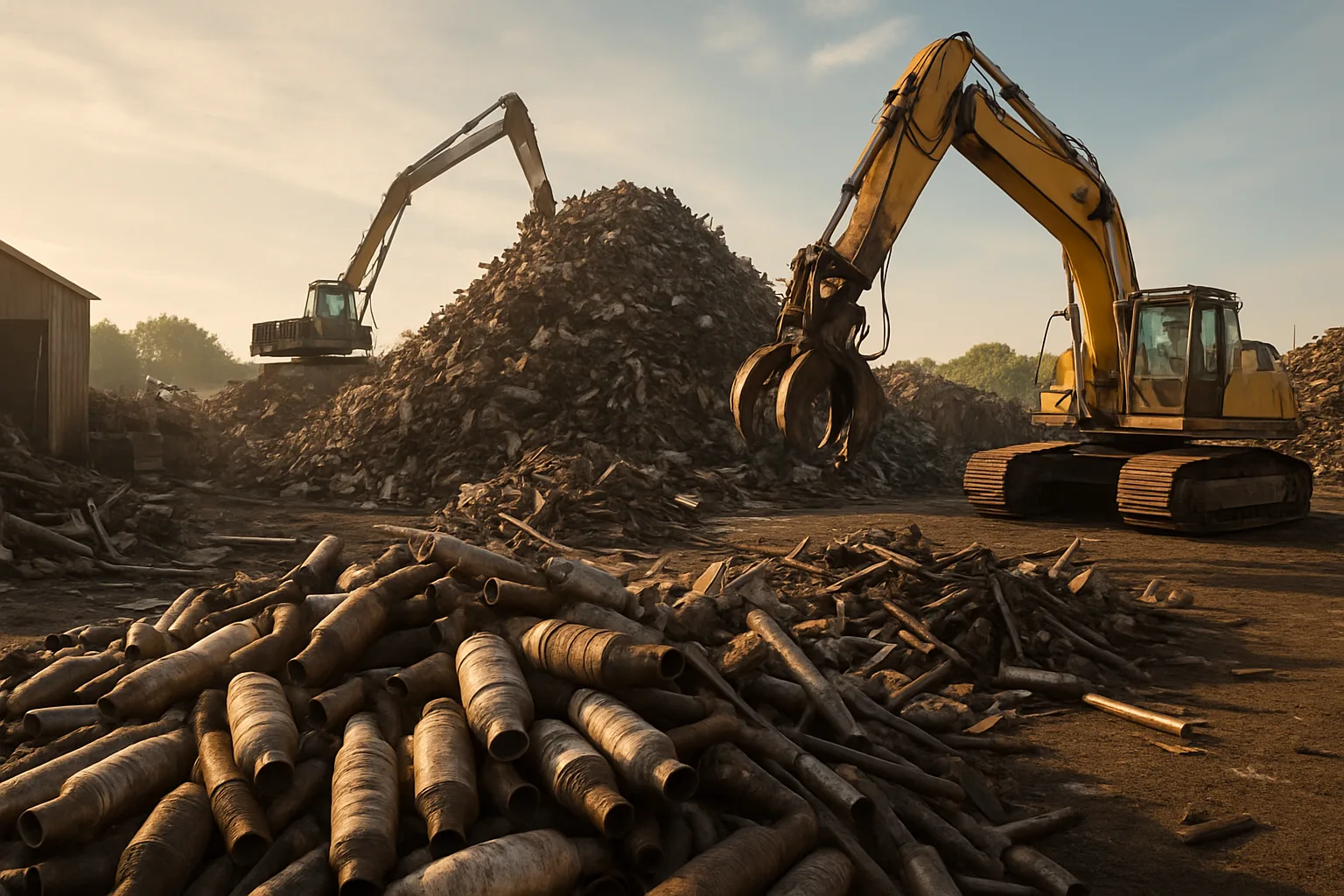
Most converter sellers have no idea what happens between the moment they hand over a cat and the moment they get paid. That gap — the assay-to-settlement process — is where your money gets made or lost. Understanding how catalytic converter assaying and smelting works gives you leverage. It helps you ask the right questions, spot weak offers, and know when you're actually getting a fair price for your catalytic converter scrap value.
This isn't just chemistry class. It's the backbone of every price quote you receive. Let's walk through the full process — from your converter leaving the yard to precious metal settlement — so you know exactly what you're selling and why the numbers move the way they do.
What's Actually Inside a Catalytic Converter Worth Money
Catalytic converters contain a ceramic or metalite substrate coated with platinum group metals (PGMs): platinum, palladium, and rhodium. These metals act as catalysts in the exhaust system, breaking down harmful gases before they exit the tailpipe. When the converter reaches end of life, those metals are still there — and they're still valuable.
The mix of PGMs varies by vehicle type, model year, and manufacturer. A domestic full-size truck cat typically carries different loadings than a foreign catalytic converter from a compact import. That's why two converters that look nearly identical on the outside can fetch wildly different prices. The substrate type matters too — ceramic substrates tend to yield differently than metalite (foil) substrates during processing.
- Platinum (Pt): Used more heavily in diesel converters
- Palladium (Pd): Dominant in gasoline vehicle converters — palladium price today directly influences your payout
- Rhodium (Rh): Present in smaller quantities but historically commands the highest price per troy ounce of the three
Because palladium and rhodium prices swing hard, your converter's value isn't fixed. A load worth one figure in January can be worth a different figure by March. Real-time market awareness isn't optional — it's how you protect your margins.
How Catalytic Converter Assaying Works: The Lab Process Explained
Assaying is how the actual PGM content of your converters gets measured. This is the scientific step that determines exactly how much platinum, palladium, and rhodium is present — and therefore what settlement number you're entitled to receive.
Here's the process in order:
- Decanning: The outer steel shell is cut away to expose the substrate inside. This is typically done mechanically in volume operations.
- Crushing and Grinding: The substrate is reduced to a fine powder. This ensures the PGMs are evenly distributed throughout the sample — accuracy depends on homogeneity.
- Sampling: A representative sample is pulled from the powdered batch. This is a critical step. A poorly pulled sample skews the entire assay result.
- Fire Assay or ICP Analysis: The sample is either subjected to fire assay (a metallurgical process using high heat and fluxes) or dissolved in acid and analyzed using Inductively Coupled Plasma (ICP) spectrometry. ICP has become the industry standard for precision.
- Results and Settlement: The lab returns gram-per-ton or parts-per-million values for each PGM. Those values are applied against the lot weight to calculate total recoverable metal, which is then priced against spot markets.
This process takes time — typically several weeks from the point the material arrives at a processor. That's why settlement timelines matter when you're evaluating buyers. Faster settlement windows mean you're priced closer to current markets. Slower windows mean more price exposure.
Smelting: Turning Converter Powder Into Recoverable Metal
Once the substrate is crushed and sampled, it gets smelted. This is the step where PGMs are physically separated from the ceramic or metalite matrix and concentrated into a form that can be refined into pure metal.
The smelting process uses high-temperature furnaces to melt the material with specific flux compounds. PGMs have an affinity for certain metals — typically copper or lead — and during smelting they concentrate into what's called a collector or button. The waste slag floats to the top and is separated. The collector, now rich in platinum, palladium, and rhodium, moves to the refinery for final separation and purification.
Large-scale processors handle hundreds of thousands of converters per year. The economics of smelting are volume-driven — which is why the price you receive as an individual seller or mid-sized yard often runs through a chain: local buyer → aggregator → primary processor → refinery. Every link in that chain takes a margin. The fewer links between you and a buyer with direct processor relationships, the better your net return tends to be.
For sellers in the Midwest — including scrap yards and individual sellers in St. Paul and across Minnesota — working with platforms that have vetted buyer networks helps compress that chain. When you find the best scrap converter prices today, you're not just comparing bids — you're comparing how many hands your material passes through before it settles.
How PGM Spot Prices Connect to Your Converter Scrap Value
Your catalytic converter scrap value isn't calculated in a vacuum. Every offer you receive is built on three inputs: the assay result (PGM content), the lot weight, and the spot price of platinum, palladium, and rhodium on the day of settlement.
Palladium in particular has been a volatile driver of converter prices over the past several years. When palladium price today spikes, high-Pd converters from domestic gasoline vehicles gain significant value. When palladium retreats, those same converters price lower — even if nothing about the physical material changed. Rhodium is even more volatile, historically moving from under $1,000 per troy ounce to well above $10,000 in relatively short periods.
This is why price transparency matters. If a buyer quotes you a flat per-unit price without referencing current PGM markets, you have no way to evaluate whether that quote is fair. A competitive bidding process — where multiple vetted buyers are seeing the same lot and competing against each other — gives you real market data instead of a single buyer's margin play. That's exactly what smashscrap.com is built around: competition between buyers, documented inventory, and price discovery driven by the market rather than one buyer's offer.
What Sellers in St. Paul and Minnesota Should Know Before Selling
The converter market in the Upper Midwest is active. St. Paul and the surrounding Twin Cities metro generate significant converter volume from auto recyclers, independent repair shops, and scrap yards processing end-of-life vehicles. If you're selling in Minnesota, you're not limited to local buyers — and that matters more than most sellers realize.
Shipping converters is straightforward for most loads. They're dense, relatively compact, and ship well by freight. That means a buyer in Houston, Chicago, or the Northeast can compete for your St. Paul load just as easily as a local yard. The moment you limit yourself to whoever is physically nearest, you're accepting geographic pricing instead of market pricing.
Documentation also plays a larger role in converter sales than it did five years ago. Regulatory pressure on the converter resale market — including serial number tracking and vehicle documentation requirements — has increased at the state level across the U.S. Having clean records for your inventory protects you legally and makes your load more attractive to serious buyers. Buyers who can verify your material is properly documented tend to pay better because their own compliance risk is lower.
If you want to check current scrap converter prices or get competitive bids on your next converter load, platforms like SMASH make it easy to list documented inventory, reach vetted buyers across North America, and let competition do the work of price discovery. No subscription fees. No guessing.
How to Get the Best Converter Price: Practical Steps for Sellers
Understanding the assay and smelting process gives you a framework, but you need a practical approach to act on it. Here's what separates sellers who consistently get strong prices from those who leave money on the table:
- Sort your material. Mixing high-value foreign cats with low-value domestic units in the same lot drags your per-unit average down. Sort by type when volume allows.
- Document everything. Photos, VINs where applicable, serial numbers if present. Documented lots move faster and attract more serious bids.
- Know the PGM market before you sell. Check palladium, platinum, and rhodium spot prices before fielding offers. If you don't know where the market is, you can't evaluate a quote.
- Get multiple bids. One buyer, one phone call is the old way. Competitive bids reveal what the market actually thinks your material is worth.
- Understand settlement terms. A higher headline price with a 60-day settlement window may net less than a slightly lower price with a 2-week settlement, depending on where PGM prices move.
- Use platforms built for this. SMASH connects sellers with vetted buyers who understand converter value — not general scrap buyers who are guessing at PGM content.
Whether you're running a large yard in St. Paul, selling a small batch from a shop in outstate Minnesota, or moving volume in Houston or anywhere else in the U.S., the same principles apply. Read scrap converter pricing guides to stay current on market conditions and best practices before your next sale.
The bottom line: the assay and smelting process is real, it takes time, and it determines your actual payout. Buyers who understand it use it to their advantage. Now you can too. If you're ready to move your next load with full price transparency and real buyer competition, find the best scrap converter prices and get a free quote at best-scrap-converter-prices.com.
Stay ahead of the scrap metal market — follow SMASH on LinkedIn for industry updates, PGM market insights, and converter pricing news.
Frequently Asked Questions
Q: What determines the catalytic converter scrap value of my converters?
Three factors drive converter value: the PGM content revealed by assay (platinum, palladium, and rhodium), the total weight of your lot, and current spot prices for each metal on settlement day. Vehicle make, model, and year are used to estimate PGM loading before assay results are available, which is why per-unit pricing databases exist — but final value always comes down to actual assay results against live market prices.
Q: How long does the assay process take before I get paid?
Settlement timelines vary by processor and buyer, but most assay-based settlements range from two to six weeks after material is received. Some buyers offer advance payments or faster settlement windows at a slight discount to spot. Understanding your buyer's settlement terms before you ship is essential — it affects your net return, especially in volatile PGM markets.
Q: Is it worth shipping converters from St. Paul to out-of-state buyers?
Often, yes. Freight costs for converter loads are relatively low compared to the price difference you might achieve by accessing a broader buyer pool. Sellers in St. Paul and across Minnesota who limit themselves to local buyers frequently leave real money on the table. Competitive bidding platforms give you access to buyers across North America without requiring you to manage individual relationships with each one.
Q: How does palladium price today affect what I get for my converters?
Palladium is the dominant PGM in most gasoline vehicle catalytic converters, so its spot price directly moves the value of the majority of converter inventory in the U.S. market. When palladium prices rise, high-Pd foreign and domestic converters gain value proportionally. When palladium falls, those same units price lower at settlement. Checking palladium and rhodium spot prices before accepting a bid helps you evaluate whether an offer reflects current market conditions.
Q: How do I sell catalytic converters online safely and get a competitive price?
Use platforms that require buyer vetting, support documented inventory submission, and facilitate competitive bidding rather than single-offer transactions. When you sell catalytic converters online through a structured process — with photos, serial tracking, and multiple buyers seeing the same lot — you get price discovery based on actual market demand rather than one buyer's margin. SMASH is built specifically for this kind of transparent, competitive converter sale.
Price disclaimer: Catalytic converter scrap values fluctuate daily based on platinum, palladium, and rhodium spot markets. All pricing information is general in nature. Always check current rates before completing a transaction.
```