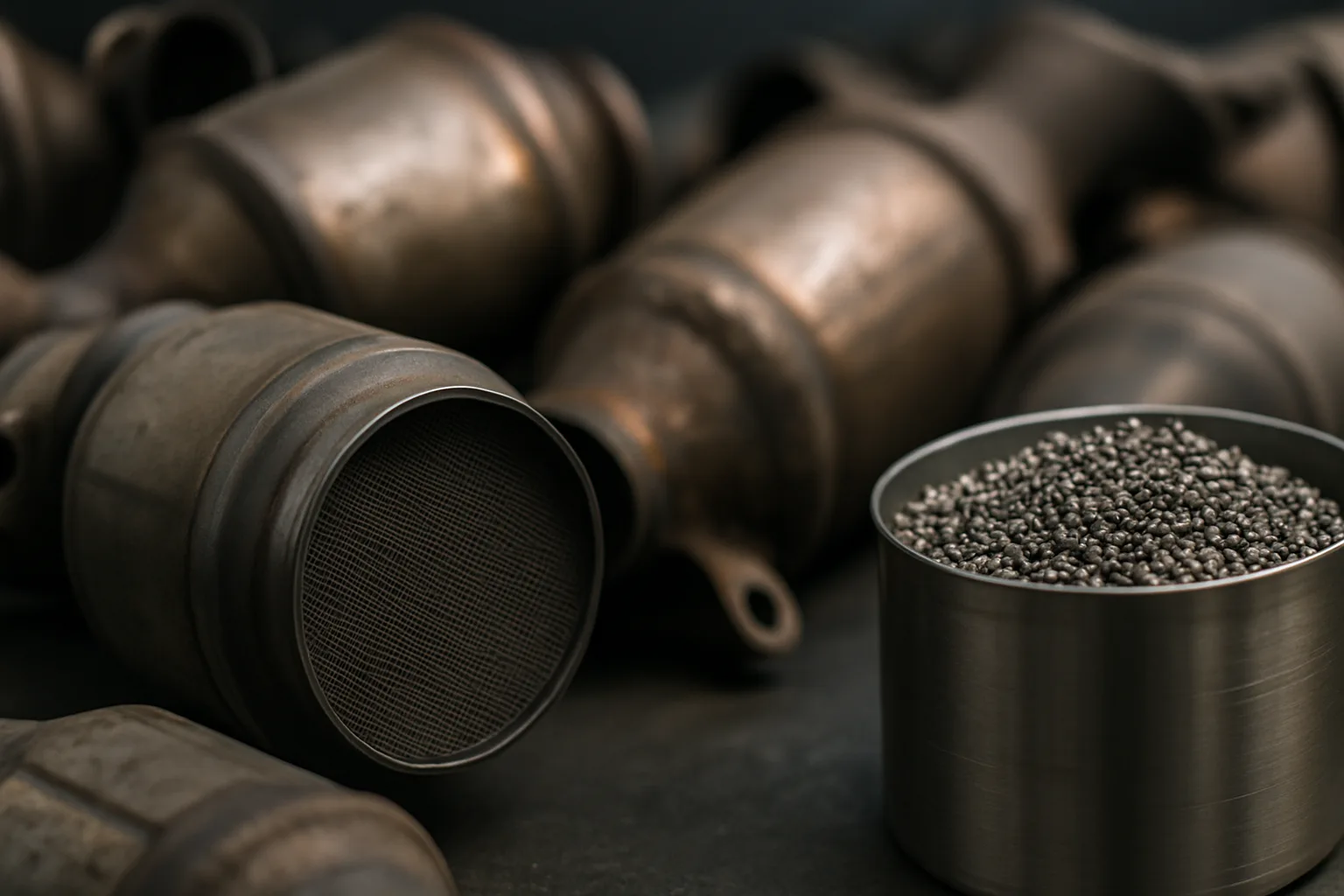
Emissions Rules Are Getting Stricter — and That's Pushing Catalytic Converter Scrap Value Higher
Here's something most scrap yards don't talk about: the stricter the emissions rules, the more precious metal ends up in every catalytic converter rolling off an assembly line. And when those vehicles eventually reach end-of-life, that metal has to go somewhere. Right now, it's flowing into the secondary market — and catalytic converter scrap value is being shaped, in large part, by regulatory pressure that started years ago and hasn't let up.
If you're sitting on a pile of cats in Minneapolis or anywhere else in Minnesota, understanding what's driving demand for platinum group metals (PGMs) helps you time your sales smarter and negotiate from a position of knowledge — not guesswork.
Why Emissions Standards Directly Drive PGM Demand
Modern catalytic converters exist for one reason: to reduce what comes out of a tailpipe. Platinum, palladium, and rhodium are the metals that make that chemistry work. They're the catalysts that convert carbon monoxide, hydrocarbons, and nitrogen oxides into less harmful compounds before they hit the air.
As regulators tighten emissions thresholds — and they have been tightening consistently through 2025 and into 2026 — automakers respond by loading more PGMs into each converter. Tighter standards mean more catalyst surface area, which means more precious metal per unit. It's a direct relationship. More regulation equals more platinum and palladium packed into every vehicle.
The downstream effect on scrap is significant:
- Newer vehicles contain higher PGM loadings than older models
- Higher loadings mean more recoverable value at end-of-life
- Refiners and processors actively compete to source these units
- That competition filters back to what recyclers can get for their cores
This is not a temporary trend. Global emissions frameworks — across North America, Europe, and Asia — are on trajectories that continue pushing PGM demand upward through the rest of this decade. The scrap side of that equation keeps getting more valuable, not less.
Palladium Price Today and What It Means for Your Cats
Palladium has been one of the most volatile PGMs over the past several years. Its primary use is in gasoline-engine catalytic converters — which means demand is tightly linked to passenger vehicle production and, crucially, to the emissions standards those vehicles must meet.
Checking palladium price today before you sell isn't just smart — it's necessary. Your converter's scrap value is calculated against live spot prices for platinum, palladium, and rhodium. When any one of those metals moves significantly, your payout moves with it. A buyer quoting you a flat rate based on last week's market is essentially pocketing the difference.
What should you watch for when tracking palladium?
- Regulatory announcements: New emissions standards in major markets often spike PGM prices as automakers scramble to source more material
- Mining supply disruptions: South Africa and Russia supply the majority of the world's palladium — any disruption there hits prices fast
- EV adoption rates: Electric vehicles don't use catalytic converters, so faster EV adoption puts long-term pressure on palladium demand from new vehicles — though the secondary market lag is substantial
- Recycling supply: Secondary recovery from scrap cats is increasingly filling the gap — which is why refiners are paying attention to recyclers like you
The takeaway: live market data matters. Selling without it is the same as selling blind. Platforms like SMASH connect you to buyers who price against real-time PGM data — so you're not guessing, and neither is the buyer.
The Minneapolis Market: What Local Sellers Need to Know
Minneapolis sits at a practical crossroads for converter recycling. The region generates substantial end-of-life vehicle volume — between cold-weather vehicle attrition, fleet turnover, and auto salvage activity across the Twin Cities metro, there's a steady flow of catalytic converter cores moving through Minnesota's recycling ecosystem.
But steady flow doesn't automatically mean strong prices. A lot of yards and individual sellers in the Minneapolis area are still selling the old way: one buyer, one call, one price with no real basis for comparison. That single-buyer model doesn't reflect the actual market. It reflects what one buyer wants to pay — which is usually less than what competition would reveal.
For anyone looking to sell catalytic converters Minnesota buyers will actually compete over, the answer is structured access to multiple buyers. Local access to Minneapolis scrap metal services that connect you to a broader buyer network means you're not limited to whoever answers the phone first.
Rhodium and platinum loadings in higher-trim vehicles common in the Minnesota market — trucks, SUVs, and larger engines designed for cold-climate performance — tend to carry meaningful scrap value. Knowing what you have before you sell is half the battle.
How to Use a Catalytic Converter Scrap Price List Without Getting Burned
A catalytic converter scrap price list is a useful starting point, but it's not a final price. Here's the problem: most publicly available price lists are snapshots. They reflect what certain common converters were worth at a particular moment, based on a specific set of assumptions about PGM spot prices and processing yields.
The market moves. PGM prices fluctuate daily. Your converter's actual assay — how much recoverable platinum, palladium, and rhodium is actually in there — may differ from list estimates depending on manufacturer, production year, and even whether the unit has been damaged or partially melted.
Use a price list to:
- Get a rough sense of which converters you have and their general tier (low, mid, high value)
- Identify which units deserve more documentation and careful handling
- Set a baseline expectation before entering a negotiation or auction
- Spot-check whether a buyer's quote is in a reasonable range
Don't use a price list to accept a quote at face value from a single buyer. Price lists are averages. Competition reveals what the actual market will pay for your specific inventory, today. That's a meaningful difference — and it's the difference between leaving money on the table and recovering what your material is actually worth.
To check current scrap converter prices against a live market, you need access to buyers who are pricing in real time — not off a laminated sheet on the wall.
Sell Scrap Metal Online: Why Digital Auctions Beat Cold Calls for Converter Cores
The phone call model has a structural problem: it's sequential. You call one buyer, get a number, hang up, call another, compare. By the time you've worked through three or four calls, the first buyer's quote is stale and you still don't know if any of them reflect market reality.
When you sell scrap metal online through a competitive auction format, the process flips. Multiple vetted buyers see your inventory simultaneously. They compete. You see the outcome transparently — what the market will actually pay, not what one buyer guesses you'll accept.
SMASH is built on that premise. It's North America's B2B scrap metal auction platform, connecting recyclers and sellers to vetted buyers who bid competitively on documented loads. For converter cores specifically, the documentation piece matters as much as the competition. Photo documentation, VIN lookup, and serial tracking give buyers confidence in what they're bidding on — which translates directly into stronger offers.
No subscription fees. SMASH only wins when the seller wins. That alignment matters when you're evaluating who to trust with your inventory.
For sellers in Minneapolis asking where can I sell catalytic converter near me — the answer increasingly isn't about physical proximity. It's about which platform connects you to the most qualified buyers, wherever they are. You want buyers who process volume, price off live assay data, and compete for your material. That's what a digital auction gives you that a single local call never can.
What Strong Emissions Regulation Means for Scrap Converter Value Through the Rest of 2026
The regulatory picture heading into the second half of 2026 continues to support PGM demand. North American emissions frameworks haven't softened. If anything, pressure on automakers to meet tighter standards for NOx and particulate emissions has pushed engineering teams to optimize converter performance — often by increasing precious metal loading or using more sophisticated catalyst formulations that require specific PGM ratios.
For scrap sellers, the implication is straightforward: the vehicles being retired today were built under stricter standards than vehicles retired five or ten years ago. The average PGM content per unit has trended upward. That doesn't mean every cat is a jackpot, but it does mean that a well-documented, properly identified load of converter cores carries real recoverable value — and deserves a real market, not a single lowball quote.
The best converter price isn't the one you were offered. It's the one that competition produces when multiple qualified buyers see your inventory and have a reason to bid aggressively. That's the gap SMASH exists to close.
Whether you're running a yard in Minneapolis, managing fleet disposal across Minnesota, or just clearing out a collection of cores you've been holding, the tools exist to get this right. Find the best scrap converter prices today — the market is there, and you shouldn't be settling for less than it will pay.
Ready to see what your inventory is actually worth? Read scrap converter pricing guides to understand how to document and position your load before you sell — and then let competition do the work.
Disclaimer: Catalytic converter scrap prices fluctuate daily based on live platinum, palladium, and rhodium spot prices. All pricing information in this article is general in nature. Always verify current rates before selling.
Frequently Asked Questions
Q: What determines catalytic converter scrap value?
Catalytic converter scrap value is primarily determined by the type and quantity of platinum group metals — platinum, palladium, and rhodium — recoverable from the unit. Spot prices for those metals fluctuate daily, so the same converter can be worth meaningfully different amounts week to week. The make, model, and production year of the vehicle also affect PGM loading and therefore scrap value.
Q: Where can I sell catalytic converters near me in Minneapolis?
Minneapolis-area sellers have access to local scrap yards, but physical proximity shouldn't be the only factor. Online platforms that connect you to multiple vetted buyers — like SMASH — often produce stronger outcomes than a single local quote because competitive bidding reflects actual market demand. Check Minneapolis scrap metal services for local options combined with broader buyer access.
Q: How does palladium price affect what I get paid for my cats?
Palladium is one of the primary PGMs in gasoline-engine catalytic converters, and its spot price directly affects your payout. Buyers calculate offers based on estimated recoverable palladium, platinum, and rhodium content multiplied by current spot prices, minus processing costs. When palladium moves up, well-documented loads of high-grade cats pay more. Tracking palladium price today before you sell helps you evaluate whether a quote is fair.
Q: Is there a reliable catalytic converter scrap price list I can use?
Price lists are useful reference tools but not final prices. They reflect general value ranges for common converter types based on snapshot PGM pricing. Because the market moves daily and your converter's actual assay can vary, price lists work best as a baseline for comparison — not as a number to accept from a single buyer without question. Use them alongside live market data for the most accurate picture.
Q: Why do stricter emissions standards increase scrap converter value?
Stricter emissions standards require automakers to use more platinum group metals in each catalytic converter to achieve better pollutant conversion efficiency. Higher PGM loadings in newer vehicles mean more recoverable precious metal when those vehicles reach end-of-life. As regulatory standards have tightened through 2025 and into 2026, the average scrap value of converters from newer model years has trended upward compared to older units.
Follow SMASH on LinkedIn for weekly market insights, PGM pricing updates, and scrap metal industry news straight from the platform built for recyclers.
```