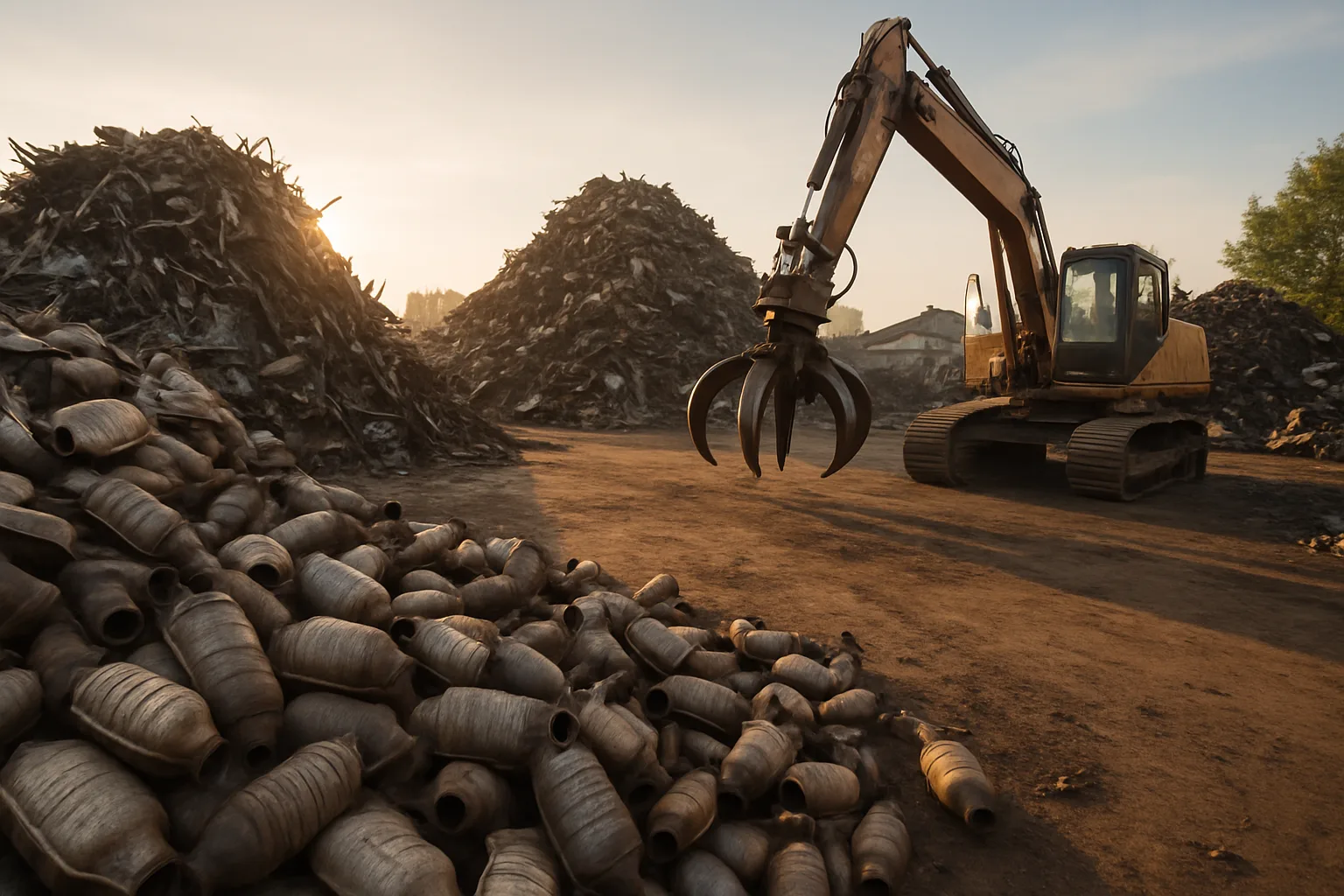
Hybrid vehicles have been quietly flooding Pittsburgh's roads for over a decade — and the catalytic converters they carry are worth significantly more than most people realize. If you're sitting on a hybrid cat, you may be leaving serious money on the table by treating it like a standard converter. Understanding why hybrid catalytic converters contain more precious metals is the difference between a fair payout and a frustrating one.
If you're ready to find the best scrap converter prices today, this guide breaks down exactly what's inside a hybrid cat, why it commands a premium, and how to make sure you're getting paid what it's actually worth when you sell catalytic converters online.
Why Hybrid Catalytic Converters Are Built Differently
A standard gasoline engine runs hot and runs constantly. That constant heat activates the catalyst inside the converter, keeping precious metals working at full efficiency. Hybrid engines are different. They cycle on and off — sometimes the electric motor takes over entirely, letting the combustion engine shut down mid-drive.
That on-off cycle creates a problem. Every time the engine restarts from cold, the catalytic converter has to reach operating temperature fast enough to control emissions before the engine warms up fully. Manufacturers solve this by loading the substrate with higher concentrations of platinum, palladium, and rhodium. More precious metal means faster light-off — meaning the converter hits working temperature quicker after a cold start.
The result? A hybrid cat often carries a meaningfully higher precious metal loading than an equivalent non-hybrid converter. That directly affects your converter scrap value when you go to sell.
What's Actually Inside: Platinum, Palladium, and Rhodium
The three metals that give a catalytic converter its value — and its function — are platinum group metals (PGMs): platinum, palladium, and rhodium. Each plays a specific role in converting harmful exhaust gases into less harmful outputs. Rhodium handles NOx reduction. Palladium and platinum oxidize hydrocarbons and carbon monoxide.
In a typical hybrid converter, you'll often find:
- Elevated palladium loadings — palladium does heavy lifting on cold-start emissions, making it particularly valuable in hybrid applications
- Higher rhodium content — more NOx work during frequent engine cycling means more rhodium is required
- Platinum presence — varies by manufacturer and model year, but often present alongside the other two PGMs
The platinum price today matters here, but palladium and rhodium prices can move dramatically and independently. A shift in any one of these three metals changes your converter's actual market value — sometimes by a significant margin. This is exactly why checking current rates before you sell matters so much. Prices fluctuate constantly based on live precious metal markets, and a converter worth one price this week may carry a different value next week.
Disclaimer: All converter prices are tied to live precious metal spot prices and fluctuate daily. Always check current rates before selling.
How to Identify a Hybrid Converter and Know Its Value
Not every hybrid produces the same converter value. A Toyota Prius cat from a 2019 model year looks very different — in precious metal terms — from a Ford Escape Hybrid or a Honda Accord Hybrid. Model year, trim level, and engine configuration all affect what's on the substrate.
This is where serial number identification becomes critical. When you sell catalytic converters online, the serial number or part number stamped on your converter is the fastest path to an accurate quote. Reputable buyers use that number to pull assay data — actual historical testing results showing what that specific converter type yields when processed.
Here's what a proper identification process looks like:
- Locate the serial number — stamped directly on the converter housing or on a label. Photograph it clearly.
- Match to the vehicle — VIN lookup can confirm the original vehicle spec and help verify the converter is correct for the application
- Photo document the converter — condition affects value; a damaged or rattled-out substrate returns less precious metal at processing
- Get a quote based on real assay data — not a flat-rate guess
The catalytic converter scrap price by serial number approach is the only transparent method. Any buyer quoting you a flat price on a hybrid cat without checking the serial number is either leaving money on the table — or keeping it for themselves.
Selling Hybrid Converters in Pittsburgh: What You Need to Know
Pittsburgh's scrap and recycling market is competitive, and that's actually good news if you know how to use it. Pennsylvania yards handle a wide range of converter grades, but hybrid cats are a different tier of product. Not every buyer will price them correctly — especially if they're accustomed to dealing primarily in domestic foil or standard foreign cats.
If you're handling hybrid converters through Pittsburgh scrap metal services, the difference between a knowledgeable buyer and a generalist buyer can be significant on a single unit. On a load of hybrid converters, that gap adds up fast.
Sellers in Pittsburgh and across Pennsylvania benefit from bringing hybrid cats to buyers who specifically understand PGM pricing. The serial number matters. The substrate condition matters. The assay data behind the quote matters. A transparent, data-driven buyer will show you exactly how your converter is being priced — and that transparency is what you should demand before you agree to anything.
If you want to check current scrap converter prices before walking into any negotiation, doing that homework first puts you in a much stronger position.
Why a B2B Auction Marketplace Changes the Math
The old way of selling converters — one phone call, one buyer, take it or leave it — doesn't serve sellers who have quality product. Hybrid catalytic converters are quality product. They deserve competitive pricing, not a single offer from a buyer who knows you don't have an easy comparison.
This is where platforms like SMASH change the equation entirely. The SMASH scrap metal auction marketplace brings vetted buyers into a competitive environment where your converters are priced against real market data. More buyers means better price discovery. Competition reveals the actual market — not just what one buyer is willing to offer on a Tuesday morning.
SMASH is built as a B2B scrap metal marketplace for exactly this kind of situation: high-value, documented product that deserves a real auction process. Photo documentation, serial tracking, inventory tools — all the infrastructure that makes a hybrid converter load easy to bid on accurately. Buyers bid with confidence when the product is documented properly. Sellers get paid based on what the market actually says the product is worth.
For yards in Pittsburgh and across Pennsylvania processing hybrid vehicles, that difference in approach can materially change the outcome on every load. Read scrap converter pricing guides to understand how documentation and buyer competition affect your final payout on hybrid cats specifically.
Maximizing Your Converter Scrap Value Before You Sell
You don't need to be a precious metals expert to sell hybrid catalytic converters well. You need a process. A consistent, documented process protects you from low-ball offers and positions your inventory for the strongest possible price discovery.
Before you sell, run through this:
- Identify the converter type — hybrid, domestic, foreign, diesel, or DPF. Each category prices differently.
- Photograph the serial number and overall condition — rattled substrates and damaged units price lower
- Pull the VIN if available — confirms vehicle application and converter spec
- Check current PGM spot prices — platinum, palladium, and rhodium all move. Know where they are before you agree to a quote.
- Use a buyer who prices by serial number — flat-rate pricing on hybrid cats almost always undervalues the product
- Get multiple offers — single-buyer pricing on a hybrid cat is the fastest way to leave money behind
The best converter price isn't something you stumble into. It comes from having the right information and the right process. Platforms like SMASH exist specifically to give sellers that competitive advantage without requiring you to cold-call a dozen buyers and hope someone gives you a straight answer.
Frequently Asked Questions
Q: Why are hybrid catalytic converters worth more than regular ones?
Hybrid engines cycle on and off frequently, requiring the catalytic converter to reach operating temperature faster during cold starts. To achieve that, manufacturers load hybrid converters with higher concentrations of platinum, palladium, and rhodium — the precious metals that give converters their scrap value. More PGM loading means a higher converter scrap value at processing.
Q: How do I find the best price when I sell catalytic converters online?
Start by identifying your converter by serial number — this gives buyers real assay data to price against rather than guessing. Then use a marketplace or platform that generates competitive offers rather than relying on a single buyer's quote. Checking current platinum, palladium, and rhodium spot prices before you agree to any offer also helps you evaluate whether a quote is reasonable.
Q: Does the condition of a hybrid catalytic converter affect its scrap price?
Yes — significantly. A damaged substrate, cracked housing, or rattled-out core all reduce the precious metal yield at processing, which directly lowers the payout. Intact, undamaged hybrid converters with clearly readable serial numbers consistently return better prices. Photo document your converters before shipping or selling.
Q: Can I sell catalytic converters from Pittsburgh to buyers outside Pennsylvania?
Absolutely. Online platforms let you access buyers across North America without being limited to local yards. This is one of the core advantages of selling through a marketplace — you're not locked into whatever a single Pittsburgh-area buyer decides to offer. A wider buyer pool means better price competition on your hybrid cats.
Q: How often do catalytic converter scrap prices change?
Prices shift with live precious metal spot markets — platinum, palladium, and rhodium can move daily or even intraday during volatile market conditions. A converter priced today may carry a meaningfully different value next week. Always check current rates at the time of sale, not based on quotes from days or weeks prior.
If you're processing hybrid vehicles in Pittsburgh or anywhere across Pennsylvania, don't settle for flat-rate guesses on product that deserves real pricing. The precious metals in a hybrid cat are worth what the market says they're worth — and finding that number requires the right buyer pool and the right data. Head over to best-scrap-converter-prices.com for a free quote and make sure you're getting paid what your converters actually contain.
Follow SMASH on LinkedIn at linkedin.com/company/scrap-metal-auction-sales-hub for live market updates, industry news, and scrap metal pricing insights delivered directly to your feed.