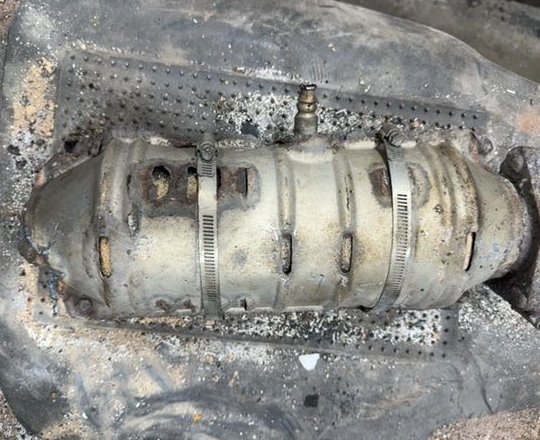
Why Hybrid Vehicle Catalytic Converters Are Worth More at the Scrap Yard
Here's something most converter sellers in Tampa don't realize: the catalytic converter sitting under a hybrid vehicle can contain significantly more precious metals than the one pulled from a standard gas-powered car. When the rhodium price today is running high — and rhodium has historically been one of the most volatile precious metals on the market — that difference in loading isn't small. It can mean hundreds of dollars left on the table if you don't know what you're selling.
Hybrid converters are built differently. They have to be. And understanding why changes how you approach the scrap side of the business. Whether you're pulling cores from end-of-life Priuses or managing a yard full of mixed inventory in Florida, this guide breaks down what makes hybrid converters valuable and how to make sure you're getting paid what they're worth.
What Makes Hybrid Catalytic Converters Different from Standard Units
A standard internal combustion engine runs hot and runs constantly. The catalytic converter reaches operating temperature quickly, and the chemistry works reliably across a narrow band of conditions. Hybrid vehicles change the equation. The gas engine cycles on and off — sometimes sitting cold for extended periods — which creates more challenging conditions for emissions control.
To compensate, manufacturers load hybrid converters with higher concentrations of platinum group metals (PGMs): platinum, palladium, and rhodium. These aren't decorative. They're the active catalysts that convert harmful exhaust gases into less harmful emissions. More PGMs per substrate means faster light-off when the engine kicks back on, more efficient conversion across wider temperature swings, and compliance with emissions standards that have tightened considerably by 2026.
- Platinum (Pt): Handles oxidation reactions, especially at lower temperatures
- Palladium (Pd): Works efficiently at higher temperatures, dominant in modern converters
- Rhodium (Rh): The most critical — reduces nitrogen oxides (NOx) — and often the most expensive per troy ounce
Because hybrid engines create more variable exhaust conditions, OEM catalytic converter value in hybrid applications is typically higher than comparable units from conventional vehicles. That's not marketing — it's chemistry reflected in scrap pricing.
How the Rhodium Price Today Directly Affects Your Converter's Value
Rhodium is the wild card in converter pricing. Its market price has swung dramatically over the past decade, and it remains extremely sensitive to supply disruptions — the majority of the world's rhodium comes from South Africa, and any instability there ripples through scrap markets fast. When you check the rhodium price today, you're looking at a number that directly ties to what a recycler will offer you for a rhodium-rich hybrid converter substrate.
This matters for a simple reason: most recyclers price converters based on the assay value of the PGMs inside. The math runs roughly like this — substrate weight, PGM loading per unit, and the current spot price of each metal, minus processing costs. If rhodium is trading high, a hybrid converter with elevated rhodium content pays substantially better than it would in a flat market.
That's why checking real-time market data before you sell is essential, not optional. Find the best scrap converter prices today by referencing current PGM spot prices before you accept any offer. A buyer offering you a flat rate without referencing market data is either guessing or banking on you not knowing the difference.
Platforms like SMASH bring competitive pricing into the equation. Instead of calling one buyer and accepting whatever they quote, you get your inventory in front of vetted buyers competing for your load. When the rhodium price today is moving, that competition can help reveal the actual market — not just one buyer's margin.
OEM Catalytic Converter Value: The Hybrid Premium Explained
Not all hybrid converters are equal. OEM catalytic converter value depends heavily on the make, model, and production year of the vehicle. A Toyota Prius converter from a late-model year will assay differently than one from a Ford Escape Hybrid or a Honda Accord Hybrid. Manufacturers use different PGM ratios, different substrate materials, and different housing designs — and the scrap market prices them accordingly.
Here's what drives OEM converter value in hybrid applications specifically:
- Higher PGM loading: Hybrid units typically carry more catalyst per unit than conventional equivalents from the same manufacturer
- Substrate density: Finer cell structures (higher cell-per-square-inch counts) offer more surface area for catalytic reaction — and more recoverable PGMs
- Dual converter systems: Some hybrids use two converters — a pre-catalyst close to the engine and a main unit downstream — doubling your scrap value per vehicle
- Less thermal degradation: Because hybrid engines run cooler and cycle off regularly, the substrate often experiences less heat damage over its lifespan, meaning better PGM recovery for the refiner
If you're processing hybrid vehicles in Tampa or anywhere across Florida, it pays to identify which units you have before you price them. A serial number or VIN lookup — which SMASH supports on its platform — can confirm the exact converter type and match it to pricing data. That's how you stop guessing and start selling with confidence.
Sell Catalytic Converters in Florida the Right Way
Florida has tightened regulations around converter sales in recent years. Sellers are required to provide documentation — vehicle title, proof of ownership, or business documentation depending on the type and volume of the sale. If you're a yard operator or dealer running volume in Tampa, these requirements aren't optional, and buyers who skip the paperwork aren't worth the risk.
The right way to sell catalytic converters Florida-wide is with documentation from the start. Photo documentation of each unit, serial number tracking where applicable, and proper BOLs and packing lists when shipping loads. This isn't just regulatory compliance — it's also what gets you better prices. A documented, verified load is a more attractive load. Buyers bid more confidently when they know exactly what they're getting.
smashscrap.com builds this documentation into the process. Photo uploads, serial tracking, and inventory tools are part of the platform — not an afterthought. That kind of transparency benefits both sides of the transaction and helps you move inventory faster without the back-and-forth that slows down single-buyer deals.
For Tampa sellers specifically, you're already in a strong market position. The Tampa Bay area generates significant vehicle throughput — between insurance auctions, dealership trades, and end-of-life vehicles. There's no shortage of hybrid converters moving through the region. Tampa scrap metal services through best-scrap-converter-prices.com can help you connect that local volume with buyers who are actively competing for it.
How to Get the Best Catalytic Converter Scrap Price Near You
The phrase "catalytic converter scrap price near me" is something people search when they feel stuck — when they've gotten a quote that didn't feel right, or when they're not sure if the yard down the street is giving them a fair number. The honest answer is that proximity matters less than competition. A buyer 500 miles away competing in an auction environment will often outperform a local yard that knows it has no competition.
That's the structural problem with the old way of selling. One phone call, one offer, take it or leave it. The converter scrap value you get is whatever that single buyer decides to pay. There's no market-clearing mechanism. There's no visibility into what other buyers would have offered.
SMASH fixes that by creating the competition that should exist in every converter transaction. Vetted buyers, auction format, transparent pricing — that's how scrap should work. Read scrap converter pricing guides to understand how the auction model works and why it tends to outperform the one-buyer phone call approach.
If you're sourcing hybrid converters locally in Tampa and want to sell scrap metal online without locking into a single-buyer relationship, the platform model is the smarter play. No subscription fees. SMASH only makes money when the deal closes — which means the incentive is to get you the best outcome, not just any outcome.
Before you finalize any deal, check current scrap converter prices against live PGM spot data. It takes five minutes and ensures you're walking into any negotiation — or auction — with a baseline that's grounded in the actual market.
Preparing Your Hybrid Converter Inventory for Sale
Getting the best converter price isn't just about timing the rhodium market. Preparation matters. Here's how to set your hybrid converter inventory up for stronger outcomes:
- Identify the units: Confirm make, model, and year of each vehicle before pulling converters. Hybrid-specific units often look similar to conventional ones externally but price very differently.
- Document everything: Photograph each converter — top, bottom, serial/part number visible. This is required on SMASH and for good reason — it builds buyer trust and reduces disputes.
- Don't crush or core-out before verification: A damaged substrate recovers less PGM. Handle hybrid converters carefully — they're worth more intact.
- Group by type: Sort your inventory before listing. Similar units in the same lot give buyers a cleaner picture and tend to attract stronger bids.
- Track serial numbers: Especially in Florida, documentation is both a regulatory requirement and a pricing advantage.
The more organized your inventory, the faster it moves — and the less room there is for a buyer to discount based on uncertainty.
Hybrid converters are worth selling right. The precious metal loading is higher, the market is active, and platforms like SMASH give you access to buyers who are actually competing for that inventory. If you're in Tampa or anywhere across Florida managing hybrid vehicles, don't sell blind. Know your units, know the current rhodium price today, and use a platform that puts competitive pressure on the buyer side — not just on you.
Frequently Asked Questions
Q: Why do hybrid catalytic converters contain more precious metals than standard converters?
Hybrid engines cycle on and off frequently, creating more variable exhaust temperatures. To maintain emissions compliance across those wider conditions, manufacturers load hybrid converters with higher concentrations of platinum, palladium, and rhodium. More PGMs per substrate means more scrap value when the unit reaches end of life.
Q: How does the rhodium price today affect what I get paid for a hybrid converter?
Rhodium is one of the primary catalysts in converter substrates, and its spot price directly influences the assay value recyclers calculate when pricing your unit. When rhodium is trading high, converters with elevated rhodium content — common in hybrid applications — pay more. Checking the current rhodium price before you sell gives you a baseline to evaluate any offer against.
Q: Where can I find catalytic converter buyers near me in Tampa?
While local yards in Tampa are one option, platforms like SMASH connect you with vetted buyers across North America who compete for your inventory — often producing better outcomes than a single local quote. Best-scrap-converter-prices.com also provides market data and connections to buyers actively purchasing in the Florida market.
Q: Do I need documentation to sell catalytic converters in Florida?
Yes. Florida regulations require sellers to provide proof of ownership or vehicle documentation when selling converters, particularly in volume. Proper photo documentation, serial number tracking, and business records protect you legally and often result in stronger buyer confidence — which can mean better pricing.
Q: What's the difference between OEM catalytic converter value and aftermarket unit value at the scrap yard?
OEM converters are manufactured to meet specific vehicle and emissions requirements, often with precise PGM loading that recyclers can reliably assay. Aftermarket converters typically carry lower PGM loads to reduce production costs, which means they yield less at the scrap yard. Hybrid OEM units in particular tend to be among the higher-value categories in converter scrapping.
Ready to stop guessing and start getting paid what your hybrid converters are actually worth? Find the best scrap converter prices — get a free quote at best-scrap-converter-prices.com and see what competitive buyers will pay for your inventory today.
Stay current on scrap metal market shifts and PGM pricing trends — follow SMASH on LinkedIn for industry updates and insights that keep you ahead of the market.