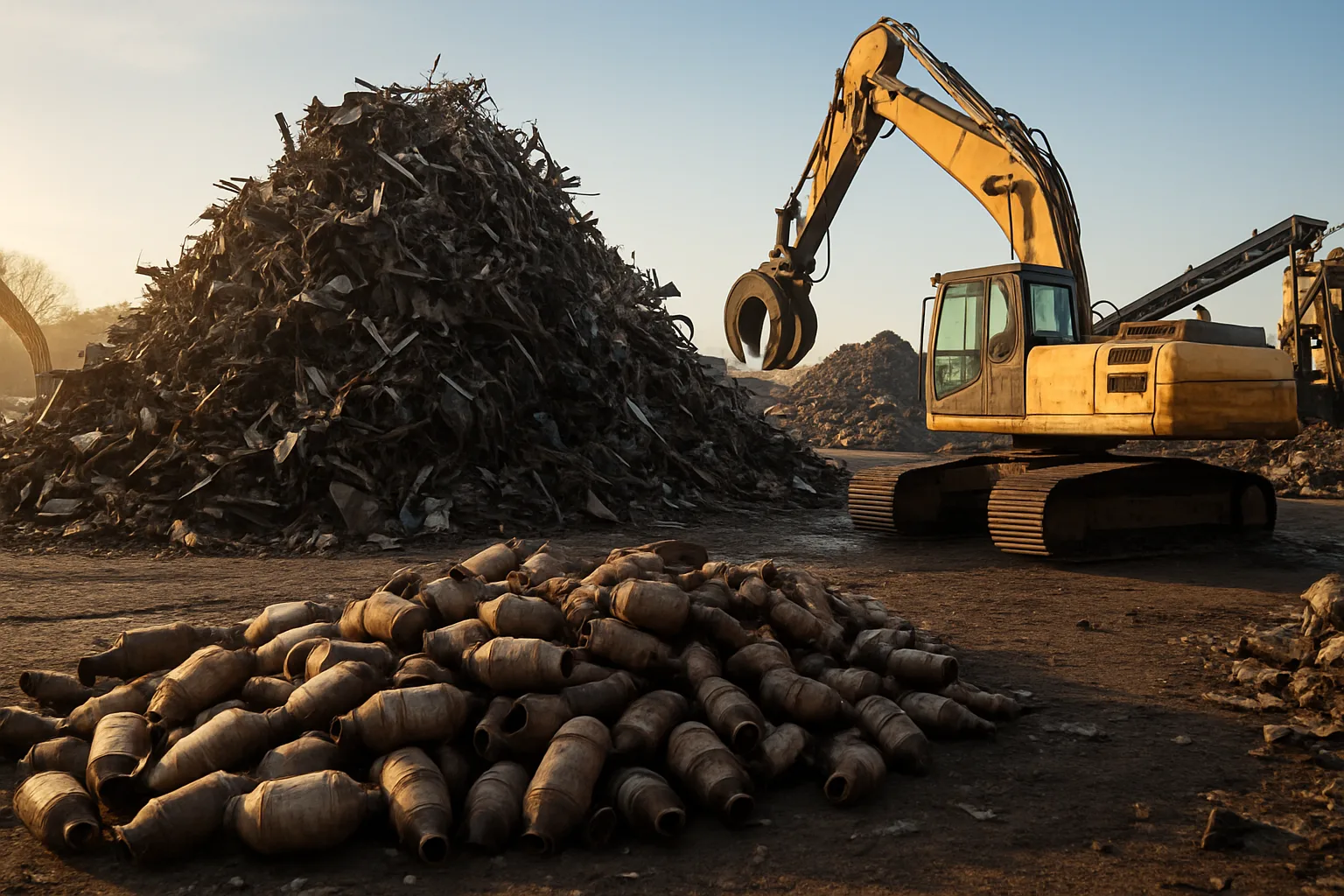
Why Proper Catalytic Converter Recycling Matters — And What Your Old Cats Are Actually Worth
Every year, millions of catalytic converters get pulled from vehicles and either tossed in the wrong bin, crushed without recovery, or sold to the first buyer who shows up with cash. That's a problem — environmentally and financially. The precious metals inside those units don't disappear. They just end up in the wrong hands, or worse, the wrong landfill.
If you're sitting on a pile of cats in Indianapolis, understanding OEM catalytic converter value isn't just about getting paid. It's about understanding what you're actually holding — and why recycling it correctly matters for the environment, for your yard, and for your bottom line.
What's Inside a Catalytic Converter (And Why It Belongs in the Right Hands)
Catalytic converters contain three precious metals: platinum (Pt), palladium (Pd), and rhodium (Rh). These are mined at enormous environmental cost — open-pit mining, toxic runoff, massive carbon output. Recycling converters properly recovers these metals and puts them back into the supply chain without tearing up the earth to find more.
A single OEM catalytic converter can contain anywhere from 3 to 7 grams of precious metal, depending on the make, model, and year. Aftermarket units typically carry far less. That gap is exactly why OEM catalytic converter value runs higher than aftermarket — and why knowing what you have before you sell matters so much.
- Platinum: Used heavily in diesel converters. Stable demand from industrial applications keeps pricing relatively steady.
- Palladium: High concentration in gasoline converters. Has seen significant price swings over the past several years — still a major value driver in 2026.
- Rhodium: The rarest of the three. Small amounts can represent a disproportionate share of converter value.
When these metals end up in a landfill — or get smelted by an unvetted processor who doesn't recover them properly — the loss is both economic and environmental. Responsible recycling captures these materials and reintroduces them into manufacturing. That reduces mining demand. That's a real environmental win, not a talking point.
5 Environmental Reasons to Recycle Catalytic Converters the Right Way
This isn't about feel-good messaging. There are concrete, measurable reasons why proper catalytic converter recycling matters — and why yards in Indiana are increasingly paying attention to how their material gets processed downstream.
- Reduces virgin mining demand. Recovering platinum group metals (PGMs) from scrap reduces the need to extract new ore. Mining operations for PGMs are energy-intensive and often located in environmentally sensitive regions. Every ton recovered from scrap is a ton that doesn't need to come out of the ground.
- Prevents toxic contamination. Catalytic converters contain ceramic substrates and metal casing that, if improperly disposed of, can leach compounds into soil and groundwater. Correct processing channels these materials into regulated facilities where they're handled safely.
- Lowers carbon footprint of metal production. Refining recovered PGMs from recycled material uses significantly less energy than smelting virgin ore. Secondary refining is a lower-carbon path to the same end product.
- Supports the circular economy in manufacturing. Automakers and battery manufacturers increasingly rely on recycled PGMs to meet supply chain demands and sustainability commitments. Your scrap cat could end up in a new vehicle or industrial application — closing the loop on material use.
- Keeps hazardous material out of landfills. Vehicle components that reach landfills create long-term liability. Converters processed through proper recycling channels meet regulatory requirements and reduce your exposure as a yard operator.
Yards in Indianapolis that take documentation and processing seriously aren't just doing the right thing — they're positioning themselves as preferred suppliers for buyers who need chain-of-custody compliance. That's a competitive advantage built on doing things correctly.
How Catalytic Converter Prices Today Are Tied to Responsible Recycling
Here's the connection most sellers miss: catalytic converter prices today are directly tied to the precious metal spot markets. When you sell to a buyer who properly assays and recovers PGMs, your price reflects actual metal content. When you sell to someone who doesn't — or who lowballs because they can't tell what they have — you leave money on the table every single time.
Proper recycling and proper pricing go hand in hand. A buyer who invests in accurate grading, testing, and PGM recovery can pay more because they're recovering more. A buyer who guesses or buys blind can't pay what the metal is worth — because they don't know what's in it.
That's why finding the best scrap converter prices today isn't just about shopping around. It's about finding buyers who actually know what they're buying. Platforms like SMASH connect yards directly with vetted buyers who understand converter grading — which means competition on price and confidence in what you're selling.
If you're in Indiana and want to know how much is my catalytic converter worth scrap by reg, the answer starts with accurate identification. VIN-based lookup, serial number tracking, and photo documentation all contribute to a more accurate valuation — and a more defensible sale. Check current scrap converter prices before you move your next load.
Scrap Metal Inventory Management: The Missing Link Between Recycling and Revenue
Most yards understand recycling in principle. Fewer have the systems in place to actually capture full value from it. That's where scrap metal inventory management becomes the bridge between environmental responsibility and real dollars.
When you can't identify what you have, you can't price it correctly. When you can't document your inventory, buyers discount for uncertainty. When you're guessing at grades, you're either underselling or creating disputes downstream. None of that serves anyone — not the environment, not your business, not the buyers you're trying to work with.
Strong inventory practices for catalytic converters include:
- Photographing each unit with visible serial numbers or markings
- Using VIN lookup tools to connect converters to vehicle origin and expected PGM content
- Sorting by grade — OEM vs. aftermarket, domestic vs. import, high-grade vs. low-grade
- Maintaining accurate count and weight records per lot
- Tracking chain of custody for regulatory compliance
This isn't overhead. It's the foundation for getting paid what your material is worth. SMASH was built around exactly this — inventory documentation that gives buyers the confidence to bid competitively, and sellers the data to know what they're putting up for auction. When buyers can see clearly documented, well-photographed inventory, competition increases. More competition means better price discovery. That's the whole point.
Indianapolis yards that adopt disciplined inventory practices aren't just protecting their margins — they're contributing to a more transparent, accountable recycling chain. That accountability is what responsible recycling actually looks like in practice.
SMASH Scrap Metal Auction: Where Environmental Accountability Meets Competitive Pricing
The old way of selling cats — one call, one price, take it or leave it — doesn't serve the environment any better than it serves your wallet. You don't know where the material goes. You don't know how it's processed. You don't know if the buyer is recovering PGMs properly or dumping substrate in a way that creates downstream problems.
The SMASH scrap metal auction model changes the dynamic. Vetted buyers competing on documented inventory creates transparency at every stage. You know who's buying. Buyers know what they're getting. The material moves through a traceable chain rather than disappearing into an unaccountable pipeline.
For sellers in Indianapolis and across Indiana, that means access to competitive catalytic converter scrap metal prices without the guesswork — and the ability to build relationships with buyers who take processing seriously. You can sell your scrap metal on the SMASH marketplace and see the difference that real competition makes on your load values.
No subscription fees. SMASH wins when you win. That's the structure — and it's designed to reward sellers who bring well-documented, properly sorted inventory to the table. If you want to read scrap converter pricing guides before your next sale, start there and come in prepared.
For Indianapolis yards ready to move converters the right way, explore Indianapolis scrap metal services and see how local sellers are connecting with buyers who pay for what the material is actually worth.
Doing this right — proper documentation, vetted buyers, competitive auctions — is how you turn environmental responsibility into a business advantage. The yards winning in 2026 aren't the ones cutting corners. They're the ones who figured out that transparency is a competitive edge, not a burden.
When you're ready to find out exactly what your load is worth, find the best scrap converter prices today and get a free quote at best-scrap-converter-prices.com.
Disclaimer: Catalytic converter prices fluctuate with platinum, palladium, and rhodium spot markets. Always check current rates before selling. Values listed by grade or reg may change daily.
Frequently Asked Questions
Q: Why is OEM catalytic converter value higher than aftermarket?
OEM converters are manufactured to meet strict emissions standards, which requires higher concentrations of platinum, palladium, and rhodium. Aftermarket units use less precious metal content to reduce cost. That gap in PGM loading is directly reflected in scrap value — OEM cats consistently grade higher and pay more.
Q: How do I find out how much my catalytic converter is worth scrap by reg?
Your converter's "reg" is typically a series number stamped or engraved on the unit. Buyers and platforms use this to identify the vehicle application and cross-reference expected precious metal content. Tools like VIN lookup and serial tracking — features built into platforms like SMASH — help connect that reg number to a defensible market value rather than a guess.
Q: Where can I sell catalytic converters in Indianapolis, Indiana?
Indianapolis has a range of scrap yards and buyers, but not all pay the same or process material the same way. Connecting with vetted buyers through an auction platform gives you competitive pricing instead of a single lowball offer. Look for buyers who can document the transaction and demonstrate proper downstream processing.
Q: What happens to the precious metals in a catalytic converter when it's recycled properly?
Properly recycled converters are sent to smelters and refiners who recover platinum, palladium, and rhodium from the ceramic substrate. These recovered metals re-enter the supply chain and are used in new automotive and industrial applications — reducing the need for virgin mining and lowering the environmental footprint of new production.
Q: Do catalytic converter prices change daily?
Yes. Converter scrap values are tied directly to precious metal spot prices, which trade on global markets every business day. A shift in palladium or rhodium pricing can move converter values meaningfully within a single week. Always check current market rates before committing to a sale — and use a platform that prices based on real-time data, not a static price sheet.
Follow SMASH on LinkedIn for industry updates, scrap metal market insights, and news that affects converter values across North America.
```