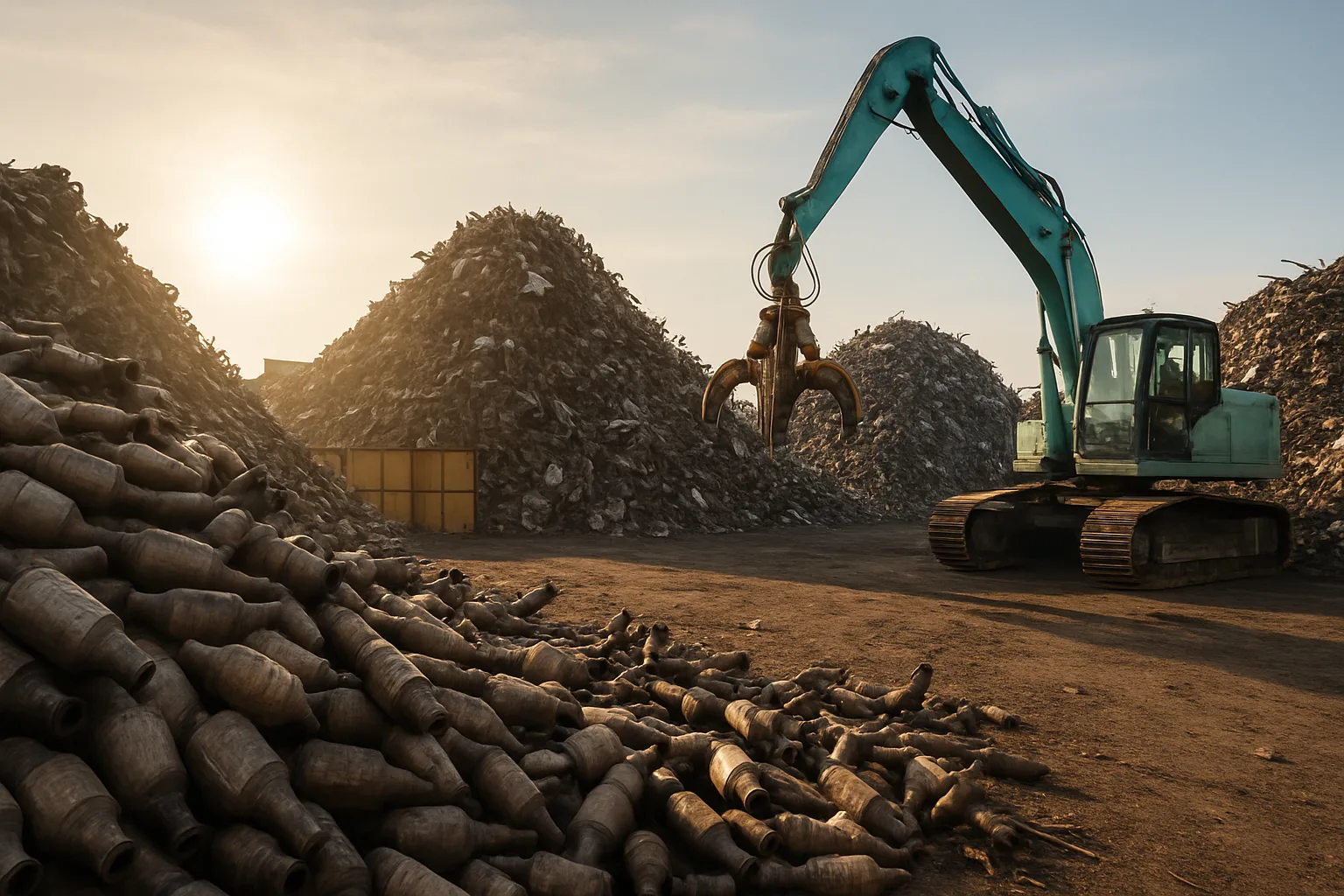
The Catalytic Converter Scam That Cost One Yard Owner $14,000 in a Single Week
It started with a phone call. A buyer offering top dollar, quick pickup, cash in hand. No paperwork, no serial tracking, no documentation. Just a handshake and a number that sounded great — until the check bounced and the buyer disappeared. Scenarios like this play out across the converter market every week, and sellers in Mesa, Arizona are not immune. If you're moving catalytic converters through the wrong channels, you're not just leaving money on the table. You may be handing it over directly to someone running a con.
The catalytic converter buying market has always attracted bad actors. High platinum group metals content, easy resale value, and a historically opaque pricing structure make converters a prime target for fraud on both sides of the transaction. Whether you're a small yard in Mesa clearing out a load of mixed cats or a larger operation managing serialized inventory, knowing how these scams work is the first line of defense.
This is a breakdown of the most common schemes, how to spot them, and how platforms like SMASH are changing the game by replacing guesswork with verified, competitive auctions. Before you move your next load, find the best scrap converter prices today — and make sure you know who's on the other end of the deal.
The Most Common Catalytic Converter Recycling Scams in Mesa and Beyond
Scams in this market take several forms. Some are obvious in hindsight. Others are carefully constructed to look completely legitimate right up until the moment you realize you've been had. Here are the patterns that show up most often:
- The Bait-and-Switch Price Drop: A buyer quotes you a strong price per unit over the phone. You agree, pull the load, document it, get it ready for pickup. Then — at the last second, after the material has already been loaded — the buyer claims the assay came back lower than expected and drops the price. You're stuck holding a packed load with no time to renegotiate properly.
- The Ghost Buyer: Someone poses as a legitimate recycler, sometimes using a fake company name or a spoofed website. They collect your load, issue a check or promise a wire, and then vanish. The check bounces. The wire never comes. The phone number is disconnected.
- Misrepresentation of PGM Content: Dishonest buyers run in-house smelts or "assays" that conveniently underreport the platinum group metals content in your converters. Without independent verification or price transparency, you have no way to challenge the number they give you.
- Unlicensed Roaming Buyers: In Arizona and across the U.S., regulations around converter transactions have tightened significantly as of 2026. Roaming buyers operating without proper licensing or business registration are a red flag. They offer cash, no paperwork, and move fast — because they have to.
- The "Trust Me" Verbal Agreement: No invoice. No packing list. No BOL. Just a verbal agreement and a promise. If there's no paper trail and something goes wrong, you have zero recourse. None.
Some of these schemes specifically target yards that are new to the market or operators who inherited a converter stockpile and aren't sure of the proper process. If you're unsure what a fair catalytic converter price looks like for your specific mix of units, the answer isn't to trust the first buyer who calls — it's to create competition and document everything.
Why Pricing Opacity Is the Root of the Problem
Most converter fraud doesn't require elaborate deception. It just requires that you don't know what your material is worth. The platinum group metals market — palladium, platinum, rhodium — shifts daily based on commodity trading, global supply chains, and industrial demand. A load that fetches one number on Monday could carry a meaningfully different value by Friday.
Without access to real-time PGM data tied to your specific converter types, you're negotiating blind. That's exactly the environment bad actors need to operate. They know the numbers. You're guessing. And the gap between your guess and their offer is their margin — sometimes legitimately, sometimes through outright manipulation.
Yards in Mesa and across Arizona have increasingly pushed back against this dynamic by demanding more transparency: photo documentation of individual units, VIN-linked tracking for vehicle-sourced converters, serial number verification, and itemized pricing breakdowns. These aren't bureaucratic formalities. They're the difference between a transaction you can audit and one that disappears in the dark.
When you check current scrap converter prices through a verified source tied to live market data, you immediately have a baseline. That baseline is your armor going into any negotiation.
How to Protect Yourself: Documentation, Verification, and Real Competition
Protecting yourself in the catalytic converter recycling market in Mesa doesn't require a legal team. It requires process. Follow these steps consistently and you eliminate most of the risk:
- Document every unit before it leaves your yard. Photograph converters individually. Record serial numbers where visible. If units are VIN-traceable, log that data. This is non-negotiable for any serious transaction.
- Get everything in writing before material moves. A legitimate buyer will not object to a packing list, a BOL, or a written price agreement. If they push back on paperwork, that's your answer.
- Verify your buyer. Check business registration. Ask for references. Look up their physical address. A real recycling operation has a footprint. Ghost buyers don't.
- Never accept verbal pricing as final. Price confirmations should be in writing and tied to specific units or weight, not a vague promise about "market rates."
- Create competition. The single biggest protection against being lowballed — or defrauded — is having multiple qualified buyers looking at your material. When buyers compete, pricing becomes visible. And visibility makes fraud exponentially harder to pull off.
- Use auto-invoicing and tracked payment terms. Platforms that generate invoices automatically and track payment create a clear paper trail. If a buyer delays or defaults, you have documentation to act on.
This is the operational foundation that separates yards that get burned from yards that get paid. It's not complicated — but it requires discipline, especially when a buyer is rushing you or offering convenience as a reason to skip the paperwork.
How SMASH Removes the Risk from Converter Transactions
The old way of selling converters — one phone call, one buyer, one price you can't verify — is exactly the environment where scams thrive. SMASH was built to eliminate that environment entirely.
SMASH is North America's B2B scrap metal auction platform, connecting verified recycling yards with a vetted network of buyers in a competitive auction format. Every buyer on the platform has been verified. Every transaction generates documentation. And because multiple buyers are bidding on the same material, the pricing process becomes transparent by design.
Here's what that means practically for a yard in Mesa, Arizona moving a load of cats:
- You build your inventory in the platform — photos, serial tracking, unit counts, any VIN data you have.
- That documented load goes to auction in front of verified buyers who are competing against each other.
- You see real bids from real buyers. No verbal promises. No mystery assays that conveniently come in low.
- Auto-invoicing handles the paper trail automatically. Payment terms are tracked.
- You know who you're dealing with before your material leaves the yard.
More buyers means better price discovery. Documented inventory gives buyers more confidence to bid higher because they know exactly what they're getting. That combination — competition plus transparency — is the structural answer to the fraud problem that plagues converter sellers operating in the dark.
No subscription fees. SMASH only wins when you win.
For more context on how this process works and what to expect at every stage, read scrap converter pricing guides built for sellers who want to move material the right way.
Red Flags Every Mesa Converter Seller Should Recognize Immediately
You don't need years of experience to spot a bad deal. You need to know what to look for. These are the hard stops — signals that a buyer or transaction is not what it claims to be:
- Cash only, no invoice. Legitimate buyers use documented payment methods and provide invoices. Cash-only deals with no paper trail are a compliance and fraud risk simultaneously.
- Pressure to move fast. Urgency is a manipulation tactic. Real buyers can wait for proper documentation. Anyone pushing you to skip steps has a reason for that urgency — and it's not in your interest.
- Vague company identity. If you can't find a business registration, a physical address, or any verifiable online presence, walk away.
- Price drops after pickup. A confirmed price that suddenly drops after your material has been loaded or delivered is a classic bait-and-switch. Never release material without a written, confirmed price agreement.
- No interest in photos or documentation. A serious buyer wants to know what they're getting. Buyers who discourage documentation are buyers who plan to dispute or manipulate the final number.
- Unlicensed mobile buyers. Arizona has strengthened secondary metal dealer regulations in 2026. Buyers operating without proper licensing are not just a fraud risk — they create legal exposure for sellers too.
Trust your instincts. If a deal feels like it's moving too fast, offering too much with too little information required, or pushing you to skip normal steps — it probably is. The scrap converter buyer who makes things easy in the wrong ways is rarely the one making things easy for you.
Frequently Asked Questions
Q: How do I know if a catalytic converter buyer in Mesa is legitimate?
Verify their business registration with the Arizona Secretary of State and confirm they have a physical business address. Legitimate buyers will provide written price quotes, accept documentation like packing lists and BOLs, and use traceable payment methods. If a buyer resists any of these steps, that's a red flag.
Q: What's a fair catalytic converter price for a mixed load in 2026?
Converter pricing varies significantly based on the specific units in your load, current platinum group metals spot prices, and the grade mix (domestic, foreign, aftermarket). There's no single number that covers all cats. Use a verified pricing source tied to live PGM data and create competition between buyers to reveal the actual market value of your specific load. Disclaimer: Converter prices fluctuate daily based on PGM commodity markets. Always verify current rates before transacting.
Q: Is catalytic converter recycling in Mesa regulated in 2026?
Yes. Arizona has strengthened secondary metal dealer regulations over the past several years, and as of 2026 those rules apply to converter transactions. Buyers are required to maintain proper licensing and documentation. Sellers who transact with unlicensed buyers can face legal exposure. Always confirm your buyer operates with the proper credentials.
Q: How does an auction platform like SMASH protect me from converter scams?
SMASH vets all buyers on the platform before they can participate in auctions. The auction format creates transparent competition, so you're not relying on a single buyer's word for your price. Documentation tools — photo uploads, serial tracking, auto-invoicing — create a paper trail for every transaction. That combination makes the most common fraud scenarios structurally difficult to execute.
Q: What documentation should I have before selling converters in Mesa?
At minimum: individual photos of each unit, a packing list with unit counts and descriptions, serial numbers where visible, VIN data if converters are vehicle-sourced, and a written, confirmed price agreement before any material is released. These steps protect you legally and give you recourse if a buyer attempts to manipulate the final price.
The converter market rewards the sellers who know what their material is worth and who they're selling it to. If you're in Mesa or anywhere across Arizona moving cats through channels that don't offer transparency or competition, you're exposed — to lowball pricing at best, outright fraud at worst. The fix isn't complicated. It's documentation, verification, and competition. If you're ready to stop guessing and start getting paid what your material is actually worth, get a free quote at best-scrap-converter-prices.com and find out what a legitimate transaction looks like.
Follow SMASH on LinkedIn for ongoing market insights, scrap metal pricing updates, and industry news that helps you make smarter decisions every time material moves.
```