OEM vs. Aftermarket Catalytic Converters: Why the Scrap Value Gap Is Bigger Than You Think
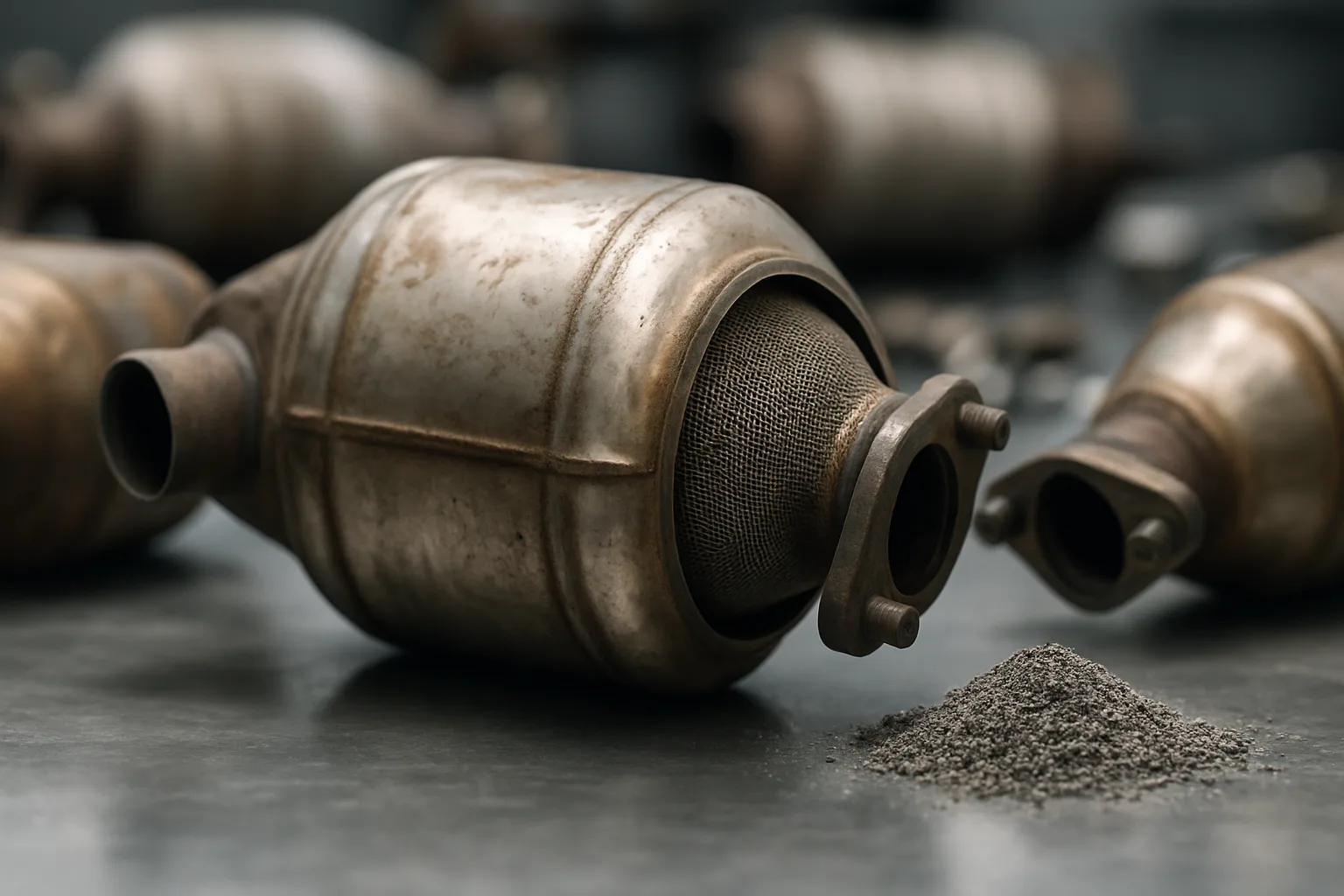
Pull two catalytic converters off the shelf — one OEM, one aftermarket — and they might look nearly identical. Same shape, same heat shields, same mounting flanges. But when a scrap buyer runs the numbers, the catalytic converter scrap value difference can be staggering. We're talking anywhere from a modest spread to a gap of hundreds of dollars on a single unit. If you don't know which type you're holding, you're leaving real money on the table.
This isn't a minor technicality. It's the single most misunderstood factor in converter pricing — and yards in Jacksonville and across Florida see this confusion play out every week. Sellers bring in loads of mixed units, quote from a random price list, and wonder why the offer comes back lower than expected. The answer almost always traces back to what's actually inside the converter.
What Makes OEM Catalytic Converters Worth More at the Scrap Yard
OEM stands for Original Equipment Manufacturer. These converters ship directly from the automaker — or their direct-supply chain — and get installed on new vehicles. The key distinction isn't the brand name stamped on the housing. It's the precious metal loading inside the ceramic or metalite substrate.
OEM converters are engineered to meet strict emissions standards across the life of the vehicle — typically 150,000 miles or more. To do that reliably, manufacturers load the substrate with higher concentrations of platinum, palladium, and rhodium. Palladium in particular has been a dominant catalyst metal for gasoline engines, and the palladium price today factors directly into what your OEM unit is worth. When palladium trades high, OEM converter values reflect that. When it drops, OEM units still tend to hold better relative value than their aftermarket counterparts — because the raw PGM content is simply higher.
Here's what drives OEM converter scrap values up:
- Higher PGM loading — More platinum, palladium, and rhodium per unit, measured in grams per cubic foot of substrate
- Consistent substrate quality — Dense, intact ceramic or metalite honeycomb retains precious metals better
- Identifiable part numbers — OEM units carry recognizable serial codes that buyers can cross-reference against verified assay data
- Predictable recovery rates — Smelters and refiners know what to expect, so buyers price more confidently
That last point matters more than most sellers realize. Confidence in recovery drives buyer competition. When a buyer knows exactly what they're getting, they'll bid harder for it. Uncertainty — like what you get with unknown aftermarket units — suppresses bids. Platforms like SMASH Scrap — where verified buyers bid on your metal exist precisely because competitive bidding on well-documented loads consistently produces better price discovery than a single phone call to one buyer.
Why Aftermarket Converter Scrap Value Falls Short
Aftermarket converters are built to pass an emissions test at a lower cost. That's a legitimate goal for vehicle owners. But the engineering priorities are completely different from what drives catalytic converter scrap yard price. Aftermarket units use lower PGM loadings — sometimes dramatically lower — because they're optimized for cost at point of sale, not for long-term catalyst performance or precious metal content.
Some aftermarket converters contain a fraction of the palladium or platinum you'd find in the comparable OEM unit. Some use ceramic substrates of varying density. Others use metalite, which can hold up differently through the smelting and recovery process. The variability is wide — and that variability is exactly what scrap buyers are pricing in when they discount an aftermarket unit.
There's another layer here: traceability. OEM converters have serial numbers, part numbers, and VIN associations that allow buyers to verify what they're looking at before they commit to a price. Many aftermarket units lack this traceability, which pushes buyers toward conservative pricing. If a buyer can't verify what's in the converter, they'll protect their margin — and that comes directly out of your payout.
The takeaway is simple: if you're sourcing converters for resale or pulling them off vehicles at your yard in Jacksonville, knowing whether a unit is OEM or aftermarket before you price it isn't optional. It's the baseline.
How Palladium Price Today Affects the OEM vs. Aftermarket Gap
The precious metals market is volatile. The palladium price today can differ significantly from last month, and that volatility flows directly into converter pricing. But it doesn't affect OEM and aftermarket units equally.
When palladium prices surge, OEM converter values climb sharply — because the payable metal content in those units is meaningfully higher. Aftermarket units see a smaller absolute dollar increase because there's simply less palladium to price in. When palladium drops, OEM units lose value too, but their relative premium over aftermarket units tends to persist. The gap doesn't close just because the market softens.
This dynamic is why serious converter sellers — whether you're a dismantler in Florida, a fleet recycler, or a yard operator anywhere in North America — need to check current scrap converter prices against live market data, not last month's price sheet. A number that was accurate 60 days ago may not reflect today's palladium market at all.
Rhodium also plays a role, though it's less discussed. Rhodium concentrations in OEM converters can be significant, and rhodium has historically been one of the most volatile PGMs on the market. OEM units from diesel applications often carry higher platinum loads rather than palladium — another reason why knowing the vehicle type and converter origin matters when you're calculating expected value.
Identifying What You Have Before You Sell Catalytic Converters Online
The difference between getting paid accurately and getting shorted often comes down to documentation. Before you sell catalytic converters online, you need to know what you're listing. That means:
- Photograph the serial number — Every OEM converter has one. Get a clear photo of the code stamped or embossed on the body. This is what allows buyers to match the unit to assay data.
- Note the vehicle make, model, and year — A converter pulled from a 2021 Toyota Tundra carries different expectations than one from a 2015 Honda Civic. VIN lookup tools can help verify this.
- Identify the substrate type — Ceramic vs. metalite affects handling, recovery, and buyer interest. If you're not sure, a photo of the end of the substrate can help an experienced buyer assess it.
- Flag aftermarket units separately — Don't mix OEM and aftermarket in the same lot without disclosure. It creates pricing friction and erodes buyer trust.
- Check for damage — A rattled or broken substrate means lost PGM material. Buyers will discount accordingly, and hiding it doesn't help anyone.
This documentation process is exactly what buyers on platforms like SMASH expect — and it's what allows them to bid with confidence rather than hedge with discounts. Find the best scrap converter prices today by bringing documentation, not just a box of mixed units.
If you're operating in the Jacksonville area, the Jacksonville scrap metal services available through the platform make it straightforward to get properly evaluated pricing on both OEM and aftermarket inventory, with buyers who understand the difference.
What This Means If You're Selling Catalytic Converters in Florida
Florida has active enforcement around converter documentation requirements — and that's not changing in 2026. Yards and sellers operating in Jacksonville and across the state need to maintain proper records: seller identification, vehicle source documentation, and inventory logs. This isn't just regulatory compliance — it's also what protects your payout.
A well-documented OEM unit with a clear chain of origin is worth more to a serious buyer than an undocumented unit of the same type. When you sell catalytic converters Florida, buyers factor in the regulatory environment. They want clean, traceable inventory — and they'll pay a premium for it. Yards that invest in documentation practices aren't just protecting themselves legally. They're building a competitive advantage in price negotiations.
The scrap converter market in Florida is competitive enough that going in without data is leaving money behind. Read scrap converter pricing guides to understand how to position your inventory before you take it to market — whether you're a small dismantler or running a high-volume operation.
Bottom line: OEM units command higher prices because they contain more recoverable precious metals, carry identifiable serial data, and generate more buyer confidence. Aftermarket units are worth less for the inverse of every one of those reasons. The wider you understand that gap, the better you'll negotiate.
If you're ready to stop guessing and start getting real market-driven offers on your converter inventory, SMASH Scrap — where verified buyers bid on your metal puts competition back on your side. That's how transparent pricing is supposed to work.
Disclaimer: Catalytic converter scrap values fluctuate with daily precious metal markets, including palladium, platinum, and rhodium. All pricing referenced is for illustrative purposes only. Always verify current rates before selling.
Frequently Asked Questions
Q: How much is a catalytic converter worth for scrap in Jacksonville?
Scrap value varies widely depending on whether the converter is OEM or aftermarket, the vehicle it came from, and the current palladium and platinum markets. OEM units from domestic trucks and SUVs tend to carry higher values than aftermarket units from compact cars. The best approach is to document the serial number and get a market-based quote rather than relying on a static price list.
Q: Why does my aftermarket converter get such a low scrap offer?
Aftermarket converters are manufactured with lower precious metal loadings than OEM units — that's how they're made affordable at the point of sale. Buyers price that reduced PGM content in immediately. If you're consistently getting low offers, it's worth verifying whether your inventory is OEM or aftermarket before approaching buyers.
Q: Does the palladium price today really affect what I get paid?
Yes, directly. Palladium is the primary catalyst metal in most gasoline-engine converters, and its market price is one of the key inputs in converter valuation. When palladium trades higher, OEM converter payouts increase. Check live metal prices before selling — a move of even a few percent in the palladium market can shift your payout meaningfully on a large load.
Q: Can I sell catalytic converters online and get accurate pricing?
Yes, provided you document your inventory properly. Clear photos of the serial number, vehicle origin data, and substrate condition give online buyers enough information to price accurately. Platforms that facilitate competitive bidding among vetted buyers — rather than a single take-it-or-leave-it offer — tend to produce the most accurate market pricing.
Q: Do Florida regulations affect how I sell scrap catalytic converters in Jacksonville?
Yes. Florida requires seller identification and documentation of converter origin, and these requirements are actively enforced in 2026. Keeping clean records isn't just a legal requirement — it also makes your inventory more attractive to serious buyers who want traceable, compliant material. Well-documented loads consistently attract stronger offers.
Find the best scrap converter prices — get a free quote at best-scrap-converter-prices.com.
Stay sharp on scrap metal market movements — follow SMASH on LinkedIn for converter pricing updates, regulation news, and market insights across North America.