Why Your Catalytic Converter Is Worth More — or Less — Than It Was Yesterday
You pulled a catalytic converter off a vehicle this morning. By the time you call a buyer this afternoon, the price may have already moved. That's not a sales tactic — that's just how the catalytic converter scrap value market works. Precious metal prices shift daily, sometimes hourly, and if you're not watching the inputs that drive converter pricing, you're guessing. Guessing costs money.
This guide breaks down exactly what moves the market, what separates a good offer from a great one, and how sellers in Long Beach and across California can stop leaving money on the table.
What Actually Drives Catalytic Converter Scrap Value
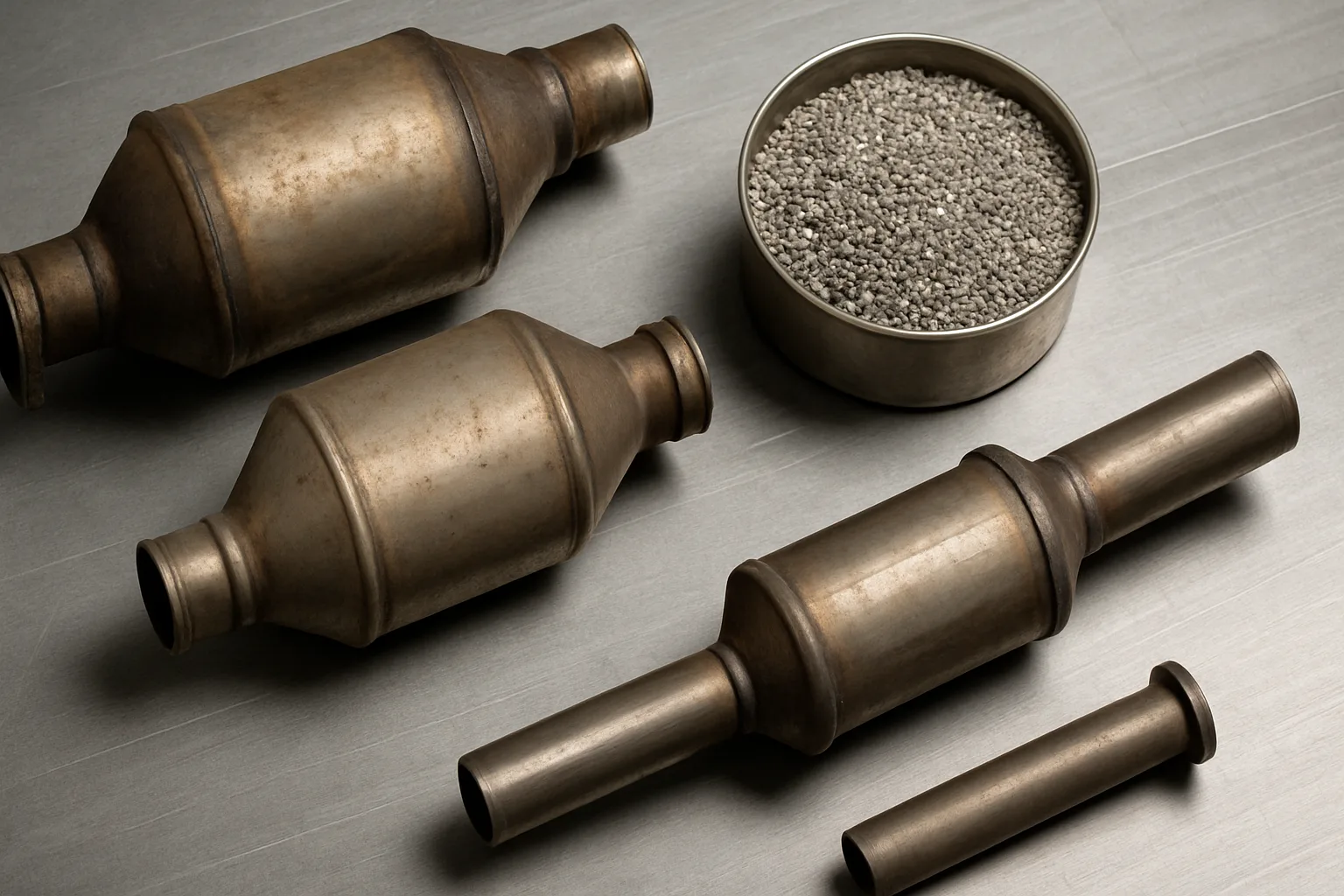
A catalytic converter isn't just a chunk of metal — it's a container for platinum group metals (PGMs): platinum, palladium, and rhodium. The converter itself is nearly worthless without them. Those three metals are what processors pay for, and their prices are set by global commodity markets, not by whoever answers the phone at your local yard.
Here's why that matters for you as a seller:
- Palladium price today directly impacts the value of converters from gasoline-powered vehicles. Palladium is the dominant PGM in most modern cats. When palladium spikes, converter values follow. When it drops, payouts shrink.
- Rhodium is volatile — it can swing hundreds of dollars per troy ounce in a single week. High-rhodium converters (often from European makes) can be extremely valuable when rhodium is elevated.
- Platinum plays a larger role in diesel converters. Diesel cats often carry higher platinum content, which is why they price differently from standard gasoline units.
None of these prices are invented by your buyer. They're pulled from commodity exchanges, updated throughout the trading day, and filtered through refinery settlement rates. When a processor quotes you a price, they're working backward from what they'll recover — minus their processing margin. Understanding that chain helps you evaluate whether an offer is fair or thin.
How Daily Market Fluctuations Actually Hit Your Payout
Here's a concrete example of how market movement works against uninformed sellers. Imagine palladium opens a trading day at a given price and closes 4% lower. A buyer locking in prices at the open may still honor that rate for loads already quoted. A buyer quoting at close? Lower payout — same converter. Same physical unit, different day, different money. That's not manipulation. That's commodity reality.
This daily volatility is why the old model of calling one buyer and taking whatever they offer is broken. That single buyer quotes you a price based on their margin requirements, their current inventory position, and whatever buffer they build in to protect themselves from market movement. Their incentive is to buy low. Yours is to sell at real market value.
A few specific factors that can move your payout on any given day:
- London Platinum and Palladium Market (LPPM) fixes — morning and afternoon fixes establish reference prices used by processors globally
- Currency fluctuations — PGMs trade in USD, so a strengthening dollar can suppress metal prices in relative terms
- Automotive industry news — production cuts, EV adoption rates, and supply chain disruptions all affect PGM demand forecasts
- Mining output data — most of the world's palladium comes from Russia and South Africa; any disruption in supply moves markets fast
- Recycling supply volume — when large volumes of used converters hit the market at once (end-of-quarter cleanouts, for example), it can soften prices temporarily
If you're a yard operator or independent collector in Long Beach sitting on a pallet of mixed cats, timing your sale and getting multiple offers isn't paranoia — it's basic price discipline. To check current scrap converter prices before you pick up the phone is just smart practice.
Identifying Your Converters Before You Sell — This Step Matters
Not all catalytic converters are created equal, and misidentifying what you have is one of the most expensive mistakes sellers make. A foreign large (FL) from a full-size pickup and a small domestic from a compact car may look similar to the untrained eye. Their PGM content — and therefore their value — can differ by a significant margin. Selling a high-value unit at a low-value price happens more than most sellers realize.
The most reliable way to identify converters before you sell:
- Use the serial number or OEM part number stamped on the converter body. This is the most accurate identification method. Reputable buyers use serial lookup databases to pull assay data for that specific unit.
- VIN lookup — if you know the vehicle the converter came from, VIN data can tell you the make, model, engine, and which converter spec it carries. Platforms built for this process make it fast.
- Photo documentation — upload clear photos showing the serial number, the body of the converter, and both ends. Buyers using structured photo intake can quote more accurately than those eyeballing a description over the phone.
- Know your converter categories — foil, ceramic, diesel particulate filters (DPFs), large foreign, small domestic, pre-cats. Each category prices differently. Lumping them together in a mixed quote often benefits the buyer, not you.
Platforms like SMASH are built around this kind of structured documentation. Serial tracking and photo intake aren't extra steps — they're what allow vetted buyers to bid accurately on what you actually have, not on a vague description. That documentation creates competition. Competition is what reveals real catalytic converter scrap value.
Selling Catalytic Converters in California — What Long Beach Sellers Need to Know
California has some of the tightest regulations around catalytic converter sales in the country, and those rules tightened further in recent years in response to theft-driven supply concerns. If you're operating in Long Beach or anywhere in California, documentation isn't optional — it's legally required.
Key compliance considerations for California sellers in 2026:
- Proof of ownership — buyers are required to verify that converters weren't stolen. This means vehicle documentation, business licenses for yards, or purchase records for independent collectors.
- Seller identification — California law requires recyclers to record seller information and hold certain records. Legitimate buyers will ask for this. If they don't, that's a red flag.
- Business-to-business vs. individual sellers — rules differ. Know which category applies to your operation before you sell.
For sellers in Long Beach specifically, the local market includes a mix of independent yards, auto dismantlers, and fleet operators. That diversity creates opportunity — there's real demand for quality, documented converter inventory. But it also means price variation across buyers is wide. Some buyers in the Long Beach area are paying closer to real market value because they have processor relationships and move volume. Others are sitting on bigger margins. You can't tell the difference without competitive quotes.
If you want to find the best scrap converter prices today, the answer isn't calling one buyer in your zip code. It's putting your documented load in front of multiple vetted buyers simultaneously and letting the market do the work.
How to Sell Catalytic Converters Online and Get Real Market Value
The shift toward online converter sales isn't a trend — it's a structural change in how the scrap market works. Physical geography used to limit your options. If you were in Long Beach, you called Long Beach buyers. That constraint no longer exists. Online platforms connect sellers with processors and buyers across the country, which means your load competes in a larger market and attracts offers that reflect broader demand.
Here's what a legitimate online converter sale process looks like:
- Inventory documentation — serial numbers, photos, weights, and converter type logged before anything else
- Listing or quoting — your documented inventory goes in front of multiple buyers, not just one
- Competitive bidding — buyers compete on price; you see the spread and choose
- Settlement and invoicing — auto-invoicing and clear payment terms so you know exactly what you're getting and when
- Shipping or logistics coordination — reputable platforms help with BOLs and packing lists so loads arrive documented and dispute-free
SMASH was built specifically for this kind of transaction. No subscription fees — they only make money when you make money. Vetted buyers mean you're not guessing who's on the other end of the bid. The auction format means you get to see real market competition, not a single buyer's preferred margin. To get competitive bids for your scrap metal, that structure matters.
For sellers looking to sell catalytic converters online for the first time, the process is less complicated than it sounds. The key is starting with good documentation. Everything downstream gets easier when your inventory is accurately described and supported by photos and serial data.
Reading the Market: When to Sell and When to Hold
Should you time the catalytic converter market? It depends on your volume, your storage capacity, and your tolerance for price risk. Here's the honest answer: most sellers — especially those with smaller volumes — are better off selling into the current market than trying to predict where palladium or rhodium goes next.
Commodity markets can move in directions that surprise even professional traders. Holding inventory in hopes of a price spike means carrying the risk of a price drop instead. For high-volume operations with the infrastructure to store properly and absorb short-term price movement, strategic timing has some merit. For most sellers, the cost of certainty — knowing what your load is worth today — outweighs the speculative upside of waiting.
What you can do without taking speculative risk: sell into competition rather than into a single buyer's offer. That's not timing the market — that's just not leaving money behind. To read scrap converter pricing guides and understand how market cycles move historically is useful context, but don't let research replace action on a load that's ready to move.
If you're sitting on inventory right now — in Long Beach, anywhere in California, or anywhere across North America — the first move is documentation, the second is competition, and the third is pulling the trigger when the offer reflects real market value. SMASH makes that process straightforward, transparent, and fee-free on the seller side. That's not a pitch — that's just how the platform works.
Ready to stop guessing what your converters are worth? Find the best scrap converter prices and get a free quote at best-scrap-converter-prices.com — no subscription, no guesswork, just real market data working for you.
Disclaimer: Catalytic converter scrap prices fluctuate daily based on precious metal markets. Always check current rates before selling. Prices referenced in this guide are for educational context only and do not represent guaranteed offers.
Frequently Asked Questions
Q: What determines the catalytic converter scrap value of my converter?
The value is based on the platinum group metals (PGMs) inside — primarily platinum, palladium, and rhodium. Each converter type carries a different PGM concentration, which is why accurate identification using serial numbers or VIN data is essential before you sell. Global commodity prices for these metals change daily, directly affecting your payout.
Q: How does the palladium price today affect what I get for my converters?
Palladium is the dominant PGM in most gasoline-engine catalytic converters, so it has the most direct impact on everyday scrap converter prices. When palladium prices rise on commodity markets, payouts for palladium-rich cats follow. When it drops, payouts drop with it — sometimes within the same business day.
Q: Can I sell catalytic converters online from Long Beach, California?
Yes. Online platforms allow Long Beach sellers to reach buyers far beyond their local market, which typically means better competition and better price discovery. California's documentation requirements still apply regardless of where you sell — make sure you have proof of ownership and proper seller identification ready.
Q: Is it worth holding my converters waiting for prices to go up?
For most sellers, holding inventory to time the market introduces more risk than reward. Precious metal prices are unpredictable, and storage carries its own costs and risks. A better approach is maximizing the value you get today by selling into a competitive, multi-buyer environment rather than a single-buyer quote.
Q: How is SMASH different from just calling a local scrap yard?
A local yard gives you one offer based on their margin requirements. SMASH puts your documented inventory in front of multiple vetted buyers who compete on price — which means you see what the market actually values your load at, not just what one buyer is willing to pay. There are no subscription fees, and you're under no obligation to accept any bid.
---Follow SMASH on LinkedIn for scrap metal market updates, pricing insights, and industry news across North America.