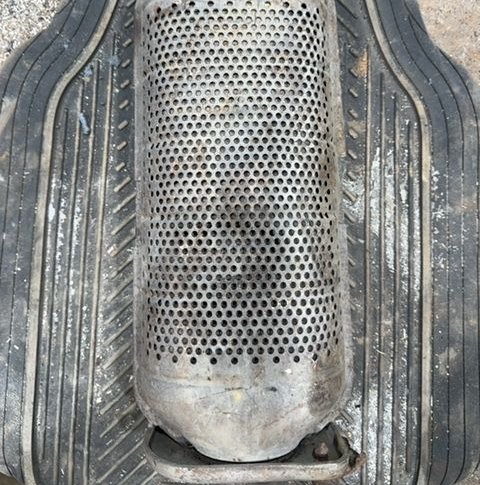
Why Your Catalytic Converter's Serial Number Is Worth Real Money
Most scrap yards will hand you a lowball offer before they even look at your converter. But the serial number stamped on that unit tells a precise story — what precious metals are inside, how much, and what your converter is actually worth on today's market. If you want to find the best scrap converter prices today, learning to read that number is step one.
For sellers in Madison, Wisconsin, this matters more than ever. With platinum, palladium, and rhodium markets continuing to swing in 2026, the difference between an informed seller and an uninformed one can be hundreds of dollars per unit. That number on the shell isn't random. It's a map to your converter's catalytic converter scrap value — if you know how to read it.
What Is a Catalytic Converter Serial Number and Where Do You Find It?
A catalytic converter serial number — sometimes called a part number, OEM number, or converter code — is a manufacturer-stamped identifier that tells recyclers exactly which vehicle the converter came from and what's inside the substrate. It's usually found stamped directly into the metal body of the converter, printed on an attached tag, or engraved on a flat surface near the inlet or outlet pipe.
Not every converter makes it easy. Some numbers are partially rusted, heat-damaged, or obscured by bracket welds. Here's where to look:
- Top or side of the main body — the most common location for OEM converters
- Heat shield surface — some manufacturers stamp directly onto the shield
- Inlet/outlet pipe flange area — look near the weld seams
- Attached foil or metal tag — common on aftermarket units
- End cap stamping — circular end pieces sometimes carry part codes
Wire brush the area lightly if grime is covering the stamp. A handheld flashlight at an angle often reveals numbers that look invisible in flat light. Take a clear photo before you move it — buyers and pricing databases need a readable image to quote accurately.
How to Decode What the Serial Number Actually Means
Here's the short version: the serial number cross-references against recycler databases that contain assay data — lab-tested results showing the exact precious metal content of that converter type. When a buyer looks up your number, they're not guessing. They're pulling historical data on platinum group metal (PGM) concentrations specific to that unit.
The format varies by manufacturer. OEM converters from major automakers follow different conventions:
- Ford/GM domestic units — typically 7-10 alphanumeric characters, often beginning with a letter prefix tied to the model year or platform
- Toyota/Honda imports — longer numeric strings, sometimes with a country-of-manufacture code embedded
- European vehicles (BMW, Mercedes, Audi) — often include a letter block indicating emission standard generation (Euro 5, Euro 6)
- Aftermarket converters (Dorman, Walker, MagnaFlow) — carry their own part numbering systems, which recyclers cross-reference to OEM equivalents
Some numbers also indicate the substrate type — ceramic honeycomb or metallic foil — which affects processing methods and yield. Ceramic substrates are most common. Metallic foil substrates, often found in performance or European applications, can carry higher PGM loadings but require different smelting approaches.
Want to go deeper on pricing methodology? Read scrap converter pricing guides that break down how PGM spot prices translate into what lands in your pocket.
Platinum Group Metals: Why the Serial Number Connects Directly to Market Value
Every catalytic converter contains some combination of platinum, palladium, and rhodium — the platinum group metals (PGMs) that do the actual emissions-reducing chemistry. The serial number tells a recycler which of those metals is present and in what approximate ratio. That's why two converters that look identical on the outside can have wildly different scrap metal prices today.
It's worth understanding the broader market context. Research into recycling the platinum group metals — including work done from a European perspective — has consistently shown that secondary recovery from catalytic converters is one of the most economically significant sources of these metals globally. South Africa dominates primary mining, but converters represent a massive secondary supply. When mining output tightens or geopolitical pressure hits supply chains, converter scrap values spike fast.
In practical terms for a seller in Madison:
- Platinum — historically used more heavily in diesel converters; prices in 2026 reflect ongoing diesel phase-out trends in European fleets
- Palladium — dominant in gasoline converters, which make up the majority of vehicles on Wisconsin roads; palladium prices have remained volatile through the mid-2020s
- Rhodium — present in smaller quantities but historically the highest-value PGM per troy ounce; minor swings in rhodium pricing can move your unit's total value significantly
The serial number lets buyers calculate your unit's exposure to each of those metals. That's not trivia — it's the math behind your offer.
Common Serial Number Problems and How to Handle Them
Selling scrap converters in Madison or anywhere else in Wisconsin runs into the same real-world complications. Serial numbers get damaged. Converters get misidentified. Here's how to navigate the most common issues without losing money.
The number is partially unreadable. Don't guess and don't let a buyer guess for you — they'll guess low. Use a wire brush and penetrating oil to clear corrosion. If the stamp is deep enough, rubbing a wax crayon over it and then lifting with paper sometimes reveals obscured digits. Photograph in multiple lighting conditions.
The converter has no visible number. This happens with some older units, heavily modified vehicles, or units that have been cut from the vehicle improperly. In this case, buyers typically assess by physical characteristics — size, weight, end pipe diameter, and substrate density. You can also provide the vehicle VIN, which experienced recyclers use to cross-reference the original equipment converter specs.
The number doesn't match any database. Aftermarket units sometimes carry proprietary codes. Ask your buyer to identify the OEM equivalent. Platforms like get competitive bids for your scrap metal connect sellers with vetted buyers who have access to deep cross-reference databases — not just the basic lookup tools most single-buyer yards use.
You have multiple converters with similar numbers. Document each unit separately with its own photo. Batch selling without individual identification is how sellers lose money — a mixed lot gets priced to the lowest common denominator.
How to Use Serial Numbers to Sell Smarter — and Get a Better Price in Madison
Knowing your serial number puts you in a completely different negotiating position. You're not walking into a yard blind. You have data. Use it.
Start by photographing every converter before you transport it. Clear photos of the serial number, the full body, both end pipes, and any identifying tags create a documentation package that serious buyers can price accurately remotely. That's critical if you want to sell catalytic converter online instantly — remote buyers need visual confirmation before they commit to a number.
Next, get multiple quotes. This sounds obvious but most sellers in Madison and across Wisconsin still call one buyer, accept one number, and leave money on the table. The difference between a single-buyer quote and a competitive auction environment can be substantial — especially on high-value units carrying significant rhodium content.
SMASH is built specifically to fix that single-buyer problem. Instead of one call to one yard, your documented converter listing goes to a network of vetted buyers who compete against each other. Competition creates price discovery. Price discovery means you find out what your unit is actually worth — not what one buyer wants to pay. Check current scrap converter prices and then put them to work by getting real competing bids.
SMASH also handles the documentation side — photo uploads, serial tracking, and auto-invoicing — so your load is professionally presented to buyers from the start. That transparency gives buyers more confidence, and confident buyers bid higher.
If you're in Madison with a load of cats, a few scraped units from a shop cleanout, or a single high-value converter from a hybrid or diesel truck, the process is the same: document the serial numbers, photograph everything, and get it in front of more than one buyer. That's how you stop guessing and start knowing what your converters are actually worth.
Ready to stop leaving money at the yard? Find the best scrap converter prices — get a free quote at best-scrap-converter-prices.com. Bring your serial numbers. The math will do the rest.
Disclaimer: Catalytic converter scrap values fluctuate daily based on platinum, palladium, and rhodium spot prices. Always verify current rates before selling.
Frequently Asked Questions
Q: Where exactly is the serial number on a catalytic converter?
It's usually stamped directly onto the metal body of the converter — check the top, sides, and near the inlet/outlet flanges. Some units have it on a heat shield or an attached foil tag. If you're having trouble finding it, clean the surface with a wire brush and use angled lighting to make the stamping visible.
Q: How do cat converter prices in Madison compare to national averages?
Cat converter prices in Madison track the same PGM spot markets as the rest of the country — platinum, palladium, and rhodium are globally traded commodities. What varies locally is the buyer competition in your area. Sellers who access national buyer networks through platforms like SMASH typically see better price discovery than those limited to local yard quotes alone.
Q: Can I get a quote for my catalytic converter without physically going to a scrap yard?
Yes. With clear photos of the serial number and the converter body, many buyers — including those accessible through online platforms — can provide remote quotes. This is the fastest way to sell catalytic converter online instantly without committing to a yard's in-person offer first.
Q: Does the vehicle VIN help if my converter serial number is unreadable?
It can. Experienced recyclers and platforms with strong cross-reference databases can use a VIN to identify the original equipment converter specs for your vehicle. This gives buyers a reasonable starting point for pricing even when the physical serial number is damaged or missing.
Q: Why do two converters that look the same have different scrap values?
Because the precious metal loading — the actual amount of platinum, palladium, and rhodium in the substrate — varies by manufacturer, vehicle platform, and emissions standard generation. Two identical-looking converters from different model years or different regions can have meaningfully different catalytic converter scrap values. The serial number is how buyers tell them apart.
Follow SMASH on LinkedIn for scrap metal market updates, PGM pricing insights, and industry news delivered straight to your feed.
```