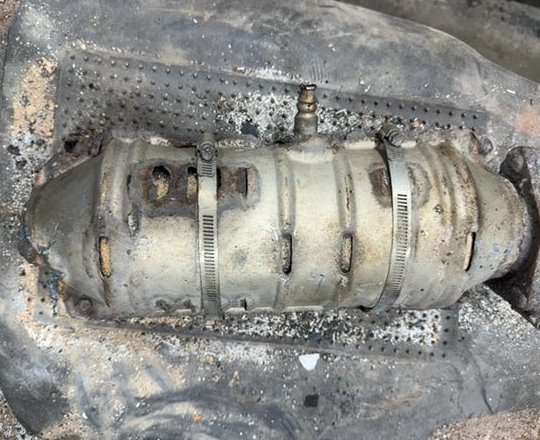
OEM vs. Aftermarket Catalytic Converters: Why the Scrap Value Gap Is Wider Than You Think
Pull two catalytic converters off a shelf — one OEM, one aftermarket — and they might look nearly identical. Same size, same shape, same flanges. But when you sell catalytic converters online, the price difference between those two units can be staggering. We're talking anywhere from a few dollars to several hundred dollars per unit. That gap doesn't happen by accident.
If you're sitting on a pile of spent cats in Detroit, Michigan and trying to figure out why your quotes are all over the map, this is the article you need. The value difference between OEM and aftermarket converters comes down to precious metal content — and understanding that difference is the fastest way to stop leaving money on the table.
What Makes OEM Catalytic Converters Worth More to Scrap Buyers
OEM stands for Original Equipment Manufacturer. These are the converters installed at the factory — built to meet strict emissions standards set by automakers and regulators. To meet those standards, OEM converters are loaded with precise concentrations of platinum, palladium, and rhodium embedded in a ceramic or metalite substrate washcoat.
That precious metal loading is the whole ballgame. Scrap buyers don't care about the shell. They care about what's inside. OEM substrates typically carry significantly higher PGM (platinum group metal) content per gram compared to their aftermarket counterparts. The assay result — the actual chemical analysis of what's in there — drives the catalytic converter scrap price.
Here's why Detroit scrap yards and national buyers pay more for OEM units without hesitation:
- Higher PGM loading: OEM converters meet stricter emissions specs, which requires more precious metals in the washcoat.
- Consistent substrate quality: Factory specs are tighter, so assay results are more predictable for buyers pricing large lots.
- Better substrate integrity: OEM units tend to retain their substrate better over time, meaning less material loss before smelting.
- Verified part numbers: Most OEM cats have traceable part numbers tied to published PGM data, making pricing faster and more accurate.
When a buyer in Michigan — or anywhere across North America — quotes your OEM Ford, GM, or Stellantis converter, they're working from known data. That confidence lets them bid aggressively.
Why Aftermarket Converters Carry Lower Scrap Value
Aftermarket converters — the ones sold at parts stores as replacements — serve a completely different purpose. They're built to pass emissions tests and keep a vehicle road-legal at the lowest possible cost. That means manufacturers minimize precious metal content to hit a price point.
The result? An aftermarket converter might carry a fraction of the PGM loading of the OEM unit it replaced. Some ultra-cheap aftermarket units have almost no recoverable precious metals at all. When you try to sell catalytic converters online and wonder why a particular unit gets quoted at $8 while a similar-looking one gets $180, this is why.
Aftermarket converters also introduce more variability for scrap buyers:
- No standardized PGM loading: Different manufacturers use different substrate formulations — some have more, some have almost none.
- Harder to identify: Many aftermarket cats lack clear part numbers or carry generic codes that don't tie to published assay data.
- Higher moisture and contamination risk: Budget converters sometimes have thinner substrates that crack or degrade faster, reducing recoverable material.
- Less buyer competition: Because values are low and variable, fewer buyers aggressively bid on aftermarket-heavy loads.
This doesn't mean aftermarket converters are worthless — they still contain recoverable PGMs. But they're priced accordingly, and mixing them into an OEM load without disclosure will get your quotes cut fast. Transparency isn't just good ethics. It's good business.
How Precious Metal Markets Drive the Value Gap Right Now
The spread between OEM and aftermarket scrap value doesn't stay static. It moves with commodity markets — specifically with the platinum price today, palladium, and rhodium. As of October 2026, PGM markets remain sensitive to global automotive production trends, EV adoption timelines, and mining supply constraints out of South Africa and Russia.
When rhodium spikes — and it has historically moved dramatically — OEM converters from certain vehicle makes can see their scrap value jump significantly in a short window. Aftermarket units with minimal rhodium content feel almost none of that upside. That's the leverage point: OEM converters move more with the market because they have more exposure to PGM price swings.
For sellers, this creates a timing consideration. Knowing what's in your inventory and watching PGM markets before you sell isn't paranoia — it's how experienced Michigan scrap operations protect their margins. Platforms like compare scrap metal bids from verified buyers help sellers access competitive pricing that actually reflects current market conditions, not yesterday's numbers.
The old way — calling one buyer, taking their word for it — doesn't give you the data to know if you're getting fair market exposure. Competition does.
Identifying What You Have: OEM vs. Aftermarket in the Yard
You can't optimize what you can't identify. Sorting your inventory correctly before you list is one of the highest-leverage moves you can make as a seller. Here's how to tell OEM from aftermarket in a practical yard setting:
- Check the substrate pattern: OEM converters typically have a finer, denser honeycomb structure. Aftermarket units often have a coarser, less dense pattern visible from the end of the unit.
- Look for part numbers: OEM cats usually have an embossed or stamped part number on the shell. Cross-reference it against a converter price database to confirm PGM data.
- Weigh the substrate: Heavier substrate weight (after removing the shell) often — not always — correlates with higher PGM content on OEM units.
- Note the vehicle source: If you're pulling converters off vehicles, document the year, make, model, and VIN. This is where scrap metal inventory management tools pay off — serial tracking and VIN lookup features let you build accurate records that buyers trust.
- Watch for foil substrate (metalite) units: Some OEM converters use metallic foil substrates instead of ceramic. These are often higher value and should be kept separate.
Detroit scrap operations processing high volumes of domestic vehicles — Ford F-Series, GM trucks, Dodge RAM — will encounter a high ratio of OEM units if they're sourcing from insurance or auction pools. That's a position worth protecting with accurate documentation.
When you're ready to find the best scrap converter prices today, having your inventory sorted and documented gives every buyer on the platform more confidence to bid at the top of their range.
Why Documented Inventory Changes the Conversation When You Sell Catalytic Converters Online
Buyers price to their uncertainty. When a buyer doesn't know if your load is 80% OEM or 80% aftermarket, they assume the worst. That assumption costs you money on every transaction.
Documented inventory flips the dynamic. Photo documentation, part number records, vehicle source data, and accurate substrate descriptions give buyers the confidence to compete on price instead of hedge against risk. More confidence from buyers means more competitive bids. More competitive bids means better price discovery for the seller.
SMASH is built around exactly this principle. The platform uses photo documentation, serial tracking, and verified buyer networks so that sellers aren't just guessing what their load is worth. Buyers bidding on a well-documented load of OEM heavy-duty truck converters from Michigan will bid differently than buyers guessing at a mystery pile. That difference shows up in your final price.
If you've been selling converters the old way — one call, one offer, no competition — you're pricing your inventory blind. Check current scrap converter prices against what competitive bids look like on a documented load and you'll understand why documentation isn't optional for serious sellers.
Maximizing Your Converter Scrap Value: What Smart Sellers Do Differently
The yards and sellers consistently getting strong converter scrap values share a few habits. None of them are complicated. All of them require discipline.
- Sort before you sell: OEM, aftermarket, and foil substrate units should never go into the same pile for pricing purposes. Separate them. Price them separately.
- Document everything: Photos, part numbers, VINs where available, vehicle source. The more data, the better the bid.
- Watch PGM markets: You don't need to be a commodities trader. But knowing whether platinum and rhodium are trending up or down before you sell can change your timing decision.
- Get multiple bids: One buyer gives you one data point. An auction format gives you the market. There's a reason SMASH was built around competition, not convenience for buyers.
- Use the right platform: Selling converters through channels built for scrap metal — with vetted buyers and auction mechanics — will outperform cold calls and local single-buyer relationships most of the time.
For sellers across Michigan and the broader Midwest, the Detroit market has enough volume and buyer interest to support real competition on well-documented loads. Don't settle for a single take-it-or-leave-it offer when the infrastructure exists to do better.
If you want to Detroit scrap metal services that connect you to verified buyers across North America, the tools are there. The question is whether you're using them.
Want to go deeper on converter pricing mechanics before you sell? Read scrap converter pricing guides that break down how PGM content, buyer competition, and documentation work together to drive your final number.
Ready to find out what your OEM converters are actually worth in today's market? Find the best scrap converter prices — get a free quote at best-scrap-converter-prices.com.
Disclaimer: Catalytic converter scrap prices fluctuate daily based on platinum, palladium, and rhodium spot prices. Always verify current rates before selling.
Frequently Asked Questions
Q: Why do OEM catalytic converters get higher scrap prices than aftermarket ones?
OEM converters are manufactured to meet strict factory emissions specifications, which requires higher concentrations of platinum, palladium, and rhodium in the substrate. Aftermarket converters are built to minimize cost, so they carry significantly less precious metal content. Since scrap buyers pay based on recoverable PGM value, OEM units command stronger prices every time.
Q: How do I sell catalytic converters online and get a competitive price?
The key is documentation and competition. Sort your inventory into OEM vs. aftermarket, photograph units, and record part numbers or VIN data where possible. Then use a platform like SMASH that puts your documented load in front of multiple vetted buyers in an auction format — not just one local buyer giving you a single take-it-or-leave-it number.
Q: Does the platinum price today affect what my scrap converters are worth?
Yes, directly. Catalytic converter scrap prices move with platinum, palladium, and rhodium spot prices. OEM converters with higher PGM loading see the biggest value swings when these markets move. Watching PGM trends before you sell — especially on large OEM loads — can meaningfully impact your final number.
Q: Where can I sell catalytic converters in Detroit or Michigan?
Detroit and Michigan have an active scrap market with local yard options, but local single-buyer quotes don't always reflect full market value. Online platforms that connect you to vetted buyers across North America — and create genuine bid competition — typically produce stronger price discovery than a single local relationship.
Q: How do I know if my catalytic converter is OEM or aftermarket before I sell?
Check for a stamped or embossed part number on the converter shell — OEM units almost always have one. Aftermarket units often have generic or no part numbers. You can also examine the substrate through the end of the unit: OEM honeycomb patterns are typically finer and denser. When in doubt, cross-reference your part number against a converter price database before you list.
Follow SMASH on LinkedIn for scrap metal market updates, PGM price insights, and industry news: linkedin.com/company/scrap-metal-auction-sales-hub.