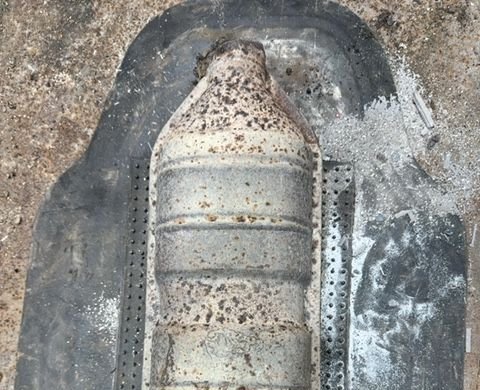
Your catalytic converter might be worth more than your car payment. Most sellers have no idea what's actually driving the price — and that gap costs real money.
Understanding OEM catalytic converter value starts with one thing: the precious metals locked inside the ceramic substrate. Platinum, palladium, and rhodium — collectively called PGMs (platinum group metals) — are what recyclers, refiners, and buyers are actually bidding on. Not the steel shell. Not the age of the vehicle. The metals.
This week's market recap breaks down exactly what's inside your converter, why those metals fluctuate in value, and how sellers in San Diego and across California can stop guessing and start getting paid what their converters are actually worth.
What Precious Metals Are Actually Inside a Catalytic Converter?
Every OEM catalytic converter contains a ceramic or metalite honeycomb substrate coated with a precise blend of PGMs. The exact ratio depends on the vehicle manufacturer, engine type, and emission standards the unit was designed to meet. But the three metals you need to know are:
- Platinum (Pt): Used primarily in diesel converters. Helps oxidize carbon monoxide and unburned hydrocarbons.
- Palladium (Pd): Dominant in gasoline converters. Highly effective at high temperatures, which is why modern vehicles lean heavily on it.
- Rhodium (Rh): The rarest and historically the most valuable of the three. Reduces nitrogen oxides (NOx) — critical for meeting emissions targets.
The loading amounts are small — we're talking fractions of a gram — but PGM spot prices are high enough that even tiny quantities move the needle significantly on scrap value. A large truck or SUV converter often carries meaningfully more PGM loading than a compact sedan unit, which is why converter prices vary so dramatically by vehicle type and application.
OEM units — the factory-installed converters — tend to carry higher PGM content than aftermarket replacements. Aftermarket converters are built to meet emissions compliance thresholds at lower cost, which usually means lower metal loading. That difference shows up directly in recycling value. An OEM converter from a domestic full-size truck and an aftermarket unit from the same vehicle are not worth the same thing — not even close.
How PGM Spot Prices Drive Catalytic Converter Prices Today
This is where most sellers get lost. Catalytic converter prices today are not fixed. They move with global precious metal markets, supply chain conditions, and industrial demand — sometimes daily. Rhodium, for instance, has historically swung from under $1,000 per troy ounce to well above $20,000 in the span of a few years. That kind of volatility has a direct impact on what your converter is worth on any given week.
As of this week in October 2026, PGM markets continue to respond to pressure from multiple directions: ongoing EV adoption affecting long-term palladium demand forecasts, mining output constraints in South Africa (which produces the majority of the world's platinum and palladium), and sustained industrial demand from the chemical and electronics sectors. These aren't abstract forces. They show up in your buyout price when you walk into a recycling yard.
Here's the practical takeaway: if you're selling a converter based on a price you heard about six months ago — or worse, a number a buyer quoted you over the phone without seeing the unit — you're flying blind. Spot prices shift. Assay returns vary by unit. The only way to know your actual converter scrap value is to get competitive bids based on current market data.
That's not an opinion. That's just how price discovery works. You can check current scrap converter prices to see where the market sits before you commit to any buyer.
OEM vs. Aftermarket: Why the Distinction Matters for Converter Scrap Value
If you're sitting on a pile of used converters — whether from a shop, a salvage operation, or a fleet — knowing the OEM versus aftermarket breakdown of your inventory is worth real money. Buyers price these differently, and for good reason.
OEM catalytic converters are manufactured to the vehicle maker's exact specifications. They carry the PGM loading required to meet original emissions certifications, which in many cases exceeds the minimum required by aftermarket equivalents. That extra loading means more recoverable precious metal per unit — and a higher payout at the refinery level. That value flows back to the seller when the buyer is actually competing for the load.
Aftermarket converters — sometimes called "direct fit" or "universal" units — use less PGM to hit cost targets. They're legal, they work, but they're not the same scrap proposition. Some aftermarket units return a fraction of what an equivalent OEM unit yields.
The problem for sellers, especially those managing mixed loads, is that sorting and identifying converters accurately is tedious work without the right tools. This is where platforms like North America's B2B scrap metal auction platform SMASH make a real operational difference. Serial tracking, photo documentation, and VIN lookup functionality help you identify and document what you have before it goes to a buyer — which means your buyers are pricing accurately, not discounting for uncertainty.
The San Diego Converter Market: What Local Sellers Should Know
San Diego sits at a unique intersection for the scrap converter market. California's strict emissions standards mean vehicles registered here — and later scrapped here — often carry higher-spec OEM converters than units from states with looser standards. That's a real advantage for San Diego scrap metal services and sellers who understand what they have.
California also generates significant converter volume from its commercial fleet sector — delivery vehicles, construction equipment, agricultural machinery in the inland areas — many of which run diesel and carry platinum-heavy converter configurations. If you're a shop or yard operator processing these units in the San Diego market, the OEM catalytic converter value of what's coming across your dock is likely above the national average on a per-unit basis.
The challenge is that local buyer networks can create a false ceiling on pricing. If you're only selling to one buyer — the same yard you've used for years, the same broker who calls every Tuesday — you have no idea whether you're at market. One buyer doesn't create competition. Competition creates price discovery.
Sellers across California are increasingly moving toward auction-based platforms for exactly this reason. When multiple vetted buyers compete for your load, you find out what your inventory is actually worth. Not what one buyer is willing to offer on a Tuesday morning.
Using a B2B Scrap Metal Marketplace to Get Competitive Converter Prices
The traditional approach to selling converters — one call, one quote, take it or leave it — has a structural flaw. It optimizes for the buyer's margin, not yours. A single buyer has no incentive to push a price higher than they need to. That's not a criticism. That's just how one-on-one negotiation works.
A B2B scrap metal marketplace like SMASH changes the dynamic. Multiple vetted buyers see your inventory. They bid competitively. You see the results. No guessing, no wondering whether you left money on the table.
SMASH is built for exactly this use case. The platform supports detailed inventory documentation — photos, serial numbers, unit identification — so buyers are bidding on real data, not vague descriptions. That documentation also reduces disputes and speeds up settlement. No subscription fees. SMASH only earns when the sale closes, which means the incentive structure is aligned with yours.
For yards and shops processing converters at volume — whether in San Diego, Los Angeles, or anywhere across the U.S. — the difference between a single-buyer quote and a competitive auction result can be significant. More buyers means better price discovery. That's not a promise. That's just math.
If you want to understand the full picture of what your converters could be worth, find the best scrap converter prices today using live market data before you pick up the phone.
Weekly Market Recap: What October 2026 Means for Your Converter Inventory
This week's roundup reflects a market that continues to price with nuance. PGM values remain sensitive to macro conditions — currency movements, South African supply updates, and ongoing signals from the automotive sector about long-term combustion engine production timelines. All of these feed into what recyclers and refiners are paying for converter loads right now.
For sellers holding inventory, timing matters but information matters more. Knowing what's in your converters — OEM vs. aftermarket, diesel vs. gasoline, high-load vs. standard — is the foundation of getting a fair price. Selling a mixed, undocumented load is the fastest way to leave value behind.
Document your inventory. Know your units. Understand that OEM catalytic converter value is tied to real-time metal markets, not to whatever a single buyer told you last month. And get competitive bids before you commit.
You can read scrap converter pricing guides to go deeper on how PGM content, market timing, and platform strategy affect your bottom line.
Disclaimer: Catalytic converter prices fluctuate daily based on PGM spot markets. The information in this article reflects general market conditions as of October 2026. Always check current rates before selling.
If you're ready to stop guessing and start getting competitive bids on your converter inventory, get a free quote at best-scrap-converter-prices.com — it takes minutes and puts real market data in your hands.
Frequently Asked Questions
Q: What determines OEM catalytic converter value when scrapping?
OEM catalytic converter value is driven primarily by the type and quantity of platinum group metals (PGMs) — platinum, palladium, and rhodium — coated onto the unit's internal substrate. The vehicle make, model, engine type, and original emissions specification all affect PGM loading. Current spot prices for those metals on global commodity markets then translate that loading into a dollar value.
Q: Are catalytic converter prices today the same everywhere in California?
No. Prices vary by buyer, by region, and by how competitive the local market is. California generates high converter volume and has strong commercial demand, but individual buyers set their own margins. Sellers in San Diego and across California get better price discovery when multiple buyers compete for their inventory rather than relying on a single local quote.
Q: How do I know if I have an OEM or aftermarket catalytic converter?
OEM converters are typically identifiable by manufacturer part numbers stamped or welded onto the unit, and they often have a more substantial build quality than aftermarket equivalents. VIN lookup tools — like those available on platforms such as SMASH — can help match a unit to the vehicle it came from and confirm OEM status. When in doubt, a reputable recycler or assay service can identify the unit.
Q: Why do converter scrap values fluctuate so much?
The PGMs inside converters — especially rhodium and palladium — trade on global commodity markets and respond to supply, demand, industrial use, and macroeconomic conditions. A shift in South African mining output or a change in automotive manufacturing forecasts can move prices meaningfully within days. This is why checking current catalytic converter recycling prices before selling is important, rather than relying on quotes from weeks ago.
Q: What is the best way to sell catalytic converters for top value in San Diego?
The most effective approach is to document your inventory accurately — photos, part numbers, OEM identification — and then expose it to multiple vetted buyers through a competitive process. A B2B scrap metal marketplace like SMASH creates that competition without requiring you to cold-call a dozen buyers yourself. More competition means the market sets the price, not a single buyer's margin targets.
Follow SMASH on LinkedIn for weekly scrap metal market updates, PGM price insights, and industry news that helps yards and sellers stay ahead of the market.