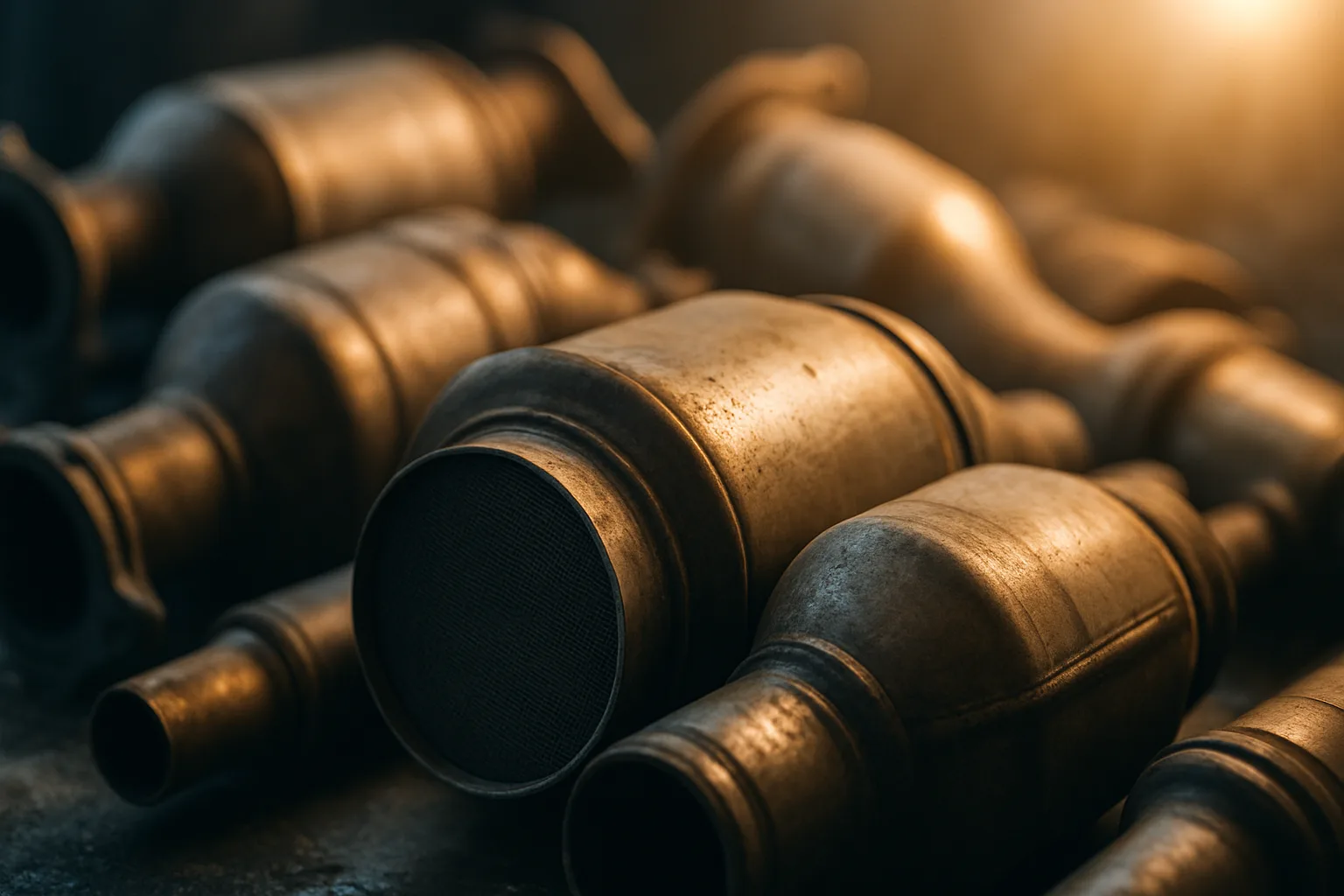
Most sellers leave money on the table because they can't read a serial number. That stamped code on the shell of your catalytic converter isn't decoration — it's the key to knowing exactly what your cat is worth before you walk into any buyer's yard. If you're selling converters in Minneapolis, understanding how to decode that number changes everything about how you negotiate.
The difference between a recycler who knows their serial numbers and one who doesn't isn't just a few dollars. On high-value units like late-model diesel cats or OEM-grade three-way converters, that gap can be significant. Platforms like SMASH Scrap — where verified buyers bid on your metal are built around exactly this kind of transparency — because when buyers compete, they compete on real data, not guesswork.
This guide breaks down how to read and identify catalytic converter serial numbers, what those numbers tell you about converter scrap value, and how to use that information to find the best scrap converter prices today.
What Is a Catalytic Converter Serial Number and Why Does It Matter?
A catalytic converter serial number is an alphanumeric code stamped, etched, or printed directly onto the converter's body or heat shield. It's assigned by the original equipment manufacturer (OEM) and it ties the unit to a specific vehicle application — make, model, engine, and year. That application data tells buyers what precious metals are inside: how much platinum, palladium, and rhodium the substrate contains.
Precious metal content drives the catalytic converter price. A converter from a V8 truck and one from a four-cylinder compact can look almost identical on the outside. The serial number is what separates them. Without it, a buyer has no choice but to guess — and when buyers guess, they guess low to protect themselves.
For sellers in Minneapolis and across Minnesota, this matters especially during volatile precious metal markets. When palladium swings, the spread between an informed seller and an uninformed one grows wider. Knowing your serial number is your first line of defense against underpricing.
Where to Find the Serial Number on a Catalytic Converter
Before you can read a serial number, you have to find it. Location varies by manufacturer, but here are the most common spots to check:
- Stamped on the body (canister): The most common placement. Look at the flat or lightly curved surfaces of the main shell.
- On the heat shield: Some OEMs stamp the code into the heat shield rather than the canister itself. Note that heat shields can be separated or damaged in handling.
- On a welded-on tag or plate: Some aftermarket or heavy-duty converters use a metal ID plate riveted or welded to the shell.
- Laser-etched near the inlet or outlet flange: Less common but used on some European and late-model Asian imports.
- Embossed under ceramic coating or paint: Clean the surface first. A wire brush and good lighting reveal a lot.
Lighting is everything. Take converters outdoors or use a strong flashlight held at an angle to create shadow contrast. Worn numbers on high-mileage units can be almost invisible under flat light. Photograph the number before it fades further — that photo becomes your documentation when you go to sell.
How to Read Catalytic Converter Serial Number Formats
Serial number formats are not standardized across the industry. Each manufacturer uses its own system. That said, there are recognizable patterns once you know what to look for.
Common Format Structures
Most serial numbers fall into one of these general patterns:
- Pure numeric strings: Common on domestic units. Example format: 16041 or 250-2014. These often correspond to aftermarket part numbers cross-referenced in converter databases.
- Alphanumeric codes: A mix of letters and numbers. Letters often indicate the manufacturer, product family, or emission standard. Numbers identify the specific application.
- OEM part numbers: Some converters carry the OEM part number directly — useful because it maps directly to the vehicle fitment data in manufacturer databases.
- Prefix + core number: Common on aftermarket converters. A two- or three-letter prefix identifies the brand, followed by a numeric core. Example format: WK-123456.
What the Characters Often Represent
While no universal key exists, common character groupings include:
- Brand/manufacturer prefix: Identifies who made the converter. This is critical — OEM and aftermarket units with the same fitment carry different precious metal loads.
- Application code: Ties the unit to engine displacement, fuel system, or emission tier.
- Production date or batch: Sometimes embedded in the sequence, helping buyers identify vintage and potential substrate degradation.
- Certification or emissions designation: California-spec (CARB) converters sometimes carry additional suffix characters.
You won't always be able to decode every character manually. That's where a read scrap converter pricing guides resource or a verified pricing database becomes essential. Cross-referencing the serial number against a known catalytic converter price list by serial number is the fastest way to confirm value.
How Serial Numbers Determine Scrap Catalytic Converter Prices Minneapolis Buyers Will Pay
Here's the direct connection: serial number → vehicle fitment → precious metal assay data → market price. Buyers in Minneapolis, like buyers everywhere, use serial number databases to look up the average precious metal yield for that specific unit type. That yield, priced against the current spot rates for platinum, palladium, and rhodium, produces the offer you receive.
This is why two converters that look identical can fetch very different prices. A cat from a larger displacement engine typically carries more substrate — more substrate means more precious metal. The serial number tells the buyer which one they're holding.
For sellers using a scrap metal auction platform like SMASH, serial number documentation takes on added importance. When you list a load with verified serial numbers, vetted buyers across the network can bid with confidence. That confidence drives competition. More competition means better price discovery — and that's how you get closer to the real market value of your inventory rather than whatever a single local buyer decides to offer on a slow Tuesday.
If you're selling cats in Minnesota regularly, building a habit around serial number documentation isn't optional — it's how you protect your margins. Minneapolis scrap metal services that rely on accurate ID data consistently deliver better outcomes for sellers who come prepared.
Common Mistakes Sellers Make When Reading Converter Serial Numbers
Even experienced recyclers make avoidable errors. Here are the most common problems and how to get past them:
- Misreading worn digits: 0 vs. O, 1 vs. I, 8 vs. B. These look nearly identical when a number is worn or partially obscured. When in doubt, photograph the unit and cross-reference multiple databases before committing to an ID.
- Assuming aftermarket equals lower value: Some aftermarket converters actually carry competitive precious metal loads. Don't dismiss them without checking.
- Relying on the heat shield alone: Heat shields get swapped, bent, or replaced. Always try to confirm the number on the canister itself if possible.
- Skipping the photo documentation step: Verbal serial numbers get transcribed wrong. A timestamped photo is both a record and a negotiating tool.
- Not checking multiple databases: No single price list covers every unit. Cross-reference at least two sources before settling on an expected value.
- Ignoring the difference between OEM and aftermarket: Same vehicle, different converter. An OEM unit will almost always carry more substrate than the aftermarket replacement that went in at the shop down the street.
Using Serial Numbers to Get Competitive Offers From Catalytic Converter Buyers Minnesota
Knowing your serial number is only half the work. The other half is putting that information in front of enough buyers to generate real competition. A single phone call to a single catalytic converter buyer in Minnesota gives you one data point. That's not a market — that's one opinion.
A documented inventory with serial numbers, photos, and counts gives a platform like SMASH something to work with. Vetted buyers can review your load data and submit competitive bids. You're not guessing at value. You're not accepting the first number someone throws at you. You're letting the market speak.
The old way — one buyer, one call, one take-it-or-leave-it price — made sense when information was locked up in dealer networks. That's not the world we're in anymore. Today, the seller who documents their converters properly and checks current scrap converter prices through a transparent channel has a real structural advantage over the seller who walks in blind.
For high-volume yards in Minneapolis handling dozens or hundreds of units, even a modest improvement per unit across a full load adds up to real money by end of quarter. The work of reading and recording serial numbers isn't overhead — it's margin protection.
Disclaimer: Catalytic converter scrap prices fluctuate based on precious metal spot rates, unit condition, and market demand. Always verify current rates before selling.
Frequently Asked Questions
Q: Where is the serial number located on a catalytic converter?
The serial number is typically stamped directly onto the converter canister (the outer shell), though it can also appear on the heat shield, a welded ID plate, or near the inlet/outlet flanges. Use strong lighting and a wire brush to expose worn numbers, and always photograph what you find before moving the unit.
Q: How do I use a serial number to find the catalytic converter price list by serial number?
Cross-reference the serial number against an established converter pricing database or use a platform that provides real-time lookup data. The number maps to a specific vehicle fitment, which buyers use to estimate precious metal yield and calculate an offer based on current platinum, palladium, and rhodium spot prices.
Q: Why do scrap catalytic converter prices in Minneapolis vary so much between buyers?
Different buyers use different databases, different margin assumptions, and different precious metal price references. Without competitive bidding, you're at the mercy of one buyer's pricing model. Submitting your documented inventory to a platform where multiple verified buyers compete gives you a much better read on actual market value.
Q: Does the difference between OEM and aftermarket converters affect scrap value?
Yes, significantly. OEM converters are manufactured to tighter emissions standards and typically contain more precious metal substrate than aftermarket replacements. The serial number helps identify which type you have — never assume a converter is aftermarket or lower grade without confirming the ID.
Q: Can I get an accurate cat converter price in Minneapolis without a readable serial number?
It's harder. Without a serial number, buyers rely on visual identification — size, shape, weight, and vehicle of origin if known — which is less precise and often leads to conservative offers. Doing whatever you can to recover or document the number before selling almost always works in your favor.
If you're selling converters in Minneapolis or anywhere across Minnesota, documentation is your competitive edge. Read the number, photograph the unit, and put your inventory in front of buyers who compete for it. When you're ready, find the best scrap converter prices today — getting a free quote at best-scrap-converter-prices.com takes minutes and puts real market data in your hands before you commit to a sale.
Stay current on precious metal markets and scrap metal pricing trends by following SMASH on LinkedIn — practical industry updates, no filler.
```