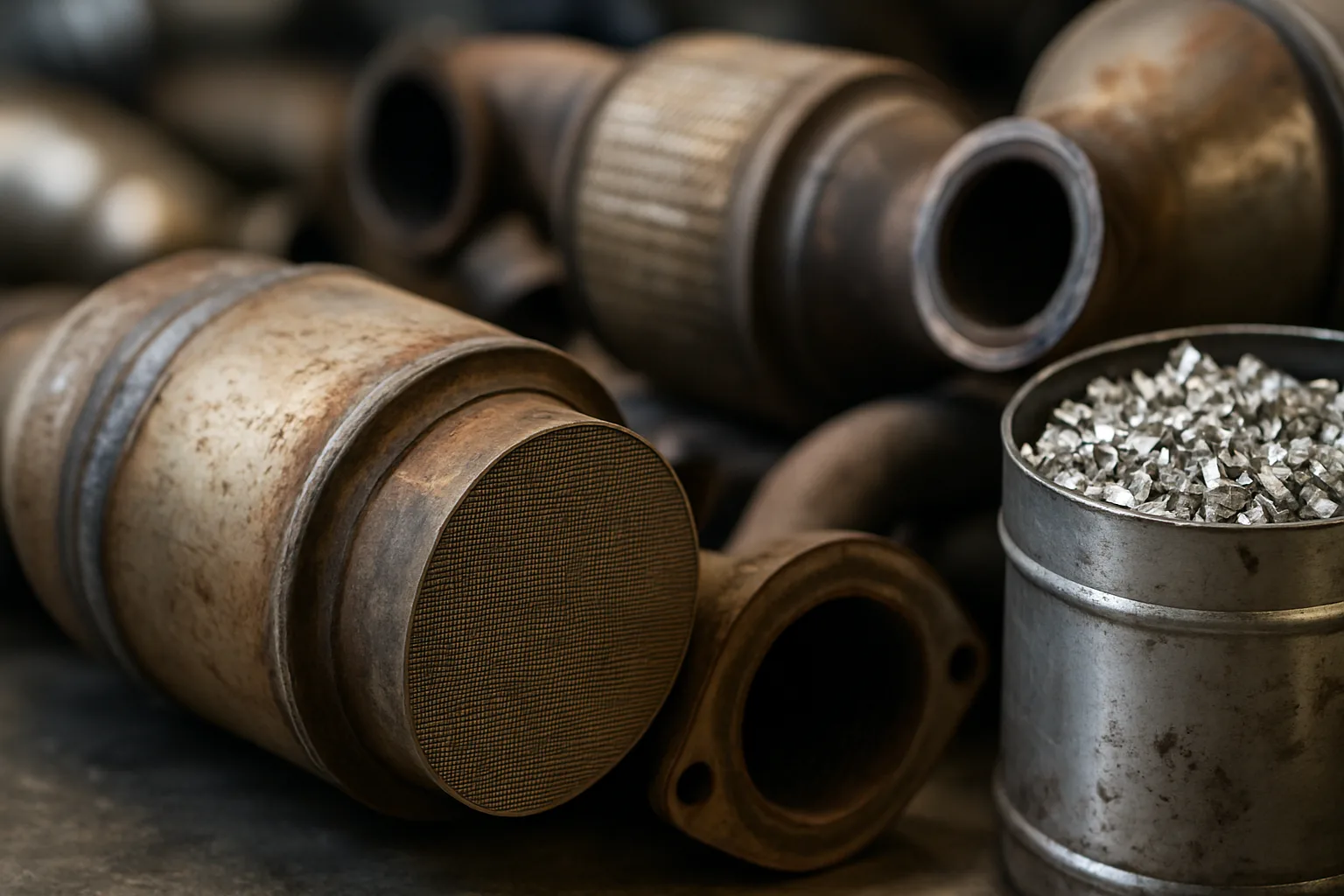
Most people who pull a catalytic converter off a vehicle have no idea what's actually inside it — or why buyers care so much about it. That mystery is exactly why so many sellers leave money on the table. If you're doing catalytic converter recycling in Tampa or anywhere across Florida, understanding the precious metals inside your cats isn't just interesting — it directly affects how much you get paid.
This isn't about chemistry class. It's about knowing your product well enough to recognize when a buyer's offer is fair and when it's not. The metals inside a catalytic converter are some of the most valuable on earth. Once you understand what they are and how they're priced, you'll approach every sale differently.
What's Actually Inside a Catalytic Converter?
A catalytic converter looks like a metal canister. Inside, there's a ceramic or metallic substrate — a honeycomb structure coated with a thin wash of platinum group metals (PGMs). These PGMs are the reason your converter has scrap value at all. The steel shell? Nearly worthless compared to what's inside.
There are three primary precious metals in most catalytic converters:
- Platinum (Pt) — Used in diesel and many gasoline converters. Historically one of the most stable and widely used PGMs in emissions control.
- Palladium (Pd) — More common in modern gasoline engines. Palladium prices surged sharply through the 2020s due to tightening global emission standards driving demand far ahead of supply.
- Rhodium (Rh) — The rarest and often most valuable of the three. Even tiny amounts of rhodium dramatically increase a converter's scrap value. It plays a critical role in reducing nitrogen oxide emissions.
The exact mix depends on the converter's make, model year, and vehicle type. A domestic full-size truck converter will carry a very different PGM profile than a small import economy car unit. That's why no two cats are worth the same price — and why generic offers from uninformed buyers are almost always low.
Why Platinum Group Metals Recycling Matters for Your Scrap Converter Price
Platinum group metals recycling isn't a niche corner of the industry. PGMs are among the most recycled materials on earth because primary mining supply is limited, geographically concentrated, and expensive. South Africa produces the majority of the world's platinum and rhodium. Russia is a dominant palladium supplier. That concentration creates supply risk — and it's why recycled PGMs from spent catalytic converters carry serious market value.
When you sell a catalytic converter, you're essentially selling access to a concentrated deposit of these metals. Refiners process the substrate, extract the PGMs, and sell them back into the supply chain. The scrap catalytic converter price you receive reflects the PGM content minus processing costs and buyer margin. This is why converter scrap value fluctuates — it moves with live precious metal markets, not with what a buyer wants to pay that day.
Here's what drives your converter's value:
- Current spot prices for platinum, palladium, and rhodium
- The specific converter type (foreign pre-cat, domestic, aftermarket, etc.)
- Condition — cracked, damaged, or gutted converters return less PGM per unit
- Volume — larger loads often attract more competitive bids
- Buyer access — more vetted buyers competing for your load means better price discovery
That last point matters more than most sellers realize. A single buyer with no competition has every incentive to low-ball you. That dynamic is exactly what get competitive bids for your scrap metal with platforms like SMASH is designed to break.
How to Identify High-Value Converters Before You Sell
Not all cats are equal. Experienced recyclers learn to sort by vehicle type, converter size, and condition — because those factors predict PGM content more reliably than visual appearance alone. If you're doing catalytic converter recycling in Tampa, you'll encounter a wide range of converter types given the sheer volume of vehicles on Florida's roads.
Some general patterns to know:
- Foreign pre-cats — Small converters positioned close to the engine on import vehicles. Often carry high palladium and rhodium concentrations relative to their size. Frequently among the highest-value units per pound.
- Large domestic units — Full-size trucks and SUVs produce larger converters. Solid platinum-palladium content, good overall value.
- Diesel converters (DOCs) — Higher platinum content, lower palladium. Value profile shifts depending on live platinum price.
- Aftermarket converters — Often far lower PGM content by design. These return significantly less at the refiner. Know the difference before you price them.
- DPF (Diesel Particulate Filters) — Not a traditional cat but carry precious metals. Value varies and they should be quoted separately.
Visual identification helps, but it has limits. That's where serial number lookup, VIN-based vehicle data, and photo documentation come in. SMASH uses these tools to help sellers accurately represent their inventory before it goes to market — so buyers bid with confidence and sellers get accurate, competitive offers rather than guesswork-based lowballs.
To find the best scrap converter prices today, you need accurate identification paired with a buying audience that's actively competing for your load.
The Regulatory Landscape for Selling Catalytic Converters in Florida in 2026
Catalytic converter theft remains one of the most prosecuted property crimes in the automotive recycling sector. Florida, like most U.S. states, has tightened its converter transaction rules significantly. In 2026, Florida's regulations require documentation at the point of sale — sellers typically need to provide proof of vehicle ownership or lawful possession, a valid ID, and in many cases a signed declaration.
Secondary buyers and recyclers operating in Tampa and across Florida are required to maintain transaction records. Many counties have implemented waiting periods before payment can be released on converter purchases. These rules exist to deter theft and protect legitimate recyclers — the ones who are doing everything right.
If you're selling through a transparent, documented platform, compliance is built in. SMASH supports photo documentation, serial tracking, and transaction records that protect both the seller and the buyer. This isn't just good practice — it's increasingly a legal requirement for anyone operating in catalytic converter recycling in Tampa at any meaningful volume.
Don't shortcut documentation. It protects your business and keeps the legitimate market functioning. If a buyer doesn't ask for documentation, that's a red flag, not a convenience.
Why Selling Catalytic Converters Online Gets You a Better Price
The traditional path — call one buyer, take what they offer, move on — costs sellers real money. When you sell catalytic converters online through a competitive auction platform, you expose your inventory to multiple vetted buyers simultaneously. That competition does something a single phone call never can: it reveals the actual market price for your specific load.
Think about what changes when multiple buyers compete:
- No single buyer can anchor the price at their preferred margin
- Buyers who specialize in your converter types can identify and bid accurately on high-value units
- You have documented offers — not verbal promises — to compare
- The transaction is recorded, protecting everyone involved
For Tampa-area recyclers running regular volume, this matters on every single load. Even a modest improvement in price discovery across a year of consistent sales adds up fast. Platforms that let you sell scrap metal online with real buyer competition aren't a luxury — they're a competitive advantage. You can also explore Tampa scrap metal services to see how local sellers are using online platforms to stop leaving money on the table.
SMASH connects sellers with vetted buyers across North America, handles auto-invoicing, and supports full inventory documentation — so your load goes to market accurately represented and properly competed for. That's how you check current scrap converter prices against real buyer demand, not just one buyer's opinion.
Building a Smarter Converter Selling Strategy
Whether you're a small independent yard processing a handful of units a week or a larger operation moving significant converter volume, a consistent strategy beats ad hoc selling every time. Here's what a sharper approach looks like in practice:
- Sort and identify before you sell. Don't mix high-value foreign pre-cats with low-value aftermarket units in the same lot without documentation. Mixed loads get priced at the lowest common denominator.
- Document everything. Photos, serial numbers, VIN data where available. This isn't busywork — it drives buyer confidence and often higher bids.
- Watch the metals markets. Palladium and rhodium in particular can move sharply. Selling into a rising market versus a dropping one is a real difference in realized price.
- Use competitive channels. One buyer is not a market. Get your inventory in front of multiple buyers every time.
- Stay compliant. Florida's documentation requirements aren't going away. Build the habit now so compliance is automatic, not stressful.
The sellers who consistently get the best converter price aren't the ones with the best connections to a single buyer. They're the ones who create real competition and document their inventory well enough that buyers trust what they're bidding on.
For more practical guidance on valuing and selling your inventory, read scrap converter pricing guides that break down market conditions, converter identification, and selling strategy in plain language.
If you're ready to stop guessing and start getting real market offers for your converters, the path is straightforward. Get your inventory documented, get it in front of multiple buyers, and let competition work for you. Start with a free quote at best-scrap-converter-prices.com — because the best scrap converter prices come from real competition, not a single phone call.
Disclaimer: Catalytic converter prices fluctuate based on live precious metal markets. Always check current rates before selling. Information in this article reflects general market dynamics as of July 2026 and is not a guarantee of specific prices.
Frequently Asked Questions
Q: What precious metals are inside a catalytic converter?
Most catalytic converters contain platinum, palladium, and rhodium — collectively known as platinum group metals (PGMs). The exact combination and quantity depend on the vehicle make, model, and engine type. These three metals are the primary drivers of converter scrap value.
Q: How do I know what my catalytic converter is worth in Tampa?
Converter value depends on the specific unit type, its PGM content, and live precious metal spot prices. The best way to get an accurate number is to identify your converter correctly — by serial number or vehicle data — and submit it to a platform with multiple active buyers. That competition gives you real price discovery rather than a single buyer's estimate.
Q: Is it legal to sell catalytic converters in Florida?
Yes, selling catalytic converters in Florida is legal when done with proper documentation. Florida law requires sellers to provide proof of lawful ownership or possession and valid identification. Many jurisdictions in Florida also have transaction record requirements for buyers. Work with buyers and platforms that support full documentation compliance.
Q: Can I sell catalytic converters online from Tampa?
Absolutely. Selling catalytic converters online is one of the most effective ways to access competitive pricing. Online platforms that connect you with multiple vetted buyers allow real competition to set the price — rather than accepting whatever a single local buyer offers. Proper documentation and accurate converter identification help you get the strongest bids.
Q: Why do catalytic converter prices change so frequently?
Converter prices move because they track live precious metal markets — specifically platinum, palladium, and rhodium. These metals trade globally and their prices shift based on supply, industrial demand, and macroeconomic factors. A converter that was worth one price last month may be worth more or less today. Always check current market rates before committing to a sale.
Stay current on scrap metal market trends and industry updates — follow SMASH on LinkedIn for regular insights on precious metals, converter pricing, and what's moving the recycling market.