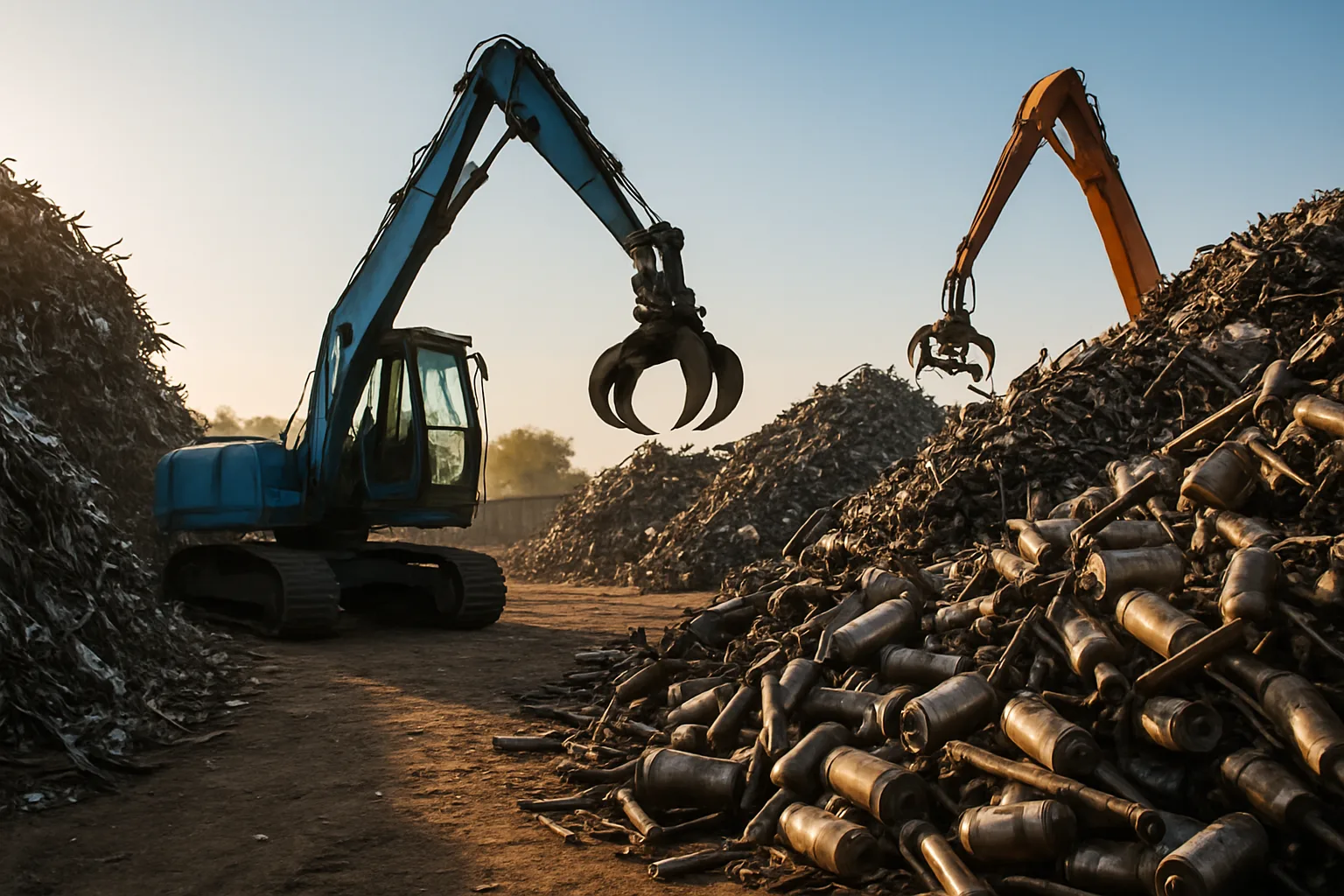
The Three Metals That Determine Your Catalytic Converter's Scrap Value
Most converter sellers think price is random. It's not. Every quote you get — whether you're in a Memphis salvage yard or selling catalytic converters online — traces back to three precious metals: platinum, palladium, and rhodium. Understand those markets, and you'll never leave money on the table again.
The rhodium price today alone can swing your converter's value by hundreds of dollars. Rhodium hit historic highs in recent years and remains one of the most volatile commodities in industrial metals. If you don't know what's driving your quote, you can't evaluate whether it's fair. That's the problem this article fixes.
Platinum, Palladium, and Rhodium: What's Inside Your Converter
A catalytic converter works by running exhaust gases over a coated substrate — a honeycomb-like structure packed with precious metal catalyst. That coating is what gives your converter scrap value. The three metals doing the heavy lifting are platinum (Pt), palladium (Pd), and rhodium (Rh).
Each metal handles a different part of the emissions conversion process. Platinum and palladium oxidize carbon monoxide and unburned hydrocarbons. Rhodium reduces nitrogen oxides — the harder chemistry — which is why it commands the highest price per troy ounce of the three. You typically find more palladium in gasoline vehicle converters and more platinum in diesel converters, though modern OEM catalytic converter designs blend all three depending on the application.
- Platinum (Pt): Common in diesel converters. Historically priced lower than palladium in recent cycles but remains significant.
- Palladium (Pd): Dominant in gasoline converters. Highly sensitive to automotive production volumes and emissions regulations.
- Rhodium (Rh): Present in smaller quantities but punches well above its weight on price. Even a fraction of a gram matters.
The actual loading — how many grams of each metal sit inside your converter — varies significantly by vehicle make, model, year, and whether it's an OEM catalytic converter or an aftermarket replacement. OEM converters from manufacturers like Toyota, Honda, or GM typically carry heavier precious metal loads than aftermarket units. That's a critical distinction for anyone trying to find the best scrap converter prices today.
How the Rhodium Price Today Drives Your Quote
Rhodium is the wildcard. Its price per troy ounce fluctuates more dramatically than platinum or palladium, and because it's present in nearly every gasoline converter substrate, its daily spot price has an outsized impact on your total converter scrap value.
Here's why rhodium moves so hard: it's rare, it has almost no substitutes in three-way catalytic chemistry, and its supply is almost entirely dependent on South African platinum group metal (PGM) mining. Any disruption — labor strikes, power outages, logistical issues — tightens supply fast. Demand, on the other hand, is structurally sticky as long as internal combustion engines need emissions controls.
When you check the rhodium price today, you're not just looking at a commodity quote. You're looking at the single biggest variable in your converter's scrap worth. Buyers who actually pay you based on real assay data and live metal prices — rather than a flat rate per unit — will adjust their offers when rhodium moves. If your buyer never mentions rhodium, ask why.
Platforms like sell your scrap metal on the SMASH marketplace bring competitive bidding to converter sales, which means market-sensitive buyers — the ones actually tracking platinum, palladium, and rhodium spot prices — are the ones competing for your load. That's how price discovery is supposed to work.
OEM Catalytic Converter Value vs. Aftermarket: Why It Matters
Not all converters are created equal, and this is where a lot of sellers lose money without knowing it. An OEM catalytic converter from a late-model truck or SUV can carry significantly more precious metal loading than a generic aftermarket replacement. If a buyer quotes you the same flat price for both, you're getting shorted on one of them.
OEM converters are designed to meet strict emissions standards for the full useful life of the vehicle. That requires enough precious metal loading to handle high mileage and heat cycles. Aftermarket converters — the kind installed when someone replaces a converter cheaply — use lower metal loadings to hit a lower price point. They pass emissions tests but they don't carry the same scrap value.
How do you tell the difference? Serial numbers and part markings matter. This is exactly why proper documentation — photos, serial tracking, and VIN lookup where applicable — gives buyers more confidence and often results in better offers. SMASH's inventory tools are built around this: photo documentation, serial tracking, and structured listings that let buyers actually evaluate what they're bidding on rather than guessing.
If you're in Memphis or anywhere across Tennessee and you're sitting on a mix of OEM and aftermarket units, sorting them before you list is worth the effort. Memphis scrap metal services can help you navigate local options, but the smartest move is to also expose your inventory to a wider buyer pool online.
How to Sell Catalytic Converters Online — and Get a Fair Price
The old way: call one local buyer, take whatever they offer, done. The problem isn't the buyer — it's the single-quote process. One quote is not a market. It's one data point from someone with a financial interest in quoting low.
The smarter approach is to sell catalytic converters online through a platform where multiple vetted buyers compete for your inventory. Competition is what reveals true market value. When three buyers are bidding on the same load of cats, the price reflects actual demand — not one buyer's margin target.
Here's what a solid online selling process looks like for converter inventory:
- Document your inventory properly. Photos, part numbers, serial numbers, vehicle source where known. More data means better bids.
- Separate OEM from aftermarket. List them distinctly. Buyers will value them differently.
- Check current metal prices before listing. Know where rhodium, palladium, and platinum are trading so you can contextualize the offers you receive.
- Use a platform with vetted buyers. Anonymous buyers with no track record are a risk. Verified buyers with transaction history are not.
- Understand the fee structure. SMASH charges no subscription fees. You pay when you sell — which means the platform's interests are aligned with yours.
You can check current scrap converter prices and get a sense of where the market sits before you commit to any offer. Going in informed is not complicated — it just requires using the right tools.
Memphis Converter Sellers: What You Need to Know in 2026
Memphis has a strong automotive recycling and salvage infrastructure. The Mid-South region generates significant converter volume from both consumer vehicles and commercial fleet turnover. That means there are buyers in Memphis — but it also means competition among sellers is real, and buyers know the local market well.
If you're selling in Memphis or across Tennessee, a few practical points apply directly to you:
- Documentation requirements are real. Tennessee, like most states, has strengthened converter transaction documentation rules. Know your requirements before you sell.
- Local flat-rate buyers exist, but they're not the only option. Taking the first offer from a catalytic converter buyer near you open now makes sense when speed is the priority — but not when you have volume or OEM units worth more.
- Online platforms reach national buyers. A Memphis-based seller listing on SMASH isn't limited to Memphis-area buyers. You're reaching vetted buyers across North America who may pay more for specific converter types than any local option.
The best catalytic converter price isn't always local. Sometimes the best buyer for a heavy load of Toyota or Honda OEM cats is a processor in another state who specializes in those units. Online selling removes the geographic limitation that's been quietly costing sellers money for years. Read scrap converter pricing guides to sharpen your knowledge before your next sale.
What Drives Converter Prices Up — and Down
Precious metal spot prices are the foundation, but they're not the whole story. Several factors layer on top of daily PGM prices to determine your final converter scrap value:
- Vehicle segment trends: Truck and SUV converters generally carry more precious metal than small car units. As truck sales volumes remain high, converter supply from that segment stays strong — which affects pricing dynamics.
- Emissions regulations: Tighter standards push manufacturers to increase precious metal loading, which supports long-term scrap value for OEM units.
- EV adoption rate: As electric vehicles grow as a share of new sales, future converter supply from those vehicles eventually drops — a long-term structural factor worth understanding.
- Refiner capacity and processing timelines: The refining pipeline from raw converter to recovered metal has lead times. Buyers price in their processing costs and holding risk.
- Market liquidity: More active buyers in the market means tighter spreads and better prices for sellers. This is the core argument for auction-style platforms over single-buyer transactions.
None of these factors are visible in a single phone call to a local buyer. But they're all baked into the market when multiple informed buyers compete. That's the transparency argument for SMASH, and it's not a marketing claim — it's basic market structure.
If you're serious about getting the best converter price for your inventory — whether you're a small yard in Memphis or a mid-size recycler moving volume across Tennessee — the answer is the same: document well, understand your metals, and sell into competition, not away from it. Start with a free quote at best-scrap-converter-prices.com and see what the market actually says your converters are worth.
Disclaimer: Catalytic converter scrap prices fluctuate daily based on platinum, palladium, and rhodium spot markets. Always check current rates before finalizing any sale.
Frequently Asked Questions
Q: How does the rhodium price today affect what I get paid for my catalytic converter?
Rhodium is present in nearly every gasoline catalytic converter and typically commands the highest price per troy ounce of the three primary PGMs. When the rhodium price today rises, buyers who pay based on real assay data and live metal prices will offer more. When rhodium drops, your converter's scrap value drops with it. Always check PGM spot prices before you sell.
Q: What's the difference in scrap value between an OEM catalytic converter and an aftermarket unit?
OEM catalytic converters carry heavier precious metal loadings than aftermarket replacements because they're engineered to last the vehicle's full lifespan under strict emissions standards. Aftermarket units use lower loadings to hit a lower retail price point. For scrap purposes, this means OEM units are typically worth meaningfully more — sometimes significantly so for larger truck or SUV applications.
Q: Is it better to sell catalytic converters online or to a local buyer in Memphis?
Local buyers in Memphis offer convenience and speed, which matters when you need fast payment. But a single local offer is not a market price — it's one buyer's number. Selling online through a platform with multiple vetted buyers creates competition, which is how you find out what your converters are actually worth. For volume or OEM-heavy loads, online selling typically outperforms the single-call approach.
Q: What documentation do I need to sell catalytic converters in Tennessee?
Tennessee has documentation requirements for converter transactions, including seller identification and vehicle source information in many cases. Requirements can vary by transaction type and volume. Always verify current state and local rules before completing a sale — proper documentation also helps buyers assess your inventory more accurately, which generally leads to stronger offers.
Q: How can I tell if I'm getting a fair scrap converter price?
The most reliable way is to understand where platinum, palladium, and rhodium are trading and compare that against the offer you receive. Buyers who pay based on actual assay data and live PGM spot prices are more transparent than flat-rate buyers. Getting multiple offers — through a competitive platform or by contacting several buyers — gives you real market context instead of a single data point.
Follow SMASH on LinkedIn for ongoing scrap metal market insights, converter pricing trends, and industry news: linkedin.com/company/scrap-metal-auction-sales-hub.
```