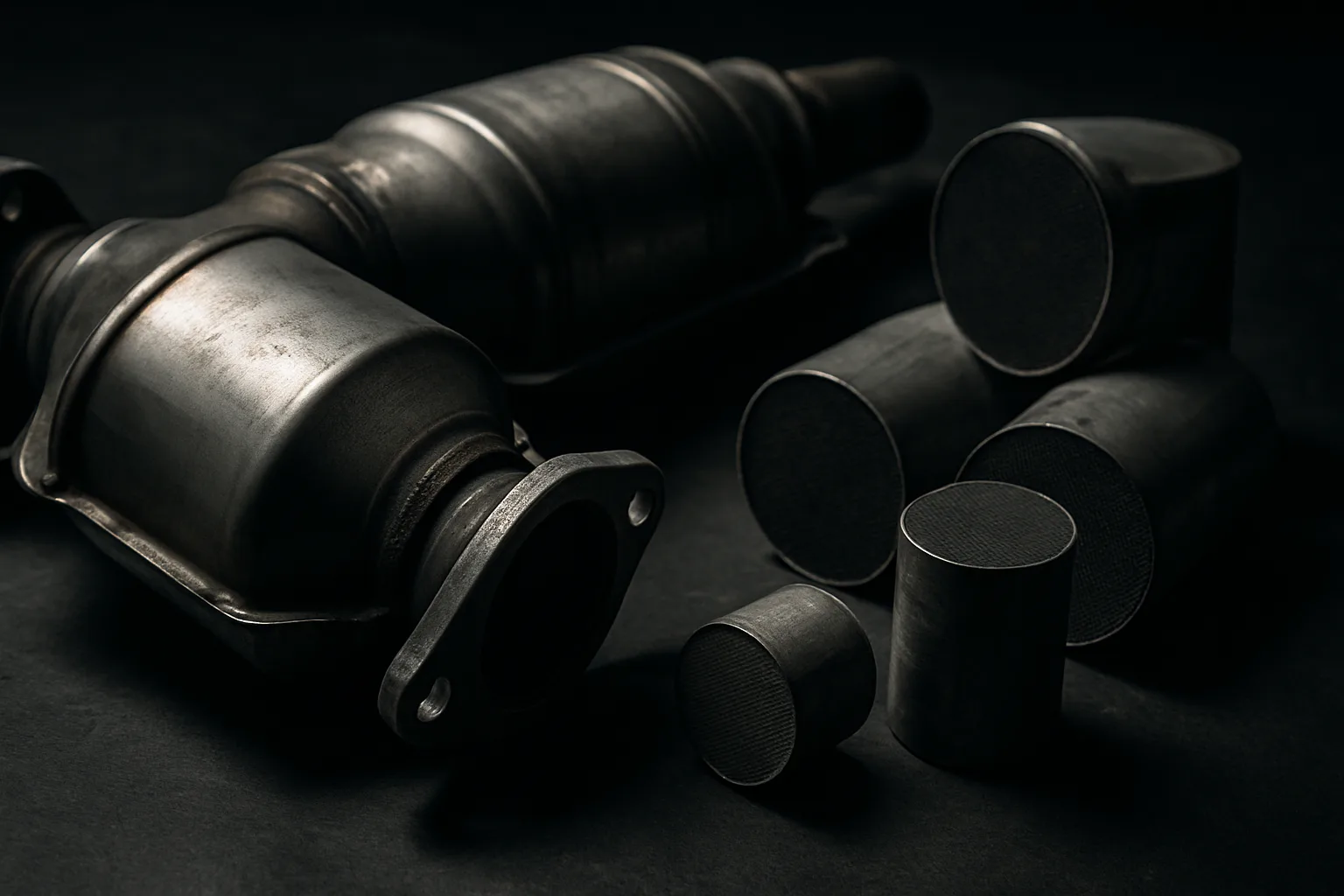
Rhodium prices have swung from under $1,000 per troy ounce to over $20,000 — and that single metal is the main reason your old catalytic converter is worth serious money. If you're sitting on used cats in Riverside and wondering why scrap values vary so wildly, rhodium is the answer you've been missing.
Understanding what's inside a catalytic converter isn't just chemistry trivia. It directly affects the cat converter prices Riverside yards and buyers are willing to pay. The more you know about platinum group metals (PGMs), the harder it is for buyers to lowball you.
What Makes Rhodium the Most Valuable Metal in a Catalytic Converter
Three platinum group metals live inside every catalytic converter: platinum, palladium, and rhodium. All three are valuable. But rhodium operates in a different league entirely. It's rarer than platinum, far rarer than palladium, and its annual global supply is measured in just a few hundred thousand troy ounces — most of it coming as a byproduct of South African platinum mining.
What makes rhodium irreplaceable is function. It handles the hardest conversion job in the catalyst — breaking down nitrogen oxide (NOx) emissions into harmless nitrogen and oxygen. No commercially viable substitute exists at scale. Automakers can't simply swap it out. That supply scarcity combined with non-negotiable industrial demand is exactly why rhodium prices move so aggressively. When emissions regulations tighten anywhere in the world, rhodium demand spikes. Supply doesn't follow quickly.
For converter sellers, this matters because rhodium content varies significantly by vehicle type and make. Knowing whether your converter is rhodium-heavy or rhodium-light changes its scrap value more than any other single factor.
How Platinum Group Metals Recycling Drives Catalytic Converter Scrap Value
The catalytic converter scrap value you get quoted isn't based on the whole unit. It's based on the recoverable PGM content inside the ceramic or metallic substrate — and that figure changes daily with spot markets. When a recycler or processor buys your converter, they're essentially buying a small, concentrated PGM deposit. The better the platinum group metals recycling process, the more accurate that valuation becomes.
Here's how the recovery chain works:
- Collection: Yards and sellers accumulate converters and sort them by type.
- Assay and identification: Converters are identified by serial number, VIN data, or physical markings to estimate PGM content before processing.
- Processing: Substrate material is crushed, sampled, and smelted. The PGMs are separated and refined.
- Settlement: Sellers receive payment based on actual recovered metal at contracted percentages of spot price.
The gap between what a street buyer quotes you and what the converter actually yields at a processor can be significant. That gap is where informed sellers either capture value or lose it. In a market where rhodium content in a single premium converter can reach fractions of a gram worth hundreds of dollars, precision in identification pays off. Platforms like SMASH let you compare scrap metal bids from verified buyers rather than accepting the first number someone offers you at the gate.
Why Riverside, California Sellers Need to Pay Attention to PGM Spot Markets
Riverside sits in the Inland Empire — one of the most active logistics and recycling corridors in the western United States. There's no shortage of scrap yards, auto dismantlers, and converter buyers operating in the region. That competition should work in your favor. But it only does if you come to the table with real market knowledge.
California's strict vehicle emissions standards mean the state has historically had a higher concentration of late-model, well-equipped catalytic converters on the road. More complex emissions systems often mean higher PGM loading in the converters. A converter pulled from a California-spec vehicle can carry more recoverable metal than the same model sold in a state with looser standards. That's a localized advantage Riverside sellers shouldn't ignore.
Spot prices for platinum, palladium, and rhodium move every trading day. A converter you hold for two weeks could be worth noticeably more — or less — depending on what's happening in the PGM markets. Watching those movements isn't paranoia. It's basic due diligence. When you're ready to sell, find the best scrap converter prices today by comparing live market-based quotes rather than relying on a single yard's posted board price.
Converter Scrap Value: What Actually Moves the Number
Sellers often ask why two converters that look nearly identical get quoted at very different prices. The answer comes down to a handful of variables that any serious buyer is factoring in — whether they explain it to you or not.
The factors that determine your converter scrap value:
- Vehicle make, model, and year: OEM specifications determine PGM loading. Domestic trucks, Japanese imports, and European luxury vehicles all follow different loading patterns.
- Converter type: Three-way catalysts, diesel oxidation catalysts (DOCs), diesel particulate filters (DPFs), and selective catalytic reduction (SCR) units all have different PGM profiles. DPFs often carry platinum but little rhodium.
- Substrate condition: A cracked, melted, or missing substrate means missing PGMs. Buyers will discount heavily for damaged cores.
- Current spot prices: Rhodium, platinum, and palladium each move independently. The blend of metals inside your specific converter determines how much each spot movement affects your quote.
- Buyer margin and processing fees: Different buyers take different cuts. The same converter can yield $40 more or less depending purely on who's buying.
That last point is why comparison matters. A single phone call to one yard is not price discovery. It's one data point. SMASH is built around the idea that competition reveals the real market — more buyers bidding on your inventory means you find out what your converters are actually worth, not what one buyer is willing to offer on a Tuesday morning.
To understand current benchmarks before you sell, read scrap converter pricing guides that break down market conditions and converter categories in plain language.
How SMASH Helps Riverside Converter Sellers Get Real Bids
The old way of selling converters goes like this: strip the cat, call your usual buyer, take what they offer, move on. That approach leaves money on the table consistently. You have no idea if the quote reflects the actual market. You have no leverage. And if your usual buyer is having a slow week, their offer reflects that — not what your inventory is worth.
SMASH changes that dynamic. Instead of one buyer and one number, you get vetted buyers competing for your inventory. Serial number tracking, photo documentation, and accurate lot descriptions give buyers the confidence to bid aggressively. Documented inventory moves faster and attracts better offers. That's not a promise — it's basic market logic. More qualified buyers with better information means better price discovery.
For a Riverside seller moving any volume of converters — even a modest accumulation from a small dismantler or repair shop — the difference between one offer and five competitive bids can add up quickly across a year's worth of sales. No subscription fees. SMASH only earns when you sell. That alignment matters.
Whether you're selling a mixed lot of domestic cats or a clean run of high-grade foreign units, the process is the same: list your inventory with photos and serial data, let vetted buyers compete, and close on the best number. If you want to check current scrap converter prices before you list, start there and build your baseline.
The Global PGM Market and What It Means for Your Local Price
Converter scrap doesn't exist in a local market bubble. The price you get in Riverside is downstream of decisions made by South African platinum miners, European automakers adjusting PGM loading in new vehicle designs, and commodity traders reacting to emissions regulation shifts in China, the EU, and North America. Rhodium's extreme price sensitivity to policy changes anywhere in the world makes it especially volatile.
This isn't an academic point. A single regulatory announcement — stricter NOx limits, new emissions compliance timelines — can push rhodium spot prices meaningfully in either direction within days. Sellers who understand this context know when urgency makes sense and when holding a load is a reasonable call. Sellers who don't understand it just take whatever number they're offered and wonder why it varies.
Global recycling demand for PGMs continues to grow as new vehicle production expands and end-of-life vehicle volumes increase. The secondary supply — converters like the ones sitting in your yard — plays an increasingly important role in meeting that demand. Your inventory has real industrial value in a global supply chain. Treat it accordingly.
Disclaimer: Catalytic converter prices fluctuate daily based on precious metal spot markets. Always verify current rates before selling. The information in this article reflects general market conditions as of July 2026 and is subject to change.
Frequently Asked Questions
Q: Why do cat converter prices in Riverside vary so much between buyers?
Different buyers use different pricing models, take different margins, and have access to different processing networks. A buyer quoting off a generic price sheet will often offer less than one using current spot data and accurate identification. Getting multiple quotes — not just one — is the only way to know if you're being paid fairly for your converter scrap value.
Q: How do I find out how much rhodium is in my specific catalytic converter?
The most reliable method is serial number or VIN-based lookup through a converter identification database. Experienced buyers and platforms like SMASH use serial tracking to match converters to their known PGM profiles. Physical appearance alone won't tell you the rhodium content — two converters that look identical can have very different PGM loading depending on make, model, and emissions spec.
Q: Does it matter that I'm selling converters in California versus other states?
California's stricter emissions standards historically meant vehicles registered here carried converters with higher PGM loading to meet compliance requirements. That can translate to higher scrap value on certain units. However, California also has regulations around converter sales documentation — ensure you're transacting with licensed buyers and maintaining proper records.
Q: What's the best way to get accurate cat converter prices in Riverside right now?
Use a combination of current spot market data for platinum, palladium, and rhodium, and get quotes from multiple verified buyers rather than relying on a single source. Platforms that connect you with competing buyers — like SMASH — give you real market exposure instead of one buyer's margin decision.
Q: Should I hold my converters if rhodium prices are rising?
That's a judgment call that depends on your volume, storage capacity, and risk tolerance. Rhodium is extremely volatile — it can move significantly in both directions in a short window. There's no guarantee that waiting leads to a higher sale price. If you're considering timing the market, watch the spot price daily and set a target before committing to hold.
Ready to stop guessing what your converters are worth? Find the best scrap converter prices with real market data behind the number — get a free quote at best-scrap-converter-prices.com and find out what competitive bidding actually looks like for your inventory.
Stay current on PGM markets and scrap metal industry news — follow SMASH on LinkedIn for market insights and updates delivered straight to your feed.
```