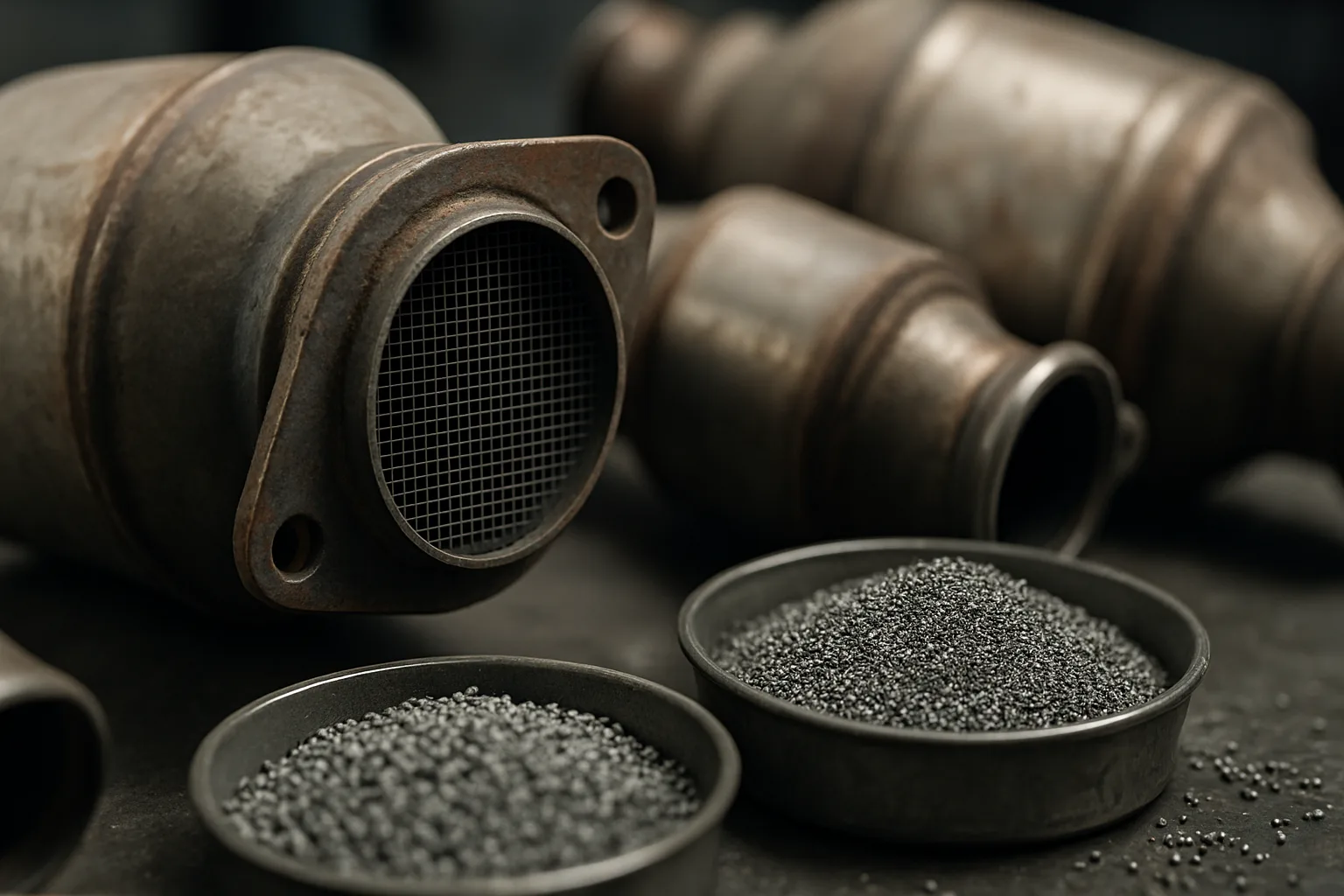
What's Actually Inside a Catalytic Converter — And Why It's Worth Real Money
Most people know catalytic converters have value. Few know why. The short answer: three precious metals that are rarer than gold and critical to industries far beyond automotive. If you're sitting on a pile of spent cats in Memphis or anywhere else in Tennessee, understanding what's inside changes how you think about selling them.
The catalytic converter scrap value isn't guesswork. It's tied directly to live precious metal markets — the same markets driving demand from electronics manufacturers, chemical processors, and green energy producers worldwide. That's why converter prices swing hard week to week. And it's exactly why you need more than one buyer quoting you a flat rate with no explanation.
This week's market recap breaks down the metals inside your cats, what's moving prices right now, and how to stop leaving money on the table when you sell.
The Three Precious Metals Driving Catalytic Converter Scrap Value
Every catalytic converter contains a ceramic or metallic substrate coated with a precise mix of platinum group metals (PGMs). The combination varies by vehicle make, model, and year — but the three metals doing the work are platinum, palladium, and rhodium.
Here's what each one does and why the market cares:
- Platinum (Pt): The original catalyst metal. Platinum oxidizes carbon monoxide and unburned hydrocarbons into CO₂ and water. Diesel vehicles lean heavily on platinum-rich formulations. It's also a core input for hydrogen fuel cell technology, which means industrial demand isn't going away.
- Palladium (Pd): The dominant metal in gasoline-engine converters. Palladium handles the same oxidation reactions as platinum but performs better at the higher temperatures gasoline engines produce. The palladium price today fluctuates with automotive production cycles, EV adoption rates, and Russian supply constraints — Russia historically supplies a significant share of global palladium. Any shift in that supply chain moves the market fast.
- Rhodium (Rh): The smallest by volume, the biggest by price. Rhodium reduces nitrogen oxides (NOx) — the emissions that tighten regulations keep targeting. It's genuinely scarce, has no good substitutes, and production is almost entirely a byproduct of platinum and palladium mining. When rhodium spikes, converter values spike with it.
The ratio of these three metals inside any given converter determines its scrap value. A three-way cat from a late-model V6 truck looks very different from a small inline-4 cat from a compact car. That's why serialized tracking matters — and why "flat rate per unit" pricing from a single buyer should raise your eyebrows.
How the Precious Metal Markets Are Moving This Week
As of this week ending August 30, 2026, the PGM markets continue to reflect a mixed demand environment. Palladium has faced sustained pressure as hybrid and battery-electric vehicle penetration reduces the total number of traditional catalytic converters entering the supply chain over time. That said, the global car parc — the total number of vehicles already on the road — still runs overwhelmingly on internal combustion engines. That backlog keeps converter recycling volume high.
Rhodium remains volatile. It doesn't take large volume swings to move the rhodium price meaningfully, which is why a load of high-rhodium domestic cats can be worth significantly more than a load of foreign small-engine units, even at similar weight.
Platinum has seen modest support from hydrogen economy investments and jewelry demand, providing a partial floor even when automotive output dips.
The takeaway for sellers this week: the spread between a well-documented, competitively bid load and a quick over-the-counter sale can be substantial. Check current scrap converter prices before you make any deal. Market data in hand changes the conversation with buyers.
Why Memphis Sellers Are at an Advantage — If They Use the Right Platform
Memphis is a logistics hub. Scrap yards and recycling operations in this city move serious volume — and that volume should translate into leverage when selling cats. The problem is that too many Memphis sellers still operate on a handshake-and-phone-call model with a single buyer. One quote. No competition. No transparency about what the PGM assay actually showed.
That's the old way. It doesn't serve you.
If you're looking to sell catalytic converters in Tennessee with real price discovery, you need multiple vetted buyers seeing your inventory at the same time. That's what competitive auctions do. Memphis scrap metal services through platforms like SMASH connect your loads to buyers who are actively competing — not just quoting a comfortable spread because they're the only phone number you called.
SMASH gives you documented inventory, photo capture, serial tracking, and a buyer network that bids against each other. That's not a pitch. That's just how price discovery works when competition is actually present.
Documenting Your Load: What Buyers Actually Need to See
Serious buyers — the ones paying top-of-market — want documented loads. That means clear photos, serial numbers where visible, accurate unit counts, and honest condition reporting. A well-documented load moves faster and attracts more bids. A mystery box gets lowball offers from cautious buyers padding for unknown risk.
Here's what a strong converter inventory submission looks like:
- Photos of each unit — front and back. Show the substrate condition. Cracked or blown-out substrates affect value.
- Serial number or part number — wherever visible. This lets buyers cross-reference against assay databases and price more confidently.
- Unit count and type — domestic large, domestic small, foreign, DPF, foil. Don't mix categories without labeling them.
- Vehicle source data — if you're pulling cats from specific makes and models, say so. A load of late-model domestic truck cats tells a different story than mixed unknowns.
- Condition notes — are they off-vehicle fresh? Stored? Any aftermarket units mixed in?
This level of documentation isn't bureaucratic overhead. It's what separates a competitive auction from a flat-rate transaction. Buyers compete harder when they know what they're buying. Find the best scrap converter prices today by giving buyers the data they need to bid with confidence.
How to Sell Catalytic Converters Online Without Getting Burned
The converter theft epidemic of the early 2020s drove stricter state-level regulations across the country, and Tennessee has tightened its documentation requirements for converter purchases in response. That means knowing your compliance obligations isn't optional — it's the cost of doing business. Legitimate buyers operating inside compliant platforms are actually your safest path to market.
When you sell catalytic converters online, vet the platform the same way you'd vet a buyer walking into your yard. Ask the right questions:
- Are buyers vetted and credentialed?
- Is pricing tied to live PGM market data?
- Does the platform handle documentation — photos, serials, BOLs, packing lists?
- Is there a subscription fee, or does the platform only make money when you do?
SMASH operates on a no-subscription model. No monthly fee. The platform only wins when the sale closes. That aligns incentives in the right direction.
If you're searching for catalytic converter buyers near me in the Memphis area, a marketplace like SMASH expands your reach beyond local yard competition without sacrificing compliance or documentation. Sell your scrap metal on the SMASH marketplace and let vetted buyers compete for your load — instead of you competing for their attention.
Want to go deeper on pricing methodology and documentation best practices? Read scrap converter pricing guides covering assay breakdowns, market timing, and how to read a buyer's offer sheet.
Weekly Recap: Key Takeaways for Converter Sellers This Week
The precious metals market doesn't pause for weekends. Here's what matters heading into the first week of September 2026:
- Palladium pressure continues — but near-term recycling volumes remain strong given the existing vehicle fleet. Don't interpret EV trends as a reason to rush a bad deal.
- Rhodium volatility means timing matters — high-rhodium loads from domestic trucks deserve competitive bidding, not a quick counter offer.
- Documentation is leverage — the seller who documents well sells better. Every time.
- One buyer is not a market — whether you're in Memphis, Nashville, or anywhere else in Tennessee, a single phone call is not price discovery.
- Compliance isn't optional — use platforms and buyers who operate inside the law. It protects you and keeps the market clean.
The catalytic converter scrap value in your next load is real. The question is whether you're capturing it fully or leaving part of it on the table. If you want a transparent, competitive process, get a free quote at best-scrap-converter-prices.com — and find out what your cats are actually worth in today's market.
Disclaimer: Precious metal prices fluctuate daily based on global market conditions. All price references in this article are general in nature. Always check current live rates before finalizing any sale.
Frequently Asked Questions
Q: What makes catalytic converter scrap value go up or down?
Catalytic converter scrap value tracks the live spot prices of platinum, palladium, and rhodium. When any of those PGM prices rise, converter values rise with them. Vehicle type, converter condition, substrate integrity, and documentation quality also affect what buyers will pay for a given load.
Q: Is the palladium price today affecting what I'll get for my catalytic converters?
Yes — directly. Palladium is the primary PGM in most gasoline engine converters, so shifts in the palladium spot price move converter values in real time. If palladium has dropped since your last sale, expect lower offers. If it's up, push for competitive bids rather than accepting the first quote you get.
Q: How do I find catalytic converter buyers near me in Memphis, Tennessee?
Local scrap yards are one option, but they represent a single buyer with no competitive pressure on their offer. Online platforms like SMASH connect Memphis sellers with vetted buyers across North America, which typically produces better price discovery than a single local quote. Check compliance requirements under Tennessee regulations before completing any transaction.
Q: Can I sell catalytic converters online legally from Tennessee?
Yes, but documentation matters. Tennessee has tightened regulations around converter sales in response to theft enforcement efforts. You'll need proof of ownership, accurate vehicle source information, and detailed unit records. Compliant online platforms handle much of this documentation automatically — which is another reason to use a structured marketplace over informal channels.
Q: What's the difference between domestic and foreign catalytic converters in terms of scrap value?
Domestic converters — typically from larger American trucks and SUVs — tend to contain higher loadings of precious metals and generally command higher per-unit prices. Foreign small-engine converters contain less PGM material by volume. That said, condition, substrate integrity, and current market prices for specific metals all influence the final value. Sorting and documenting your load by category helps buyers price accurately and bid competitively.
Follow SMASH on LinkedIn for weekly scrap metal market updates, pricing insights, and industry news: linkedin.com/company/scrap-metal-auction-sales-hub.
```