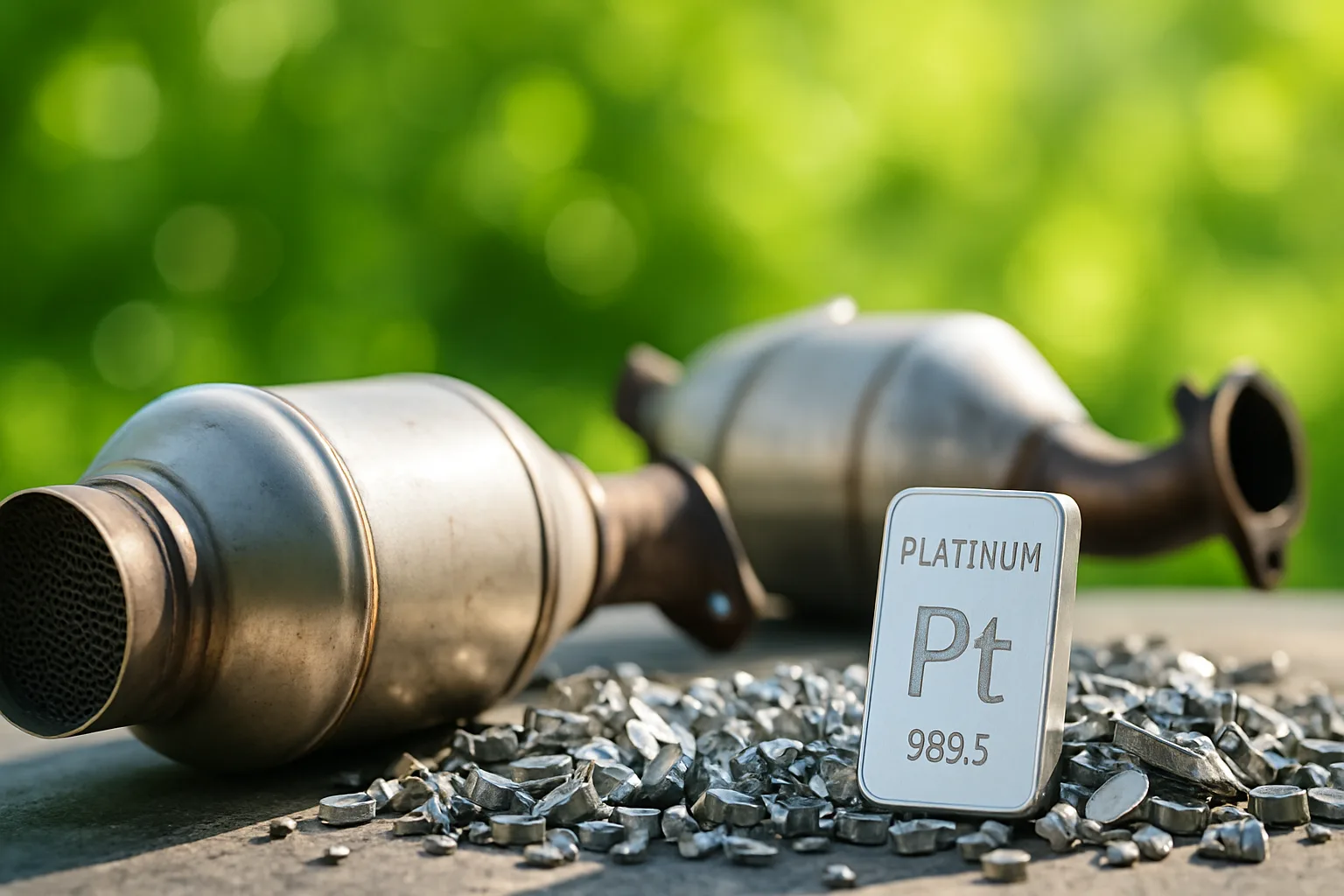
The platinum price today moved before your morning coffee was ready — and your converter's scrap value moved with it. That's not a warning. That's just how this market works. If you're sitting on a pile of cats and calling around for quotes without understanding what drives the numbers, you're leaving money on the table every single day.
This isn't a generic explainer about precious metals. This is a practical breakdown of how daily market fluctuations hit catalytic converter scrap prices — and what sellers in Detroit and across Michigan can do about it. We'll look at the real mechanics, a real-world example of how a seller used better data and competition to get a better result, and where platforms like SMASH fit into the picture.
Let's get into it.
What Drives Catalytic Converter Scrap Prices on Any Given Day
Three metals live inside every catalytic converter: platinum, palladium, and rhodium. The platinum price today, along with palladium and rhodium spot prices, forms the foundation of every quote you'll ever receive. When spot moves up, your cats are worth more. When it drops, they're worth less. It really is that direct.
But spot price is only one variable. Here's what else shifts your converter scrap value on a daily basis:
- Assay results from smelters: Buyers price based on expected precious metal yield. Assay data from recent runs shifts their confidence — and their bids.
- Refinery throughput and capacity: If a major refinery is backed up or running at reduced capacity, buyers may lower offers to manage inventory risk.
- Currency exchange rates: Platinum and palladium trade in USD globally. A stronger dollar can suppress commodity prices, which ripples down to your quote.
- Demand from automotive manufacturers: OEM demand for fresh PGMs affects how aggressively secondary refiners compete for scrap material.
- Grade and volume of material: A load of high-grade foil cats from late-model vehicles will always command a different number than a mixed load of aftermarkets and DPFs.
The bottom line: there is no fixed catalytic converter price. Every quote is a snapshot in time. Sellers who understand this stop treating the first number they hear as gospel — and start treating it as a starting point.
A Detroit Seller's Story: From One Buyer to a Real Market
This is the kind of situation that plays out constantly across Michigan and the wider Midwest. A mid-sized recycling yard in the Detroit area had been moving their converter loads through the same buyer for years. Good relationship, reliable pickups, no complaints. But they had no benchmark. No way to know if the number they were getting reflected the actual market or just one buyer's margin structure.
When spot platinum climbed through a volatile stretch earlier in 2026, the yard manager noticed their quote didn't move much. The buyer explained it away with processing costs and timing. The yard accepted it — because what else could they do? They had one data point.
They decided to try something different. They documented their load properly: photos of each unit, serial numbers where available, VIN-linked cars where applicable. They uploaded the inventory to a platform that put the load in front of multiple vetted buyers simultaneously. Within hours, they had competing bids. The spread between the lowest and highest offer on that load was significant — not because anyone was cheating them before, but because competition reveals the market in a way that a single call never can.
That's not a knock on their original buyer. It's just math. One buyer has no reason to bid against themselves. Multiple buyers do. smashscrap.com is built on exactly that principle — auction-format selling that creates real price discovery instead of a guessing game.
How Proper Documentation Changes Your Converter Scrap Value
Here's something most sellers don't think about: the way you present your material directly affects what buyers are willing to bid. A load with clear photos, accurate unit counts, and documented grades is a lower-risk purchase for a buyer. Lower risk means higher confidence. Higher confidence means stronger bids.
Sloppy documentation — a handwritten list, blurry photos, vague descriptions of "mixed cats" — forces buyers to pad their offers with a risk discount. You eat that discount. Always.
What proper documentation looks like in practice:
- Photos of each unit — top, bottom, and substrate visible where possible
- Serial numbers or OEM part numbers captured for grading reference
- VIN lookup data for vehicle-sourced units to confirm make, model, and year
- Accurate count by grade — foil, ceramic, aftermarket, DPF, and bead cats listed separately
- Packing list or BOL prepared before pickup, not after
Platforms like SMASH have built-in tools for exactly this — inventory documentation, serial tracking, photo uploads — because clean data is what makes a competitive auction actually work. If you want to find the best scrap converter prices today, the documentation step isn't optional. It's the foundation.
Detroit and Michigan: Why Local Market Conditions Still Matter
Global spot prices set the ceiling. Local market conditions determine whether you get anywhere near it.
Detroit sits at the center of North American automotive manufacturing and dismantling. That means a dense concentration of converters flowing through the market — from OEM warranty replacements, to fleet vehicles, to salvage yard pulls. High volume creates more buyer activity, which should translate to better price discovery. But only if sellers are actually accessing that competition.
Too many yards and individual sellers in Michigan still operate on a one-buyer model because it's familiar. The Detroit scrap metal services market is more competitive than most sellers realize — buyers are hungry for quality, documented loads. The question is whether you're putting your material in front of enough of them.
Buyers searching for converters in this region are actively looking for vetted sellers with clean documentation. If you're a seller in Detroit or anywhere across Michigan, that works in your favor — provided you're using the right channels. Regional density means faster logistics, lower transport costs for buyers, and more competitive bidding on local loads. Use that advantage.
For additional context on how pricing works across different load types and grades, read scrap converter pricing guides that break down the variables by material type.
Reading the Market: What to Watch When Platinum Price Today Swings
You don't need to be a commodities trader. But you do need a basic read on market direction before you lock in a sale. Here's a simple framework for daily market awareness:
Check spot before you quote or accept a quote. Platinum, palladium, and rhodium spot prices are publicly available and update throughout the trading day. Any buyer quoting you a fixed price without acknowledging current spot is baking in their own buffer — at your expense.
Watch for volatility windows. Spot prices can swing sharply on macro news: Federal Reserve decisions, automotive industry data releases, mining supply disruptions, or geopolitical events affecting South African platinum production. On high-volatility days, buyers may widen their spread. That's not manipulation — it's risk management. Understanding it helps you time larger sales when the market is more stable.
Don't sell a large load on a down day if you can hold. This isn't always possible — cash flow has its own timeline — but for sellers with storage capacity, timing a large sale to a period of spot stability or upward momentum makes a real difference in outcome.
Use competitive bidding as a real-time market check. The cleanest way to know what your load is actually worth today is to put it in front of multiple buyers at the same time. That's what an auction format does. The bids you receive are the market, not someone's interpretation of it.
When you're ready to move, check current scrap converter prices to see where the market sits and what your load could realistically be worth before you commit to any single offer.
No Subscription Fees, No Guessing: The SMASH Model in Plain Language
SMASH is a scrap metal auction platform built for yards and sellers who are tired of calling one buyer and hoping for the best. The model is straightforward: you document your load, it goes in front of vetted buyers who compete for it, and you see the results. No subscription fees. SMASH only wins when you do.
For converter sellers specifically, this means your catalytic converter price isn't set by whoever picks up the phone first. It's set by what vetted, competing buyers are actually willing to pay on that day, for that documented load. That's real price discovery. That's how markets are supposed to work.
The platform handles auto-invoicing and documentation so you're not chasing paperwork after the fact. And because buyers are vetted before they ever see your inventory, you're not dealing with tire-kickers or cash-only strangers showing up at your yard.
If you've been selling converters on one relationship for years and haven't benchmarked that relationship against the actual market, now is a reasonable time to do it. Not because anything is wrong — but because you should know what your material is actually worth.
Frequently Asked Questions
Q: How does the platinum price today affect what I get for my catalytic converters?
Platinum is one of three precious metals — alongside palladium and rhodium — that give catalytic converters their scrap value. When the platinum price today rises, the theoretical recovery value of your cats goes up, and competitive buyers will reflect that in their bids. When it falls, offers tend to follow. Watching spot before accepting a quote helps you understand whether the number you're seeing is fair for current market conditions.
Q: How do I find a reliable catalytic converter buyer in Detroit?
Start by looking for buyers who quote based on documented grades rather than eyeballing a load. A reliable catalytic converter buyer in Detroit will ask for photos, serial numbers, and a unit count — not just a rough description. Using a platform that puts your load in front of multiple vetted buyers simultaneously is the most efficient way to find competitive offers without cold-calling around the city.
Q: Why do catalytic converter prices change daily?
Because the precious metals inside them — platinum, palladium, and rhodium — trade on global commodity markets that move every business day. Refinery capacity, OEM demand, currency movements, and macroeconomic news all influence spot prices. Your converter scrap value is essentially a function of those daily spot prices applied to the specific grade and quantity of material you're selling.
Q: Does it matter how I document my converters before selling?
Yes — significantly. Buyers price based on their confidence in what they're buying. A well-documented load with clear photos, accurate counts, and serial numbers gives buyers the information they need to bid aggressively. A vague or poorly documented load forces buyers to discount their offers to account for uncertainty. Better documentation directly supports better price discovery.
Q: Are catalytic converter scrap prices in Michigan different from other states?
The underlying spot prices are global and don't change by state. What varies regionally is buyer competition, logistics costs, and how efficiently sellers can access the market. Michigan — and Detroit in particular — has high converter volume due to automotive industry density, which means more active buyers in the region. Sellers who tap into that buyer pool through competitive auction formats are better positioned to capture strong local market pricing.
Ready to stop guessing what your load is worth? If you're moving converters in Detroit, across Michigan, or anywhere in the U.S., understanding daily market fluctuations is step one — but acting on that understanding is what actually changes your outcome. Get a free quote and find the best scrap converter prices today at best-scrap-converter-prices.com.
Disclaimer: Catalytic converter scrap prices fluctuate daily based on precious metal spot markets. All pricing information in this article is for educational purposes only. Always check current rates before selling.
Stay current on scrap metal market trends and auction platform updates — follow SMASH on LinkedIn for industry insights delivered straight to your feed.
```