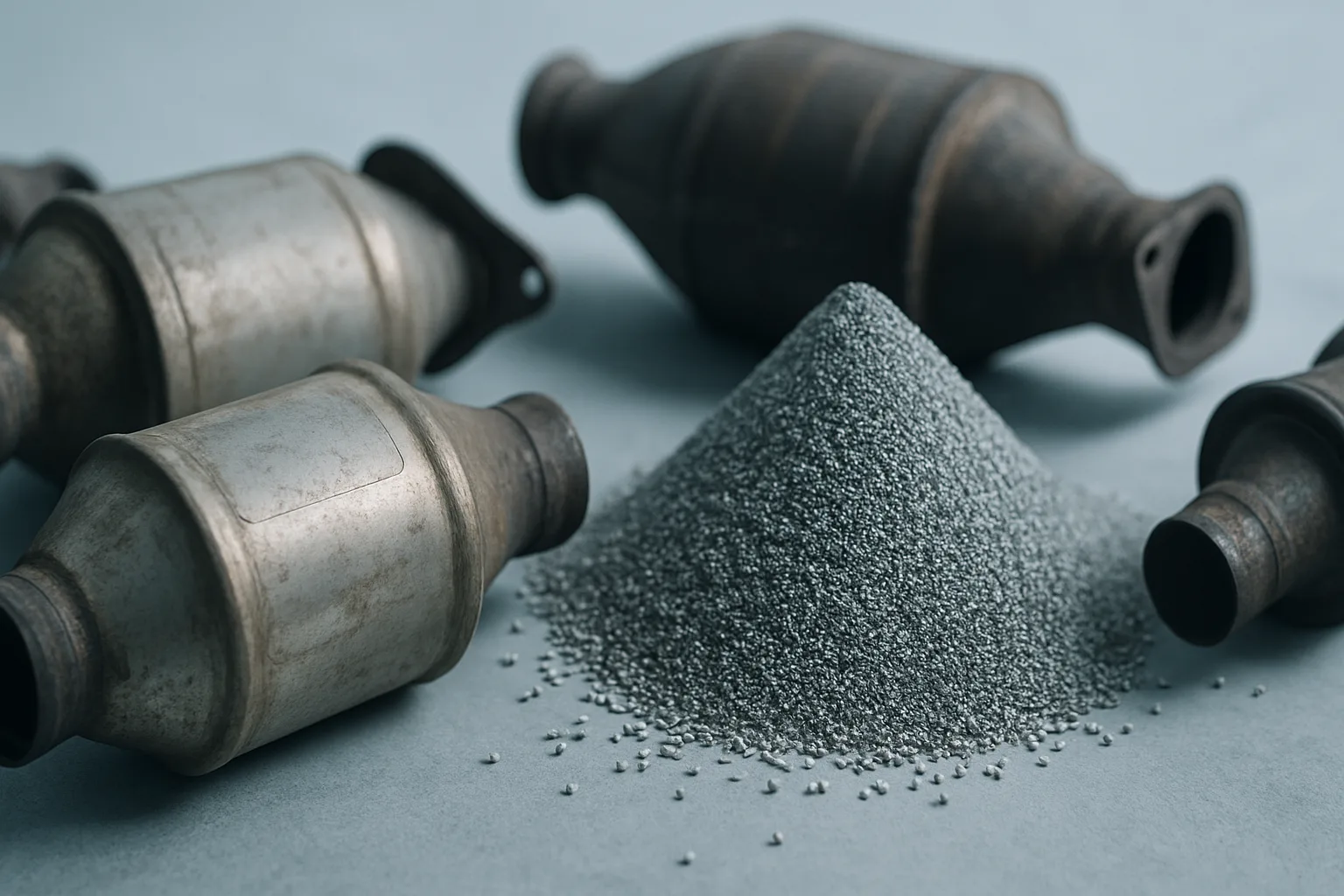
Most converter sellers in Virginia Beach leave money on the table before the conversation even starts. Not because they chose the wrong buyer — because they handed over a load without knowing what they actually had. The serial number stamped on your catalytic converter is the single most important piece of information in the pricing conversation. If you can't read it, you're negotiating blind.
This guide breaks down how to find, read, and use catalytic converter serial numbers to find the best scrap converter prices today — whether you're clearing out a shop floor in Virginia Beach or moving a steady volume of cores every week.
---What Is a Catalytic Converter Serial Number and Why Does It Matter?
A catalytic converter serial number — sometimes called a part number, OEM number, or substrate ID — is a manufacturer-stamped alphanumeric code that identifies the specific converter model. That code maps to a substrate type, which tells buyers how much platinum, palladium, and rhodium loading is inside the unit. These three platinum group metals (PGMs) drive the entire valuation. No serial number means no data. No data means a buyer guesses low.
When you walk into a yard or submit to an online platform without a readable serial, you're handing control of the negotiation to the buyer. They'll assume the lower end of the range. That might cost you $20 on one unit — but across a load of 50 converters, it becomes a real number. Knowing your serial and having it cross-referenced against a catalytic converter price list is how serious sellers close stronger deals.
- Serial numbers identify the substrate — the ceramic or metallic honeycomb core inside the shell.
- Substrate type determines PGM loading — how much platinum, palladium, and rhodium is recoverable.
- PGM recovery value drives scrap metal prices today — especially with rhodium price today swinging significantly based on industrial demand.
- Buyers price from databases — your serial number is the key that unlocks accurate data.
Where to Find the Serial Number on a Catalytic Converter
Not every serial number lives in the same spot. Location varies by manufacturer, vehicle make, and production era. Here's where to look — and what to expect from each placement type.
1. Stamped Directly on the Shell
The most common location. Look for a raised or recessed stamp on the outer metal canister — often on the inlet or outlet cone, or on the body of the converter itself. These stamps can be dirty, corroded, or heat-discolored, especially on high-mileage units. A wire brush and good lighting reveal most of them.
2. Welded-On Tag or Plate
Some OEM converters have a small metal tag spot-welded to the body. These are clean and easy to read when intact — but they can burn off or fall off entirely. If there's a tag missing, look for the welding marks where it used to be, then check the body underneath for a secondary stamp.
3. Ink Stamp or Laser Etching
Less common, but found on some aftermarket or mid-tier OEM units. Ink stamps fade fast under heat. Laser etching holds better but can be hard to read on dark or coated surfaces. Angle your light source rather than pointing it straight on — oblique lighting reveals shallow markings better.
4. Internal Substrate Marking
If the shell is damaged and the substrate is exposed, some manufacturers mark the substrate itself. This is a last resort — but it's valid. Substrate markings are less common in buyer databases, so you may need to cross-reference by vehicle VIN and catalytic converter position instead.
5. OBD Port and VIN Lookup
If the converter is still on the vehicle, use the VIN. A VIN lookup tied to model year, engine, and emissions standard can confirm what converter was installed from the factory. This matters most for California-spec vehicles or any car running a stricter emissions package — those often carry higher-loaded substrates with better scrap converter value.
---How to Decode a Catalytic Converter Serial Number
Serial number formats aren't universal. OEM converters from different manufacturers follow different coding conventions. Here's how the major categories break down.
OEM Numbers (Original Equipment Manufacturer)
These look like part numbers — often a mix of numbers and letters, sometimes with dashes. A Ford OEM converter might read something like 6L2Z-5F250-AA. These map directly to OEM part databases and pricing tools. Buyers with access to up-to-date pricing databases can cross-reference these quickly. High-confidence identification, better converter scrap value quotes.
Aftermarket Numbers
Aftermarket converters (think Walker, MagnaFlow, Eastern) carry their own part number systems. These often start with a manufacturer prefix. The substrate in an aftermarket unit typically carries less PGM loading than the OEM equivalent — which means lower scrap value. Don't expect OEM pricing on an aftermarket unit. Know what you have before you negotiate.
Pre-OBD Units (Pre-1996)
Older converters — particularly pre-OBD2 units — may have simpler or shorter part numbers, and some have no stamping at all. These are harder to price from a serial alone. For these loads, foil testing or XRF assay becomes more important. Serious buyers and platforms like SMASH Scrap — where verified buyers bid on your metal have tools to handle mixed or unidentified loads, but clean documentation always helps.
High-Value Identifiers to Know
- Foreign Pre-OBD (FPD) converters — high PGM loading, strong scrap value
- Large GM converters — often identifiable by size and body type
- Toyota and Honda OEM converters — consistent OEM part number systems, well-documented in price databases
- Diesel particulate filters (DPFs) — different composition, price separately from standard cats
Why Serial Number Documentation Gives Virginia Beach Sellers a Real Edge
If you're selling converters in Virginia Beach — or anywhere across Virginia — clean documentation changes the dynamic. When you walk in with a load where every unit is photographed, serial numbers are legible, and the count is accurate, you're not just a seller. You're a counterparty that informed buyers take seriously. That confidence translates into better price discovery.
The old way: pull the converters, throw them in a bin, call your one buyer, take what you get. No serial data, no comparison, no leverage. The SMASH way is built on the opposite logic. Document your load, submit it to a competitive auction, and let vetted buyers bid based on real data. Competition — not a single phone call — reveals what your converters are actually worth. You can read scrap converter pricing guides to understand what factors actually move prices before your next sale.
When rhodium price today spikes or PGM markets shift, the best time to sell is when your documentation is already clean and your load is ready to move fast. That's not luck — that's preparation.
---How SMASH Uses Serial Data to Drive Better Converter Pricing
SMASH is built for exactly this scenario. When you submit a load through the platform, you're not calling one buyer and hoping they're having a good day. You're putting your documented, serial-verified inventory in front of multiple vetted buyers who are actively bidding. That's the SMASH scrap metal auction model — and serial number accuracy is a core part of what makes it work.
The platform supports photo documentation and serial tracking, so buyers can see exactly what they're bidding on. Better information drives stronger bids. More buyers means better price discovery. And no subscription fees means you're not paying to access the market — SMASH only wins when you win.
If you're sitting on a load in Virginia Beach and trying to compare what different buyers are offering, serial numbers are what make that comparison real. Without them, every quote is an estimate. With them, buyers are pricing actual substrate chemistry — which is what scrap metal prices today are ultimately tied to. Ready to stop guessing? Check current scrap converter prices and see what transparent pricing looks like.
---Quick Reference: Serial Number Identification Checklist
Before you move your next load, run through this list. It takes ten minutes and can meaningfully affect what you walk away with.
- Clean the converter shell — wire brush the body and both cones. Remove grease, scale, and carbon buildup around the stamp area.
- Use oblique lighting — angle a flashlight or work light across the surface to reveal shallow stampings that disappear under direct light.
- Photograph every readable serial — close-up, in focus, with the number centered. One photo per unit.
- Note any missing or damaged tags — record the VIN if the converter is still vehicle-mounted.
- Separate OEM from aftermarket — different pricing tiers, don't mix them in your count.
- Flag DPFs and oxygen sensors separately — these price differently from standard catalytic converters.
- Cross-reference against a current price list — not one that's six months old. PGM values shift, and scrap metal prices today reflect live rhodium, palladium, and platinum markets.
Frequently Asked Questions
Q: What does a catalytic converter serial number actually look like?
It's typically an alphanumeric code stamped, etched, or tagged onto the converter shell. Format varies by manufacturer — OEM numbers often include dashes and letters, while aftermarket numbers may start with a brand prefix. Length ranges from 6 to 15+ characters depending on the manufacturer. Clean the surface before trying to read it.
Q: Where can I get the best catalytic converter price in Virginia Beach?
The best catalytic converter price in Virginia Beach comes from having documented inventory and access to multiple competing buyers — not from calling one yard. Platforms like SMASH connect you with vetted buyers who bid competitively based on your actual serial data. More buyers, better price discovery, no guessing.
Q: How does rhodium price today affect my scrap converter payout?
Rhodium is one of three platinum group metals recovered from catalytic converter substrates. When rhodium price today is elevated, high-rhodium-loading converters — especially certain foreign pre-OBD units — command significantly stronger offers. PGM market pricing directly drives converter scrap value, which is why checking current rates before you sell matters.
Q: Can I sell converters without a serial number?
Yes, but your pricing confidence drops. Without a readable serial, buyers either estimate conservatively or request a sample assay for large loads. You can still sell — but clean documentation is always worth the extra ten minutes of prep. Some buyers use visual ID databases for common converter shapes, but serial data is more reliable.
Q: Are there catalytic converter buyers near me within 5 miles of Virginia Beach?
There are local yards in the Virginia Beach and greater Virginia area that buy converters, but proximity isn't the same as best price. A buyer five miles away offering a flat rate may pay significantly less than a competitive auction with vetted buyers bidding on your documented load. Distance matters less than competition.
---If you're pulling converters in Virginia Beach and want to know what they're actually worth — not what one buyer decides they're worth — start with the serial number. Document it, photograph it, and put it in front of buyers who are competing for your business. That's the difference between guessing and knowing. Find the best scrap converter prices and get a free quote at best-scrap-converter-prices.com.
Disclaimer: Catalytic converter prices fluctuate daily based on platinum, palladium, and rhodium market values. Always check current rates before finalizing any sale.
Stay sharp on market moves — follow SMASH on LinkedIn for scrap metal market updates and industry insights delivered straight to your feed.