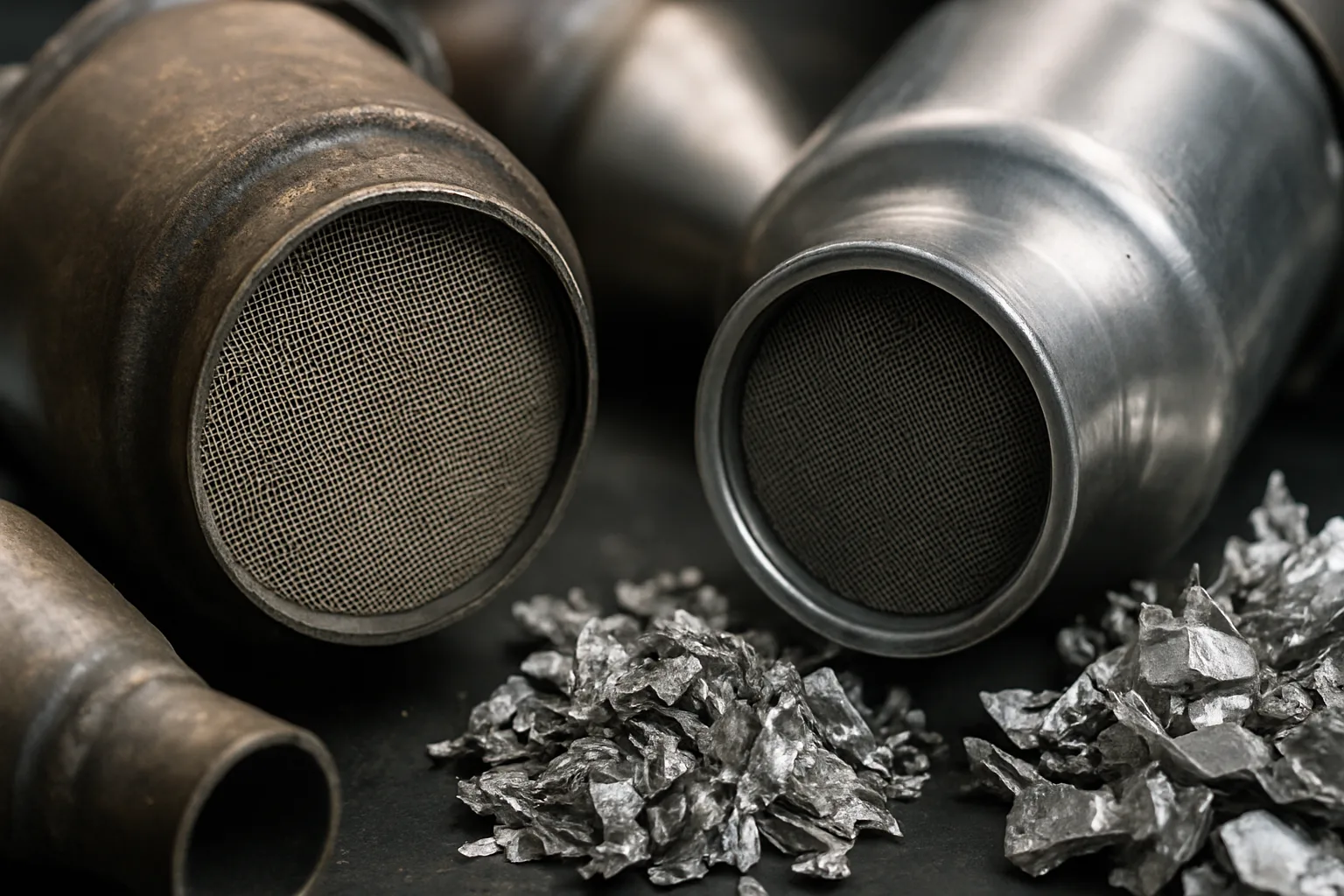
Most converter sellers treat diesel and gasoline cats the same. That mistake costs them money every single time.
The palladium price today drives a lot of the conversation around scrap converter values — but diesel converters don't run on palladium the way gasoline units do. If you're pulling diesel cats from trucks, buses, or heavy equipment and pricing them like a standard three-way converter, you're likely leaving real money on the table. Or worse, you're overvaluing them and losing buyers.
This guide breaks down exactly how diesel catalytic converters — DPFs and DOCs — differ from gasoline converters, what that means for scrap value, and how sellers in Philadelphia and across Pennsylvania can stop guessing and start getting paid what their inventory is actually worth.
Ready to stop guessing? find the best scrap converter prices today before your next diesel load moves.
---Diesel vs. Gasoline Converters: What's Actually Inside Them
A gasoline catalytic converter uses a three-way catalyst. It handles hydrocarbons, carbon monoxide, and nitrogen oxides simultaneously. The substrate — typically a honeycomb ceramic or metallic core — is coated with a precious metal wash. That wash almost always includes platinum, palladium, and rhodium. Palladium does the heavy lifting in modern gasoline cats, which is why the palladium price today matters so much to gasoline converter values.
Diesel converters are a different animal entirely. The diesel emissions system typically includes two distinct components:
- DOC (Diesel Oxidation Catalyst): Handles hydrocarbons and carbon monoxide. Uses platinum and palladium, but the loading ratios are different from gasoline units. DOCs tend to be platinum-heavy.
- DPF (Diesel Particulate Filter): Traps soot and particulate matter. DPFs use far less precious metal coating — some contain minimal PGM loading or none at all depending on the application. Their value is more about substrate integrity than metal content.
This distinction is critical. A large DPF from a commercial truck looks impressive on a pallet — it's bulky, heavy, and feels valuable. But weight doesn't equal PGM content. A smaller DOC from the same vehicle may be worth significantly more per pound because the platinum loading is concentrated there.
Why the Palladium Price Today Affects Diesel and Gas Converters Differently
When precious metal markets move, the impact isn't uniform across your inventory. Gasoline converters — especially those from late-model passenger vehicles — are highly sensitive to palladium price swings. Modern gasoline cats are palladium-dominant, so a spike or drop in palladium directly moves the needle on what those cores fetch.
Diesel DOCs carry both platinum and palladium, but they tend to skew platinum-heavy in their PGM ratio. That means DOC values track platinum price movements more closely. If platinum is running strong and palladium is softer, a DOC may outperform a comparable gasoline cat on a per-unit basis — even if it looks smaller.
DPFs are the wildcard. Their scrap value depends on:
- Whether the filter is clean, cracked, or contaminated
- The specific vehicle application (OEM heavy-duty units carry different loadings than aftermarket)
- Whether the substrate is intact — crushed or melted DPFs lose significant value
- Current demand from processors who specialize in diesel emissions components
The bottom line: don't assume a big diesel cat means a big check. And don't assume a small DOC is worth skipping. check current scrap converter prices broken down by type before you price a mixed diesel load.
Scrap Catalytic Converter Prices in Philadelphia: What Diesel Sellers Need to Know
Philadelphia sits at the center of a busy commercial vehicle corridor. I-95, I-76, and the Port of Philadelphia push enormous volumes of diesel freight through the region year-round. That means scrap catalytic converter prices Philadelphia yards are seeing include a steady stream of diesel emissions components — DOCs, DPFs, and SCR (selective catalytic reduction) units from Class 6, 7, and 8 trucks.
Sellers in Philadelphia and across Pennsylvania who deal in commercial fleet scrap need buyers who actually understand diesel cat grading. A buyer who primarily handles passenger car converters may undervalue your DOC or lump your DPFs into a generic "other" category. That's not competitive pricing — that's guesswork.
The local market for diesel converter scrap is more specialized than the gasoline side. Fewer buyers means less price competition unless you're actively working platforms that bring multiple vetted buyers to the table. That's exactly where SMASH changes the dynamic. the SMASH scrap metal auction marketplace connects sellers with buyers who specialize in diesel emissions components — not just gasoline cats — so your DOCs and DPFs get priced by people who know what's inside them.
If you're based in the Philadelphia area and regularly handle diesel fleet scrap, connecting with Philadelphia scrap metal services that understand the diesel side of the market is worth the time investment.
How to Price a Diesel Converter: Serial Numbers, Photos, and Substrate Condition
Gasoline converter pricing has been simplified significantly by VIN lookup and serial number databases. You pull the serial off a Honda or Ford cat, run it through a reference database, and get a market price within seconds. Diesel converter pricing is messier — but it's not guesswork if you document correctly.
Here's what buyers need to accurately price a diesel DOC or DPF:
- Serial number or OEM part number: This identifies the specific application, manufacturer, and PGM loading specs. A serial lookup for diesel cats is how you move beyond generic pricing tiers.
- Clear photos: Face shots of both ends of a DOC, plus the housing condition. For DPFs, buyers want to see the inlet and outlet faces — cracking, melting, or heavy contamination kills value fast. A catalytic converter price list with pictures approach forces buyers to price what you actually have, not what they assume you have.
- Vehicle application: Year, make, model, and engine for the source vehicle. A DOC from a 2022 Freightliner Cascadia is priced differently than one from a 2015 Ford F-350 — same component category, different PGM economics.
- Clean vs. failed substrate: DPFs that have been regenerated properly and are structurally intact carry more value than failed, cracked, or oil-contaminated units. Document condition honestly — misrepresenting a failed DPF wastes everyone's time.
Platforms that handle scrap metal inventory management systematically — tracking photos, serial numbers, condition notes, and vehicle data — make this process faster and more defensible. SMASH builds this documentation into the listing process so buyers get what they need to bid competitively and sellers get prices based on real data, not approximations.
Want a deeper look at how documentation affects pricing? read scrap converter pricing guides that cover serial lookups, photo documentation, and how buyers use this data to set bids.
How Much Is My Diesel Converter Worth? Setting Realistic Expectations
This is the question every seller asks, and the honest answer is: it depends on factors most single-buyer transactions never fully account for.
Here's a general framework for thinking about diesel converter value tiers:
- High-value DOCs: OEM heavy-duty units from Class 8 trucks, intact substrate, clearly identified via serial number, platinum-dominant PGM loading. These can compete with or exceed the value of many gasoline cats on a per-unit basis.
- Mid-value DOCs: Medium-duty or light-duty diesel applications. Smaller substrate, lower PGM loading, but still worth breaking out separately from DPFs in your inventory.
- Standard DPFs: Clean, intact, properly identified. Value is real but lower than DOCs — think of them as a volume play rather than a high-ticket unit.
- Damaged or failed units: Cracked substrates, melted faces, oil-contaminated DPFs. Value drops sharply. Still worth selling but don't price them against clean units.
The question "how much is my catalytic converter worth by serial number" applies to diesel units too — it's just a less automated process than gasoline cars. Working with buyers who have diesel-specific pricing data, combined with proper photo documentation, is the most reliable path to an accurate number.
No platform can guarantee a specific price — precious metal markets move, buyer demand shifts, and substrate condition varies. What good documentation and competitive bidding can do is ensure the price you get reflects actual market conditions, not one buyer's floor price.
Why Competitive Bidding Matters More for Diesel Converter Scrap
The diesel converter market is thinner than the gasoline side. Fewer buyers specialize in DPFs and DOCs, which means the spread between a lazy offer and a sharp offer is wider. One buyer quoting your diesel load is almost certainly not giving you the market — they're giving you their number.
This is the core problem SMASH was built to solve. Instead of calling one buyer, accepting their price, and wondering what you left behind, you put your documented inventory in front of multiple vetted buyers simultaneously. Competition reveals the market. More buyers means better price discovery. That principle applies to gasoline cats, and it applies even more to diesel emissions components where pricing opacity is higher.
Yards and fleet sellers across Pennsylvania running mixed diesel and gasoline converter inventory benefit most from this model. Your gasoline cats have relatively standardized pricing benchmarks. Your diesel cats — especially commercial-grade DOCs — are where the spread between a single-buyer quote and a competitive bid can be meaningful.
No subscription fees. SMASH earns when you sell. That alignment matters when you're moving specialized inventory that deserves real buyer competition, not a standing offer from whoever picks up the phone first.
If you're ready to stop pricing diesel converters by feel, the path forward is straightforward: document your inventory, get it in front of vetted buyers who understand the diesel market, and let competition do its job. Find the best scrap converter prices — get a free quote at best-scrap-converter-prices.com and find out what your diesel and gasoline cats are actually worth today.
---Frequently Asked Questions
Q: Does the palladium price today affect diesel catalytic converter values?
It does, but less directly than it affects gasoline converters. Diesel DOCs carry both platinum and palladium, but they tend to be platinum-dominant in their PGM ratio. DPFs carry minimal precious metal loading in many applications. When palladium price today is the driver of market movement, gasoline cats move more sharply than most diesel units.
Q: Are DPFs worth scrapping, or should I focus on DOCs?
Both are worth scrapping, but they're valued very differently. DOCs carry meaningful platinum and palladium content and should be separated from DPFs in your inventory. DPFs have lower PGM loading and their value depends heavily on substrate integrity and application. Never mix them into a single pricing bucket — you'll under-sell your DOCs every time.
Q: Where can I find scrap catalytic converter prices in Philadelphia for diesel units?
Diesel converter pricing in Philadelphia is more specialized than the gasoline market. Your best option is working with buyers who specifically handle commercial diesel emissions components and using platforms like SMASH that bring competitive bids from multiple vetted buyers. Generic scrap yards may not have diesel-specific pricing data, which means their offers reflect that knowledge gap.
Q: How do I find out how much my diesel converter is worth by serial number?
Serial number lookup for diesel cats is less automated than for gasoline passenger car converters, but the serial or OEM part number still identifies the application and helps buyers assess PGM loading. Combine your serial number with clear photos of both ends and the vehicle application details for the most accurate pricing. Platforms that support photo documentation and serial tracking make this process much more defensible.
Q: Does a cracked or failed DPF have any scrap value?
Yes, but significantly less than an intact unit. A cracked or melted DPF substrate loses value because the material is harder to process and the recoverable PGM content is lower. Always document condition accurately with photos — misrepresenting a failed DPF as clean wastes buyer time and damages your credibility for future transactions. Sell failed units as-is with full disclosure and price them accordingly.
---Follow SMASH on LinkedIn for industry updates, precious metal market insights, and scrap converter pricing news: linkedin.com/company/scrap-metal-auction-sales-hub.
Disclaimer: Precious metal prices and converter scrap values fluctuate daily based on market conditions. All pricing references in this article are general in nature. Always check current rates before pricing or selling your inventory.
```