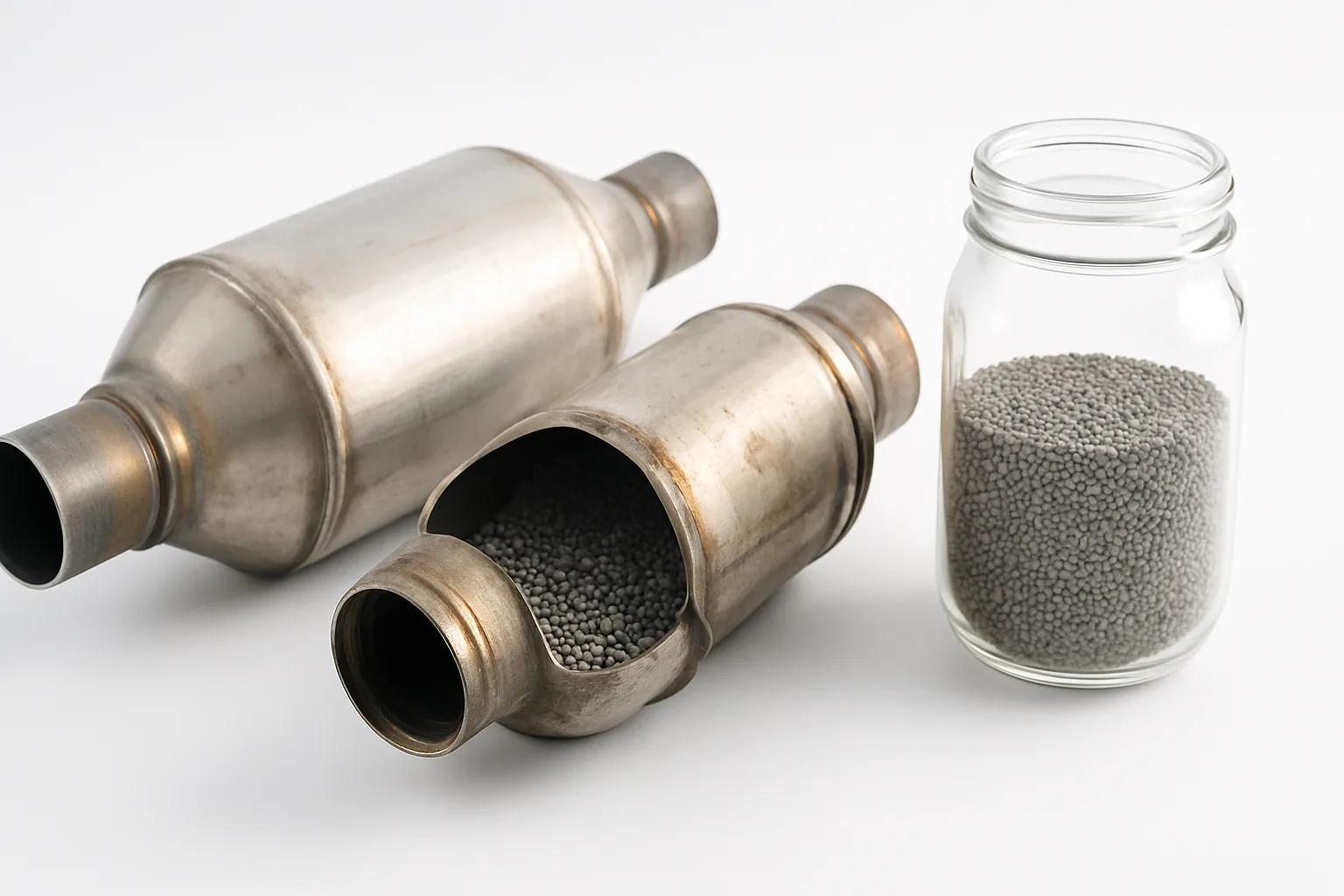
Most people selling scrap catalytic converters don't realize they're holding two completely different products — and that difference can mean a significant gap in what they get paid. Foil-style and bead-style converters look similar from the outside. Same metal shell. Same exhaust fittings. But crack one open and you'll see why recyclers and buyers treat them as separate categories entirely. If you're doing catalytic converter recycling in Fresno or anywhere across California, knowing which type you have changes your entire pricing conversation.
This isn't academic. It's money. Let's break it down.
---What Is a Foil-Style Catalytic Converter?
Foil-style converters — sometimes called metallic substrate converters — use a honeycomb-shaped substrate made from thin corrugated metal foil, typically a stainless steel alloy. The precious metals (platinum, palladium, and rhodium) are coated onto that metallic surface. These converters are lighter than their ceramic counterparts and were used extensively in performance vehicles, motorcycles, and some European diesel applications.
Because the substrate is metallic and not ceramic, foil converters behave differently in the smelting process. The assay results — the actual measurement of precious metal content — tend to vary more between units. That makes consistent pricing harder to nail down without proper testing. Most reputable buyers won't quote a fair price on foil material without a sample or lot assay.
Key characteristics of foil-style converters:
- Lightweight metallic honeycomb interior
- Often found in motorcycles, performance cars, and European imports
- Precious metal loading varies significantly by make and model
- Require specialized processing — not all facilities handle them the same way
- Typically sold by weight and lot, not per unit
If you've ever shaken a converter and heard nothing rattle — no ceramic breakage, no loose chunks — there's a reasonable chance you've got a foil unit. But visual ID alone isn't enough. Get it in front of someone who knows what they're looking at before you name a price.
---What Is a Bead-Style Catalytic Converter?
Bead-style converters use small ceramic or alumina beads — sometimes called pellets — as the substrate instead of a flat honeycomb structure. The precious metals are coated onto each individual bead, and those beads pack into the converter shell in bulk. Shake a bead converter and you'll hear them rattle and shift inside.
These were common in older North American vehicles, particularly in domestic production through the 1980s and into the 1990s. You'll find them in vintage trucks, older GM and Ford platforms, and some early import models. They're less common in modern vehicles, so finding a stockpile of them usually means you're dealing with older fleet material or salvage from classic vehicle teardowns.
Bead converters have their own processing quirks. The loose beads are easier to sample accurately, which is one reason some buyers prefer them — the assay process is more straightforward. However, the precious metal content per kilogram is often lower than in high-value ceramic honeycomb converters from late-model vehicles, so volume matters when you're selling bead material.
Key characteristics of bead-style converters:
- Loose pellet or bead interior — audible when shaken
- Common in domestic vehicles from the 1970s through early 1990s
- More uniform sampling — easier to assay accurately
- Precious metal loading tends to be lower per unit than modern converters
- Often sold in bulk by weight rather than individually catalogued
What Are Foil and Bead Converters Actually Worth?
Here's the honest answer: it depends on the market price of platinum, palladium, and rhodium on the day you sell. Precious metal prices move constantly. A converter worth one price today can be worth noticeably more or less in 30 days. That's not a hedge — it's just how this market works. Anyone quoting you a firm flat price on foil or bead material without checking current metal values is either working from old data or offering you a lowball.
What you can control is how much of the actual metal value reaches your pocket. That's where the selling method matters as much as the converter type. When you sell catalytic converters online through a competitive platform, buyers are bidding against each other. That competition is what drives the price toward actual market value instead of whatever a single buyer decides to offer.
General value considerations by type:
- Foil converters — value varies widely. High-end foil units from performance applications can carry significant precious metal content. Lower-grade foil from economy applications may assay out at a modest per-kg return. Always push for lot assay pricing rather than flat-rate offers.
- Bead converters — typically priced by weight and lot. Expect per-kg returns that reflect older-generation precious metal loading. Sorting and keeping material clean (no broken shells, no contamination) improves your return.
Disclaimer: Converter prices fluctuate with precious metal markets. Always check current scrap converter prices before selling — rates can shift significantly in a short period.
---How to Get the Best Price When Selling Foil and Bead Converters in Fresno
The biggest mistake sellers make is calling one buyer, getting one number, and accepting it. That's leaving money on the table. The scrap converter market is driven by precious metal spot prices and competition among buyers — and if you're only talking to one person, you're seeing none of that competition.
This is exactly where platforms like smashscrap.com change the math. Instead of one cold call and one number, your material goes in front of vetted buyers who are competing for it. That competitive dynamic is how price discovery actually works. More buyers seeing your lot means better visibility into what the market will actually pay — not what one buyer chooses to offer.
If you're based in Fresno or anywhere in California and you're holding foil or bead converters, here's a practical approach:
- Sort your material. Keep foil and bead converters separate. Don't mix them in the same lot — buyers need to assess them differently.
- Document what you have. Photos, weights, and any make/model information you can pull. Bead units from identifiable platforms help buyers quote more accurately.
- Understand your material before you sell. Know whether you're dealing with foil or bead. This helps you ask the right questions and avoid being lowballed by someone hoping you don't know the difference.
- Use a competitive selling platform. One buyer equals one offer. Multiple buyers equals market pricing. The math isn't complicated.
- Watch the metal market. Rhodium especially has historically shown sharp volatility. Timing matters if you have volume to move.
Fresno yards and sellers who have started approaching converter sales with this kind of discipline are finding the process less guesswork and more data. That shift — from gut feeling to documented, competitive selling — is exactly what the market has been moving toward across California.
---Why SMASH Works for Converter Sellers Across California
SMASH isn't a single buyer making you an offer. It's a vetted buyer network running competitive auctions on your material. When you list foil or bead converters through SMASH, qualified buyers see it and bid. That's how you find out what your lot is actually worth — not what one person decided to tell you over the phone.
For sellers doing catalytic converter recycling in Fresno — or anywhere from Sacramento to San Diego — the practical benefits are straightforward. You get photo documentation, transparent pricing tied to real metal markets, and no subscription fees. SMASH only earns when you sell. That alignment matters. A platform that gets paid when you get paid has a strong incentive to get you the best possible result.
If you've been searching for catalytic converter dealers near me and finding the same frustrating single-buyer model, this is the alternative. You can find the best scrap converter prices today through a platform built for exactly this kind of material — including specialty types like foil and bead that many buyers undervalue simply because they don't see them often.
Want to go deeper on how converter pricing works? Read scrap converter pricing guides to understand how precious metal values, lot assays, and buyer competition all interact to determine what you actually take home.
The old way — one call, one number, take it or leave it — is broken. Competition fixes it. Whether you're moving five foil units or five hundred pounds of bead material, your lot deserves to be seen by more than one buyer.
---Frequently Asked Questions
Q: How do I know if I have a foil or bead catalytic converter?
Shake the converter. Bead-style units will rattle — you'll hear the loose pellets shifting inside. Foil-style units are silent and noticeably lighter. If you're still unsure, a reputable converter buyer or recycler can identify the type quickly from the substrate visible at the opening of the unit.
Q: Can I sell foil and bead converters online from Fresno?
Yes. Platforms designed for selling catalytic converters online handle specialty substrate types including foil and bead material. You'll typically need to provide weight, photos, and any available make/model information. Shipping or local pickup logistics vary by platform — confirm before you list.
Q: Are foil converters worth more than bead converters?
Not always — it depends on the specific units and the current precious metal market. High-end foil converters from performance vehicles can carry significant platinum group metal content. Standard bead material from older domestic vehicles tends to have lower per-kg precious metal loading. The best approach is to get a lot assay rather than relying on flat-rate offers for either type.
Q: What should I do to get the best scrap catalytic converter price in California?
Sort your material by type, document it thoroughly with photos and weights, and sell through a competitive platform rather than a single buyer. Competition between buyers is the single most reliable driver of fair market pricing. Timing your sale around precious metal spot prices — particularly rhodium — can also impact your return if you have volume to move.
Q: Is there a converter recycling option near me if I'm in Fresno?
Local buyers exist across the Central Valley, but local doesn't always mean best price. Online competitive platforms let Fresno sellers reach a wider network of vetted buyers — which often results in better price discovery than a single local offer. For specialized material like foil or bead converters, broader market exposure typically works in the seller's favor.
---Ready to find out what your foil or bead converters are actually worth? Stop guessing and start selling with real market data behind you. Get a free quote and find the best scrap converter prices today at best-scrap-converter-prices.com.
Stay ahead of the scrap metal market — follow SMASH on LinkedIn for industry updates, precious metal market insights, and converter pricing news.