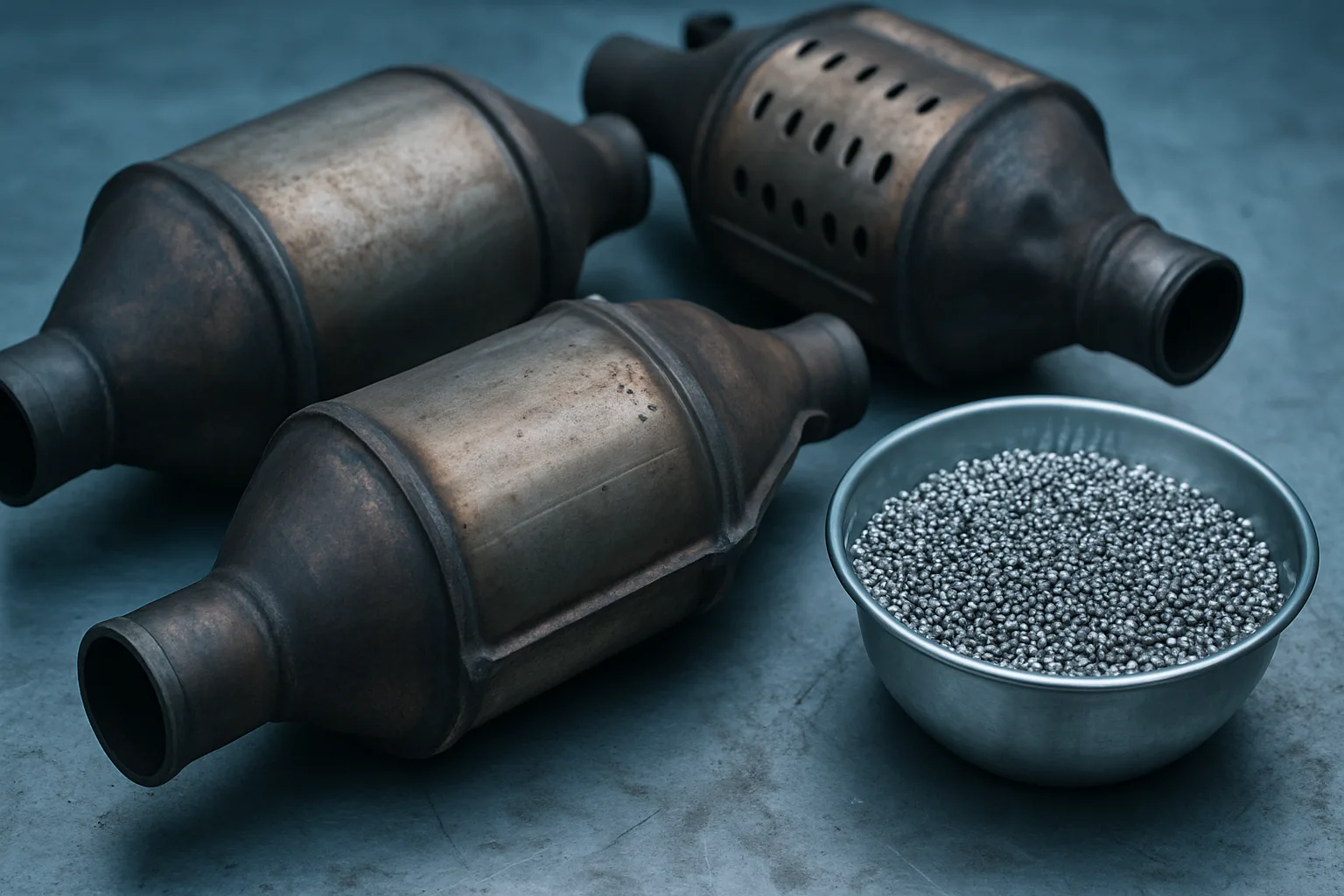
Most people don't realize the catalytic converter sitting on their vehicle could be worth anywhere from $50 to several hundred dollars — sometimes more, depending on the unit. Before you can find the best scrap converter prices today, you need to get the converter off the vehicle safely and in a condition that doesn't cost you money at the buyer's window. A damaged cat, a crushed shell, or missing documentation can kill your payout before the negotiation even starts.
This guide covers the full removal process — tools, safety steps, what to watch out for — and how to position your converter for the strongest possible catalytic converter scrap value when you go to sell. Whether you're working through a single vehicle or clearing out a pile of cores at your Fort Lauderdale shop, the fundamentals are the same.
---Why Catalytic Converter Scrap Value Depends on More Than Just the Metal Inside
The precious metals inside a catalytic converter — platinum, palladium, and rhodium — are what drive the price. Palladium price today directly influences what buyers are willing to pay for gasoline engine converters. Rhodium, though volatile, remains one of the most valuable metals by weight in the recycling market. But here's the thing most sellers miss: how you remove and handle the converter affects what you actually walk away with.
Buyers grade cats based on condition. A converter that's been torched carelessly, crushed by a careless jack, or gutted before sale is worth significantly less — or nothing at all. The substrate inside, that honeycomb ceramic or metallic core, is where the precious metals live. Crack it, contaminate it with fluids, or expose it to excessive heat during removal, and you've just reduced your payout.
Understanding this connection between condition and value is why proper removal isn't just a safety issue — it's a financial one. The converter market rewards sellers who bring clean, intact, properly documented units. That's true whether you're selling locally in Florida or choosing to sell catalytic converters online through a national platform.
---Tools and Safety Gear You Need Before You Start
Don't wing this. Catalytic converter removal involves working under a vehicle, often around rusted hardware, exhaust heat, and tight clearances. The right tools make the job cleaner and protect the unit's value.
Basic tool list:
- Floor jack and jack stands — Never work under a vehicle supported only by a hydraulic jack. Jack stands are non-negotiable.
- Reciprocating saw or angle grinder — For exhaust pipe cuts when bolts are seized beyond recovery.
- Penetrating oil (PB Blaster or equivalent) — Soak rusted bolts 24 hours before you start if possible.
- Oxygen sensor socket — A standard socket won't clear the wire. You need the slotted version.
- Breaker bar and impact wrench — Exhaust hardware is almost always over-torqued and corroded.
- Heat-resistant gloves — Even a cold engine has residual heat in the exhaust system.
- Safety glasses and dust mask — Exhaust scale and ceramic dust are real hazards.
- Wheel chocks — Lock the vehicle before you get under it. Every time.
Safety non-negotiables:
- Work on a cold engine. A hot catalytic converter can exceed 1,200°F at operating temperature. Let the vehicle sit for at least 2 hours — ideally overnight.
- Never use a flame torch near the converter substrate. It damages the precious metal-coated ceramic and can reduce assay value.
- Ensure the vehicle is on level, solid ground. Gravel and soft soil compress under jack stands.
- If you're in Fort Lauderdale working outdoors in July, heat exhaustion is a real risk. Hydrate and take breaks.
Step-by-Step: Removing a Catalytic Converter Without Damaging the Core
The goal here is clean separation — intact pipes, undamaged shell, no cracked substrate. Follow this sequence and you protect both yourself and the converter scrap value you're about to cash in.
- Identify the converter location. On most passenger vehicles, it's positioned close to the engine (close-coupled) or further back in the exhaust run (underfloor). Some vehicles have multiple cats. Know what you're removing before you start cutting.
- Disconnect the oxygen sensors. Before touching any exhaust hardware, remove the O2 sensors if they're mounted in or near the converter. Use an oxygen sensor socket. These sensors have resale value of their own — don't cut the wiring harness.
- Apply penetrating oil to all fasteners. Spray every bolt, nut, and clamp connection point. Let it soak. Rushing this step is how you strip bolts and end up cutting pipes you didn't want to cut.
- Attempt bolt removal first. Use a breaker bar or impact wrench. If the flange bolts break loose cleanly, you preserve the pipe ends — which some buyers prefer because it makes the unit easier to identify by VIN or part number.
- Cut when bolts won't budge. If you've got seized hardware after soaking and proper torque attempts, use a reciprocating saw to cut the exhaust pipe. Cut as far from the converter body as possible. Cutting too close to the converter risks nicking the shell or, worse, the substrate.
- Handle the removed unit carefully. Don't drop it. Don't stack heavy items on top of it. The ceramic substrate inside is fragile. Store it upright or in a padded container if you're moving multiple units.
- Document before you move it. Take photos of the converter — the stamp, the heat shield markings, the pipe configuration. Platforms like SMASH use photo documentation and serial tracking to help buyers accurately price units. This documentation protects you as the seller too.
One note specific to Florida yards: humidity and salt air accelerate corrosion on exhaust hardware. If you're pulling converters from vehicles that have spent time near the coast — Fort Lauderdale, Miami, Tampa — expect seized hardware and plan extra penetrating oil soak time. It's not unusual for coastal vehicle exhaust components to be far more corroded than their mileage suggests.
---How to Get the Best Scrap Converter Prices When You Go to Sell
You've got the converter off. Now you need to get paid fairly. This is where most sellers leave money on the table — not because the market is against them, but because they only talk to one buyer.
A single phone call to a single yard is not price discovery. It's accepting whatever number someone gives you without knowing if it's fair. The best converter price comes from competition — multiple vetted buyers seeing the same unit and bidding against each other. That's the core mechanic behind platforms like SMASH, which connects sellers with competitive buyer networks rather than locking you into a single relationship with a single offer.
When you read scrap converter pricing guides, you'll see consistent advice: document your units, understand the metal markets (palladium and rhodium especially), and don't accept the first number. That advice applies whether you're walking into a local Fort Lauderdale scrap yard or listing units through an online platform.
What maximizes your payout:
- Intact units sell better. No gutted cores. No cracked substrates. Buyers pay for recoverable PGMs (platinum group metals), and damaged units yield less during processing.
- Identification matters. A converter tied to a specific VIN or part number gives a buyer confidence in what they're getting. SMASH's VIN lookup and serial tracking tools exist for exactly this reason.
- Timing has a real impact. When palladium price is elevated, gasoline engine converters command stronger offers. Diesel engine cats are driven more by platinum. Watch the market before you sell large volumes.
- Volume gives you leverage. A single cat is a transaction. A pallet of cores is a negotiation. Accumulate before you sell if your storage situation allows it.
If you're ready to move units and want real competitive offers, get competitive bids for your scrap metal through a platform that brings buyers to you rather than the other way around.
---Legal Considerations When Selling Catalytic Converters in Florida
Florida has active regulations around catalytic converter sales, and they've tightened in recent years in response to theft-related concerns. If you're selling in Fort Lauderdale or anywhere else in the state, you need to be aware of the documentation requirements that legitimate buyers will ask for.
Scrap metal dealers in Florida are required to verify seller identity and maintain transaction records for catalytic converter purchases. You should expect to provide:
- Government-issued photo ID
- Proof of ownership for the vehicle the converter came from (title, bill of sale, or repair order)
- Business documentation if you're selling as a shop or yard
Reputable buyers — whether local Florida yards or national platforms — require this documentation. If a buyer doesn't ask for any of it, that's a red flag, not a shortcut. Platforms like SMASH work with vetted buyers who operate within regulatory frameworks, which protects you as the seller from downstream liability.
Stay current on Florida's scrap metal dealer regulations before you move large volumes. Laws update, and compliance is non-negotiable if you're operating a legitimate business.
---Weekly Market Recap: What's Moving Converter Prices This Week
As of this week, the precious metal markets remain the primary driver of scrap converter prices. Palladium has seen continued activity given ongoing automotive production demand, and rhodium — as always — adds significant variance to high-grade gasoline converter values.
The broader scrap market continues to reward sellers who bring documented, condition-verified units. Buyers on competitive platforms are pricing more aggressively when they have confidence in what they're bidding on. That trend reinforces the core argument: show your work, document your units, and sell into competition rather than accepting a single-buyer offer.
For Florida sellers, summer months can slow walk-in yard traffic slightly — heat affects both sellers and buyers — but online platforms normalize that seasonality by keeping buyer networks active regardless of local conditions. If you're sitting on a volume of cores in Fort Lauderdale and waiting for the right moment, this is a good time to check current scrap converter prices and understand where the market sits before you move inventory.
Disclaimer: Precious metal prices and catalytic converter values fluctuate daily based on market conditions. Always verify current rates before making selling decisions. Nothing in this article constitutes a guaranteed price offer.
---Frequently Asked Questions
Q: What is the catalytic converter scrap value based on?
Catalytic converter scrap value is driven primarily by the platinum group metals (PGMs) inside the unit — platinum, palladium, and rhodium. The specific blend varies by manufacturer, engine type, and vehicle age. A buyer will typically reference the unit's serial number or part number against a converter price database, then factor in current spot prices for each metal to calculate an offer.
Q: How does palladium price today affect what I get paid?
Palladium is the dominant PGM in most gasoline engine catalytic converters, so when palladium spot price rises, buyers can pay more for gasoline engine cats. The relationship isn't always immediate — some buyers lock in pricing on weekly cycles — but meaningful palladium moves will affect your offer. Selling during a palladium rally can meaningfully improve your payout compared to selling during a downturn.
Q: Can I sell catalytic converters online from Fort Lauderdale?
Yes. Online platforms that connect sellers with vetted buyers operate nationally, including Florida. Selling online expands your buyer pool beyond local Fort Lauderdale yards, which introduces competition and can lead to better price discovery. You'll typically need to document your units with photos and identification, then ship or arrange pickup once a deal is confirmed.
Q: What happens if I damage the converter during removal?
A cracked or broken substrate reduces the recoverable precious metals in the unit, which directly reduces the buyer's offer. In severe cases — like a completely shattered honeycomb — some buyers may decline the unit entirely or offer only scrap shell value. Careful removal with proper tools protects both the unit's integrity and your payout.
Q: Do I need paperwork to sell a catalytic converter in Florida?
Yes. Florida scrap metal regulations require sellers to provide identification and proof of ownership documentation. Legitimate buyers — including those operating through vetted platforms like SMASH — will ask for this before completing a transaction. Having clean paperwork also protects you from any downstream questions about the source of the material.
---If you've got converters ready to move, don't settle for one offer from one buyer. Start with solid information — find the best scrap converter prices today at best-scrap-converter-prices.com and get a free quote before you commit to any deal. Competition is how the market finds real value, and you deserve to know what your units are actually worth.
Follow SMASH on LinkedIn for weekly market insights, scrap metal pricing updates, and industry news that helps you sell smarter.