Most sellers don't realize they're sitting on platinum, palladium, and rhodium — not just a rusty piece of exhaust pipe. Catalytic converters contain three of the most valuable metals on earth. If you're trying to get the best catalytic converter price Milwaukee buyers will actually pay, understanding what's inside your converter isn't optional. It's the difference between getting a fair number and leaving serious money on the table.
This guide breaks down the precious metals in cats, why their prices move, and how platforms like smashscrap.com are changing the way sellers in Wisconsin get paid for what they have.
What's Actually Inside a Catalytic Converter?
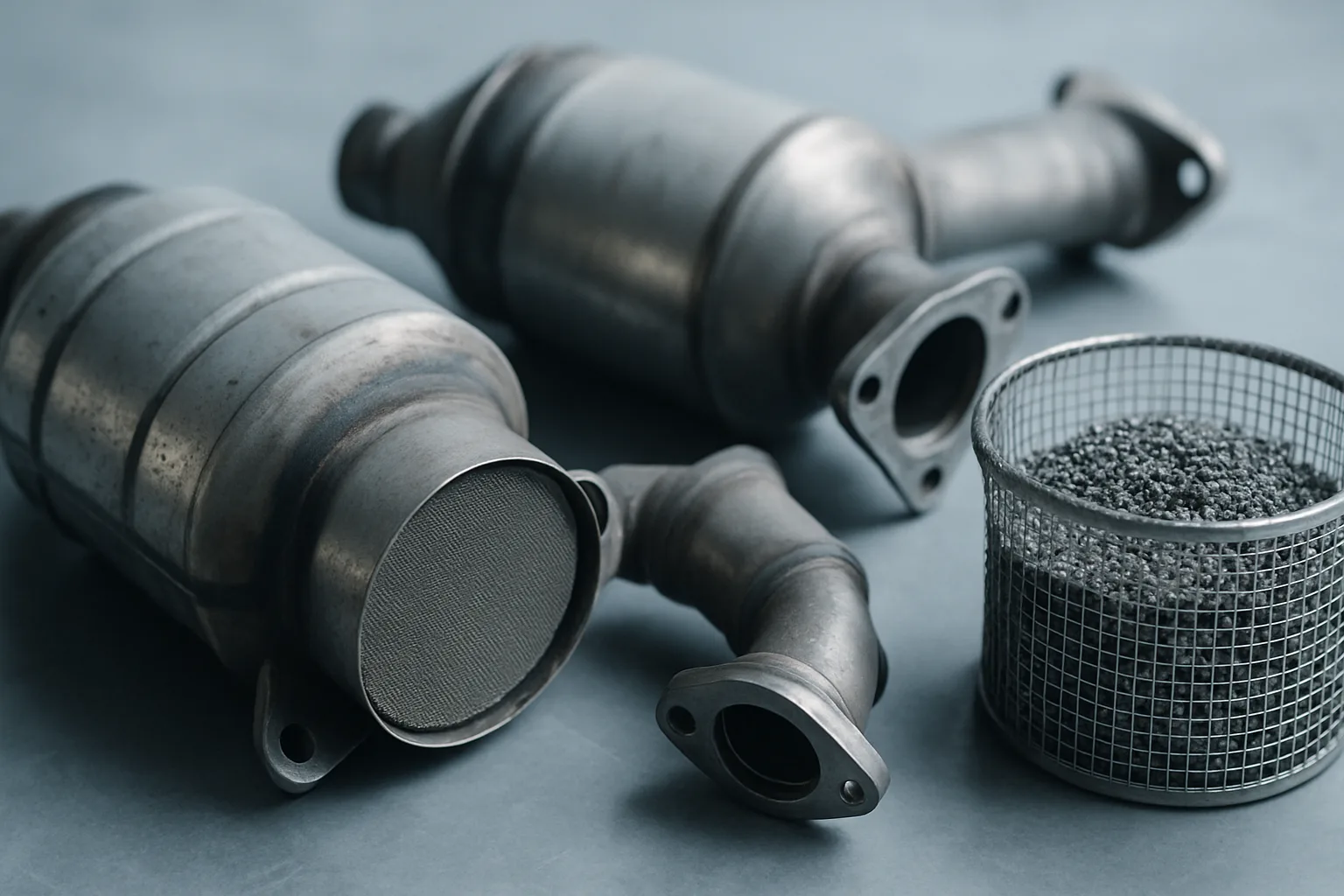
Cracking open a converter (literally or figuratively) reveals a ceramic or metalite substrate coated in a wash of precious metals. These metals aren't there for decoration. They trigger the chemical reactions that convert harmful exhaust gases — carbon monoxide, hydrocarbons, nitrogen oxides — into less harmful outputs. Without them, the converter doesn't work.
The three key metals are platinum (Pt), palladium (Pd), and rhodium (Rh). Every converter contains some combination of these three, and the specific ratios depend heavily on the vehicle make, model, year, and engine type. A 2005 Honda Civic cat and a 2018 Ford F-150 cat are not even in the same conversation price-wise — and that's because the precious metal content inside them is completely different.
- Platinum — historically the dominant metal in diesel converters; now used more selectively
- Palladium — common in gasoline-engine converters; has seen extreme price volatility in recent years
- Rhodium — the rarest and most expensive of the three; even small quantities move the needle on converter value
The substrate material also matters. Ceramic substrates are more common in older vehicles. Metalite (foil-type) substrates tend to appear in newer, higher-performance applications and often carry higher precious metal loadings. Knowing what you have before you call a buyer puts you in a stronger position at the table.
Rhodium Price Today — Why This Metal Drives Converter Value
If you've been tracking rhodium price today, you already know this metal is in a category of its own. Rhodium is roughly 80 times rarer than gold. It's primarily mined as a byproduct of platinum and palladium operations in South Africa, and global supply is structurally tight. That scarcity creates price swings that would be alarming in any other market.
Rhodium prices have hit historic highs north of $25,000 per troy ounce in recent years and have also pulled back sharply during periods of softening automotive demand. In 2026, the rhodium market continues to reflect a push-pull between tightening emissions regulations globally (which increases automotive demand) and a slow-growing secondary supply from recycled catalytic converters. The bottom line: even a fraction of a gram of rhodium inside a single converter has real dollar value attached to it.
This is exactly why two converters that look identical from the outside can have wildly different scrap values. Rhodium loading isn't visible. It requires assay data, serial tracking, or a reputable price list tied to real market data. Milwaukee-area sellers who rely on a single buyer quoting from memory are almost certainly leaving rhodium-related value uncaptured.
Platinum and Palladium — The Workhorses of Converter Chemistry
Platinum was the original catalytic converter metal when the technology was introduced in the 1970s. It handles oxidation reactions and performs well in diesel applications where exhaust temperatures run hotter. Today, platinum is still found in diesel passenger cars, heavy trucks, and some industrial applications. It's also used in three-way catalysts alongside palladium and rhodium.
Palladium stepped into the spotlight as gasoline-engine catalysts evolved. It's highly effective at lower temperatures, which makes it ideal for light-duty gasoline vehicles — the most common vehicle type on Wisconsin roads. Palladium content is often highest in late-model domestic and Japanese-brand converters. The price per troy ounce for palladium has also been subject to dramatic movement, driven largely by EV adoption timelines, automotive production volumes, and Russian supply chain uncertainty.
A few things worth knowing when evaluating your scrap converter value based on these metals:
- Diesel cats are typically platinum-heavy; gasoline cats lean palladium
- Newer OEM converters (pre-theft, pre-damage) carry more recoverable metal than aged or melted units
- High-mile converters may have degraded substrate integrity — this affects yield and therefore price
- Foil-type metalite substrates usually indicate higher precious metal density per unit weight
Understanding these distinctions helps you have an intelligent conversation with any buyer — or, better yet, lets competitive bidding reveal the market rate without you having to negotiate blind.
How Scrap Metal Prices Today Connect to Your Converter Quote
When a buyer quotes your cat, they're not guessing. They're working backward from live scrap metal prices today — specifically the spot prices for platinum, palladium, and rhodium on the London Platinum and Palladium Market (LPPM) or the NYMEX futures market. From there, they apply a recovery factor (how much metal they expect to actually extract via smelting) and subtract their processing costs and margin.
This is where the transparency gap bites sellers hardest. A single buyer controls every variable in that equation. You don't know their recovery assumptions. You don't know their margin expectations. You don't know if they're pricing to the spot rate from this morning or last week. You just get a number — take it or leave it.
That's the exact problem platforms like SMASH are built to solve. When your load goes to competitive auction through smashscrap.com, multiple vetted buyers price it simultaneously against the same market data. The result is price discovery — not a guess, not a favor, not a relationship number. A real number backed by real competition.
For Milwaukee sellers managing volume — multiple loads, mixed grades, or high-value units like large-format diesel cats — this difference in process translates directly into dollars recovered per unit. You can check current scrap converter prices and benchmark what you're being offered against what the market is actually paying.
Why Milwaukee Sellers Need More Than One Buyer in the Room
Milwaukee is a significant scrap market. Wisconsin's industrial base, aging vehicle fleet, and active auto recycling sector mean there's consistent volume of converter material moving through the region. That volume deserves a better process than a phone call and a handshake.
Here's the core problem with the single-buyer model: when only one buyer sees your load, they set the price. They know what the metals are worth. You might not. That information asymmetry is the oldest profit margin in the scrap business — and it doesn't favor the seller.
Bringing competition into the process changes the dynamic entirely. The Milwaukee scrap metal services available through platforms like SMASH put your inventory in front of multiple pre-vetted buyers. Serial tracking, photo documentation, and accurate lot descriptions give those buyers the confidence to bid aggressively. More confidence in the data means tighter, more competitive bids — which means better price discovery for you.
If you're selling occasional single units, this matters. If you're selling regular loads of 50, 100, or 500 converters out of a Milwaukee yard, it matters a lot more. To understand the full picture, read scrap converter pricing guides that walk through how professional sellers structure their loads for maximum return.
Getting the Best Catalytic Converter Price in Milwaukee — What to Do Before You Sell
Getting the best catalytic converter price in the Milwaukee market starts before the sale. It starts with documentation, organization, and knowing what you have. Here's a practical checklist for sellers who want to come to market prepared:
- Photograph every unit — both ends of the converter, the serial or OEM number, and any visible substrate damage
- Record serial numbers or part numbers — these map directly to vehicle application and precious metal content estimates
- Separate by grade — domestic, foreign small, foreign large, aftermarket, and DPF (diesel particulate filter) should never be mixed in a quote request
- Note substrate type — ceramic vs. metalite affects recovery and buyer appetite
- Document condition — intact units vs. cracked, blown, or previously processed material will be priced differently
- Get multiple bids — one quote is not a market; use auction-based platforms to surface what buyers actually compete to pay
Sellers who show up with organized, documented inventory consistently get stronger offers than sellers who show up with a garbage bag of mixed, unlabeled cats. This is true in Milwaukee, across Wisconsin, and everywhere else. Documentation isn't busywork — it's margin.
When you're ready to put your inventory in front of buyers who compete for it, find the best scrap converter prices today by getting a free quote through best-scrap-converter-prices.com. You don't need a subscription. You don't pay unless a sale closes. That's how SMASH operates — we only win when you win.
Disclaimer: Catalytic converter prices fluctuate daily based on live precious metals markets. Always verify current rates before selling. The prices and market conditions referenced in this article reflect general 2026 market context and are not guaranteed quotes.
Frequently Asked Questions
Q: What precious metals are in a catalytic converter?
All catalytic converters contain some combination of platinum, palladium, and rhodium. The exact ratio depends on the vehicle make, model, engine type, and year of manufacture. Gasoline-engine converters tend to be palladium-heavy; diesel converters lean more toward platinum. Rhodium appears in smaller quantities but is often the highest-value metal per gram.
Q: How do I get the best catalytic converter price in Milwaukee?
The most reliable way to get the best catalytic converter price in Milwaukee is to document your inventory accurately and get multiple bids. Single-buyer quotes give you one data point — competitive auction platforms like SMASH put your load in front of multiple vetted buyers simultaneously, which produces real price discovery rather than a take-it-or-leave-it number.
Q: Why does the rhodium price today affect what I get for my cats?
Buyers calculate converter value by working backward from live spot prices for platinum, palladium, and rhodium. Even a small amount of rhodium in a converter has significant dollar value because rhodium trades at multiples of gold. When rhodium prices are high, converters with strong rhodium loading — typically certain domestic full-size vehicle applications — command meaningfully higher bids.
Q: Does converter condition affect scrap value?
Yes, significantly. Intact converters with undamaged substrates yield more recoverable precious metal than cracked, blown, or previously processed units. Milwaukee buyers and buyers everywhere apply a condition discount to damaged material. Protecting converters from further physical damage between removal and sale directly protects their recoverable value.
Q: How are catalytic converter scrap prices calculated?
Buyers use a combination of serial number or OEM part number lookups, assay data from similar units, current precious metals spot prices, and estimated recovery rates to generate a bid. The more accurately your inventory is documented — photos, serial numbers, grade separation — the more confidently a buyer can bid, which typically results in tighter, more competitive offers.
Stay current on precious metals markets and converter pricing trends by following SMASH on LinkedIn — regular updates on scrap metal market movements, industry news, and pricing insights for recyclers across North America.
```