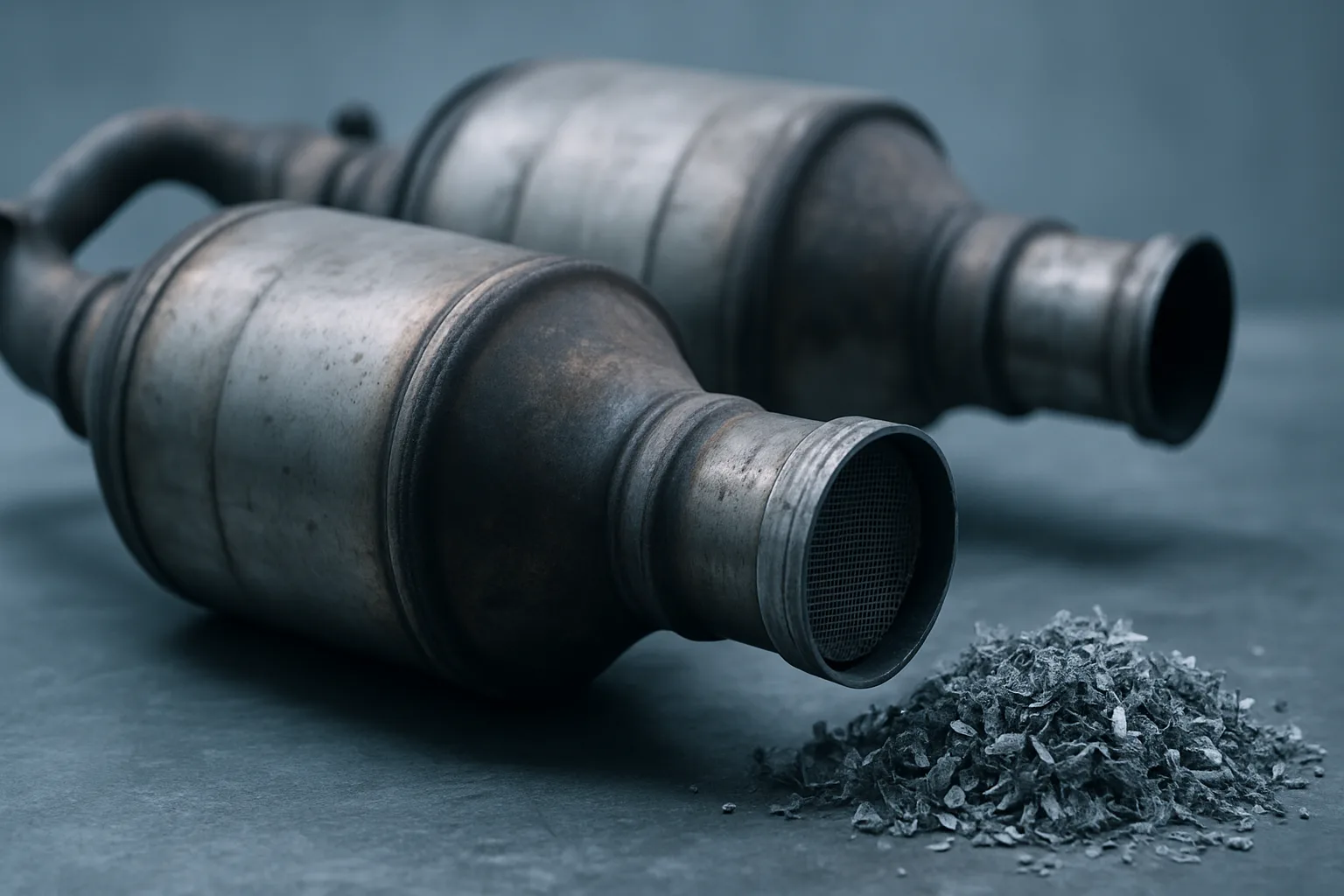
Diesel vs. Gasoline Catalytic Converters: What Rochester Sellers Need to Know About Scrap Value
Most converter sellers assume a catalytic converter is a catalytic converter. Pull it off, weigh it, get paid. But that assumption leaves real money on the table — especially if you're scrapping diesel equipment. The metals inside a diesel converter are fundamentally different from what's inside a gasoline unit, and that difference directly impacts your catalytic converter scrap value.
If you're in Rochester or anywhere across New York running a recycling yard, fleet operation, or repair shop, understanding this distinction helps you price smarter, sort better, and stop selling diesel units at gasoline rates.
The Core Difference: What's Actually Inside Each Converter
Gasoline catalytic converters use a three-way catalyst. They process hydrocarbons, carbon monoxide, and nitrogen oxides simultaneously. To do that, they rely on a specific mix of platinum group metals (PGMs): platinum, palladium, and rhodium. Palladium typically carries the heaviest load in modern gasoline converters. Because palladium prices have been elevated for years — and remain a significant market driver in 2026 — gasoline cats often carry strong scrap value per unit.
Diesel systems work differently. They run lean combustion, which means nitrogen oxide chemistry changes, and they don't need the same three-way catalyst formulation. Instead, diesel emissions systems split the work across multiple components:
- DOC (Diesel Oxidation Catalyst): Handles hydrocarbons and carbon monoxide. Contains platinum and sometimes palladium, but typically in lower concentrations than gasoline cats.
- DPF (Diesel Particulate Filter): Traps soot and particulate matter. This is a filter, not a catalyst — it contains little to no PGMs. Scrap value is significantly lower.
- SCR (Selective Catalytic Reduction): Found on newer diesel systems, used to break down nitrogen oxides using urea (DEF fluid). Contains platinum group metals but often in different ratios.
The takeaway: not everything that comes off a diesel vehicle has equal converter scrap value. A DPF pulled from a heavy truck is not the same as a DOC — and neither is the same as the gasoline three-way converter sitting in a passenger car. Treating them identically is a pricing mistake.
Why Palladium Price Today Affects Gasoline Converters More Than Diesel
When you see market talk about palladium price today, that's mostly a gasoline converter story. Palladium is the dominant PGM in most gasoline catalytic converters, and when palladium prices move, gasoline converter scrap values tend to move with them. Diesel DOCs lean more heavily toward platinum.
Platinum and palladium don't always move in the same direction. That's important if you're sorting mixed loads. A load of diesel DOCs priced the same as a load of gasoline converters might be over- or under-valued depending on where the PGM markets are sitting that week.
In 2026, PGM pricing remains tied to:
- Global automotive production shifts (electric vs. ICE mix)
- Supply constraints from primary mining regions
- Refinery throughput and assay timelines
- Secondary recovery volumes from recycling
The point isn't to become a commodities trader. The point is to separate your diesel and gasoline units before you sell. Mixing them into one unsorted load means someone else benefits from your ignorance of what's in each pile. You can check current scrap converter prices to understand how the metals market is influencing what buyers are paying right now.
How to Identify Diesel Converters in a Rochester Shop or Yard
If you're processing vehicles in Rochester — whether that's heavy trucks, fleet vans, or farm equipment coming in from surrounding Monroe County — you'll encounter diesel systems regularly. Here's how to sort them correctly on the floor:
- Check the vehicle type first. Diesel engines are common in pickup trucks (Ford 6.7 Power Stroke, GM Duramax, Ram Cummins), semi-trucks, delivery vans, and diesel SUVs. If it's diesel, assume a multi-component emissions system.
- Look for multiple units in the exhaust line. A gasoline car typically has one or two converters. A diesel truck may have a DOC, a DPF, and an SCR — three separate units, each valued differently.
- Check the substrate. DOCs have a honeycomb ceramic or metallic substrate similar to gasoline cats. DPFs have a wall-flow filter structure — it looks different under a light and feels denser. If you can't see light through it, it's a DPF.
- Use VIN lookup when possible. Platforms like smashscrap.com support VIN-based documentation that helps identify what converter came off what vehicle — critical for accurate pricing and buyer transparency.
- Never assume weight equals value. DPFs are heavy. They're full of trapped soot and dense ceramic. Weight alone will mislead you if you're pricing per pound without understanding what's inside.
Rochester yards processing mixed commercial and passenger vehicle streams face this sorting challenge constantly. Getting it right on the intake side determines what you get paid on the back end.
Selling Diesel and Gasoline Converters: Why the Sales Channel Matters
Even if you sort your inventory perfectly, selling through the wrong channel erases the advantage. If you're calling one local buyer with a mixed load, you're accepting whatever price they feel like offering that day. That's the old way. It works in their favor, not yours.
Competitive auctions — where multiple vetted buyers bid on your documented inventory — create price discovery. When buyers compete for a sorted, well-documented load of diesel DOCs or gasoline cats, the market reveals what those converters are actually worth. That's how platforms like SMASH approach the converter market. No subscription fees, no guessing. You list your inventory, buyers compete, and you see the bids.
For sellers looking to sell catalytic converters in New York, this matters because the local buyer pool in any one city — including Rochester — is finite. A single call to a local shop or a post on a local recycling group limits your exposure. An online auction platform expands your buyer pool nationally, which is where real competition comes from.
To find the best scrap converter prices today, you need buyers competing against each other — not a single price from a single phone call.
Documentation: The Detail That Separates Good Prices from Great Ones
Buyers pay more for certainty. A documented load — photos, serial numbers, vehicle source, converter type identified — gives buyers the confidence to bid aggressively. An unsorted pile of mystery converters gets discounted because buyers are pricing in the uncertainty.
For diesel units specifically, documentation is even more critical because:
- DPFs and DOCs look similar to untrained eyes — photos and labels prevent disputes
- Serial tracking helps buyers cross-reference against known PGM assay data
- Photo documentation reduces the risk of after-the-fact price adjustments
- Buyers who can verify converter type upfront don't need to hedge their bids
SMASH's inventory tools support photo documentation, serial tracking, and unit-by-unit cataloging. That's not paperwork for paperwork's sake — it's how you protect your price. You can read scrap converter pricing guides to understand how documentation affects what buyers are willing to pay across different converter types.
For Rochester sellers working with commercial fleets or diesel-heavy inventory, building this habit on intake saves time and earns more at sale. Document once, sell better every time.
What This Means for Your Next Load
You don't need a chemistry degree to sell converters smarter. You need a basic sorting process and a sales channel that rewards the work you put in. Here's the short version:
- Separate diesel from gasoline converters before pricing or selling anything
- Within diesel loads, identify DOCs vs. DPFs — they are not the same product
- Track PGM market direction, especially platinum and palladium, when timing larger loads
- Use platforms that let buyers compete — single-buyer deals rarely reflect true market value
- Document everything with photos and serial numbers before the load moves
If you're processing converters in Rochester, New York and selling to one buyer with one phone call, you're working harder than you need to for less than the market would pay with competition. The best scrap converter prices come from buyers who want what you have badly enough to outbid each other — not from whoever answers first.
Ready to see what competition looks like on your next load? Find the best scrap converter prices and get a free quote at best-scrap-converter-prices.com.
Price disclaimer: Catalytic converter scrap values fluctuate with live PGM markets. Platinum, palladium, and rhodium prices change daily. Always verify current rates before selling.
Frequently Asked Questions
Q: Are diesel catalytic converters worth less than gasoline converters at scrap?
It depends on the component. Diesel DOCs contain platinum and can carry solid scrap value. DPFs contain little to no PGMs and are generally worth significantly less per unit. Gasoline converters typically contain higher palladium concentrations, which has historically made them competitive — but it varies by make, model, and current palladium price. Never assume diesel means lower value without identifying exactly which component you have.
Q: What is the catalytic converter scrap value of a DPF filter?
DPF filters are primarily soot traps, not PGM-bearing catalysts, so their scrap value is considerably lower than DOCs or gasoline converters. Some DPFs do contain trace precious metals, but it's not enough to significantly affect most per-unit pricing. If you're sorting a diesel load in Rochester, set DPFs aside and price them separately from your DOCs.
Q: How do palladium prices today affect what I get paid for my converters?
Palladium is the primary PGM in most gasoline catalytic converters, so when palladium prices rise, gasoline converter scrap values tend to follow. Diesel DOCs are more platinum-dependent, so they respond more to platinum price movements. Tracking both metals gives you a better read on when to sell and what to expect from buyers on mixed loads.
Q: Where can I sell catalytic converters in New York if I want competitive pricing?
Online auction platforms like SMASH let vetted buyers across North America compete for your documented converter inventory — far broader reach than calling a single local buyer. For Rochester sellers, this means your load isn't limited to whoever picks up the phone locally. More competition typically means better price discovery. Visit smashscrap.com to learn how the process works.
Q: Do I need to sort my converters before selling, or can I sell a mixed load?
You can sell a mixed load, but buyers will discount it. When a buyer can't verify what types of converters are in a load, they price in the uncertainty — which means you absorb the risk in the form of a lower offer. Sorting and documenting diesel DOCs, DPFs, and gasoline cats separately almost always results in better overall returns. The extra step on intake pays off at sale time.
Follow SMASH on LinkedIn for scrap metal market insights, PGM price updates, and industry news relevant to recyclers and converter sellers across North America: linkedin.com/company/scrap-metal-auction-sales-hub.