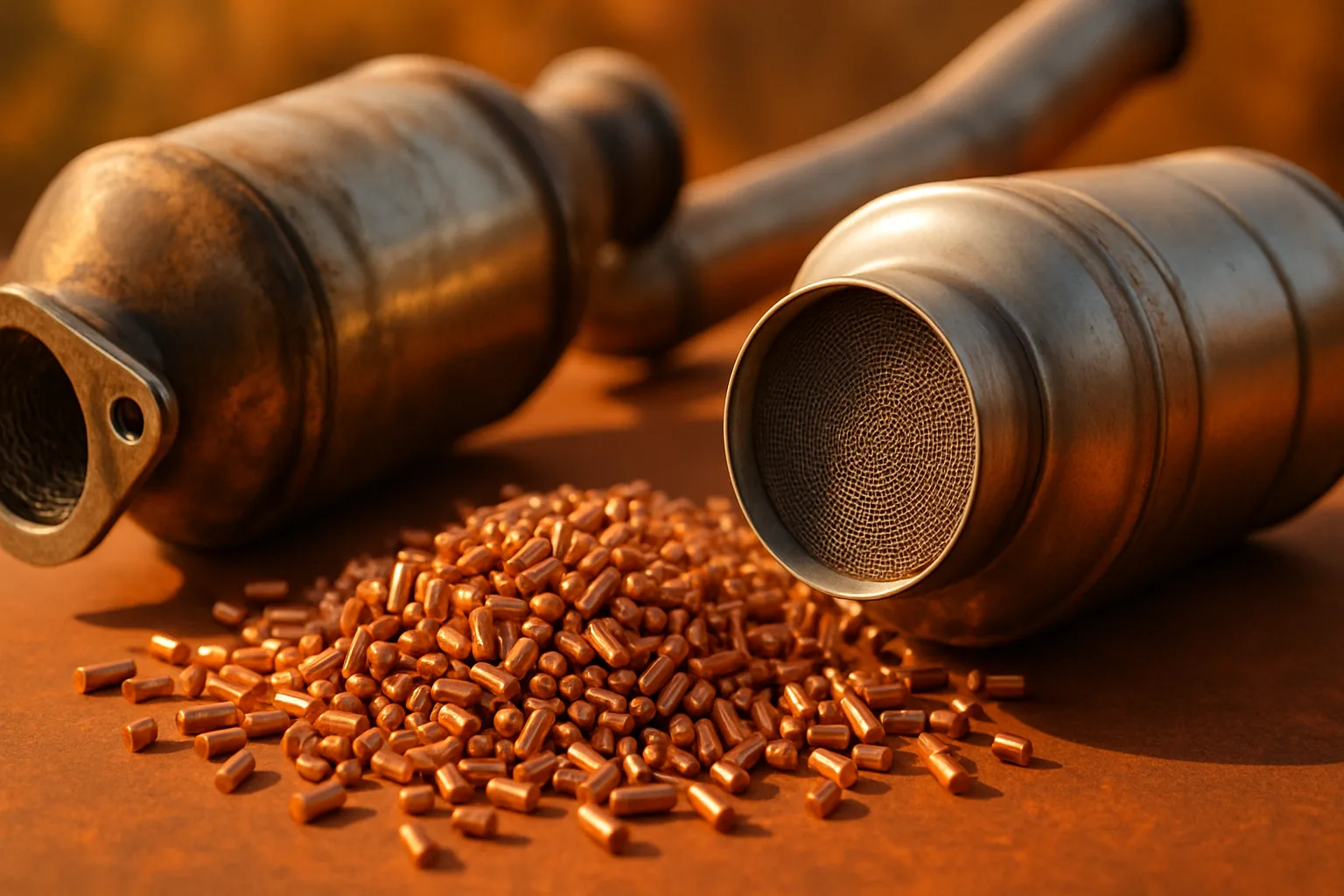
Foil vs. Bead Catalytic Converters: What's the Difference and What Are They Worth?
Most converter sellers know there's money in the pipe. What they don't always know is that the OEM catalytic converter value varies dramatically depending on what's inside the shell — and two of the most common internal designs, foil and bead, price out very differently. If you're selling converters in Denver or anywhere across Colorado, understanding this distinction can mean real money left on the table or real money in your pocket.
This isn't trivia. It's the kind of knowledge that separates sellers who get market rate from sellers who get lowballed. Let's break it down.
What Is a Foil-Style Catalytic Converter?
A foil-style catalytic converter uses a metallic substrate — thin corrugated foil layers, typically made from a stainless steel alloy — wound into a honeycomb structure inside the converter shell. The precious metals (platinum, palladium, and rhodium) are coated onto this foil substrate. These converters are common in European vehicles, high-performance applications, and some diesel platforms.
The foil substrate is lighter and allows for tighter cell density, which improves exhaust flow in performance-oriented builds. But from a scrap standpoint, the foil structure behaves differently during processing than a ceramic substrate. Recovery yields can vary, and buyers factor that into their bids.
Key characteristics of foil-style converters:
- Metallic (steel alloy) internal substrate — not ceramic
- Common in European OEM vehicles (BMW, Mercedes, Volkswagen, Audi)
- Often found in diesel and high-performance gasoline engines
- Lighter than ceramic equivalents at similar dimensions
- PGM (platinum group metal) content varies by manufacturer and application
- Generally require different processing than ceramic — assayers account for this
When you shake a foil converter, it doesn't rattle. The substrate is bonded tightly to the housing. That's a quick field identifier. A rattling converter typically signals a broken ceramic substrate — a sign of damage that reduces value. Foil converters that are intact command fair market attention from buyers who know what they're looking at.
What Is a Bead-Style Catalytic Converter?
Bead-style converters use small pellets or beads — typically alumina-based — as the substrate carrier for precious metals. Instead of a honeycomb, you've got a chamber packed with loose or semi-loose catalyst beads. These were common in older North American vehicles, particularly GM platforms from the late 1970s through the 1990s, and they appear in some industrial and stationary engine applications as well.
Bead converters are often bulkier than their ceramic counterparts and feel heavy for their size because of the bead mass. They're also easier to identify: if you shake one and hear what sounds like loose gravel or sand shifting inside, you're holding a bead unit. That sound is normal — it's the bead matrix moving slightly inside the canister.
From a scrap and recovery standpoint, bead-style converters have distinct processing requirements:
- Beads must be separated from the shell before smelting
- PGM extraction from bead material requires specific processing — not all facilities handle it
- Bead converters tend to have lower PGM concentrations per unit than some premium ceramic OEM units
- Pricing reflects recovery complexity and metal yield — not just physical weight
- Age and vehicle application affect PGM loading significantly
Don't assume a heavy bead converter means high value. Weight here comes from the bead material itself, not necessarily from precious metal content. The actual catalytic converter scrap price for a bead unit depends on where those beads came from and what application the converter served.
How OEM Catalytic Converter Value Is Calculated for Each Type
Regardless of whether you're selling foil or bead converters, the underlying value calculation works the same way: it's driven by the PGM content and the current spot prices for platinum, palladium, and rhodium. But the path to that number differs between converter types, and that's where sellers often get confused — or get taken.
Here's how buyers typically approach valuation:
- Identification: Every converter has a serial number, part number, or OEM stamp. That data links to assay databases with historical PGM concentration data. Foil and bead converters have their own entries — separate from ceramic honeycomb units.
- Weight and condition: Damaged, melted, or chemically poisoned substrates yield less. A cracked foil substrate reduces recoverable PGM. A bead unit that's been overheated loses catalyst activity and value.
- Refinery processing cost: Foil material and bead material both require handling beyond standard ceramic processing. Buyers factor in the cost differential. That gets reflected in the offer price.
- Spot price on the day of sale: PGM markets move daily. The price you're quoted today is tied to today's market — not last week's. check current scrap converter prices before you finalize any deal.
The biggest mistake sellers make with foil and bead converters is treating them like standard ceramics. They're not. If a buyer quotes you a flat rate per pound without referencing the converter type or serial number, that's a red flag. You're likely leaving money on the table.
Platforms like SMASH Scrap — where verified buyers bid on your metal let you get competitive offers based on documented inventory — not a single buyer's take-it-or-leave-it number. When multiple vetted buyers see your foil or bead units with proper documentation, price discovery happens. That's the difference between guessing and knowing.
Scrap Metal Inventory Management for Converter Sellers in Denver
If you're running a recycling yard, an auto salvage operation, or even processing converters out of a shop in Denver, inventory documentation is the single biggest lever you can pull on your margins. It sounds administrative. It isn't. It's the foundation of getting paid what your metal is worth.
Proper scrap metal inventory management for converter stock means:
- Photographing each unit — both ends, the OEM stamp, and any serial numbers
- Logging foil, bead, and ceramic units separately — they price differently
- Recording vehicle source and approximate model year when known (especially for OEM units)
- Tracking by serial number or part number for any high-value units
- Noting physical condition — intact substrate, rattling, heat damage, or external damage to the shell
Denver yards dealing in volume move a mix of converter types. Colorado's vehicle landscape includes a wide spread of domestic trucks, older GM platforms (bead converters show up here regularly), imported European vehicles, and fleet diesel applications. That variety means you need a system that accounts for type, not just weight.
SMASH's platform is built for exactly this workflow. Photo documentation, serial tracking, and structured listings mean buyers aren't guessing what they're bidding on. Documented inventory attracts more confident buyers — and more confident buyers bid closer to real market value. You can read scrap converter pricing guides that walk through how documentation affects final sale price in detail.
Catalytic Converter Prices Today: What to Expect for Foil and Bead Units
Let's be direct about what the market looks like in mid-2026 for foil and bead converters. PGM spot prices — particularly rhodium and palladium — remain volatile. Rhodium specifically has seen significant swings over the past several years, and that directly impacts the value of any converter carrying appreciable rhodium loading.
General expectations for foil and bead units in the current market:
- Foil-style converters: High-end European OEM foil units (late-model BMW, Mercedes) can carry meaningful PGM loads. These are worth identifying carefully before selling in bulk. Low-end diesel foil units typically price lower than premium OEM ceramics but still have real value.
- Bead-style converters: Older domestic bead units tend to price in the lower tier of the converter market. However, some older heavy-duty or industrial bead converters carry surprisingly high PGM loading. Don't assume old means worthless.
- Both types: Condition matters. A poisoned or heat-damaged foil substrate can drop value significantly. Document condition and let buyers assess — don't pre-discount yourself.
Disclaimer: Catalytic converter prices fluctuate daily based on platinum, palladium, and rhodium spot markets. Always find the best scrap converter prices today before finalizing a sale. The ranges above are general market context only and do not constitute a price guarantee.
If you're based in Denver or elsewhere in Colorado, local Denver scrap metal services can help you understand what your specific mix of foil and bead units might fetch in the current market. Combine that with a competitive auction format through SMASH, and you're no longer guessing — you're selling with data behind you.
How SMASH Helps You Get Real Market Value for Foil and Bead Converters
The old way of selling specialty converters — calling one buyer, taking their word on what your foil units are worth, hoping they're being straight with you — is the definition of price risk. One buyer has every incentive to price low. Multiple buyers competing for the same documented load have every incentive to price accurately.
SMASH connects sellers with vetted buyers across North America who actually know the difference between a foil substrate and a ceramic honeycomb. When you list your inventory with proper documentation — photos, serials, condition notes — buyers aren't hedging against uncertainty. They're bidding on what they can see. That changes the dynamic entirely.
No subscription fees. SMASH only makes money when the seller does. Auto-invoicing and documentation support mean less back-and-forth and fewer surprises at settlement. Whether you're clearing a load of older domestic bead converters or a batch of European OEM foil units from a recent fleet acquisition, the process is the same: document it, list it, let buyers compete.
If you're ready to stop leaving money on the table, start with the right information. Get familiar with your converter types, document your inventory properly, and use platforms that give you pricing based on real competition — not a single buyer's best guess. Ready to move your converters at market value? Get a free quote at best-scrap-converter-prices.com and see what transparent, data-backed pricing actually looks like.
Frequently Asked Questions
Q: How do I know if my catalytic converter is foil, bead, or ceramic?
Shake the converter gently. A loose gravel or sand sound indicates bead-style. No sound, or a solid feel, suggests foil or ceramic. Foil units are typically metallic inside and found on European vehicles; ceramic honeycomb units are the most common type on North American domestic vehicles. When in doubt, photograph the converter ends and the OEM stamp — a knowledgeable buyer or platform like SMASH can help identify the type from documentation.
Q: Are foil catalytic converters worth more than ceramic ones?
Not automatically. OEM catalytic converter value depends on PGM loading, which varies by vehicle application and manufacturer — not just substrate type. Some premium European OEM foil converters carry strong PGM content; others do not. Ceramic converters from high-value applications (Toyota Prius, diesel trucks) can outprice foil units from lower-tier applications. Always identify before assuming value based on type alone.
Q: What affects catalytic converter prices today for bead-style units?
The same factors that drive all converter pricing: platinum, palladium, and rhodium spot prices, the specific PGM loading of the unit, physical condition, and the processing cost buyers will incur to recover the metal. Bead converters require specific processing and often carry lower PGM concentrations than newer OEM units, which typically results in lower per-unit pricing. However, condition and application matter — some bead units from older heavy-duty platforms surprise sellers with their value.
Q: Can I sell foil and bead converters in Denver the same way I sell ceramic converters?
Yes, but you'll get better results if you document them separately and identify the type before listing. Denver and the broader Colorado market see a mix of converter types. Bundling foil and bead units into a generic "miscellaneous" category often results in buyers pricing the whole load conservatively. Separate documentation by type gives buyers the confidence to bid more accurately — which usually means more money for you.
Q: Does SMASH handle foil and bead converter sales specifically?
SMASH handles all types of converter inventory — ceramic, foil, and bead — through its auction format. The key is documentation: photo evidence, serial numbers, and condition notes help vetted buyers make accurate bids regardless of substrate type. More buyer confidence leads to better price discovery. That's the core of how SMASH works, whether you're selling one type or a mixed load.
Stay current on PGM markets and converter pricing trends — follow SMASH on LinkedIn for industry updates and scrap metal market insights.
```