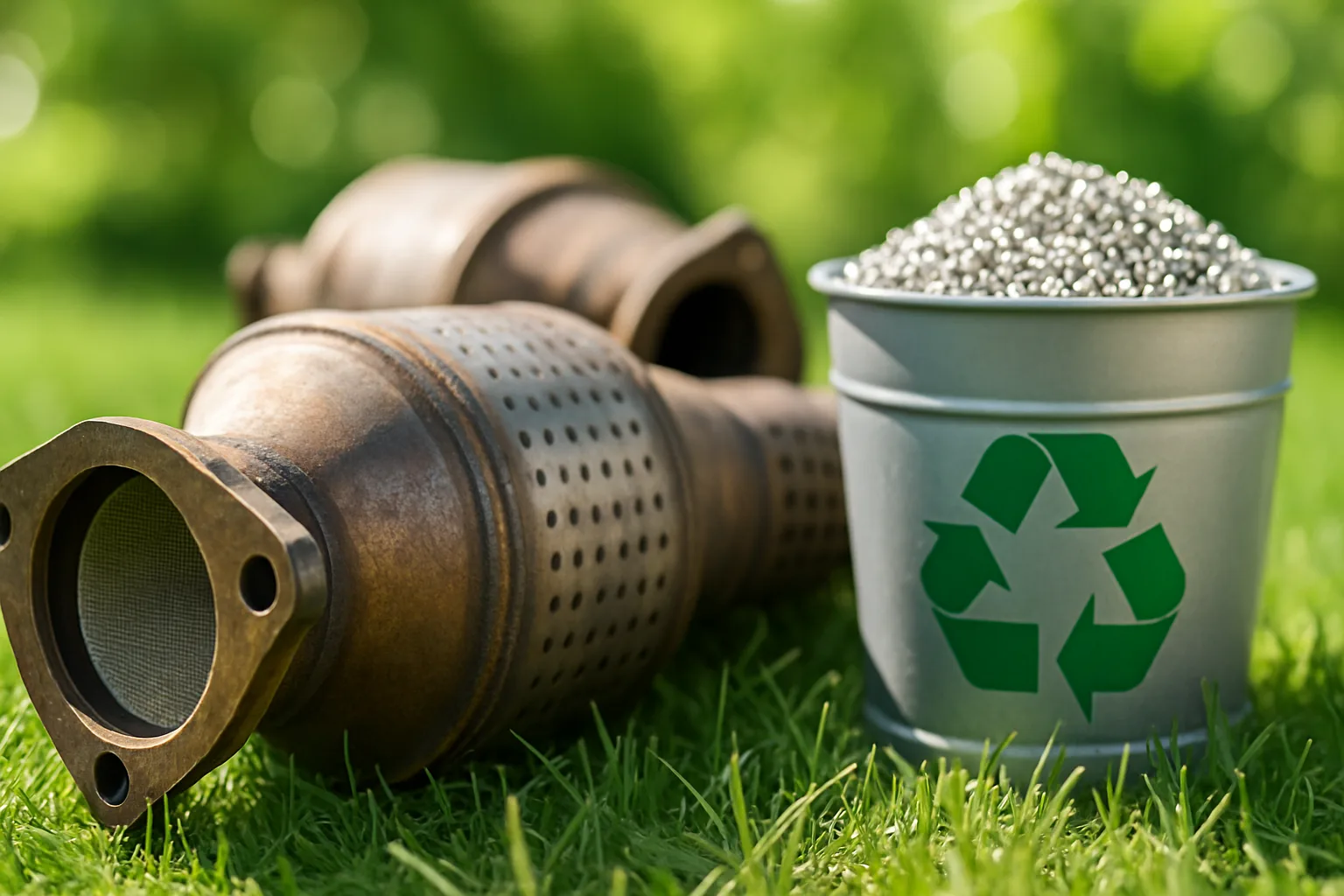
Why Safe Removal Is the First Step to Getting the Best Catalytic Converter Price in Minneapolis
Most converter sellers leave money on the table before they ever contact a buyer. Not because of bad timing or a weak market — because of a bad removal job. A damaged catalyst brick, a crushed shell, or a unit stripped of its heat shields can quietly kill your payout. If you're chasing the best catalytic converter price Minneapolis has to offer, the work starts in the driveway, not at the yard.
This guide walks you through safe, clean removal from start to finish. Whether you're pulling one converter off a junked vehicle or processing a batch of end-of-life units, the same principles apply. Protect the unit. Document everything. Then get it in front of real buyers who compete for your material.
---Tools You Actually Need Before You Start
Don't wing this with whatever's in the back of the truck. Catalytic converter removal is straightforward — but only if you have the right setup. Cutting corners on tools usually means cutting corners on the unit itself, which directly affects your scrap converter prices.
Here's what you need on the bench before you touch the vehicle:
- Angle grinder or reciprocating saw — for cutting through seized pipe sections when the flanges won't budge
- Penetrating oil (PB Blaster or equivalent) — soak all bolts and flanges 24 hours before removal if possible
- Impact wrench or breaker bar — for flange bolts; a standard ratchet often won't generate enough torque on corroded hardware
- Floor jack and jack stands — never work under a vehicle on a floor jack alone
- Safety glasses and gloves — catalytic converters trap heat for a long time; even a "cold" unit can burn you
- Wire brush — clean around pipe connections before cutting to reduce flying debris
- Marker or paint pen — mark the unit with vehicle info before it leaves the car (more on why below)
If you're operating a yard in the Minneapolis metro area and processing multiple units weekly, invest in a proper exhaust pipe cutting station. The time savings alone justify it, and you'll keep your units cleaner.
---Step-by-Step: How to Remove a Catalytic Converter Without Damaging Scrap Value
The converter's value lives in its ceramic substrate — the honeycomb material coated with platinum, palladium, and rhodium. Crack that substrate and you lose precious metal surface area. Buyers notice. Platforms like compare scrap metal bids from verified buyers — and those buyers are evaluating condition, not just make and model.
Follow this sequence:
- Let the vehicle cool completely. Minimum two hours after the engine ran last. Exhaust systems hold heat longer than most people expect. Burns slow you down and cost you.
- Soak all connection points with penetrating oil. Give it time. Rushing this step is where most damage happens — forced bolts shear off, flanges crack, and suddenly you're cutting pipe where you didn't plan to.
- Lift and secure the vehicle properly. Use jack stands rated for the vehicle weight. Four-point support is better than two. Don't rush the lift.
- Identify your cut points. If flanges are accessible and not completely seized, try to remove at the flanges. If they're gone, plan your cuts to leave as much pipe as possible on the converter — buyers prefer units with some pipe length attached rather than a bare shell cut flush.
- Cut steadily and straight. An angle grinder works fast, but it can deflect. Take your time on the first cut. A jagged cut into the converter housing can crack the brick inside.
- Do not hammer or pry the converter off the vehicle. This is the most common cause of internal brick damage. If it's stuck, the answer is more penetrating oil and patience — not force.
- Mark the unit immediately after removal. Write the VIN, year, make, and model on the unit with a paint pen. Do this before it goes into a bin. If you're processing a load, mix-ups happen fast.
Clean removal takes maybe 20 extra minutes per unit. That time investment shows up in your catalytic converter scrap price at payout.
---Documentation: The Part Most Yards Skip (And Shouldn't)
In Minnesota, documentation isn't optional — it's increasingly expected at every stage of the scrap chain. State-level regulations on precious metal dealers have tightened over the past several years, and Minneapolis yards are operating under more scrutiny than ever. Keeping clean records protects you legally and commercially.
At minimum, document the following for every unit you process:
- Vehicle VIN (ties the converter to a specific vehicle)
- Year, make, model, and engine size
- Date of removal
- Photos of the unit before removal and after (with a ruler or reference object for scale)
- Serial number if visible on the converter housing
Why does this matter for price? Buyers pay more when they know what they're getting. A documented unit with photos and vehicle data gives a buyer confidence to bid higher than they would on an unidentified unit that could be anything. This is exactly why finding the best scrap converter prices today starts with your intake process, not your outreach process.
If you're selling through an auction platform like SMASH, documented inventory with photos and VIN data gives vetted buyers the information they need to compete aggressively. That competition is what moves the needle on your converter scrap value.
---Understanding What Drives Catalytic Converter Scrap Value in 2026
The precious metals inside a catalytic converter — platinum, palladium, and rhodium — don't trade at a fixed price. They move daily based on global supply and demand, mining output, industrial use, and macro market conditions. Rhodium price today can be dramatically different from what it was six months ago, and that directly changes what your converter is worth on the floor.
Here's the basic breakdown of how converter value gets calculated:
- Assay percentage: The yield of platinum group metals (PGMs) from the substrate after processing
- Spot prices: Current market rates for platinum, palladium, and rhodium
- Return percentage: The cut the processor takes versus what they return to the seller
- Unit condition: Intact brick vs. cracked, damaged, or "washed" substrate
- Vehicle type: A diesel particulate filter from a heavy-duty truck carries very different value than a small-engine domestic cat
This is why guessing your price — or taking the first number a single buyer throws out — doesn't serve you. To genuinely check current scrap converter prices, you need market-based data and real buyer competition, not a verbal quote from one contact who has every incentive to lowball you.
For sellers in the Minneapolis market and across Minnesota, working with a platform that connects you to multiple vetted buyers changes the dynamic entirely. You stop guessing. The market tells you what the load is worth.
---Getting the Best Catalytic Converter Price: From Removal to Sale
Safe removal and clean documentation are the foundation. But how you sell matters just as much as how you prep.
The old model — one call, one buyer, take it or leave it — doesn't reflect what your material is actually worth. A load of well-documented converters pulled cleanly from identified vehicles is a genuinely competitive asset. Treat it that way.
Here's where SMASH fits into the picture. SMASH connects scrap sellers with vetted buyers through a competitive auction format. You upload your inventory — photos, VINs, serial numbers, unit details — and buyers compete. That competition is what drives best converter price outcomes. No subscriptions. No guesswork. You only pay when you sell.
If you're running Minneapolis scrap metal services or processing converters through a Minnesota-based yard, connecting your prep process to a transparent sales channel is the logical next step. The work you put into clean removal and documentation pays off when buyers can actually see what they're bidding on.
Want to see how other sellers are approaching this? Read scrap converter pricing guides for more detail on valuation, market trends, and how to position your inventory for stronger returns.
When you're ready to sell, don't settle for a single number from a single source. Get your load in front of real competition. That's how you find out what your converters are actually worth — and how you walk away confident you didn't leave money behind.
---Frequently Asked Questions
Q: How do I know if my catalytic converter was damaged during removal?
Shake the unit gently near your ear after removal. A rattling sound usually means the ceramic substrate has cracked or broken loose inside the shell. Damaged substrate reduces precious metal yield, which buyers factor directly into their offers. The best way to protect value is to avoid prying or hammering the unit off — patience during removal prevents most of this damage.
Q: Does rhodium price today actually affect what I get paid for my converter?
Yes, directly. Rhodium is one of the three platinum group metals (PGMs) recovered from catalytic converters, and its spot price is factored into every legitimate buyout calculation. When rhodium trades high, certain converter types — especially those from larger-displacement vehicles — see significant value increases. Checking current PGM spot prices before selling gives you a realistic benchmark for evaluating offers.
Q: What's the best catalytic converter price I can realistically get in Minneapolis?
There's no single answer — price depends on the unit type, vehicle make and model, current PGM spot prices, unit condition, and how many buyers are competing for your load. What's consistent is that sellers who document their inventory, remove units cleanly, and sell through competitive channels consistently outperform those who take a single quote. The Minneapolis market has active buyers; the question is whether you're reaching all of them.
Q: Do I need to report catalytic converter sales in Minnesota?
Minnesota has regulations governing the sale of catalytic converters, including requirements around seller identification and documentation of the vehicle the unit came from. Requirements have evolved in recent years as part of broader state-level efforts to address converter theft. Always verify current state and local requirements before processing a sale — regulations can change, and compliance protects you from liability.
Q: How does SMASH help me get a better price for my converters?
SMASH uses a competitive auction format where vetted buyers bid on your documented inventory. Instead of accepting the first offer from a single contact, you put your load in front of multiple qualified buyers who compete for it. More competition means better price discovery — you find out what your converters are actually worth in the current market, not just what one buyer is willing to pay that day.
---You've done the hard part — pulled the unit cleanly, documented it properly, and understand what drives its value. Now make sure you sell it right. Find the best scrap converter prices today and get a free quote at best-scrap-converter-prices.com. Your converters are worth more when real buyers compete for them.
Disclaimer: Catalytic converter scrap prices fluctuate daily based on platinum, palladium, and rhodium spot markets. Always verify current rates before finalizing a sale.
Follow SMASH on LinkedIn for ongoing scrap metal market updates, pricing insights, and industry news that affects what your material is worth.