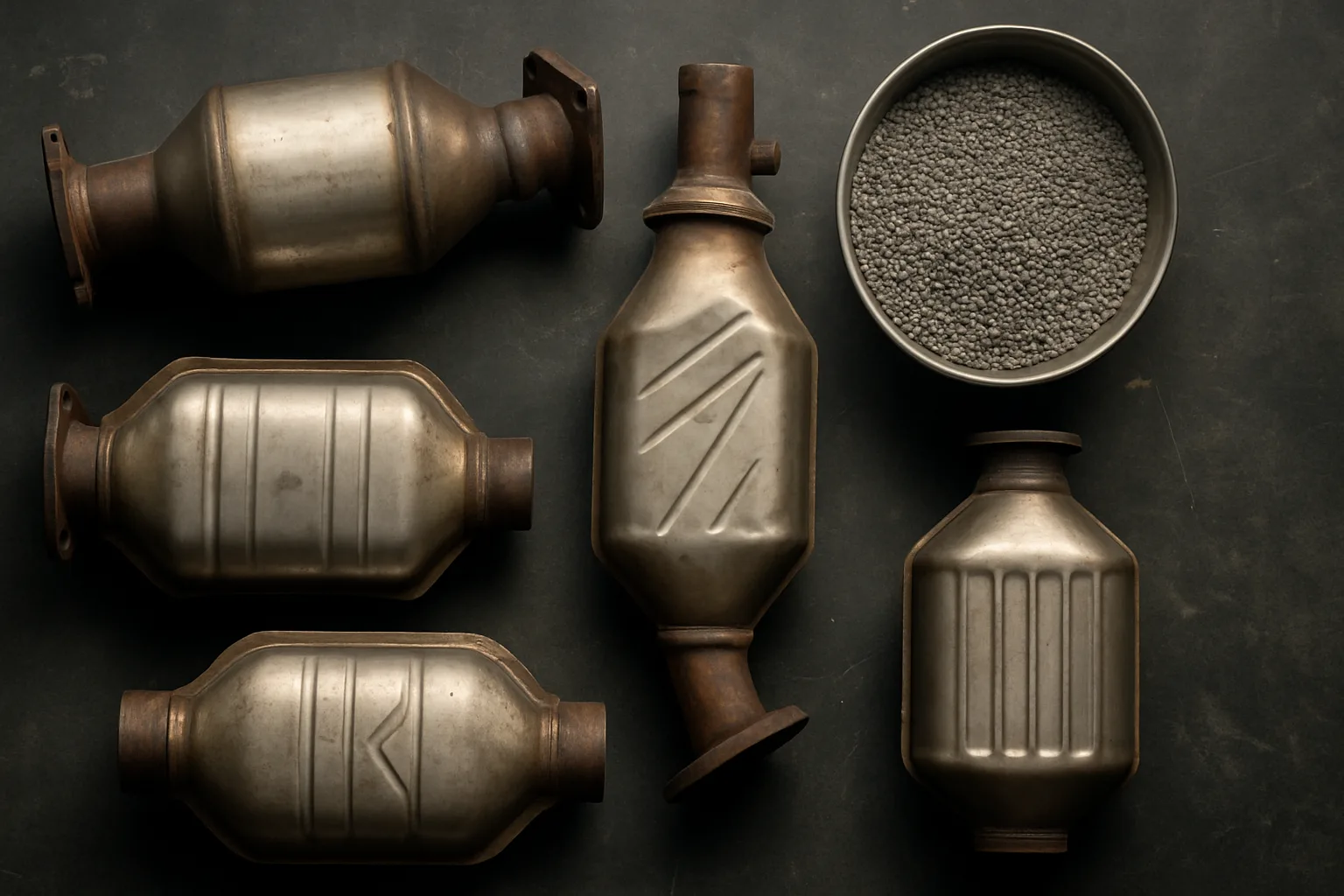
Rhodium, Palladium, Platinum: Why Rhodium Dominates Catalytic Converter Scrap Value
Most people pulling a catalytic converter off a vehicle think platinum is the big prize. They're wrong. Rhodium — a metal most people have never heard of — is why some converters are worth hundreds of dollars and others barely cover your gas money. Understanding why rhodium commands the prices it does is the single most important thing you can do before you sell.
If you're sitting on a pile of cats in Philadelphia or anywhere across Pennsylvania, this breakdown will help you stop guessing and start getting paid what your metal is actually worth. Find the best scrap converter prices today before you hand anything over to the first buyer who answers the phone.
What Makes Rhodium So Valuable in a Catalytic Converter?
Catalytic converters contain three platinum group metals (PGMs): platinum, palladium, and rhodium. All three are rare. All three are useful. But rhodium operates in a completely different pricing tier — and the reason is chemistry, not hype.
Rhodium's primary job inside the converter is reducing nitrogen oxide (NOx) emissions. Modern emissions regulations — which have only tightened through 2025 and into 2026 — demand extremely precise NOx reduction. No other metal does this job as efficiently as rhodium. Automakers can't just substitute it out. That inelastic demand, paired with an extremely limited global supply concentrated mostly in South Africa, keeps rhodium priced at a significant multiple above platinum and palladium.
- Platinum — handles oxidation of hydrocarbons and carbon monoxide
- Palladium — also handles oxidation, especially effective in gasoline engines
- Rhodium — the NOx reducer; no viable substitute; orders of magnitude rarer than platinum
Global rhodium production runs in the low single-digit tonnes annually. Compare that to gold, which is mined in thousands of tonnes per year. Scarcity at that level means price volatility that swings hard — but the floor stays high because the industrial demand never goes away.
How Rhodium Content Affects Your Catalytic Converter Scrap Value
Not every converter carries the same rhodium load. This is where most sellers leave money on the table. A converter from a domestic V8 truck looks the same from the outside as one from a small import four-cylinder. But the PGM content — especially the rhodium — can be dramatically different.
Several factors determine how much rhodium (and total PGM value) your converter holds:
- Vehicle make and model — Exotic and luxury brands often use more rhodium-heavy formulations
- Engine displacement and type — Larger engines, stricter emissions targets mean more loading
- Converter position — Pre-catalysts (close-coupled) vs. main body converters have different loadings
- Model year — Emissions standards tightened significantly in the 2010s and again in the 2020s; newer converters often carry more PGMs
- Aftermarket vs. OEM — OEM converters typically carry higher PGM loads than cheaper aftermarket replacements
This is exactly why serial number lookup matters. If you want to know how much is my catalytic converter worth by serial number, the answer lives in the assay data tied to that specific unit. A legitimate buyer uses real serial data — not a visual guess — to quote you. Platforms that rely on guesswork are guessing with your money, not theirs.
Rhodium vs. Palladium: Understanding Both Metals Before You Sell
Palladium has had its own dramatic run in recent years, and it remains a significant contributor to overall catalytic converter scrap value. Tracking the palladium price today matters because it shifts your total payout even when rhodium holds steady. Both metals move independently based on their own supply-demand dynamics.
Here's how to think about them side by side:
- Rhodium: Smallest quantity per converter, highest price per troy ounce, most volatile swings — but the biggest single driver of top-tier converter values
- Palladium: Larger quantities per converter (especially in gasoline-engine vehicles), significant price per ounce, demand pressured by EV transition but still dominant in the near-term ICE fleet
- Platinum: Most associated with diesel converters, historically the reference PGM, currently trading below palladium in most markets
A converter with strong rhodium content and solid palladium loading can be worth multiples of a unit that's heavy in platinum but light on the other two. This is why knowing your specific units — by serial number, by vehicle, by type — is not optional. It's the difference between a fair quote and getting shorted.
If you're selling in Philadelphia, you have access to a competitive regional market. Use it. Read scrap converter pricing guides to understand exactly what drives the number your buyer quotes you before you agree to anything.
Why Philadelphia Sellers Need to Stop Relying on a Single Buyer
Philadelphia has a real scrap ecosystem — yards, processors, independent buyers, and everything in between. But having options doesn't mean you're automatically getting competitive prices. If you're calling one buyer, getting a number, and taking it, you're not price-discovering. You're just accepting whatever margin that buyer wants to keep.
The old way: one phone call, one number, take it or leave it. The buyer knows your rhodium content better than you do, and they're pricing that asymmetry into their offer.
The better way: document your load, pull serial numbers, get multiple offers, and let buyers compete. That's exactly what the SMASH scrap metal auction marketplace is built to do. When vetted buyers compete on your specific inventory — serialized, documented, verifiable — the market sets the price. Not one buyer's mood on a Tuesday afternoon.
For Philadelphia scrap metal services that actually connect you to competitive buyers, the process starts with proper documentation and real serial lookups — not a quick eyeball estimate at the back of a yard.
How to Maximize Your Converter Scrap Value Before You Sell
Whether you're clearing out a shop in Philadelphia, a salvage yard in central Pennsylvania, or managing a commercial fleet's end-of-life units, the prep work you do before the sale directly affects your payout. Here's what separates a strong sale from a mediocre one:
- Document every unit by serial number. Don't mix unknown cats with identified ones. Each serialized unit gets its own data point, and that data is what buyers bid on.
- Photograph your inventory. Clean photos showing condition, serial numbers, and substrate integrity give buyers confidence. Confident buyers bid higher.
- Separate by type. Foil converters, ceramic substrate, pre-cats, aftermarket — don't lump them together. Mixed loads get priced at the lowest common denominator.
- Check current PGM prices before you sell. Rhodium and palladium pricing shifts daily. Check current scrap converter prices so you know whether today is a strong selling day or whether holding a few days makes sense.
- Use a platform with vetted buyers. If you're looking for catalytic converter buyers near me open now, the real question isn't who's open — it's who's paying fair market rates. Availability without competition doesn't help you.
- Understand your volume tier. Higher volumes often unlock better per-unit pricing. If you have a significant load, make sure your buyer knows the full scope of the inventory upfront.
SMASH is built specifically for this process. Inventory documentation, serial tracking, photo uploads, and a buyer network that bids on your actual load — not a generic estimate. When you sell catalytic converters Pennsylvania through a competitive auction format, you stop leaving money on the table.
What Transparent Pricing Actually Looks Like When You Sell Scrap Metal Online
Transparency in converter pricing means one thing: you can see what's driving your quote. Not just a dollar figure, but what metal, at what price, at what recovery estimate. When you sell scrap metal online through a documented, auction-based process, that chain of logic is visible — or at least challengeable.
When you sell to a single buyer over the phone, you get a number with no breakdown. You don't know if they're pricing your rhodium at today's spot or last month's. You don't know what recovery rate they're using. You don't know how much margin they've built in. You're flying blind.
SMASH's approach flips that. Vetted buyers see the same documented inventory and bid competitively. More buyers means better price discovery. Competition can help reveal what the market actually values your load at — not what one buyer wants to pay on a slow Friday afternoon.
Disclaimer: Precious metal prices — including rhodium, palladium, and platinum — fluctuate daily based on market conditions. Always check current rates before making a selling decision. Prices referenced in any pricing guide reflect market conditions at the time of writing and may not reflect current values.
Frequently Asked Questions
Q: Why is rhodium worth more than platinum or palladium in a catalytic converter?
Rhodium is the rarest of the three platinum group metals found in converters, and it's the only one that efficiently reduces nitrogen oxide (NOx) emissions — a non-negotiable requirement under modern emissions standards. Because no automaker can substitute it out, demand stays high while supply remains extremely limited, keeping prices elevated above the other PGMs.
Q: How much is my catalytic converter worth by serial number?
The serial number on your converter links to assay data that tells buyers the specific platinum, palladium, and rhodium loading for that unit. The actual dollar value depends on current precious metal spot prices and the recovery rate applied — but serialized units almost always generate stronger offers than unidentified or mixed loads. Tools that look up converter value by serial number give you a real baseline before you negotiate.
Q: What are the best catalytic converter buyers near me in Philadelphia?
The best buyer is one who offers transparent pricing based on documented PGM content — not a flat rate based on a quick visual. In Philadelphia and across Pennsylvania, your strongest move is to document your load, get serial numbers recorded, and put your inventory in front of multiple vetted buyers rather than defaulting to whoever picks up the phone first.
Q: How does the palladium price today affect what I get for my converters?
Palladium is a significant PGM in most gasoline-engine converters and contributes meaningfully to your total payout. When palladium prices are strong, even units with modest rhodium content can produce solid offers. Because prices shift daily, checking the current palladium rate before you sell helps you time the sale and benchmark any offer you receive.
Q: Can I sell catalytic converters online in Pennsylvania?
Yes — and it's increasingly the smarter way to sell if you want competitive pricing. Online auction-based platforms allow vetted buyers to compete on your documented inventory without geographic limitations. Pennsylvania sellers have used platforms like SMASH to reach buyers across the country rather than settling for local-only pricing. Proper documentation and serial tracking are what make remote sales work effectively.
Ready to stop guessing what your converters are worth? Whether you're clearing a single unit or moving a full load, find the best scrap converter prices today at best-scrap-converter-prices.com — and get a quote based on what your metal actually contains, not what one buyer decides to offer.
Follow SMASH on LinkedIn for industry updates, PGM market insights, and scrap metal pricing news: SMASH on LinkedIn.
```