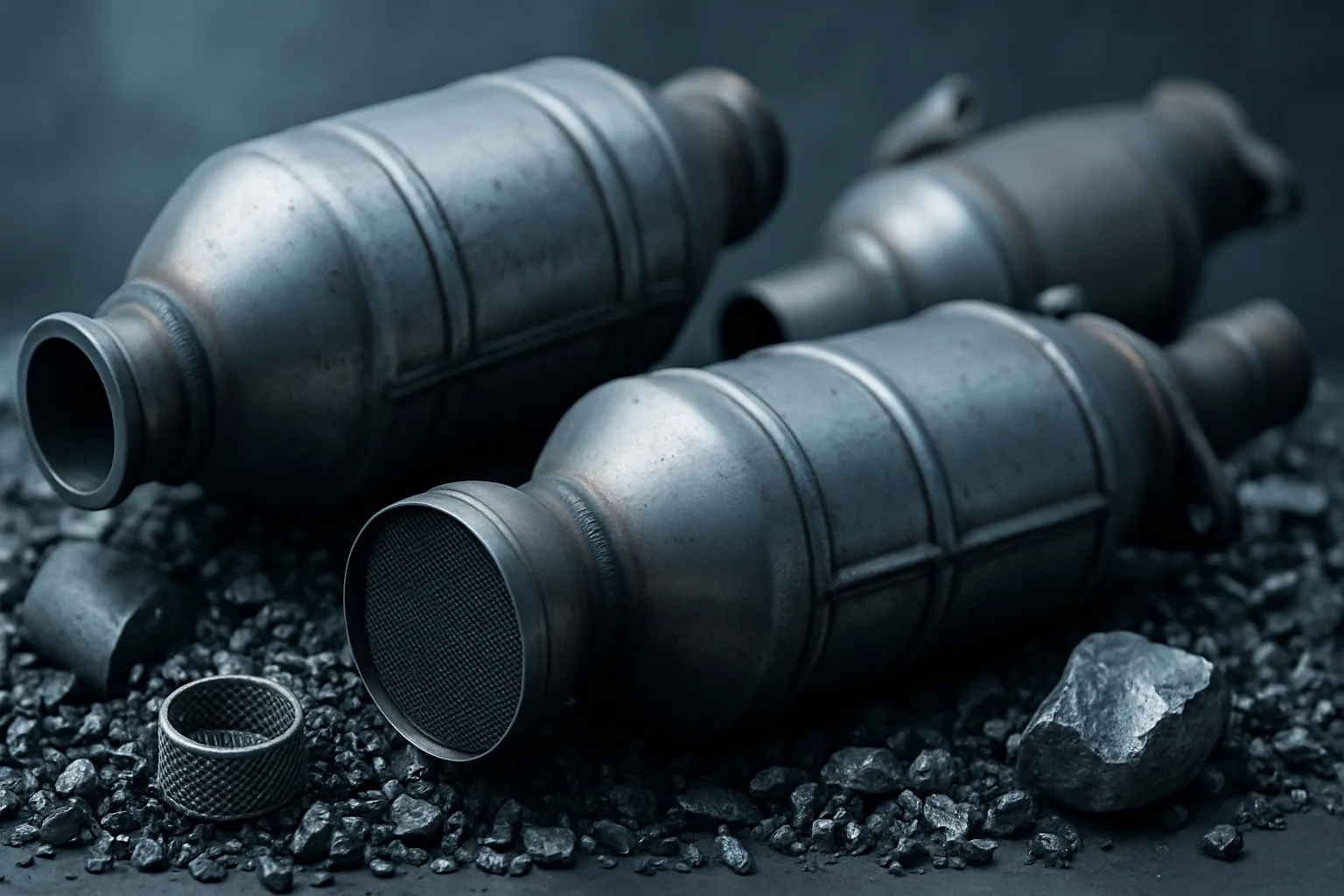
Why Hybrid Catalytic Converters Are Worth More at the Scrap Yard — And What Gary Sellers Need to Know
Most people selling a catalytic converter have no idea what's inside it. They hand it over, take whatever number they're given, and walk away wondering if they left money on the table. If that converter came off a hybrid vehicle, the answer is almost certainly yes. Hybrid cats are a different category entirely — and finding the right catalytic converter buyer Gary sellers trust means understanding why before you sell.
The difference isn't small. Hybrid catalytic converters often contain significantly higher concentrations of platinum, palladium, and rhodium than their conventional counterparts. That makes them more valuable on the scrap market — but also more frequently misquoted by buyers who aren't paying attention or don't want you to know the difference. This guide breaks down why hybrids command higher scrap values, what drives those prices in 2026, and how to make sure you're not shortchanged when you sell.
What Makes Hybrid Catalytic Converters Different From Standard Cats
A conventional internal combustion engine (ICE) runs hot and hard from the moment you start it. The catalytic converter heats up quickly, reaches operating temperature fast, and the chemical reactions that reduce harmful emissions happen efficiently. Hybrid vehicles don't work that way. The combustion engine in a hybrid cycles on and off constantly — sometimes the electric motor carries the load entirely, and the gas engine stays cold.
That cold-start problem is the key. Catalytic converters only work effectively above a certain temperature threshold — typically around 400°C (750°F). When an engine starts cold, the converter hasn't activated yet, and raw emissions pass through. For a hybrid, where the engine starts and stops dozens of times per trip, this is a chronic issue. Engineers solve it by loading the converter with a higher concentration of precious metals. More platinum group metals (PGMs) means faster light-off — the point at which the converter reaches working temperature — and better emissions control even during repeated cold starts.
The result is a converter that's physically loaded with more of the metals that make it valuable at the scrap yard:
- Platinum (Pt): Primary catalyst for oxidation reactions; hybrid cats often carry elevated platinum loadings
- Palladium (Pd): Effective at lower temperatures; critical for hybrid cold-start performance and heavily loaded in modern hybrid converters
- Rhodium (Rh): Handles nitrogen oxide (NOx) reduction; used in smaller quantities but commands the highest price per troy ounce of the three
Some hybrid models — particularly those from Toyota, Honda, and Ford — are well-documented in the converter recycling industry for their above-average PGM content. Certain Toyota Prius converters have become almost a benchmark for high-value cats in the recycling world. If you're sitting on a stack of hybrid converters in Gary and you haven't checked what they're actually worth, that's a real problem worth fixing.
How Precious Metal Markets Drive Scrap Converter Prices in 2026
Converter scrap value isn't a fixed number stamped on a list somewhere. It moves with the live commodity markets for platinum, palladium, and rhodium. In 2026, PGM markets remain sensitive to global supply chain dynamics, electric vehicle adoption curves, and ongoing demand from the automotive sector. Palladium in particular has seen significant price swings in recent years as automakers adjusted their engine and emissions strategies.
For Gary sellers watching scrap metal prices today, the practical implication is straightforward: the same hybrid converter can be worth meaningfully different amounts depending on when you sell and who you sell to. A buyer quoting a flat rate without referencing current PGM spot prices isn't giving you a market-based offer. They're giving you a number that works for them.
The calculation behind a proper converter quote works like this:
- The converter is identified by serial number, make, model, and year
- Known or estimated PGM content is pulled from assay data
- Current spot prices for platinum, palladium, and rhodium are applied
- Processing and refining costs are factored in
- A buyback percentage is offered to the seller
The higher the PGM loading — as with hybrid converters — the more each of those line items matters. A hybrid cat from a late-model Prius and a cat from a base-model sedan are not remotely the same sell. To find the best scrap converter prices today, you need a buyer who actually runs that math instead of handing you a flat number pulled from thin air.
Why Gary, Indiana Sellers Have a Real Opportunity Right Now
Gary sits in the heart of one of the most active industrial and recycling corridors in the Midwest. The region's proximity to Chicago, major rail lines, and a dense network of auto dismantlers and recycling operations means there's no shortage of buyers competing for scrap metal — including catalytic converters. That competition is an advantage if you know how to use it.
The problem most sellers in Gary run into isn't a lack of buyers — it's a lack of competitive bidding. You call one catalytic converter scrap yard near me, get a number, and have no way to know if it's fair. You're negotiating against yourself. The yard has the price data. You have a converter and a guess.
The solution is to create competition. When multiple vetted buyers see the same converter and bid against each other, the market price reveals itself. That's not a theory — it's how every efficient commodity market works. Indiana has enough volume and enough buyers that you shouldn't be accepting a single-source quote without at least knowing what a competitive process would return. Platforms like SMASH let you compare scrap metal bids from verified buyers instead of guessing whether the yard down the road is giving you a fair shake.
If you're a dismantler, a recycling yard, or an independent seller moving volume in Gary, that difference compounds fast. One or two extra percentage points on a high-PGM hybrid converter adds up quickly when you're selling regularly.
How to Identify High-Value Hybrid Converters Before You Sell
Not every converter off a hybrid vehicle is created equal. Knowing what you have before you walk into a negotiation changes the dynamic entirely. Here's how experienced sellers approach it:
- Serial number lookup: Most hybrid converters have a serial number stamped on the body or heat shield. Cross-referencing this number against a reputable converter price database gives you a baseline value estimate tied to real assay data.
- VIN-based identification: If you have the vehicle VIN, you can trace the exact OEM converter spec for that make, model, and year — which tells you the converter type and its known PGM profile.
- Photo documentation: Clear photos of the converter, serial number, and any visible markings give remote buyers enough information to make accurate offers. A buyer who won't quote from photos or serial numbers is a buyer you should question.
- Weight: Hybrid converters tend to be heavier than standard cats. Weight alone isn't a value indicator, but combined with serial identification, it's part of the picture.
- Model knowledge: Certain hybrids are consistently flagged as high-value — Toyota Prius generations, Honda Accord Hybrid, Ford Escape Hybrid, and others. If you know the source vehicle, you already know to pay attention.
SMASH builds serial tracking and photo documentation into its selling process precisely because these details determine value. A documented load gives buyers confidence, and confident buyers bid more aggressively. To check current scrap converter prices with that kind of accuracy, you need the right tools in the process from the start.
Getting the Best Price: What Serious Sellers Do Differently
The sellers who consistently get top dollar for hybrid converters aren't necessarily the ones with the most inventory. They're the ones with the most information and the most buyers in the room. That's the entire premise behind competitive converter auctions — replace the single-buyer phone call with a process that forces the market to show its hand.
Here's what separates a strong sale from a mediocre one:
- Accurate identification before listing: Misidentified converters get mispriced. Correct serial numbers and photos remove the ambiguity buyers use to justify lower offers.
- Multiple verified buyers: One quote is a starting point, not a final answer. Vetted buyers competing on the same lot produce better price discovery than any individual negotiation.
- Current market data: PGM spot prices move. A buyer quoting prices from last week's market without adjusting is paying last week's price. Know the market, or work with a platform that does.
- No subscription, no lock-in: SMASH charges no subscription fees. You only participate when you have inventory to move. That structure means the platform only works if you get a result — which aligns the incentive correctly.
For Gary yards and sellers looking to read scrap converter pricing guides and sharpen their approach, understanding the hybrid premium is step one. Step two is building a process that captures it consistently instead of leaving it on the table deal after deal.
Disclaimer: Catalytic converter scrap prices fluctuate with live precious metal spot markets. Always verify current rates before selling. The values referenced in this article reflect general market dynamics as of August 2026 and are not guaranteed prices.
If you're moving hybrid converters in Gary — or anywhere across Indiana — and you're still relying on a single buyer and a handshake number, you're making the buyer's job easy and your own harder than it needs to be. Get the serial numbers. Document the load. Create competition. You can find the best scrap converter prices and get a free quote at best-scrap-converter-prices.com — and know you're starting from the right number instead of hoping for the best.
Frequently Asked Questions
Q: Why do hybrid catalytic converters contain more precious metals than regular converters?
Hybrid engines cycle on and off frequently, creating repeated cold-start conditions where the converter hasn't reached operating temperature yet. To maintain emissions compliance during these cold cycles, manufacturers load hybrid converters with higher concentrations of platinum, palladium, and rhodium — the same metals that give converters their scrap value.
Q: How do I find a reliable catalytic converter buyer in Gary, Indiana?
Look for buyers who quote based on serial number identification and current PGM spot prices — not flat-rate price sheets. In Gary and across Indiana, the best approach is to get multiple offers from vetted buyers rather than accepting the first quote you receive. Platforms like SMASH connect sellers with verified buyers who compete on price.
Q: How much is a hybrid catalytic converter worth at the scrap yard?
Values vary significantly by make, model, year, and current precious metal markets. Hybrid converters — particularly from vehicles like the Toyota Prius — consistently command higher prices than standard cats due to elevated PGM content. Always look up your specific serial number rather than relying on general estimates, and check current scrap metal prices on the day you sell.
Q: What information do I need to get an accurate quote for catalytic converter recycling in Gary?
The serial number stamped on the converter, clear photos of the unit, and the source vehicle's make, model, and year are the core requirements for an accurate quote. A buyer who can't or won't use this information to refine their offer is likely quoting generically — which rarely works in your favor on a high-value hybrid converter.
Q: Does it matter which buyer I sell my hybrid catalytic converters to?
Yes — significantly. Not all buyers price converters the same way or have access to the same assay data and market pricing. Selling to a single local buyer without comparison means you're accepting their margin structure without knowing what competitive bidding might return. For high-value hybrid cats in particular, the difference between a well-priced and a poorly-priced sale can be substantial.
Follow SMASH on LinkedIn for ongoing scrap metal market insights, converter pricing updates, and industry news that keeps you ahead of the market.
```