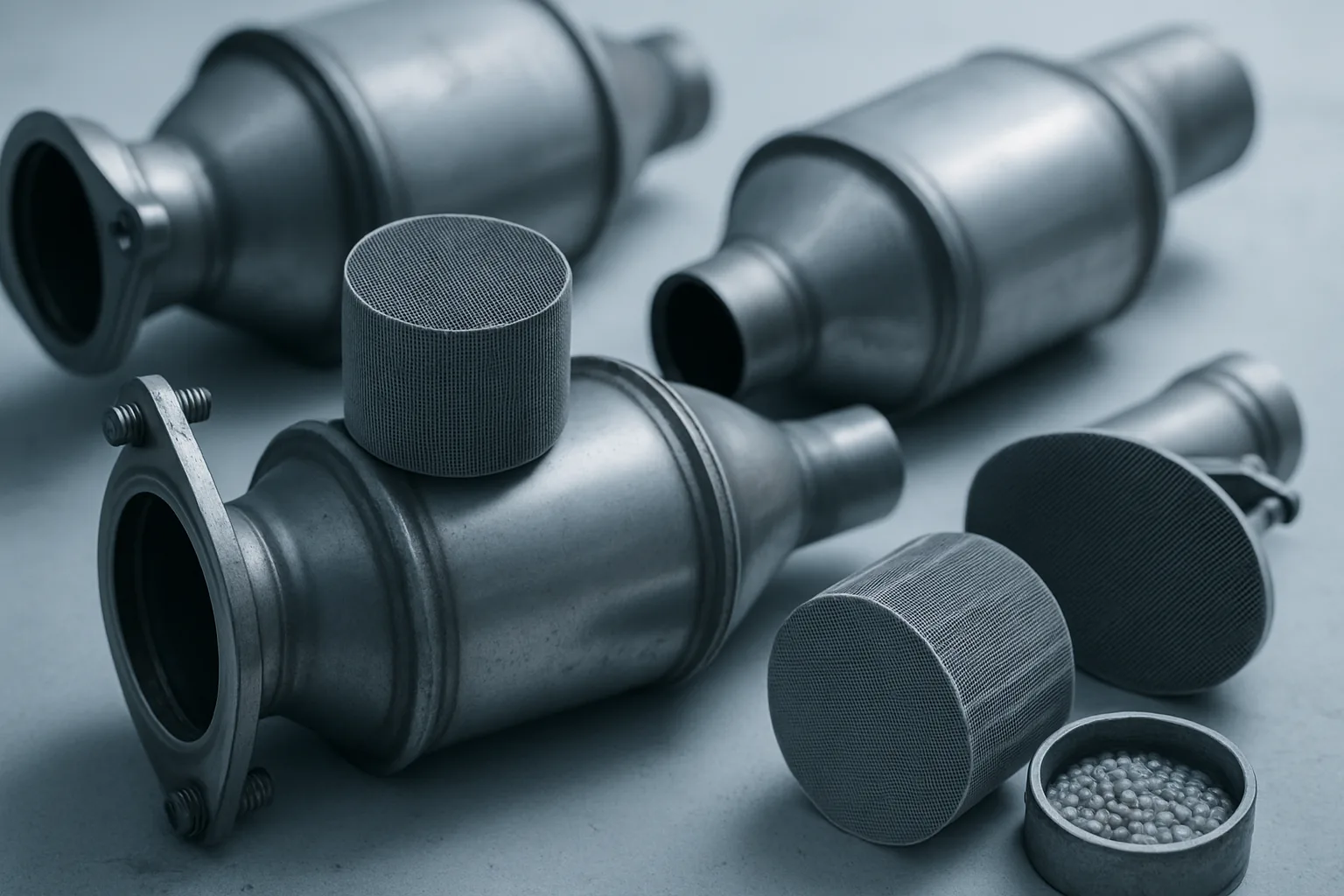
Why Emissions Rules Are Pushing Platinum Prices Higher in 2026
Most converter sellers focus on what's in the can. They should also be watching what's coming out of Washington — and Brussels, Beijing, and Sacramento. Emissions regulations are tightening globally in 2026, and that policy pressure has a direct line to the platinum price today. If you're sitting on a pile of cats, that context matters.
Platinum group metals — platinum, palladium, and rhodium — are the active ingredients inside every catalytic converter. They're what make the converter work. Stricter tailpipe standards mean automakers need more PGM loading per vehicle to pass emissions tests. More loading per vehicle means more demand for the metals. More demand with constrained supply means price pressure. It's not complicated, but most sellers never think about it when they're negotiating a scrap price.
Understanding this chain helps you time your sales smarter and find the best scrap converter prices today instead of just taking whatever a single buyer quotes you.
The Regulatory Pressure Behind Platinum Group Metal Demand
The U.S. Environmental Protection Agency's Tier 4 standards, California's Advanced Clean Cars II rules, and the Euro 7 framework in Europe all push in the same direction: lower particulate emissions, lower NOx output, tighter hydrocarbon limits. Every time a regulator lowers the threshold, engineers respond by increasing catalyst efficiency — which often means more PGM per converter.
In 2026, several major regulatory deadlines are hitting simultaneously. Euro 7 implementation timelines have forced European OEMs to redesign emissions systems. California's rules continue influencing the broader U.S. market because automakers rarely build separate fleets for California versus the rest of the country. The result is a consistent upward pull on PGM demand that isn't going away anytime soon.
- Platinum — dominant in diesel catalysts; demand growing as diesel emissions standards tighten in Europe
- Palladium — the primary metal in gasoline catalysts; the most common type in the North American vehicle fleet
- Rhodium — used in smaller amounts but critical for NOx reduction; historically the most volatile of the three
When you sell a scrap catalytic converter, you're essentially liquidating a small package of these metals. The more tightly the metals are priced by the market, the more your converter is worth — provided you're selling to a buyer who actually knows what's in it.
What the Platinum Price Today Means for Your Scrap Converter Value
The platinum price today trades on the London Platinum and Palladium Market (LPPM) and on NYMEX futures. Spot prices shift daily. Your converter's scrap value is a function of those spot prices, the assay results from the smelter (what metals are actually recoverable), and what kind of margin the buyer takes off the top.
That margin is where most sellers get hurt. A single buyer with no competition has every incentive to quote you a low number. You don't know the current platinum price. You don't know what's in your specific converter. They do — or at least they act like they do. That information gap costs sellers real money every day.
The practical takeaway: converter scrap value is not a fixed number. It moves with platinum, palladium, and rhodium spot prices. A load of cats that was worth X three weeks ago might be worth meaningfully more or less today depending on macro factors — trade flows, mining output from South Africa and Russia, industrial demand from the hydrogen economy, and yes, emissions regulations driving OEM purchasing. Read scrap converter pricing guides to better understand what drives these swings before your next sale.
Disclaimer: Scrap converter prices fluctuate daily based on precious metal spot markets. Always check current rates before selling.
Richmond Sellers: Why Local Buyer Options Matter More Than You Think
Richmond, Virginia sits in a strong position for scrap metal activity. The mid-Atlantic corridor moves a lot of used auto parts, and the region's mix of independent recyclers, auto dismantlers, and salvage operations means there's real volume flowing through the market. But volume doesn't automatically mean competitive pricing.
A lot of catalytic converter buyers in Virginia still operate the old way — one phone call, one quote, take it or leave it. If you're a yard or a dismantler in Richmond running a meaningful volume of cats, that approach leaves money on the table month after month. You don't know if the quote you got was the market or the buyer's margin.
That's the gap that a platform like SMASH is built to close. Instead of calling one buyer and guessing, you list your inventory — documented with photos, serial tracking, and VIN lookup where applicable — and let vetted buyers compete. Competition reveals the market. That's not a slogan; it's how price discovery actually works. Sellers using get competitive bids for your scrap metal stop guessing and start seeing what buyers will actually pay.
If you're moving converters out of Richmond, Richmond scrap metal services can connect you with buyers who understand the local market and the value of properly documented inventory.
How a Scrap Metal Auction Platform Changes the Selling Dynamic
The old model: you call a buyer, describe your load, take a number. The new model: you document your inventory, post it to a scrap metal auction platform, and watch vetted buyers submit bids. Same load. Potentially different outcome.
Documentation is the key variable most sellers underestimate. Buyers pay more for certainty. When you've got photos of each converter, serial numbers tracked, and a clean packing list, you're selling a known quantity. That confidence translates into better bids. Buyers who can't see what they're buying either pass or discount heavily for the unknown.
SMASH builds that documentation layer into the process. Inventory tool, photo uploads, serial tracking — it's all there. No subscription fee. The model works because SMASH only earns when the seller sells. That alignment matters. A platform that charges you monthly whether your cats move or not has different incentives than one that only succeeds when you do.
Here's what the process looks like in practice:
- Photograph and log your converters using SMASH's inventory tool
- Add serial numbers and any VIN data where available
- List the load — buyers can see documented inventory, not just descriptions
- Vetted buyers submit competitive bids
- You accept the best offer; auto-invoicing handles the paperwork
That's a fundamentally different experience than a cold call and a take-it-or-leave-it quote.
Emissions Regulations Aren't Going Backward — Plan Accordingly
Some sellers assume that the shift toward electric vehicles will crater PGM demand and hurt converter scrap values. The reality in 2026 is more nuanced. EV adoption is real, but the internal combustion engine fleet in North America is enormous and turns over slowly. The average vehicle on U.S. roads is over 12 years old. That's millions of catalytic converters still in service — and eventually coming off the road and into the scrap stream.
Meanwhile, tighter emissions standards mean newer ICE vehicles carry heavier PGM loads than older ones. The converters coming into the scrap stream in the next decade will, on average, be worth more per unit than many of the older cats that have already been processed. That's a tailwind for sellers who understand what they have.
Platinum's role is also expanding beyond automotive. Hydrogen fuel cell technology uses platinum as a catalyst. As that sector grows, it adds another demand channel that didn't exist at meaningful scale five years ago. The platinum price today is being shaped by more forces than just tailpipe regulations — and all of them are worth tracking if you're in the converter business.
The bottom line: regulations aren't loosening, EV transition is slower than the headlines suggest, and PGM demand has structural supports that will persist through the decade. Sellers who check current scrap converter prices regularly and sell through competitive channels are positioned to capture that value. Sellers who call one buyer and take one quote are not.
If you're in Richmond or anywhere across Virginia moving converter inventory, now is the time to stop guessing at value and start letting the market tell you what your cats are worth. Get a free quote at best-scrap-converter-prices.com and see what competitive pricing actually looks like for your load.
Frequently Asked Questions
Q: How does the platinum price today affect what I get for my scrap catalytic converter?
The platinum spot price is one of three key metals — along with palladium and rhodium — that determine your converter's scrap value. When platinum prices rise due to tighter emissions regulations or supply constraints, buyers can typically pay more for catalysts that contain it. Always check current spot prices before selling rather than relying on last month's quote.
Q: Where can I find a reliable catalytic converter buyer in Richmond, Virginia?
Richmond has active scrap and recycling operations, but not all buyers offer competitive pricing. Using a platform like SMASH connects you with vetted buyers who compete for your inventory, rather than a single buyer with no incentive to offer market rate. Documented inventory — photos, serials, packing lists — consistently attracts stronger bids from serious buyers.
Q: Do emissions regulations actually affect scrap converter prices?
Yes, directly. Stricter tailpipe emissions standards require automakers to use more platinum group metals per converter to meet the thresholds. More OEM demand for PGMs puts upward pressure on spot prices. Higher spot prices mean higher scrap converter values, assuming you're selling to a buyer who prices based on actual metal content.
Q: Will the shift to electric vehicles hurt catalytic converter scrap prices?
Not significantly in the near term. The average U.S. vehicle on the road in 2026 is over 12 years old, meaning the ICE fleet remains enormous. Converters from newer vehicles also tend to carry heavier PGM loads than older units, so the scrap stream is not declining in value. Platinum demand from hydrogen fuel cell technology is also growing as an additional price support.
Q: What's the best way to sell catalytic converters and get a fair price?
The best converter price comes from competition among buyers, not a single quote. Document your inventory thoroughly — photographs, serial numbers, weight — and sell through a platform that gives multiple vetted buyers a chance to bid. SMASH is built specifically for this: no subscription fees, competitive auctions, and auto-invoicing once a deal is done.
Follow SMASH on LinkedIn at linkedin.com/company/scrap-metal-auction-sales-hub for industry updates, market insights, and scrap metal pricing trends.
```