The platinum price today can swing your converter's value by $50 or more — overnight — and most sellers never see it coming. If you're sitting on a pile of catalytic converters and wondering why quotes keep changing, the answer isn't the buyer. It's the global precious metals market, and understanding it puts money back in your pocket.
Every scrap catalytic converter contains some combination of platinum, palladium, and rhodium — three of the most volatile commodities traded on earth. When those metals move, your converter scrap value moves with them. No exceptions. This article breaks down exactly how that works, why it matters for sellers in Charlotte and across North Carolina, and how platforms like the SMASH scrap metal auction marketplace help you stop guessing and start selling with real data behind you.
Why Platinum, Palladium, and Rhodium Drive Scrap Converter Prices
Catalytic converters don't have a fixed price. They never did. What they have is a value tied directly to the precious metals locked inside the ceramic substrate — and those metals trade on global commodities exchanges around the clock. The platinum price today is set in London and New York. Palladium prices react to Russian supply constraints and automotive demand shifts. Rhodium is one of the rarest metals on earth, and its price history reads like a roller coaster chart.
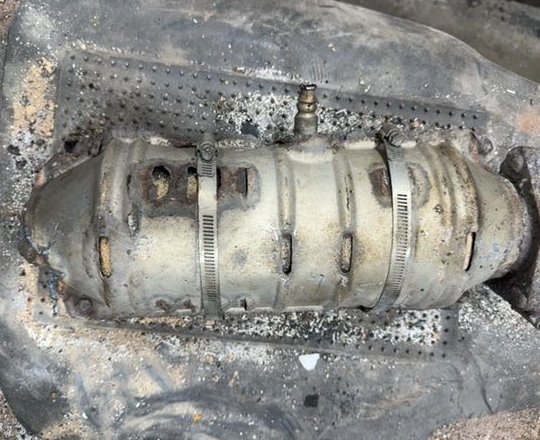
Here's what's actually inside a typical catalytic converter:
- Platinum (Pt): Found in diesel converters and many older gasoline units. Prices fluctuate with mining output in South Africa and industrial demand.
- Palladium (Pd): Dominant in modern gasoline converters. Demand from the auto sector is the biggest price driver.
- Rhodium (Rh): Present in smaller quantities but commands an extraordinary price per troy ounce. Even tiny amounts matter.
When you call a buyer for a quote and they give you a number, that number is a calculation — metal content estimates multiplied by live spot prices, minus processing and margin. Change the spot price and the quote changes. It's not a negotiating tactic. It's math.
How Global Markets Set the Platinum Price Today — And What That Means for Your Converter
South Africa produces the majority of the world's platinum. Any disruption — labor strikes, power grid failures, logistical bottlenecks — tightens global supply and pushes the platinum price today higher. On the demand side, automotive manufacturers, hydrogen fuel cell developers, and industrial chemical plants all compete for the same supply. When one sector heats up, prices respond.
Palladium tells a different story. Russia supplies a significant share of global palladium production. Geopolitical tension, sanctions, or export restrictions translate almost immediately into price spikes. Sellers in Charlotte who track these headlines aren't being paranoid — they're doing smart business.
Rhodium is in a category of its own. The market for rhodium is thin, which means relatively small changes in supply or demand create outsized price movements. A converter with meaningful rhodium content can have wildly different values from one month to the next.
The practical takeaway: timing matters. Holding inventory through a metal price dip and selling into strength is a legitimate strategy — but only if you understand what's driving the market and have a reliable way to check current scrap converter prices in real time.
The Problem With Single-Buyer Quotes in a Volatile Market
Here's where most converter sellers leave money on the table. They call one buyer, get one number, and take the deal. In a stable market, that might be fine. In a volatile precious metals environment, it's a problem.
A single buyer has no incentive to offer you the market price. They have every incentive to offer you the lowest number you'll accept. That gap between what they offer and what the market actually supports is their margin — taken directly from your pocket. In a week where the platinum price today jumped 8%, that gap gets even wider.
Compare that to a competitive auction format. When multiple vetted buyers bid on your load simultaneously, the price discovery process works in your favor. No one buyer can low-ball you when three others are willing to pay more. That's not theory — it's how markets are supposed to work. More buyers means better price discovery. Competition can help reveal the market.
Yards and sellers in North Carolina increasingly recognize this dynamic. The single-buyer phone call model made sense when there were no alternatives. There are alternatives now.
How to Use Metal Market Data Before You Sell a Catalytic Converter in Charlotte
You don't need a commodities trading background to use market data effectively. You need a few reliable habits and the right tools.
Step 1: Check spot prices before you accept any quote. Free resources publish daily platinum, palladium, and rhodium spot prices. If a buyer quotes you on a day when platinum dropped significantly, know that context before you respond.
Step 2: Know your converter types. Not all cats are equal. Foreign versus domestic, diesel versus gasoline, large versus small — each category has different metal content. A VIN lookup or serial tracking tool can help identify what you have and what the estimated precious metal content looks like. Documented inventory gives buyers more confidence and gives you a stronger negotiating position.
Step 3: Don't sell distressed. If you're not in a cash flow emergency, avoid selling into a sharp price dip. Precious metal markets are cyclical. Patience has a dollar value.
Step 4: Use a platform that brings buyers to you. Rather than cold-calling buyers one at a time, platforms like SMASH allow you to list your inventory with proper photo documentation, serial tracking, and full transparency — then let vetted buyers compete. This is the structural advantage that single-buyer phone calls can't replicate.
For sellers managing Charlotte scrap metal services, this kind of structured approach changes what's possible. You move from guessing to knowing. From one offer to competitive bids. From opacity to documented, auditable transactions.
What a Catalytic Converter Auction Actually Looks Like
The idea of a catalytic converter auction sounds complex. It isn't. The process is straightforward when the platform is built right.
Here's how it typically works on a well-structured platform:
- Inventory your load. Photograph each converter. Record serial numbers or use VIN lookup where applicable. The more documented your load, the more confidence buyers have — and confident buyers bid higher.
- List your inventory. Upload your documented load to the platform. Include weights, converter types, and condition details.
- Buyers compete. Vetted buyers — not random strangers — review your listing and submit bids. Multiple buyers in the same auction means competitive pressure on price.
- Accept the best offer. You're not locked into taking any bid. You review, compare, and decide.
- Paperwork handled automatically. Auto-invoicing and documentation tools handle the back end, including any required tracking for compliance.
If you want to find the best scrap converter prices today, this is the process that consistently outperforms the cold-call-one-buyer model. There are no subscription fees on SMASH — the platform only wins when you win.
Market Volatility Is a Feature If You Know How to Use It
Most sellers treat precious metal volatility as a headache. That's the wrong frame. Volatility creates opportunity — specifically, the opportunity to sell at a price that reflects genuine market strength rather than a buyer's margin target.
When the platinum price today is rising, documented inventory with clear metal content estimates is worth more to a buyer who's tracking the same data you are. When the market softens, competitive bids from multiple buyers help ensure you're not being taken advantage of by a single buyer who knows you don't have a comparison.
Sellers across North Carolina who treat converter liquidation as a managed process — tracking markets, documenting inventory, using auction formats — consistently make better decisions than those who treat it as a transaction to get done fast. Read scrap converter pricing guides to build that knowledge base before your next sale.
The scrap catalytic converter price you receive on any given day is a function of metal markets, buyer competition, and how well you've documented what you're selling. You control two of those three variables. Start there.
Ready to stop guessing? Find the best scrap converter prices and get a free quote at best-scrap-converter-prices.com — bring your inventory data, know your converter types, and let competition do the work for you.
Frequently Asked Questions
Q: How does the platinum price today affect what I get paid for my scrap catalytic converter?
Platinum is one of three precious metals — alongside palladium and rhodium — that determine your converter's scrap value. Buyers calculate offers based on estimated metal content multiplied by live spot prices. When the platinum price today rises, well-documented converter loads become worth more. When it drops, so do offers. Checking spot prices before you accept a quote helps you understand whether an offer is fair.
Q: Why do catalytic converter quotes vary so much between buyers in Charlotte?
Different buyers use different assay estimates, processing margins, and market timing. A buyer quoting you off last week's metal prices will give you a different number than one quoting off today's market. Competitive platforms that bring multiple vetted buyers together — like a catalytic converter auction format — reduce this variance by letting the market set the price rather than a single buyer's internal calculation.
Q: Is it better to sell catalytic converters immediately or wait for better precious metal prices?
There's no universal answer, but the logic is straightforward: if metal prices are in a short-term dip and you're not cash-constrained, waiting for recovery can improve your return. If you're holding large volumes, even modest per-unit price improvements add up quickly. The key is having reliable market data and a platform that lets you move quickly when conditions are right.
Q: What makes a catalytic converter worth more to a scrap buyer?
Metal content is the primary driver — converter type, size, and condition all affect estimated precious metal yield. Beyond that, documentation matters. Converters with clear serial number tracking, photos, and weight records give buyers more confidence, which translates into stronger bids. Diesel converters often carry higher platinum content, while newer domestic gasoline converters tend to be palladium-heavy.
Q: How do I find catalytic converter buyers in North Carolina that pay fair market prices?
Start by understanding the current precious metals market before you reach out to any buyer. Then use a platform that aggregates vetted buyers and creates competitive bidding rather than relying on a single phone call. Sellers in Charlotte and across North Carolina have access to national buyer networks through auction-format platforms — which means you're not limited to whoever happens to pick up the phone locally.
Follow SMASH on LinkedIn for industry updates, scrap metal market insights, and platform news: linkedin.com/company/scrap-metal-auction-sales-hub.
Disclaimer: Precious metal prices fluctuate daily based on global market conditions. All converter values referenced in this article are illustrative. Always check current spot prices and platform quotes before making selling decisions.
```