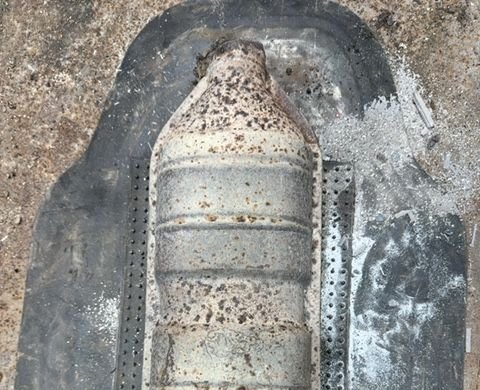
Your catalytic converter might be worth more than your entire car payment. Some high-demand units pull several hundred dollars at scrap — and a handful of exotic OEM cats from luxury and hybrid vehicles can fetch well over a thousand dollars each. If you're sitting on a pile of cores in Jersey City and guessing at what they're worth, you're leaving money on the table.
This guide breaks down which vehicle makes and models produce the most valuable catalytic converters, what drives scrap converter prices in 2026, and how to stop relying on a single buyer's quote when competition does a better job of revealing what your material is actually worth.
If you want to find the best scrap converter prices today, start by knowing what you have.
What Makes One Catalytic Converter Worth More Than Another?
Every catalytic converter contains a washcoat loaded with platinum group metals — platinum, palladium, and rhodium. The loading of each metal varies dramatically by vehicle make, engine size, emissions standard, and model year. That loading, multiplied by the current spot price of each metal, is what determines your converter's scrap value.
Rhodium is the wildcard. It's the rarest of the three and can swing hard on short notice. The rhodium price today has a disproportionate impact on high-rhodium converters — particularly those from larger displacement engines and high-performance vehicles. When rhodium runs hot, certain Ford, Toyota, and exotic brand converters can see their scrap value jump significantly in a short window.
Key factors that affect converter scrap value:
- PGM loading — higher platinum, palladium, and rhodium content means more value
- Substrate type — ceramic vs. metallic foil substrates carry different metal concentrations
- Emissions tier — stricter emissions standards (like CARB-compliant units) often mean richer PGM loads
- Engine size and configuration — larger engines typically run hotter catalysts with denser washcoats
- Vehicle age and condition — newer, lightly used converters may retain more recoverable PGM
Understanding these factors is how experienced recyclers in New Jersey and across North America separate the premium cores from the low-grade material — and price accordingly.
The Most Valuable Catalytic Converters by Make and Model
Not all converters are created equal. Here's a breakdown of the vehicle types and models consistently associated with high converter scrap value in 2026. These categories are based on known PGM loading ranges and market demand from processors — not invented figures.
Toyota and Lexus
Toyota hybrids — particularly the Prius — are some of the most talked-about high-value converters in the scrap world. Because the combustion engine in a hybrid cycles on and off, the catalyst runs at lower average temperatures. Lower thermal stress means less PGM degradation over time. The result is a converter that retains more recoverable metal even at high mileage.
Lexus models with larger V6 and V8 engines also carry premium converters. The LS430, RX300, and GX470 are regular names in processor buying lists. If you're pulling these at your yard, know they're not mid-grade material.
Ford and GM Trucks and SUVs
High-displacement American trucks and SUVs are consistent contributors to high-value scrap loads. Ford F-250 and F-350 with 6.8L V10 engines, older Excursions, and GM's 8.1L Vortec-powered trucks carry large substrate converters with meaningful PGM content. These vehicles also ran before aggressive OBD-II catalyst monitoring became standard, so the converters were often built with richer PGM loads to ensure long-term compliance.
The Ford Mustang Shelby GT500 and similar performance variants also produce premium cats. Performance applications demand converters that can handle extreme exhaust temperatures — which means denser, more valuable washcoats.
Honda and Acura
Honda and Acura models — especially the CR-V, Accord, and MDX from the early-to-mid 2000s — generate consistent mid-to-high-value converter scrap. The brand's long-running palladium-heavy catalyst chemistry has made certain Honda OEM converters reliable earners for scrap yards. Acura NSX converters are another category entirely — exotic metal loading in an exotic car.
BMW, Mercedes-Benz, and Porsche
European luxury vehicles often carry converters with high rhodium concentrations due to European emissions compliance requirements. BMW M-series, Mercedes AMG models, and Porsche 911 variants are regularly cited in high-value processor categories. The tradeoff: availability is lower than domestic trucks, so you may be accumulating these more slowly.
Exotic and Low-Volume Vehicles
Ferrari, Lamborghini, and older Bentley models with large naturally aspirated engines can produce some of the highest per-unit converter values in the market. These are rare pulls for most yards — but if you have one, do not treat it like a standard domestic cat. Get it properly identified and run it through a competitive process.
How Scrap Metal Prices Today Affect What You Get Paid
The phrase scrap metal prices today is relevant to converter sellers in a very direct way. Converters aren't priced like bulk steel or aluminum — they're priced against live PGM spot markets. Platinum, palladium, and rhodium trade on commodity exchanges and move daily. What a processor offers you on a Tuesday may be different from what they offer on Friday of the same week.
This volatility is exactly why relying on one buyer's verbal quote is risky. A single buyer has every incentive to anchor your expectations low. They quote you a number, you say yes, and the deal is done before you've compared anything. That's the old way — and it's the reason yards across New Jersey and the rest of North America consistently under-sell their converter inventory.
The smarter approach: get multiple buyers competing for your material at the same time, with documented inventory and real transparency on what you have. That's the core idea behind platforms like North America's B2B scrap metal auction platform — create competition, reveal the market, and let buyers drive the price rather than set it unilaterally.
Want to check current scrap converter prices before you commit to a sale? Do it. Knowing the baseline before you pick up the phone changes the conversation entirely.
Selling Catalytic Converters in Jersey City: What You Need to Know
Jersey City sellers operate under New Jersey's scrap metal dealer regulations, which have tightened significantly in recent years. If you're selling catalytic converters — whether from your yard's inventory or as an individual — you need to understand what documentation is required and what the regulations say about converter sales specifically.
New Jersey, like many states, has moved to restrict anonymous converter sales to combat theft-driven supply chains. This matters for legitimate recyclers because it affects how you document your inventory and what records you need to present at the point of sale. If you're wondering about how to sell a catalytic converter online without a title, the answer depends on the origin of the material — salvage yard converters with proper acquisition records are generally sellable with documentation from the vehicle's acquisition, not necessarily the vehicle title itself. Always verify current state requirements before transacting.
For yards in Jersey City with properly documented inventory, the process is straightforward:
- Identify and sort converters by make/model or OEM part number
- Photograph each unit — full body, both ends, and any visible part numbers
- Document acquisition source (vehicle VIN, purchase record, or lot reference)
- Submit inventory through a platform or direct to a vetted buyer
- Receive competitive bids and compare before accepting
SMASH supports photo documentation, serial tracking, and inventory management — exactly the kind of paper trail that makes legitimate converter sales faster and cleaner on both sides of the transaction.
Why the SMASH Scrap Metal Auction Model Works for Converter Sellers
The SMASH scrap metal auction model is built around a simple truth: one buyer means one price. More buyers mean better price discovery. That's not marketing language — it's how competitive markets work.
When you list your converter inventory through SMASH, vetted buyers across North America can see what you have and compete for it. No guessing at what your load is worth. No hoping the one buyer you called is having a generous day. The auction format does what it's supposed to do — surfaces the real market price.
There are no subscription fees. SMASH only wins when the seller wins. For yards in Jersey City moving regular volume, that alignment matters. You're not paying a platform fee to maybe get a better price — the incentive structure is on your side from the start.
For more guidance on maximizing your converter scrap value, read scrap converter pricing guides that break down the market by material type and current conditions.
Frequently Asked Questions
Q: What is the best catalytic converter price in Jersey City right now?
Converter prices fluctuate daily based on platinum, palladium, and rhodium spot markets. The best price available in Jersey City on any given day depends on which buyers are active, what you have, and how well your inventory is documented. Use a competitive process — not a single quote — to find the real market rate. Always check current rates before selling.
Q: How much is my catalytic converter worth for scrap?
Value depends on the vehicle make, model, engine size, and current PGM spot prices. High-demand converters from Toyota Prius hybrids, large-displacement Ford trucks, and European luxury vehicles often return the highest scrap values. Getting your converter properly identified by OEM part number is the fastest way to get an accurate valuation.
Q: Can I sell a catalytic converter online without a title?
In most cases, yes — as long as you can document the legal acquisition of the material. Salvage yards typically use vehicle acquisition records rather than titles to demonstrate legal ownership of the converter. Requirements vary by state and buyer. New Jersey has specific scrap metal dealer regulations — verify current requirements before selling.
Q: Does the rhodium price today affect what I get for my converters?
Directly, yes. Rhodium is the highest-value PGM and the most volatile. Converters from high-performance and larger displacement vehicles tend to carry more rhodium. On days when rhodium prices spike, the spread between high-value and mid-grade converters can widen significantly. Staying current on PGM spot prices helps you time larger sales strategically.
Q: How does SMASH help Jersey City scrap yards get better converter prices?
SMASH connects sellers with vetted buyers across North America through a competitive auction format. Instead of calling one buyer and accepting one quote, your inventory gets seen by multiple buyers who compete for it. Better competition reveals better prices. There are no subscription fees — SMASH earns when you sell.
If you're sitting on converter inventory in Jersey City and still running on single-buyer quotes, you're not working the market — you're letting the market work you. Document your material, know your makes and models, and let competition do its job. Find the best scrap converter prices today and get a free quote at best-scrap-converter-prices.com.
Disclaimer: Catalytic converter scrap prices fluctuate based on live platinum, palladium, and rhodium markets. All price references in this article are general in nature. Always verify current rates before completing a transaction.
Follow SMASH on LinkedIn for industry updates, scrap metal market insights, and platform news across North America.
```