Best Scrap Converter Prices · United States seller guide
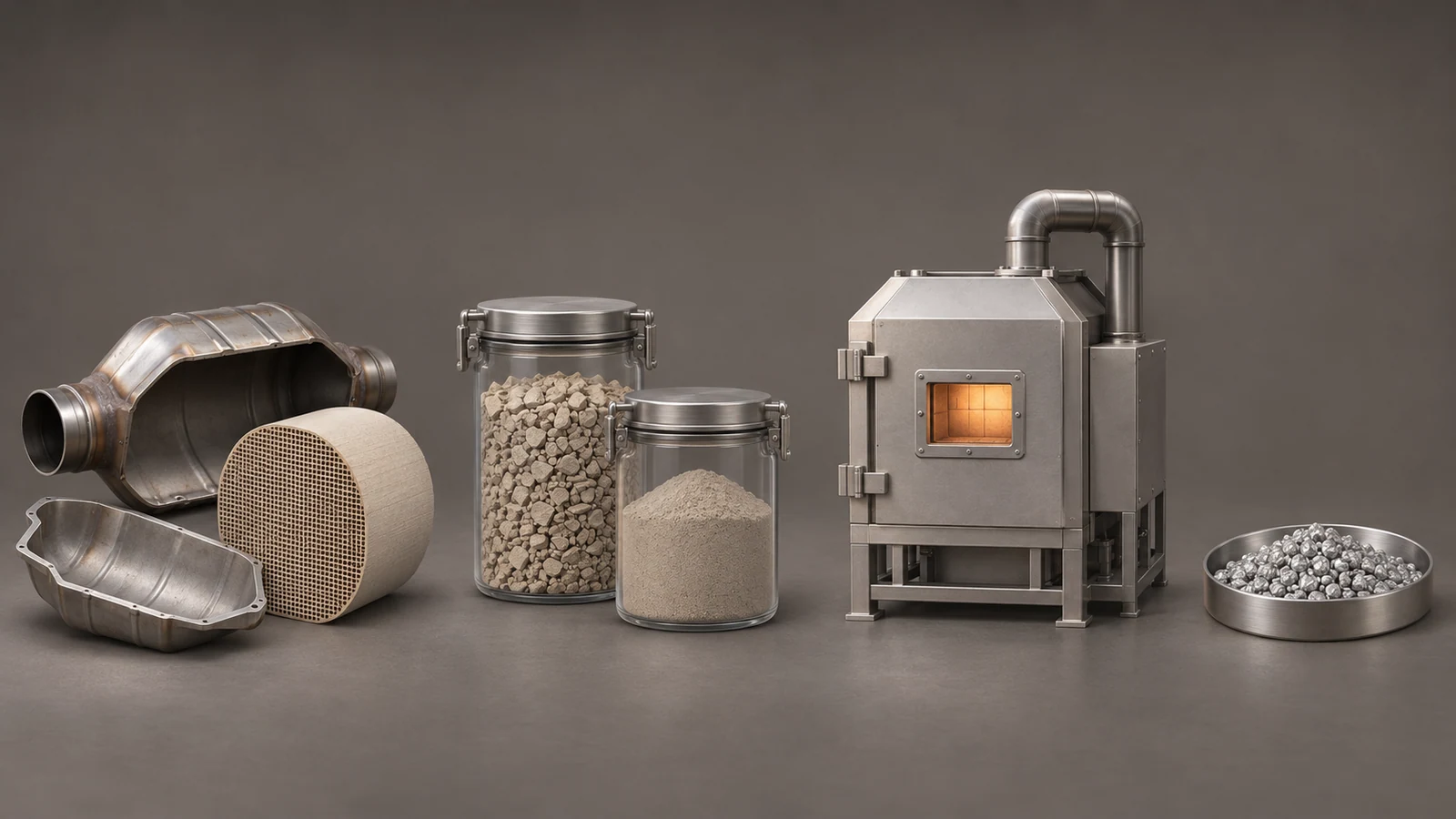
The recovery chain shown conceptually, not to scale; specialist refining follows material preparation.
Better preparation, careful metal recovery and new research are expanding the possibilities for used catalysts. Here is how to understand the developments without confusing a laboratory result with an operating service.
Selling from the United States? Start with photos and source details for eligibility review. An account or request is not approval to sell or ship. Wait for SMASH to confirm the applicable route and receiving instructions.
In this guide
- Progress is more than a headline recovery rate
- More consistent preparation supports better decisions
- Hydrometallurgy is being developed for new recovery routes
- Electrified recovery and direct reuse are research areas
- Read research claims in their proper setting
- Good collection still connects the whole chain
- Questions sellers ask
Progress is more than a headline recovery rate
A useful recycling process must handle real material, recover useful products and operate under its technical and commercial requirements. A promising result on a selected sample is only part of that picture. Material preparation, consistency, process control and the intended product all matter when assessing a development.
For sellers, the practical question remains how their actual material is identified, received and bought. These industry developments are at different stages, with results tied to the conditions studied. The processing arrangement and commercial terms that apply to your lot belong in your accepted offer.
More consistent preparation supports better decisions
Representative sampling remains an important foundation of catalyst recycling. Refiners describe selecting preparation and analytical methods to suit the material, rather than relying on a single reading without context. Better control of a prepared lot supports a more meaningful understanding of its precious-metal content.
This is a useful reminder when comparing an instrument photograph or a technical claim online. Ask what material was sampled, whether it represented the lot and which buying terms apply. The presence of sophisticated equipment is not, by itself, proof of the content or payable value of a different converter.
Hydrometallurgy is being developed for new recovery routes
Hydrometallurgical routes use solution-based processing to recover and separate metals. Feed composition, reagent management and treatment of remaining streams all affect their suitability. Development work examines the complete recovery circuit and how each stage can perform on real catalyst materials.
In April 2026, Lifezone reported precious-metal production from an automotive-catalyst pilot campaign. Its later filing, dated October 29, 2026, described further test work and plant-design development, with feasibility completion and an investment decision targeted for early 2027. This is a pilot-to-commercial development programme with further milestones to complete.
Electrified recovery and direct reuse are research areas
A study published in RSC Sustainability in 2026 examined a process combining microwave-assisted leaching with gas-diffusion electrocrystallization. The researchers recovered material that they then tested as an electrocatalyst. The work explores making a useful catalytic product from recovered metals rather than treating metal separation as the only possible end point.
The European Commission's PEACOC project results list related work on microwave-assisted recovery and electrocrystallization. These are dated research publications with defined experimental conditions. Moving a method into routine commercial use also requires engineering, scale-up and a suitable feed.
Read research claims in their proper setting
When a process is described as cleaner, faster or more efficient, look for the comparison and its scope. A study may discuss one processing stage, a particular material or an experimental product. A company's planned facility may still depend on further engineering, approvals and investment.
Useful questions include what feed was tested, what product was produced and whether the work was laboratory, pilot or commercial scale. A measured result, a target and a future plan are different statements. Read each on its own terms when considering what a development could mean for the industry.
- Check the publication date and look for a later update.
- Distinguish a demonstrated result from a planned improvement.
- Keep recovery performance separate from a seller's agreed payment.
Good collection still connects the whole chain
New processing methods still need a supply of correctly described material. Clear photographs, intact identification, ownership information and the right transport arrangements help start that journey. Submit your converters for an individual review, then use the confirmed offer and shipping instructions for the steps that apply to you.
Questions sellers ask
Does a research recovery percentage predict what I will be paid?
No. Experimental performance concerns particular material and conditions. Your converter offer depends on the material review and the agreed commercial terms.
Is every new recycling method already operating commercially?
No. Research, pilot testing, engineering development and commercial operation are different stages. Look for dated evidence of the stage being described.
Will my converter use one of the methods in this guide?
This guide introduces industry developments. It does not promise a specific processing route for your lot or change the terms of your accepted sale.
Keep reading
Further reading
- Lifezone Metals: April 2026 automotive-catalyst pilot announcement
- Lifezone Metals: September 2026 interim report filed October 29, 2026
- RSC Sustainability: electrified upcycling of PGMs from spent automotive catalysts
- European Commission: PEACOC project results
- Heraeus: precious metals catalyst recycling