Best Scrap Converter Prices · United States seller guide
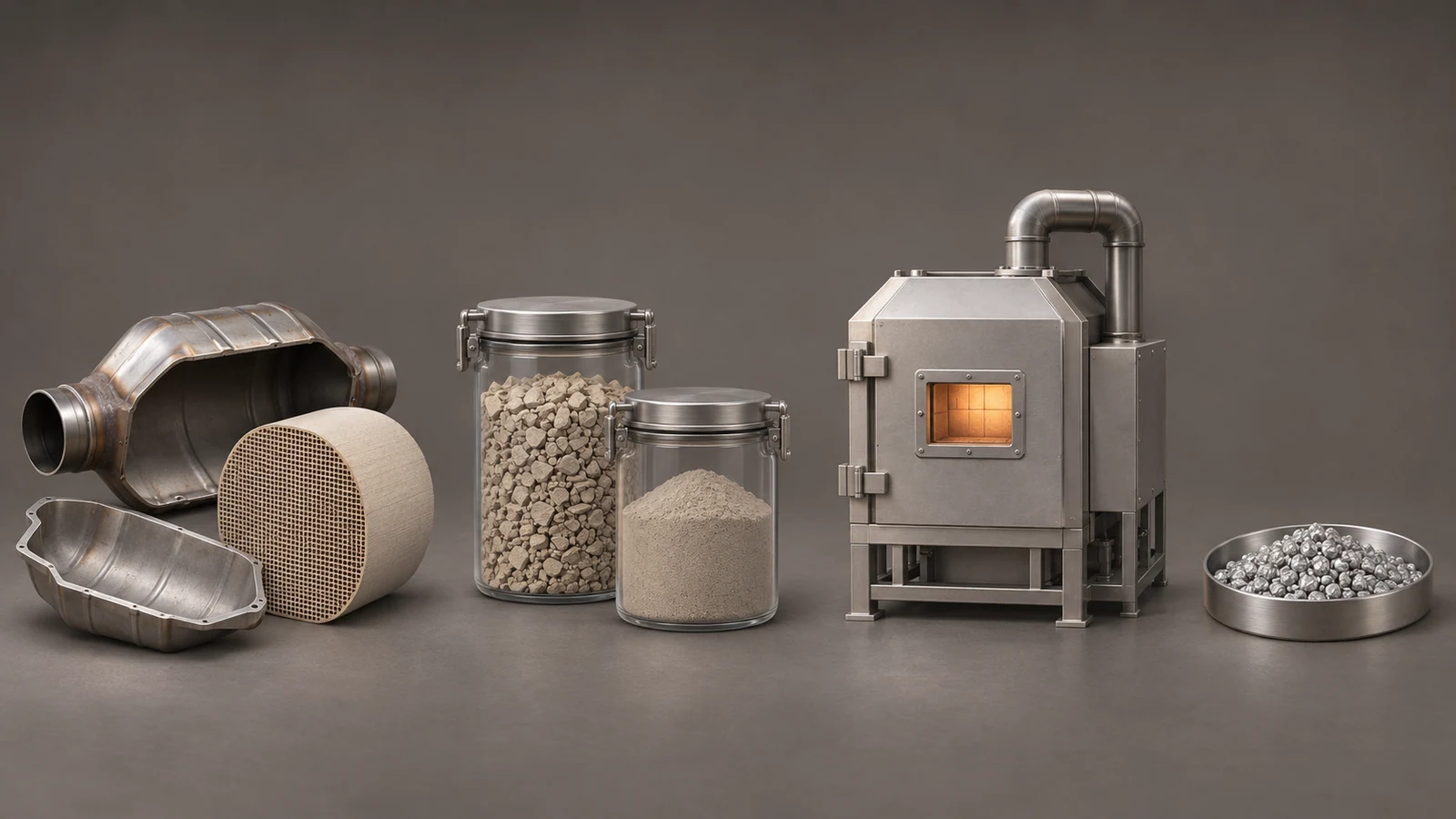
The recovery chain shown conceptually, not to scale; specialist refining follows material preparation.
A worn-out converter can still contain useful materials. Follow the industrial recycling chain from an identified unit through prepared catalyst feed to precious metals that can return to manufacturing.
Selling from the United States? Start with photos and source details for eligibility review. An account or request is not approval to sell or ship. Wait for SMASH to confirm the applicable route and receiving instructions.
In this guide
Collection starts with knowing the material
Before processing, a converter needs to be identified and connected with the appropriate sale and source information. Keep its markings intact and describe its condition honestly. The material sent should match the agreed lot, with the ownership records and transport arrangements requested for that transaction.
Industrial recycling can involve several specialist facilities, each handling a particular preparation or recovery stage. Material type, the buying arrangement and the receiving processor's requirements determine the route. The shipment instructions for your lot identify the agreed receiving arrangement.
Decanning separates the catalyst from the shell
Many automotive converters contain a ceramic honeycomb inside a metal shell. In a suitable processing facility, decanning means opening that shell and recovering the catalyst-bearing material. The steel housing is a separate material stream from the ceramic that carries the precious metals.
Not all converters have the same construction. Metallic foils, different ceramic substrates and other catalyst materials may require different handling. Specialist refiners identify acceptable feed forms rather than treating every exhaust component as an interchangeable ceramic converter.
Milling prepares a consistent material
Ceramic catalyst can be crushed or milled into finer material and blended. This prepares a more consistent feed for the next processing stage and helps representative sampling. Think of it as prepared ceramic feed rather than loose nuggets of platinum or palladium: the valuable metals are dispersed within the catalyst material.
Preparation is controlled industrial work. Keep a converter intact for your enquiry unless the receiving instructions specifically say otherwise. Cutting, emptying or grinding it yourself can lose material, disturb its identification and create a different product from the unit originally described.
Representative sampling helps establish content
A prepared lot can be sampled and analysed to determine its precious-metal content. The sample needs to represent the material being valued; careful preparation, blending and division are important parts of that job. An analytical instrument cannot correct a sample that does not represent the lot.
The industry uses more than one buying model. Some transactions are agreed by converter, while others settle on an assay of prepared material. A description of industrial sampling does not promise an individual laboratory test for every unit you submit. Your offer states the arrangement for your sale.
Specialist recovery and refining separate the metals
Prepared catalyst material moves into an appropriate specialist recovery circuit. An established route uses high-temperature treatment to concentrate valuable metals, followed by chemical stages that separate and purify the individual precious metals. Other processing routes are selected for different feeds and commercial requirements.
Smelting produces a metal-bearing intermediate. Subsequent refining separates individual metals and brings them to the required specification. The specialist processor selects the circuit for the feed; your receiving instructions coordinate the first part of that journey.
Recovered metals can return to manufacturing
Once recovered and refined to the required specification, precious metals can return to manufacturing as inputs for new catalysts and other useful products. The final recovery and application depend on the material and processor, connecting responsible collection with a continuing supply of industrial metals.
Your practical role is straightforward: provide accurate information, preserve the material and follow the agreed sale and transport instructions. Responsible collection and clear records help useful material enter an appropriate recycling chain instead of becoming an untraceable or poorly described load.
Questions sellers ask
Should I remove the ceramic before requesting a quote?
Do not assume that is required. Submit the material as it is and follow the agreed receiving instructions. Whole-unit and prepared-material arrangements are different.
Is milled catalyst the same as refined precious metal?
No. It is a prepared feed that still needs the appropriate recovery and refining stages. Its metal content must not be confused with its total weight.
Where does final refining happen?
Specialist recovery and refining facilities use processes suited to their catalyst feed. Follow the receiving address and shipment instructions provided for your agreed lot.