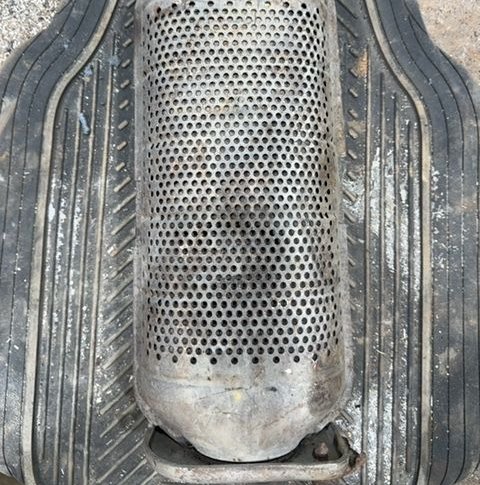
From Exhaust Pipe to Precious Metal: What Really Happens to a Catalytic Converter After It Leaves Your Vehicle
Most people know catalytic converters contain valuable metals. Far fewer understand what actually happens between the moment a mechanic pulls one off a vehicle and the moment those metals show up in a refinery report. That gap in knowledge costs sellers money — sometimes a lot of it. If you've ever searched how much is my catalytic converter worth scrap by reg and gotten wildly different numbers, the lifecycle of a converter is exactly why.
The journey from vehicle to precious metal recovery is longer and more involved than most sellers realize. Understanding each stage helps you make smarter decisions about where you sell, when you sell, and who you trust with your material. And in a market where the platinum price today can shift your payout by a meaningful margin, that understanding is worth real dollars.
Stage One: Removal and Initial Assessment — Where Converter Scrap Value Starts
The lifecycle begins the moment a converter is removed — either from an end-of-life vehicle at a salvage yard, during a routine repair, or as part of a fleet decommission. At this stage, condition matters. A converter that's been cut cleanly, kept dry, and stored away from contaminants will yield better assay results downstream. Crushed, waterlogged, or tampered units are a different story.
Once off the vehicle, the first question any experienced seller or catalytic converter buyer asks is: what's in it? That answer depends on three things — the vehicle make and model, the year, and the converter's position on the exhaust system. A rear secondary cat on a V6 midsize sedan will hold far less platinum group metals (PGMs) than a primary converter on a diesel truck. This is why lookup tools that pull data by VIN or serial number are so useful at the point of sale.
- Primary (front) converters — highest PGM loading, highest scrap value
- Secondary (rear) converters — lower loading, but still worth recovering
- Diesel oxidation catalysts (DOCs) — different metal ratios, often platinum-heavy
- Diesel particulate filters (DPFs) — palladium and platinum, significant value
- Small foreign cats — compact but can still carry meaningful PGM content
If you're selling in the Kansas City area and want to skip the guesswork on initial valuation, find the best scrap converter prices today using a platform that pulls real market data rather than offering you a flat rate based on gut feel.
Stage Two: Sorting, Grading, and What Buyers Actually Look For
Once a converter leaves the seller's hands, it enters a sorting and grading process. Reputable catalytic converter buyers in Missouri and across the country don't just throw everything into a bin. They sort by series — grouping converters with similar PGM profiles to maximize recovery efficiency when they go to the processor.
Grading looks at several factors. The substrate — the honeycomb ceramic or metallic core inside the shell — must be intact. A rattling cat almost always means a broken substrate, which means PGMs have potentially been lost or contaminated. The shell should be free of excessive tampering, and the unit should match the grade or series it's being sold as. Misrepresentation at this stage is one reason serious buyers have moved toward documented, photo-verified purchasing processes.
This is also where serial number and VIN lookup tools earn their value. Platforms like the SMASH scrap metal auction marketplace use serial tracking and photo documentation to create a verifiable record of each unit. That documentation gives downstream buyers more confidence — and confidence translates into better bids.
Stage Three: Processing — How Platinum, Palladium, and Rhodium Are Recovered
After sorting, converters move to a processor — typically a large-scale smelter or chemical refinery. This is where the actual precious metal recovery happens, and it's a highly technical process most sellers never see. Understanding it in broad terms, though, helps you appreciate why the platinum price today matters so much to your payout.
The process typically follows these steps:
- Decanning — The ceramic or metallic substrate is removed from the steel shell. The shell is sold as scrap steel. The substrate goes forward for processing.
- Sampling and assay — Material is crushed, blended into a homogenous sample, and tested for PGM content. This is the most critical step. The assay result determines what the material is actually worth.
- Smelting or hydrometallurgical refining — Depending on the processor, material is either smelted at extremely high temperatures or dissolved in acid solutions to extract platinum, palladium, and rhodium.
- Refining and separation — The three metals are separated and refined to high purity, then sold on the commodities market.
The platinum price today, combined with palladium and rhodium spot prices, directly determines what a batch of converters is worth at the refinery gate. That commodity price works backward through the supply chain — processor margins, buyer margins, transportation costs — until it reaches the number on your check. Understanding this chain helps you evaluate offers more critically.
Want to see how current PGM markets affect your specific material? Check current scrap converter prices before you commit to any buyer's offer.
How Kansas City Sellers Can Capture More Value in This Chain
Kansas City sits in a strong position geographically. The metro straddles two states, serves a massive logistics corridor, and has a well-developed scrap and recycling infrastructure. That means there's genuine competition for converter material here — which is exactly the condition that produces better pricing for sellers.
The problem is that most sellers in the area don't access that competition. They call one buyer, accept one number, and move on. That single-call approach works fine when volumes are low and prices are stable. It becomes costly when you're moving significant volume or when PGM markets are running hot.
A scrap metal auction platform changes that dynamic. Instead of one offer, you get multiple vetted buyers competing for your material. The auction format forces price discovery rather than letting a single buyer set the terms. For converters specifically — where PGM loading varies so much by make, model, and year — documented, competitive auctions tend to surface the real market value of a load rather than a lowball estimate padded with buyer margin.
If you're handling Kansas City scrap metal services for a yard or fleet operation, Kansas City scrap metal services built around competitive bidding and transparent documentation are worth exploring before your next load moves.
SMASH was built specifically for this kind of transaction. No subscriptions, no guessing. We only win when you win.
Regulation, Documentation, and Why the Paper Trail Now Matters More Than Ever
The catalytic converter theft epidemic of the early 2020s reshaped how states regulate converter sales. By 2026, most U.S. states — Missouri included — have passed or significantly strengthened laws requiring documentation at the point of purchase. Sellers need to provide proof of ownership, vehicle identification, and in many cases, photo records of the converter itself.
This isn't just a compliance burden. For legitimate sellers, it's actually an advantage. Documentation separates your material from gray-market supply and makes it more attractive to serious, licensed buyers. A well-documented load of converters — with photos, VIN references, and chain of custody records — commands more buyer confidence than an undocumented pile, regardless of PGM content.
Platforms that build documentation into the selling process aren't just helping you stay compliant. They're helping you tell a cleaner story about your material to buyers downstream. SMASH's inventory tools, photo documentation, and serial tracking exist precisely because documented inventory gets better bids. It's not red tape. It's leverage.
For a deeper look at how regulations and pricing interact in today's converter market, read scrap converter pricing guides that break down what's changed and what it means for your bottom line.
Frequently Asked Questions
Q: How does the platinum price today affect what I get paid for my catalytic converter?
The platinum price today sets the floor value for the PGMs in your converter. Buyers price their offers by working backward from current spot prices for platinum, palladium, and rhodium — minus processing costs, transportation, and their own margin. When platinum prices rise, the market value of your converter rises with it. That's why checking current PGM prices before accepting any offer is always worth the two minutes it takes.
Q: How do I find catalytic converter buyers near me open now in the Kansas City area?
The fastest route is a platform that connects you with vetted, active buyers rather than requiring you to cold-call yards one by one. In the Kansas City metro, several licensed buyers operate on a consistent schedule, but availability varies. Using a marketplace approach means your material goes in front of multiple buyers simultaneously — you're not waiting on one yard to pick up the phone.
Q: How much is my catalytic converter worth scrap by reg or VIN?
Converter scrap value varies significantly by vehicle. A VIN or serial number lookup can narrow down the expected PGM loading for your specific unit, giving you a realistic baseline before you approach any buyer. The final number still depends on current platinum, palladium, and rhodium spot prices, the condition of the substrate, and the buyer's current demand — but starting with a lookup puts you in a much stronger negotiating position.
Q: What makes a catalytic converter buyer in Missouri legitimate?
In Missouri, legitimate buyers are licensed, comply with state documentation requirements, and provide clear records of the transaction — including the price basis and how PGM content was assessed. Be cautious of buyers who offer flat-rate cash with no documentation, no photo records, and no paper trail. Beyond the legal risk, undocumented transactions typically mean you're leaving money on the table.
Q: What is a scrap metal auction platform and how is it different from selling to a local yard?
A scrap metal auction platform like SMASH puts your converter inventory in front of multiple vetted buyers who compete for it. A local yard gives you one offer, take it or leave it. Competition creates price discovery — you learn what the market actually thinks your material is worth, not what a single buyer wants to pay. For higher-value converter loads especially, the difference in outcome can be significant.
The lifecycle of a catalytic converter is more complex than most sellers realize — but understanding it gives you real leverage at every stage. From removal and grading to refinery assay and commodity settlement, each step connects back to the same question: are you getting what your material is actually worth? If you're ready to find out, find the best scrap converter prices today and get a free quote at best-scrap-converter-prices.com.
Disclaimer: Catalytic converter scrap prices fluctuate daily based on platinum, palladium, and rhodium spot prices. Always verify current rates before completing any transaction.
Follow SMASH on LinkedIn for ongoing market updates, scrap metal pricing insights, and industry news that keeps you ahead of the market.
```