Organizing Multiple Converters for a Recycling Enquiry: What to Know Before You Reach Out
You have more than one catalytic converter to deal with. Good. That's not a complication — it's just more information to gather before you submit. The mistake most people make is assuming all their converters are worth roughly the same amount. They're not. Each one is its own story.
If you're in the Memphis area and exploring Memphis scrap metal services, this guide walks you through how to organize your details so a purchase eligibility review can actually move forward — without guesswork on either end.
Why Each Converter Needs Its Own Details
Catalytic converters contain platinum group metals (PGMs) — platinum, palladium, and rhodium. The mix and quantity of those metals varies significantly by converter type, vehicle make, engine size, and model year. Two converters sitting side by side in your garage can have meaningfully different values.
Treating them as a single batch without individual details slows things down. It also means any offer or eligibility determination is based on incomplete information — which helps no one.
Before you submit anything for review, build a simple list. One converter per line. Here's what to capture for each one.
What to Document for Each Converter
Vehicle Information
If you know the year, make, model, and engine size of the vehicle the converter came from, record it. That information helps identify the converter type and what PGM loading it may carry. If you don't know the vehicle, say so — don't guess or fill in something plausible. Unknown vehicle origin is a gap to flag honestly, not paper over.
VIN is useful when available. It ties the converter to a specific vehicle configuration more precisely than year and model alone. If you have it, include it.
Physical Condition
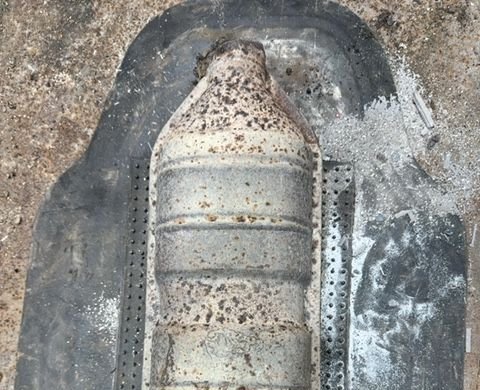
Note whether each converter is intact. A converter with a crushed body, significant external damage, or a compromised substrate is a different item than a clean, intact unit. Photograph each one individually — multiple angles, including both end pipes and the body. Keep them visually separated in your photos so there's no ambiguity about which image goes with which converter.
Do not open, cut, or alter any converter before enquiring. Keep material intact. Any processing decision belongs after a review, not before.
Ownership and Source
Be straightforward about where each converter came from and confirm you are the lawful owner. If sources vary across your converters — for example, one came off a vehicle you owned and another came from a different situation — document that separately per unit. SMASH will ask clarifying questions if needed; it's easier to address those upfront than mid-review.
Quantity and Matching
Some vehicles carry more than one converter. Note if any of your units are pairs or sets from the same vehicle. That context matters for identification.
What You Cannot Determine on Your Own
Looking at a converter and estimating its value based on size or weight is not a reliable method. PGM content is internal and varies by substrate design and loading specification — not by how heavy the shell feels. Market prices for platinum, palladium, and rhodium shift. Any number you find online is a reference point, not a live offer.
If you want to understand pricing context better before submitting, you can check current scrap converter prices for general orientation — but treat those as background, not as a quote for your specific units.
The same applies to recycling company comparisons. You may come across names like Platinum Group Metals Recycling Inc. or similar processors in search results. What any specific buyer will offer for your specific converters on a specific date depends on current market conditions, the converters themselves, and that buyer's current purchasing criteria. SMASH can review your eligibility; decisions about what an offer looks like follow from that review, not from a directory listing.
Selling Converters From Tennessee: No Special Process, But Document Carefully
There's no unique Tennessee-specific ritual for selling converters online versus any other state. What matters everywhere is that you can clearly establish lawful ownership and provide accurate identification details. Tennessee does have scrap metal dealer regulations — if you're a business operating under those rules, your documentation requirements may differ from an individual owner selling a converter from a personal vehicle. If you're unsure which category applies to your situation, that's worth clarifying with SMASH directly rather than assuming.
For individuals with converters from vehicles they own, the process is straightforward: document, photograph, submit for review, and go from there.
Submitting a Multi-Converter Enquiry
When you're ready, compile your list — one converter per entry, with all the details above — and submit it for a purchase eligibility review. Don't combine everything into a vague summary like "several converters, various makes." That doesn't give reviewers enough to work with.
If you're not sure how to present your information, read scrap converter pricing guides for more context on how the enquiry process works and what affects converter value.
When you're ready to submit, contact SMASH about a converter enquiry — or go directly to find the best scrap converter prices today to start your eligibility review.
Having five converters is not harder than having one — it's just five sets of details to gather. Do that work upfront and the review process moves faster.
Frequently Asked Questions
Q: Can I sell catalytic converters online if I'm in Memphis, Tennessee?
You can submit converters for a purchase eligibility review online regardless of your location in Tennessee. Whether your specific converters are accepted depends on the review outcome, your ownership documentation, and any conditions in the confirmed offer — not on your ZIP code alone.
Q: Do all catalytic converters have the same scrap value?
No. PGM content varies by vehicle make, model year, engine configuration, and converter type. Two converters that look similar externally can carry meaningfully different amounts of platinum, palladium, and rhodium. That's why each unit needs to be identified separately before any value discussion is meaningful.
Q: How do I identify a catalytic converter if I don't know what vehicle it came from?
Some converters carry a stamped part number or serial markings on the body or heat shield — photograph those clearly and include them in your enquiry. If there are no markings and no vehicle record, flag that honestly when you submit. Unknown vehicle origin is not automatically disqualifying, but it's a fact SMASH needs to know, not something to paper over with a guess.
Q: What does catalytic converter recycling in Memphis actually involve?
From a seller's perspective, it means documenting your converters, confirming ownership, submitting details for eligibility review, and — if an offer is made and accepted — following the approved receiving instructions. It is not an automatic transaction. Each step requires confirmation before the next one moves forward.
Q: Will I get a higher price by selling multiple converters together?
That depends on the specifics of each unit, not on batch size alone. More converters does not automatically mean a better per-unit price. What matters is accurate identification of each converter so the review reflects actual PGM potential — not an assumed average across a mixed group.