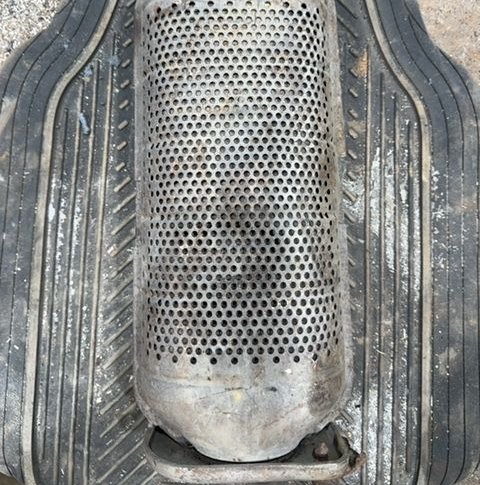
From Converter to Cash: How Assaying and Smelting Actually Determine Your Payout
Most converter sellers never see what happens after their load leaves the yard. That's a problem — because understanding the process between "drop-off" and "check in hand" is exactly what separates sellers who get market value from sellers who get lowballed. If you're watching the platinum price today and wondering why your payout doesn't reflect it, the answer usually lives inside the assay and smelt process.
This isn't academic. If you're selling converters in Aurora, Illinois or anywhere else across the country, knowing how your metal gets valued gives you real leverage at the table. Let's break it down.
What Is Catalytic Converter Assaying — and Why It Matters for Scrap Converter Prices
Assaying is the lab process that determines exactly how much platinum, palladium, and rhodium your converters contain. These three precious metals — commonly called PGMs (platinum group metals) — are the entire basis for catalytic converter scrap value. The ceramic or metallic substrate inside your converter holds the PGMs, but the concentration varies wildly by vehicle make, model, year, and even manufacturing batch.
Before any responsible buyer can offer you a real price, the PGM content has to be measured. Here's the basic assay workflow:
- Collection and segregation: Converters are sorted by type — ceramic honeycomb, metallic substrate, foil — because each type processes differently.
- Decanning: The shell is cut open and the substrate (the "brick") is removed. The shell itself is steel scrap — it has minimal PGM value.
- Sampling and milling: The substrate is crushed, ground, and milled into a fine, homogeneous powder. This step is critical. If the sample isn't representative, the assay number is wrong.
- Fire assay or ICP analysis: The milled sample goes through either fire assay (a traditional metallurgical technique using flux and cupellation) or ICP-OES (Inductively Coupled Plasma Optical Emission Spectrometry), which dissolves the sample in acid and measures PGM concentrations with high precision.
- Results: You get a report showing grams per unit (or grams per metric ton) of platinum, palladium, and rhodium.
Those gram-per-unit numbers, multiplied against live metal prices, produce your payout calculation. That's why the platinum price today matters — but it's only one variable. The assay result is the other. If you don't know your assay, you're negotiating blind.
The Smelting Process: Turning Substrate Into Tradeable Metal
Assaying tells you what's there. Smelting is how you get it out. After sampling, the bulk of the milled converter material goes into a smelter — a high-temperature furnace that separates PGMs from the substrate matrix.
Here's how the smelt typically runs:
- Charge preparation: Milled substrate is mixed with flux materials (silica, lime, etc.) that help control the melt chemistry.
- Fusion: The charge goes into a furnace at temperatures exceeding 1,400°C. At that heat, the ceramic or metalite matrix melts. PGMs, being dense, sink and collect in a metallic collector phase — usually a lead or copper collector alloy.
- Separation: The molten material separates into slag (the spent matrix, now waste) and a PGM-rich alloy button or matte at the bottom.
- Refining: The PGM-rich alloy goes through further chemical refining to separate platinum, palladium, and rhodium into individual streams that can be sold on the commodity market.
This whole cycle — from decan to refined metal — typically takes weeks, sometimes longer depending on the smelter's queue and the refinery's processing schedule. That delay between drop-off and final settlement is why some buyers offer "spot" or "quick pay" at a discount versus waiting for official smelt results. Know which deal you're getting before you agree to it.
If you want to understand the full picture before you sell, read scrap converter pricing guides that break down how metal markets connect to your actual payout.
How Live Metal Prices — Including Platinum Price Today — Connect to Your Check
Your final payout is a formula, not a guess. Here's the simplified version:
Payout = (Grams of PGM recovered) × (Return percentage) × (Metal price on settlement date)
Each variable matters:
- Grams recovered: Set by the assay and smelt. You can't negotiate this — it's chemistry.
- Return percentage: This is the percentage of the assayed PGM content the buyer actually pays you. Industry standard ranges vary, and this is a major negotiating point. A difference of a few percentage points across a large load is real money.
- Settlement price: The metal price used for your payout. This could be the price on the day of settlement (after smelting), an average over a window, or a fixed forward price agreed at time of sale. If platinum spikes after your material ships, some agreements let you benefit — others lock you in. Read your terms.
This is exactly why watching the platinum price today isn't enough on its own. A seller in Aurora, Illinois who understands their return percentage and settlement terms will consistently outperform one who just tracks spot prices and takes whatever the first buyer offers.
Platforms like SMASH Scrap — where verified buyers bid on your metal — create competitive bidding environments where these variables get surfaced, not buried. When multiple buyers compete, you see what the market actually thinks your load is worth.
Scrap Catalytic Converter Value Lookup: What the Data Can and Can't Tell You
A scrap catalytic converter value lookup tool — whether VIN-based, serial number-based, or by converter part number — gives you a starting reference point. These tools pull historical assay data and current metal prices to generate an estimated value range per unit. They're genuinely useful, especially if you're sorting a mixed load and trying to prioritize.
But there are limits. Lookup tools show typical or average values for a converter type. Your actual units might be above or below that average depending on condition, mileage, tampering, or even the specific production run. A converter that's been in service on a high-mileage diesel application may have different PGM loading than a low-mileage unit of the same part number.
Use lookup values to screen and sort. Use actual assay data to settle. And use competitive bidding — the kind that a catalytic converter auction format enables — to make sure you're not leaving money behind based on a single buyer's internal estimate.
Sellers across Aurora and throughout Illinois who build lookup verification into their workflow catch discrepancies before they sign off on a load. That's not being difficult — that's being a smart operator.
Why Competitive Bidding Changes the Assay-to-Payout Equation
Here's the uncomfortable truth about the traditional converter market: a single buyer has every incentive to offer you less than your load is worth. They're not villains — they're running a business. But their business benefits when your payout is lower. That's the structural problem with the one-call, one-offer model.
A catalytic converter auction format flips that dynamic. When multiple catalytic converter buyers in Illinois and beyond compete for your load, the offer reflects what buyers actually think the assay will show — not what one buyer hopes you'll accept out of convenience.
SMASH is built around exactly this mechanic. Vetted buyers compete. You see the bids. No subscription fee — SMASH only wins when you do. If you're in Aurora running a steady volume of converters, that competitive structure can fundamentally change what your loads are worth over a year.
The assay and smelt process doesn't change based on who buys your material. What changes is the return percentage and terms you negotiate going in. Competition is the most reliable way to discover where the real market sits.
Ready to stop guessing? Find the best scrap converter prices today and see what your load is actually worth in a competitive market.
Selling Converters in Aurora, Illinois: Practical Steps to Maximize Your Return
If you're based in or near Aurora and you're moving catalytic converters regularly, here's a practical workflow that respects the assay and smelt process instead of fighting it:
- Document every unit. Photos, serial numbers, part numbers where visible. Good documentation gives buyers more confidence and reduces the discount they build in for uncertainty.
- Use a converter value lookup before you call anyone. Know your expected range. This sets your floor for negotiation.
- Ask every buyer about their return percentage and settlement terms — in writing. "We pay market price" means nothing without these details.
- Get multiple offers. If you only call one buyer, you have no way to know if the offer is competitive. A catalytic converter buyer in Aurora who operates in a vacuum can't be compared against themselves.
- Consider auction or competitive bid platforms. SMASH connects you to vetted buyers who compete on your load — which is precisely what pulls price discovery out of the dark.
- Track your settlement reports. Over time, your assay results tell you which types of converters in your mix deliver the best return. That's operational intelligence you can use to source smarter.
Illinois has a dense base of industrial activity, vehicle recycling operations, and regional processors — which means there's real buyer competition available to you if you structure your sales process correctly. Don't settle for whoever picks up the phone first.
When you're ready to check current scrap converter prices and put your load in front of real competition, the tools exist. Use them.
Disclaimer: Catalytic converter prices fluctuate based on live precious metals markets including platinum, palladium, and rhodium. Always verify current rates before finalizing any sale.
Frequently Asked Questions
Q: How does the platinum price today affect what I get paid for my catalytic converters?
Platinum is one of three PGMs inside your converter, alongside palladium and rhodium. Your payout is calculated based on the grams of each metal recovered in the assay multiplied by the settlement-day spot price. When the platinum price today rises, loads with high platinum content — typically older domestic converters — increase in value. The settlement price used in your contract determines whether you benefit from price movement after your load ships.
Q: What's the difference between a quick-pay offer and a smelt-return settlement?
A quick-pay offer gives you cash upfront, before assaying is complete, at a discount to estimated value. A smelt-return settlement pays you after the full assay and smelt cycle based on actual recovered PGM content. Quick-pay trades certainty and speed for a lower number. Smelt-return maximizes accuracy but requires you to wait — typically weeks — for final settlement. Which is better depends on your cash flow needs and your confidence in the assay estimate.
Q: Is a scrap catalytic converter value lookup accurate enough to base my sale on?
Lookup tools are solid for screening and sorting your load, but they reflect averages — not your specific units' actual PGM content. Condition, mileage, and production variation all affect real recovery. Use lookup data to establish a baseline and catch lowball offers. Use actual assay results to finalize settlements on significant loads.
Q: Can I sell my catalytic converter online and still get a fair price?
Yes — platforms that connect you to multiple verified buyers and use transparent bidding give you real price discovery without requiring you to show up in person. SMASH operates exactly this way. The key is making sure the buyer is vetted, the terms are clear, and you understand the return percentage and settlement date before you agree to anything.
Q: Are there specific types of catalytic converters that recover better in the smelt process?
Generally, ceramic honeycomb substrates from domestic and import vehicles from the late 1990s through 2010s tend to carry meaningful PGM loading. Large diesel oxidation catalysts and certain exotic vehicle converters can carry very high PGM concentrations. Foil-type metallic substrates often have lower PGM content by weight but process differently. Sorting your load by type before going to assay helps you understand your mix and negotiate accordingly.
If you're in Aurora or anywhere across Illinois and you're ready to stop guessing what your converters are worth, find the best scrap converter prices today at best-scrap-converter-prices.com — no fluff, no hidden math, just real market data working for you.
Follow SMASH on LinkedIn for ongoing scrap metal market insights, PGM price updates, and industry news that keeps you ahead of the market.
```