Why Proper Catalytic Converter Recycling Is One of the Most Environmentally Critical Decisions You Can Make
Most people think about catalytic converter recycling as a financial decision. And fair enough — with platinum price today sitting in volatile territory tied directly to global mining output and industrial demand, the scrap converter value in that unit under your car or sitting on your shop shelf is real money. But there's a second story here that doesn't get told nearly enough: what happens to those converters when they go to the wrong buyer, get improperly processed, or simply disappear into gray-market channels.
The environmental consequences of mishandled converter recycling are serious. And if you're in Boston, Massachusetts — a region with strict environmental compliance standards and an increasingly watchful regulatory climate — this matters more than ever in 2026.
This article breaks down the environmental case for doing converter recycling right. It also shows you how platforms like smashscrap.com are changing how yards and sellers connect with vetted buyers who actually follow the rules.
What's Inside a Catalytic Converter — and Why It Matters
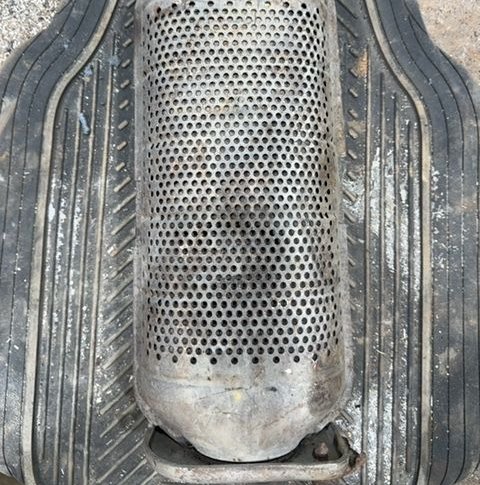
Before you can understand the environmental stakes, you need to know what you're dealing with. A catalytic converter contains a ceramic or metallic substrate coated with platinum group metals (PGMs): platinum, palladium, and rhodium. These metals are the reason you track the platinum price today — and they're the reason the recycling process is both valuable and sensitive.
Here's the core environmental problem: PGM recovery requires high-temperature smelting and precise chemical processing. When converters are processed by unqualified operations — or worse, stripped and abandoned — those materials don't disappear. They leach into soil and water systems. The ceramic substrate, if crushed and dumped improperly, creates fine particulate hazards. The metals themselves, including trace amounts of cerium, zirconium, and other compounds inside the washcoat, are not benign.
Responsible recycling keeps all of this in a controlled loop. The PGMs get extracted and re-enter the industrial supply chain. The substrate gets processed correctly. Nothing ends up in a landfill or a drainage ditch. That's the standard — and not every converter buyer meets it.
The Problem With Gray-Market Converter Buyers
Here's where the comparison matters. Not all converter buyers are equal, and the gap between the best and worst operators is enormous — both for your payout and for environmental outcomes.
Gray-market buyers — the ones working without proper licensing, skipping documentation, and offering you cash with no paper trail — are often not equipped for proper PGM processing. They flip converters to secondary brokers with no chain of custody, no catalytic converter price list by number transparency, and no accountability for what happens downstream.
- No BOLs or packing lists — no documentation of what left your facility
- No serial tracking — you can't verify the converter was processed correctly
- No photo documentation — nothing to prove condition or provenance
- No recycling compliance verification — you're trusting a handshake
For a yard in Boston or anywhere across Massachusetts, this creates real exposure. Environmental and theft-related regulations around converter sales have tightened significantly through 2025 and into 2026. Selling to a buyer who can't produce documentation is not just bad business — it can be a liability. The right catalytic converter buyer Boston brings paperwork, transparency, and a verified downstream process.
Why Proper Processing Protects the Environment at Every Step
Let's get specific about what "proper recycling" actually means — because it's not just about the smelter at the end of the chain.
It starts the moment you pull the converter off the vehicle. Responsible handling means:
- Accurate identification — using VIN lookup and serial tracking to confirm the unit, its substrate type, and expected PGM content. This isn't just about getting the right price. It ensures the unit goes to the right processing stream.
- Documented intake — photo documentation and inventory logging so there's a clear chain of custody from your shop or yard to the buyer.
- Vetted buyer network — selling through a scrap metal auction platform means your converter goes to buyers who have been screened, not the first number you found in a group chat.
- Proper downstream handling — licensed smelters that meet emissions standards and recover PGMs at high efficiency rates, keeping those materials in the supply chain rather than losing them to waste streams.
When you find the best scrap converter prices today, you shouldn't have to sacrifice environmental accountability to get there. That's the core problem with a race-to-the-bottom approach: the "buyer" offering the most cash in a parking lot is often the one cutting the most corners downstream.
The Environmental Case for Competitive, Transparent Auctions
Here's a counterintuitive point: transparency in pricing actually supports better environmental outcomes.
When you know what your converter is worth — based on real PGM content, real market data, and real competition between vetted buyers — you're less likely to take the first gray-market offer that comes your way. A scrap metal auction platform like SMASH puts multiple qualified buyers in the room at the same time. Competition can help reveal the true market value. And because every buyer on the platform is vetted, every offer comes from an operation that's accountable.
SMASH uses serial tracking, photo documentation, and a structured inventory tool so that every load has a paper trail. For catalytic converter buyers Massachusetts and buyers across the U.S., this changes the dynamic entirely. You're not guessing. You're not trusting a stranger. You're selling to a verified buyer in a documented transaction.
That documentation doesn't just protect you legally — it's the environmental accountability chain that proper PGM recycling requires.
Want to understand how this works before you list your first load? Read scrap converter pricing guides that break down what drives converter value and how the auction process works.
Boston Yards: Why This Region Is Under a Microscope in 2026
Boston and the broader Massachusetts recycling sector have been navigating a tighter compliance environment throughout 2026. State-level secondary metals dealer regulations, combined with federal EPA scrutiny of PGM processing chains, mean that the old way of doing business — one phone call, one buyer, no documentation — carries more risk than it used to.
Boston scrap yards and auto dismantlers have always operated in a dense, competitive market. The city's proximity to major automotive corridors, combined with the region's volume of older vehicles reaching end-of-life, means there's no shortage of converters moving through the system. But volume without accountability is exactly the scenario regulators and environmental advocates are watching.
If you're running Boston scrap metal services and you want to stay ahead of compliance requirements while maximizing your converter scrap value, the answer isn't to slow down — it's to document better, sell smarter, and choose buyers who can show you where that material goes.
SMASH was built for exactly this. No subscriptions. No guessing. You bring the inventory, vetted buyers compete, and you get a documented transaction that holds up to scrutiny.
Environmental Responsibility and Your Bottom Line Aren't Opposites
This is the point that tends to surprise people. Doing converter recycling the right way — documented, competitive, transparent — doesn't cost you money. It usually makes you more of it.
When you check current scrap converter prices through a platform that uses real market data and brings real competition, you get better price discovery. More buyers bidding means a more accurate reflection of what your material is actually worth. And because proper documentation gives buyers more confidence in what they're purchasing, you're not leaving value on the table to compensate for ambiguity.
The gray-market buyer who offers you a flat rate for a mixed load of cats isn't doing you a favor. They're discounting for the risk they're taking by not sorting, not documenting, and not processing properly. You pay for their shortcuts with a lower payout.
Recycling done right — with VIN lookup, serial tracking, accurate grading, and vetted buyer competition — is both the environmentally sound choice and the financially rational one. In 2026, with platinum price today continuing to drive real converter scrap value, leaving that money on the table is a choice, not an inevitability.
Disclaimer: Precious metal prices including platinum, palladium, and rhodium fluctuate daily based on global market conditions. Converter scrap values change accordingly. Always check current rates before selling.
Frequently Asked Questions
Q: How does the platinum price today affect my catalytic converter scrap value?
Platinum is one of three precious metals (alongside palladium and rhodium) inside most catalytic converters. When platinum prices rise, converter scrap values often follow — particularly for units with higher platinum content. Tracking the platinum price today gives you a baseline for understanding whether the market is favorable before you sell.
Q: Where can I find a reliable catalytic converter buyer in Boston?
Look for buyers who provide documentation, use serial tracking, and operate with a verifiable downstream processing chain. A platform like SMASH connects sellers with vetted catalytic converter buyers in Boston and across Massachusetts, so you're not taking the first offer from an unverified source. Transparency and competition are what separate a reliable buyer from a gray-market operation.
Q: Why does proper catalytic converter recycling matter environmentally?
Catalytic converters contain platinum group metals and chemical compounds that require controlled processing to recover safely. Improper handling — like dumping ceramic substrate or selling to unqualified buyers who skip processing steps — can result in hazardous material entering soil and water systems. Responsible recycling keeps PGMs in the supply chain and prevents environmental contamination.
Q: What is a catalytic converter price list by number, and should I use one?
A catalytic converter price list by number is a reference guide that assigns estimated scrap values to specific converter part numbers based on their PGM content. It's a useful starting point for grading and sorting your inventory, but values shift with the precious metals market. Use a price list alongside current market data — not as a substitute for it.
Q: Is a scrap metal auction platform better than calling a single buyer?
In most cases, yes. A single buyer gives you one offer with no competition — which means no market pressure to price fairly. A scrap metal auction platform brings multiple vetted buyers to the same load, which supports better price discovery. Documented inventory and competitive bidding typically give sellers more confidence in the outcome than a cold call ever will.
Ready to stop guessing what your converters are worth? Find the best scrap converter prices and get a free quote at best-scrap-converter-prices.com — where transparency, competition, and documented transactions are the standard, not the exception.
Follow SMASH on LinkedIn for scrap metal market updates, converter pricing insights, and industry news delivered straight to your feed.