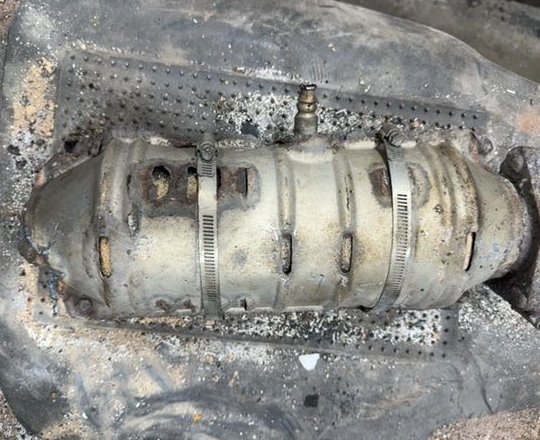
Most converter sellers leave money on the table — not because they picked the wrong buyer, but because they had no idea what tier their converters actually fell into.
If you're sitting on a load of cats in Toledo and wondering why two buyers quoted you completely different numbers, the answer almost always comes back to grading. Catalytic converter grading is the system buyers use to determine converter scrap value — and if you don't understand it, you're negotiating blind.
This guide breaks down how grading works, what drives pricing tiers, and how to make sure you're getting the best catalytic converter price Toledo has to offer in October 2026.
What Is Catalytic Converter Grading and Why Does It Matter?
Grading is how buyers classify converters before they price them. Every cat that comes off a vehicle gets sorted into a tier based on its precious metal content — primarily platinum (Pt), palladium (Pd), and rhodium (Rh). Those three metals are what drive catalytic converter price at every point in the supply chain.
Here's why this matters to you directly: a "high-grade" domestic converter can be worth several times more than a "low-grade" or "foreign small" unit. Same-sized cans, completely different values. If you're selling without knowing the tier breakdown, you're essentially handing the buyer an information advantage — and you'll pay for it in the final payout.
The grading system isn't standardized across the entire industry, but most North American buyers use a framework that looks something like this:
- High Grade (HG): Domestic full-size converters from larger displacement engines. High PGM loading. Top of the price list.
- Medium Grade (MG): Mid-range domestic units. Solid precious metal content but below HG. Common in everyday passenger vehicles.
- Low Grade (LG): Smaller units, foreign small cats, or older converters with reduced catalyst loading. Lower PGM content.
- Foreign Pre-Cat / Small Foreign: Tiny secondary converters. Often overlooked but still worth sorting separately.
- Foil / Bead / Exotic: Non-standard substrate types. Require separate handling and pricing.
- Aftermarket / Direct Fit Replacement: Much lower precious metal content than OEM. Often misidentified — and overvalued — by inexperienced sellers.
Knowing which tier your inventory falls into before you pick up the phone changes everything about that conversation.
Rhodium Price Today and Its Outsized Impact on Converter Tiers
If you want to understand why scrap converter prices are so volatile, start with rhodium. Rhodium is the rarest of the three key PGMs, and its spot price has historically swung more dramatically than platinum or palladium. Even a moderate move in rhodium price today can shift the value of a high-grade domestic converter by a meaningful amount — in either direction.
High-grade converters carry the most rhodium. That's why the spread between HG and LG units tends to widen when rhodium is elevated, and compress when it pulls back. In a market where rhodium is soft, a seller holding a mixed load with heavy HG representation may feel less upside than they expected. In a strong rhodium market, those same HG cats are significantly more valuable.
This is why checking scrap metal prices today — specifically PGM spot prices — before you sell isn't optional. It's the baseline. Buyers price against the market. You should too.
Palladium matters for mid-grade domestic and many foreign converters. Platinum is more prominent in diesel applications — European and heavy-duty units. Understanding which metal dominates each tier helps you read the market and time your loads more intelligently.
How Toledo Yards Should Be Using Grade Data Right Now
Toledo sits in a strong position geographically. The region's industrial history, density of automotive shops, and proximity to major Midwest transportation corridors means there's consistent converter volume moving through Ohio yards. But volume doesn't automatically mean strong pricing — especially if grading is being done loosely or skipped entirely.
Yards in Toledo that sort and document their inventory by grade before going to market consistently get better price discovery than those selling unsorted mixed loads. Here's why: a vetted buyer bidding on a documented, graded load can price with confidence. An unsorted load forces them to price defensively — meaning lower bids to account for the unknown.
For Toledo scrap metal services, the shift toward documented, graded inventory has been one of the most practical changes yards can make. It costs time upfront, but the return on that time shows up in the final sale price.
A few practical grading steps for Ohio yards:
- Photograph every unit — top and bottom of the can, plus the substrate if it's accessible or visible.
- Record the serial number where visible — serial tracking connects the converter to a known vehicle application and known PGM loading data.
- Separate aftermarket from OEM — this is a common and costly mistake. Aftermarket cats look similar but carry far less precious metal.
- Sort by substrate type — ceramic honeycomb, metallic foil, and bead/pellet types are processed differently and priced differently.
- Weigh each grade tier separately — don't blend loads if you can avoid it.
The SMASH Scrap Metal Auction Advantage: Competition Reveals the Real Price
Here's the old way: you call your regular buyer, describe the load, get a number, and either take it or leave it. You have no idea if that number reflects the actual market. You have no leverage. And if you leave it, you're starting the same one-sided conversation with the next buyer on your list.
The SMASH way is different. The SMASH scrap metal auction marketplace puts your graded, documented inventory in front of multiple vetted buyers simultaneously. They compete. You see the bids. That competition is how the market actually gets discovered — not through a single phone call with a single buyer who has every incentive to keep the number low.
For converter sellers in Toledo, this matters because your load now gets exposure beyond your local network. A buyer in another part of Ohio — or another state — who needs exactly your grade mix can bid, and their bid competes against local buyers. That's how you find the best scrap converter prices today instead of just the most convenient ones.
SMASH also supports photo documentation and serial tracking — exactly the kind of grading data that gives buyers confidence to bid higher. More documentation, more buyer confidence, better price discovery. That's not a marketing promise. That's how informed markets function.
No subscription fees. SMASH only wins when you win.
How Catalytic Converter Price Lists Work — and What to Ignore
You've probably seen references to a catalytic converter price list online — sometimes with pictures, sometimes organized by vehicle make or serial number. These lists exist in various forms across different markets. You'll find references to a catalytic converter price list with pictures in markets like South Africa and Australia, where buyers use visual identification tools to grade converters without serial data.
In the U.S. market, the most reliable pricing data comes from buyer platforms and refinery-linked price sheets that update based on real-time PGM spot prices. A static list with fixed dollar amounts per unit is usually outdated within days — sometimes hours — depending on how volatile the metals market is running.
What a good price list actually gives you:
- A reference point for grade classification by serial or part number
- Historical data on PGM loading per converter type
- A baseline for negotiation — not a final number
What a good price list cannot give you: today's actual market value. That requires live PGM spot data applied to the converter's known PGM content. This is why reading scrap converter pricing guides that explain the methodology — not just the numbers — is more valuable long-term. Understanding how the price is built means you can evaluate any offer intelligently, regardless of what the market is doing that week.
If a buyer can't or won't explain their pricing methodology, that's a signal. Transparent buyers show their math. Opaque buyers rely on your not knowing it.
Getting the Best Converter Price: What the Top Sellers Do Differently
Sellers who consistently get strong converter scrap value aren't doing anything exotic. They're executing the basics better than everyone else. If you want the best converter price on your next load, here's what that looks like in practice:
- They sort before they sell. No mixed unsorted loads. Every unit is categorized.
- They document thoroughly. Photos, serials, weights by grade. Buyers get what they need to price confidently.
- They watch the market. PGM spot prices move. Timing a sale when rhodium or palladium is elevated isn't always possible, but it's worth knowing where the market is before you commit.
- They use competitive formats. One-buyer negotiations almost always favor the buyer. Auction-style formats put pressure on buyers to come in strong.
- They avoid aftermarket contamination. Mixing OEM and aftermarket units kills the average value of a load. Separate them always.
- They build buyer relationships — but don't rely on just one. Regular buyers matter, but having multiple vetted buyers in the mix keeps everyone honest.
Toledo yards that check current scrap converter prices regularly and bring that data to buyer conversations are the ones negotiating from a position of knowledge. That's the difference between a fair price and a great one.
If you're ready to stop guessing and start selling with real market data behind you, find the best scrap converter prices for your Toledo load at best-scrap-converter-prices.com — and put competition to work for you.
Disclaimer: Catalytic converter prices fluctuate based on live precious metal markets, including platinum, palladium, and rhodium spot prices. Always verify current rates before selling. The figures and ranges discussed in this article are general in nature and do not represent guaranteed offers or current market pricing.
Frequently Asked Questions
Q: How do I know what grade my catalytic converter is before I sell it?
Start with the serial number stamped on the converter body. Many buyers and platforms can cross-reference that serial to a known vehicle application and grade classification. If there's no readable serial, photos of the substrate type and can dimensions help buyers categorize the unit. Sorting before you sell always leads to better outcomes than selling a mixed unsorted load.
Q: Why are two buyers in Toledo quoting me completely different prices for the same converters?
Different buyers use different grading interpretations, different PGM assay data, and different internal margin structures. One buyer may classify a unit as mid-grade while another calls it high-grade. This is exactly why competitive auction formats — where multiple buyers price the same documented load — produce better price discovery than single-buyer negotiations.
Q: Does the rhodium price today actually affect what I get paid for my cats?
Yes, directly. High-grade domestic converters carry significant rhodium content, and rhodium is the most price-volatile of the three primary PGMs. A shift in rhodium spot price can materially change the value of an HG load. Always check current PGM spot prices before selling, especially if you're holding high-grade inventory.
Q: Are aftermarket catalytic converters worth scrapping in Toledo?
Yes, but their scrap value is substantially lower than OEM converters. Aftermarket units contain far less precious metal loading by design — they meet emissions standards but aren't built with recycling value in mind. The critical thing is to separate them from your OEM inventory before selling. Mixing them into an OEM load drags down your average price per unit.
Q: How is SMASH different from just calling a local scrap buyer in Ohio?
A local buyer gives you one price from one party with no competition. SMASH puts your documented, graded inventory in front of multiple vetted buyers who bid against each other. That competition is how the real market price gets revealed — not through a single phone call where the buyer controls all the information. No subscription fees mean you only pay when you sell.
Follow SMASH on LinkedIn for real-time scrap metal market insights and industry updates: linkedin.com/company/scrap-metal-auction-sales-hub