Most sellers leave money on the table before they even make a phone call. Not because their converters aren't valuable — but because bad photos kill a quote before it starts.
Catalytic converter scrap value is directly tied to how well a buyer can identify what they're looking at. Precious metals — platinum, palladium, rhodium — are locked inside that honeycomb substrate. A buyer can't guess at the grade. They need to see the stamping, the condition, and the substrate clearly. Blur that information and you get a lowball number or no number at all.
This guide walks you through exactly how to photograph your converters for an accurate online quote. No professional camera required. Just your phone, some natural light, and a few minutes of attention.
Why Photos Matter for Catalytic Converter Scrap Value
When you check current scrap converter prices, you'll notice that two converters that look nearly identical on the outside can have wildly different values. A direct-fit Toyota cat might be worth three times what a generic aftermarket unit fetches. The difference is in the grade — and buyers determine grade from your photos and the serial or part number stamped on the shell.
Online quoting has changed how yards and buyers work. Platforms like SMASH Scrap — where verified buyers bid on your metal have moved pricing into a competitive, documented environment. That's good for sellers. But it only works when the documentation is solid. A blurry photo of a rusted shell tells a buyer nothing useful. A sharp image of the end cap, the stamp, and the substrate tells them everything.
Think of your photos as your negotiating power. Better documentation means buyers compete with more confidence — and more confidence leads to better price discovery. That's the whole game when you sell catalytic converters online.
The Five Shots Every Converter Quote Needs
You don't need twenty photos. You need five good ones, each capturing something specific. Here's exactly what to shoot:
-
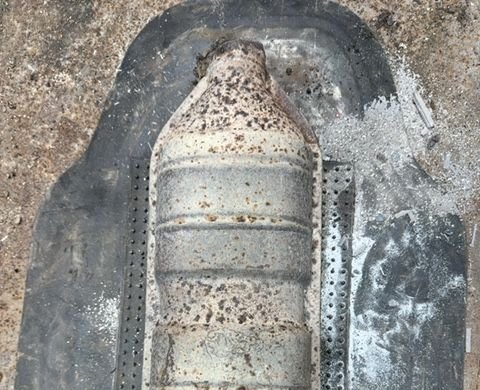
The full converter, laid flat on a clean surface.
This establishes the overall condition and size. Use a neutral background — concrete, plywood, or pavement work fine. Avoid gravel or cluttered shop floors. Make sure the entire unit is in frame with a couple inches of clearance on each side. -
The serial number or OEM stamp.
This is the most critical shot. The stamp is usually on the shell, the end cap, or a welded-on tag. Get close enough that the numbers are legible — no zoom blur. If there's rust or grime over the stamp, wipe it down first with a rag. -
Both end caps, one photo each.
End cap condition matters. Crushed, cut, or damaged ends affect substrate integrity and can reduce value. Buyers want to see what they're working with before they bid. -
The substrate face (the honeycomb interior).
Shoot straight into the opening of the converter. You're showing whether the substrate is intact, partially broken, or blown out. A blown substrate is still valuable — just at a different price tier. Don't hide it. Honest documentation protects you. -
Any damage, welds, or unusual features.
Cut pipes, non-OEM welds, heat damage — photograph it. Surprises after a deal is struck cause problems. Get it in the record upfront.
That's five shots. For a single converter, this takes under five minutes. For a load of twenty? Maybe thirty minutes. The return on that time investment is a quote that actually reflects your converter's real value rather than a hedge against the unknown.
Lighting and Phone Settings That Actually Work
You don't need a DSLR. Your phone is fine — if you use it correctly. The biggest mistake sellers make is shooting in shadow or with the shop light directly overhead creating glare. Both kill detail.
Best lighting: Natural daylight, overcast sky. An overcast day diffuses light evenly across the surface, which means no harsh shadows hiding the stamp and no glare washing out the substrate. If you're indoors, position near an open bay door or large window.
Avoid: Direct sunlight at an angle (creates deep shadows across stamps), fluorescent shop lighting directly overhead, flash photography on polished or chrome surfaces.
A few practical tips for phone photography:
- Tap the screen on the area you want sharp — most phone cameras will autofocus there.
- Hold steady or rest your hand on a surface before shooting.
- Shoot horizontally (landscape mode) for full converter shots, vertical for close-ups of stamps.
- If a stamp is hard to read, try shooting at a slight angle with light coming from the side — this creates shadow relief that makes stamped text pop.
- Don't crop aggressively after shooting. Send the full resolution image. Buyers can zoom in on their end.
One more thing: clean the converter before you shoot. A quick wipe with a rag removes surface grime that can obscure stamps and make an otherwise intact substrate look damaged. You're not hiding anything — you're making the relevant details visible. That's what gets you an accurate number.
How to Document a Load of Multiple Converters
Selling one converter is straightforward. Selling a load — which is common in Boston yards, auto dismantlers, and shop environments across Massachusetts — requires a bit more organization so a buyer can quote each unit, not just the pile.
The mistake most sellers make is photographing a pile and expecting a buyer to sort it out. That approach gets you a conservative quote or a flat "need individual shots" response. Here's a system that works:
- Number each converter. Use a marker and a small piece of masking tape on each unit. Write 1, 2, 3 — whatever you need. This creates a reference system for your photo set.
- Photograph each unit individually using the five-shot method above.
- Name your files or organize your album so photos are grouped by converter number. Most photo apps let you create albums or folders.
- Include a single "load overview" shot — all converters laid out with numbers visible. This gives buyers context for the full volume before they go through individual photos.
Platforms built for competitive quoting, like SMASH, are designed to handle documented inventory submissions like this. When vetted buyers can see exactly what's in a load, they bid with more confidence — and that competition helps reveal the real market value of your metal. Find the best scrap converter prices today by making your documentation work for you, not against you.
For Boston sellers and those across Massachusetts running dismantling operations, this kind of systematic approach also helps with your own inventory records — especially important as regulations around catalytic converter documentation have tightened across the industry in 2026.
What Buyers Look for in Your Converter Photos — and Why It Affects Your Quote
Understanding what a buyer is actually analyzing helps you take better photos. When a buyer reviews your images, they're trying to answer three questions fast:
- What is this unit? OEM vs. aftermarket, manufacturer, vehicle application. The stamp answers this.
- What condition is the substrate in? Intact, partial, or blown? This determines PGM (platinum group metal) recovery potential and directly affects what the buyer can pay based on current palladium price today and rhodium markets.
- Are there any variables that change the value? Damage, non-standard modifications, pipe cuts close to the substrate — anything that complicates processing.
Buyers aren't looking for perfect converters. They're looking for honest, clear information. A broken substrate photographed accurately will get a fair quote. The same converter photographed to hide the damage will create disputes after the deal — and cost you future business with that buyer.
Precious metal markets — platinum, palladium, rhodium — fluctuate daily. A buyer's margin for error is tight. Clear photos let them price accurately instead of building in a cushion for uncertainty. You want that cushion gone. It's your money.
If you want to understand how photo documentation connects to converter grading and current market pricing, read scrap converter pricing guides that break down how grades are established and what drives value at the substrate level.
Getting Your Photos Into the Right Hands in Boston and Massachusetts
Taking great photos is only half the equation. The other half is submitting them to buyers who actually compete for your business — not a single contact with a take-it-or-leave-it number.
If you're in Boston or anywhere across Massachusetts, the market for converters is active. Local auto recyclers, dismantlers, and yards move significant volume. But local doesn't have to mean limited. Online platforms connect your documented inventory with vetted buyers across North America, which means more competition for your load.
For those looking for Boston scrap metal services that go beyond the single-buyer phone call, the combination of solid photo documentation and a competitive quoting platform changes what's possible. More buyers seeing clear photos means better price discovery. That's not marketing language — it's just how auctions work.
A few practical notes for Massachusetts sellers specifically: converter documentation requirements have continued to evolve in 2026. Maintaining clear photo records of your inventory — including serial numbers — helps you stay compliant and positions you well with buyers who require documentation before purchase. Good photos aren't just about getting a better quote. They're becoming standard operating procedure.
When you're ready to get an actual number on your converters, find the best scrap converter prices today and submit your documented photos through a platform where buyers compete for your business. That's how you stop guessing and start selling at actual market value.
Frequently Asked Questions
Q: How many photos do I need for a catalytic converter scrap value quote?
For a single converter, five photos cover everything a buyer needs: full unit, serial stamp, both end caps, and the substrate face. If there's visible damage, add one more shot of that specifically. More detail means a more accurate quote — and fewer back-and-forth requests from buyers.
Q: Does substrate condition really affect the scrap price that much?
Yes. The substrate is where platinum, palladium, and rhodium are concentrated. A fully intact substrate recovers more precious metal than a blown or fractured one, so buyers price accordingly. That said, even partial or blown substrates have value — the key is accurate documentation so you get a quote that reflects reality, not a worst-case hedge.
Q: Can I sell catalytic converters online if I'm in Boston?
Absolutely. Online platforms have made it straightforward to sell catalytic converters online from anywhere in Massachusetts, including Boston. You photograph your converters, submit the documentation, and receive quotes from vetted buyers — without being limited to whoever picks up the phone locally. Platforms like SMASH connect sellers with competitive buyers across North America.
Q: How does palladium price today affect what I get for my converters?
Palladium is one of three primary precious metals recovered from catalytic converters, alongside platinum and rhodium. Daily market fluctuations in palladium pricing directly influence converter grades — especially for units from vehicles that rely heavily on palladium catalysts, like many gasoline-engine cars. Checking current market conditions before you sell helps you time your transaction and understand the quote you receive.
Q: Does it matter if my converter has a non-OEM or aftermarket shell?
It matters because it affects the grade. Aftermarket converters typically contain lower concentrations of platinum group metals than OEM direct-fit units, which means lower scrap value. A buyer needs to see the stamp — or the absence of a meaningful stamp — to price it correctly. Photographing any markings, even partial ones, gives a buyer what they need to make an accurate offer rather than defaulting to a conservative generic price.
Ready to turn your documented converters into a real offer? Find the best scrap converter prices and get a free quote at best-scrap-converter-prices.com — where your photos do the work and buyers compete for your business.
Stay current on scrap metal markets and converter pricing trends by following SMASH on LinkedIn — practical industry updates, no filler.
```